


Feeling irritable before breakfast, exhausted by noon, and mentally drained by evening is not just a bad day. For many adults between 40 and 65, that pattern repeats itself week after week until it starts affecting sleep, relationships, and physical health. Chronic stress is linked to inflammation, cognitive decline, and heart disease, making it one of the most urgent wellness challenges of midlife. This guide gives you a clear, step-by-step path to managing stress effectively, with practical tools, real techniques, and honest guidance for when things get tough.
Table of Contents
- Understand the causes and effects of stress
- What you need before you start: Tools, mindset, and preparation
- Step-by-step stress management routine for adults 40-65
- Core techniques: Mindfulness, movement, and healthy habits
- Troubleshooting: What to do when stress management isn’t working
- Tracking progress and making stress management a lifelong habit
- Connect stress relief with your wellness journey
- Frequently asked questions
Key Takeaways
| Point | Details |
|---|---|
| Tailored strategies work | Evidence-backed, step-by-step routines deliver reliable stress reduction for adults aged 40-65. |
| Start with key steps | Identifying stress sources, practicing mindfulness, and staying active are core to success. |
| Track and adapt | Regular tracking and flexibility help maintain progress and resilience over time. |
| Get support early | Professional help is vital if stress persists or disrupts your daily life. |
Understand the causes and effects of stress
Stress is your body’s response to any demand or threat, real or perceived. It comes in two main forms: acute stress, which is short-term and often harmless (like nerves before a presentation), and chronic stress, which lingers for weeks or months and quietly damages your health. The distinction matters because most people in midlife are dealing with the chronic kind without realizing it.
After 40, your body handles stress differently. Hormonal shifts, slower recovery, and accumulated life pressures mean that the same stressor hits harder than it did at 30. Adults in their 40s show 37% higher cortisol levels after stressful experiences compared to younger adults. Elevated cortisol and health problems are closely linked, affecting everything from blood pressure to memory.
Here is what chronic stress can do to your body and mind:
- Cardiovascular strain: Raises blood pressure and increases heart disease risk
- Cognitive fog: Impairs memory, focus, and decision-making over time
- Immune suppression: Makes you more vulnerable to illness and slower to recover
- Sleep disruption: Interrupts deep sleep cycles, compounding fatigue
- Mood changes: Increases anxiety, irritability, and risk of depression
- Weight gain: Cortisol promotes fat storage, especially around the abdomen
Stat to know: Chronic stress is directly linked to inflammation, cognitive decline, and heart disease. For a solid overview of where to start, the stress relief overview covers the key strategies in one place.
What you need before you start: Tools, mindset, and preparation
Starting a stress management routine without preparation is like trying to cook a meal without checking if you have ingredients. A few simple things in place before you begin will make every step more effective and easier to stick with.
Here is a quick reference table of what you will need:
| Tool or resource | Why it helps | Where to find it |
|---|---|---|
| Quiet space | Reduces sensory overload during practice | A corner of any room |
| Journal or notebook | Tracks patterns and progress | Any stationery store |
| Supportive person | Accountability and emotional buffer | Friend, family, or group |
| Habit tracking sheet | Keeps you consistent | Printable or phone app |
| Timer or phone alarm | Structures short practice sessions | Already on your phone |
Beyond tools, your mindset is the real foundation. Mindfulness-Based Stress Reduction (MBSR), an evidence-based program, has been shown to reduce stress in older adults when practiced consistently. The key word is consistently. These mindset shifts will help you get there:
- Be open to slow progress. Results build over weeks, not days.
- Treat consistency as the goal, not perfection.
- Expect setbacks and plan to return without guilt.
- Start small so the habit feels manageable from day one.
For practical guidance on where to begin, the relaxation techniques guide and the personalized relaxation guide are both worth bookmarking. If you prefer a structured digital option, mindfulness online support offers accessible programs.
Important: If your stress includes thoughts of self-harm or feels completely unmanageable, please contact a healthcare provider or therapist right away. This guide is a wellness tool, not a substitute for professional care.
Step-by-step stress management routine for adults 40-65
With your tools and mindset set, here is the stress reduction routine step by step. Each stage builds on the last, so working through them in order gives you the best results.
- Identify your stressors. Write down what is causing stress. Be specific. Identifying and removing the source is the first and most important step in any effective stress plan.
- Seek support. Talk to someone you trust. Social connection lowers cortisol and helps you process difficult emotions faster than going it alone.
- Use a problem-solving framework. For stressors you can control, describe, brainstorm, evaluate, choose, and review your options. This structured approach prevents rumination.
- Improve nutrition and hydration. Reduce caffeine and sugar, which spike cortisol. Prioritize whole foods, protein, and at least 8 cups of water daily.
- Add movement. Even a 20-minute walk counts. Physical activity is one of the fastest ways to lower stress hormones.
- Practice mindfulness daily. Even 10 minutes of focused breathing or a body scan can shift your nervous system out of fight-or-flight mode. Explore mindfulness techniques to find what fits your schedule.
- Build a gratitude practice. End each day by writing three things that went well. This rewires your brain toward positive pattern recognition over time.
Pro Tip: Pair each new habit with something you already do. Practice breathing while your coffee brews. Journal right after brushing your teeth. Attaching new behaviors to existing ones dramatically improves follow-through.
Here is a summary table to keep things clear:
| Step | Expected benefit | Quick tip |
|---|---|---|
| Identify stressors | Clarity and control | Be specific, not vague |
| Seek support | Emotional relief | Schedule it, don’t wait |
| Problem-solving plan | Reduces rumination | Write it down |
| Nutrition and hydration | Stable energy and mood | Prep meals in advance |
| Movement | Lower cortisol fast | Start with 10 minutes |
| Mindfulness | Calmer nervous system | Use a timer |
| Gratitude practice | Positive mindset shift | Keep journal by your bed |
For turning your home into a space that supports this routine, creating a relaxation zone walks you through the setup in two weeks.

Core techniques: Mindfulness, movement, and healthy habits
To make each step easier, here is why the core techniques work and how to weave them into your day. These are not trendy wellness extras. They are the most research-supported tools available for midlife stress.
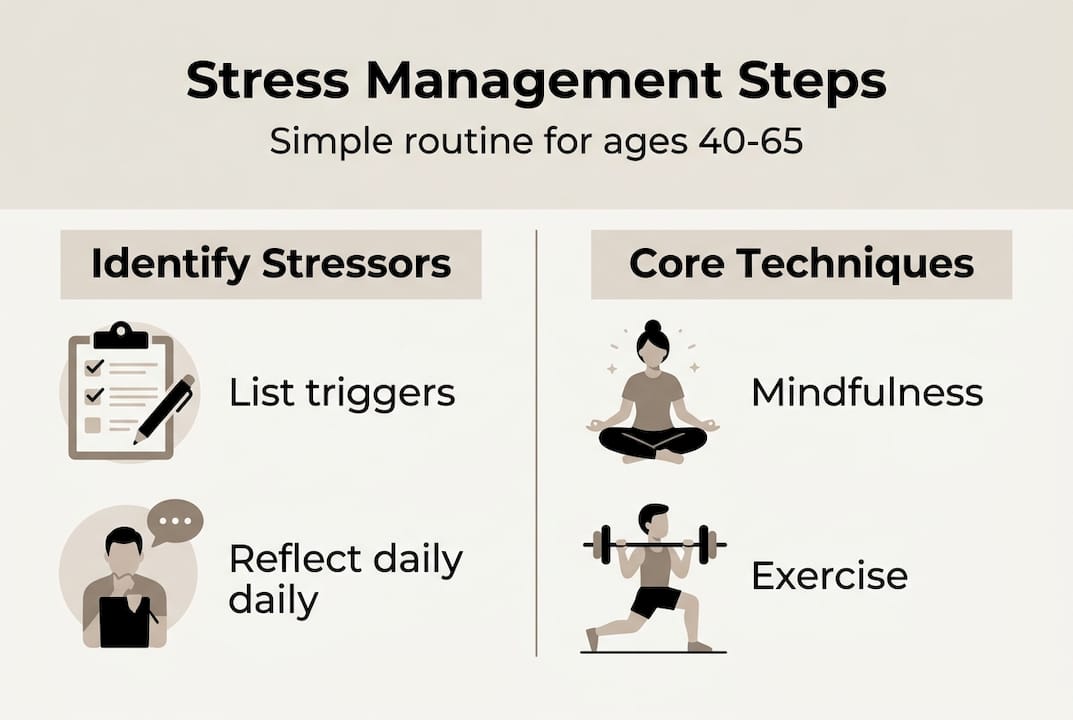
Mindfulness-Based Stress Reduction (MBSR) is an 8-week structured program that teaches you to observe your thoughts without reacting to them. Its core practices include body scan, mindful breathing, and mindful movement such as gentle yoga. You do not need to complete the full program to benefit. Even individual practices done daily produce measurable results.
Physical movement is equally powerful. 150 minutes of moderate exercise per week releases endorphins and reduces stress hormones. For adults 40 to 65, low-impact options like tai chi, yoga, and brisk walking are especially effective because they combine movement with breath awareness. You do not need a gym membership or an intense workout routine.
Here are the daily healthy habits that build stress resilience over time:
- Sleep 7 to 9 hours and keep a consistent bedtime, even on weekends
- Limit alcohol, which disrupts sleep and raises anxiety the next day
- Eat anti-inflammatory foods like leafy greens, berries, and fatty fish
- Reduce screen time in the hour before bed to protect sleep quality
- Practice mindful self-compassion to reduce self-criticism, which is a hidden stressor for many adults
For a structured daily plan, the morning routine guide offers a realistic template built for this age group.
Pro Tip: Use a buddy system. Find one person who is also working on stress or health habits and check in weekly. Shared accountability doubles the likelihood of sticking with a new routine.
Troubleshooting: What to do when stress management isn’t working
Sometimes you do everything right and still feel overwhelmed. That is more common than you think, and it does not mean the approach is wrong. It usually means something specific needs adjusting.
Common roadblocks and what to do about them:
- Not enough time: Scale down. Five minutes of breathing is better than skipping entirely.
- Too many changes at once: Pick one step and master it before adding another.
- Feeling worse before better: Normal in the first two weeks. Your nervous system is recalibrating.
- Isolation: Stress without social support is harder to manage. Reach out, even briefly.
- Unrealistic expectations: Progress is rarely linear. Track trends over weeks, not days.
Social support buffers the effects of stress, and regular mindfulness practice can reduce cortisol by 20 to 30 percent. That is a significant physiological shift, but it takes time to accumulate.
“Persistence matters more than perfection. Getting help when you need it is not a setback. It is the smartest move you can make.”
Watch for these red flags that signal you need professional support:
- Stress that does not improve after 4 to 6 weeks of consistent effort
- Thoughts of self-harm or hopelessness
- Inability to function at work or in relationships
- Physical symptoms like chest pain or severe sleep loss
If stress persists, therapies like Cognitive Behavioral Therapy (CBT) are highly effective and widely available. The after-work relaxation guide also offers strategies for decompressing during the highest-stress window of the day.
Tracking progress and making stress management a lifelong habit
After overcoming roadblocks, here is how to keep stress management working for you long-term. Tracking does not have to be complicated. Simple, consistent check-ins are far more useful than elaborate systems you abandon after a week.
Easy ways to track and celebrate your progress:
- Daily journal entries: Note your stress level (1 to 10), what triggered it, and what helped
- Weekly habit checklist: Check off each step you completed that week
- Monthly self-assessment: Ask yourself if sleep, mood, and energy have improved
- Buddy feedback: Ask your accountability partner what changes they have noticed in you
- Body awareness: Notice physical signals like jaw tension or shallow breathing as early warning signs
A practical daily routine of body scan, breathing exercises, and a gratitude walk covers the three most effective stress-reduction practices in under 30 minutes. That is a realistic daily investment with compounding returns.
Flexibility is key to making this last. Life changes, and your routine should too. Traveling? Swap your morning walk for hotel room stretching. Busy season at work? Shorten sessions but do not skip them entirely. For guidance on adapting your approach over time, tailoring relaxation routines shows you how to customize based on your current season of life.
The long-term payoff is real: lower inflammation, better sleep, sharper thinking, and a stronger immune system. Periodic self-assessment every 4 to 6 weeks keeps you honest and motivated. Stress management is not a phase. It is a practice, and the longer you keep it, the more resilient you become.
Connect stress relief with your wellness journey
Ready to take control of your stress with even more support? The steps in this guide work best when your environment and tools are set up to reinforce them. At Lunix, we design recovery and comfort solutions specifically to help your body restore and relax as part of your daily life, not as an afterthought.

Our recovery resources include smart comfort products that make relaxation easier to access at home, whether you are winding down after a long day or building a morning routine that actually sticks. Explore the full range of health benefits tools to see how thoughtful design can support every step of your stress management plan. Your body does the work. We make sure your space and tools are ready to help it.
Frequently asked questions
Does stress management really lower my risk of health problems after 40?
Yes. Managing stress consistently can reduce inflammation, lower the risk of cognitive decline, and improve heart health. Chronic stress management can even reverse some of the physical effects associated with aging.
What is the first step in effective stress management?
The first step is identifying your main sources of stress and determining whether any can be removed or changed. Identifying and removing the source is the foundation of every effective stress reduction plan.
How much exercise should I get for stress management?
Aim for at least 150 minutes of moderate exercise each week. Walking, yoga, and tai chi are all excellent options for adults in the 40 to 65 age range.
What should I do if these steps don’t help my stress?
If your stress does not improve or you feel worse, contact a healthcare provider or therapist as soon as possible. Professional therapy like CBT is highly effective for persistent stress that does not respond to self-managed strategies.
Recommended
- Benefits of self-care: practical tips for adults 40-65 – Lunix
- Morning relaxation routine guide for adults 40-65 in 2026 – Lunix
- Create a Relaxation Zone: Cut Stress by 25% in 2 Weeks – Lunix
- Stress Relief Guide 2026: Master Effective Daily Relaxation – Lunix
- Come gestire lo stress: guida pratica per ritrovare calma