


TL;DR:
- Most wellness plans fail due to misalignment with individual habits and unrealistic goals. A baseline audit clarifies starting points, and SMART goals improve adherence by providing clear, manageable targets. Regular monitoring, flexibility, and support systems are essential for lasting success in personalized health strategies.
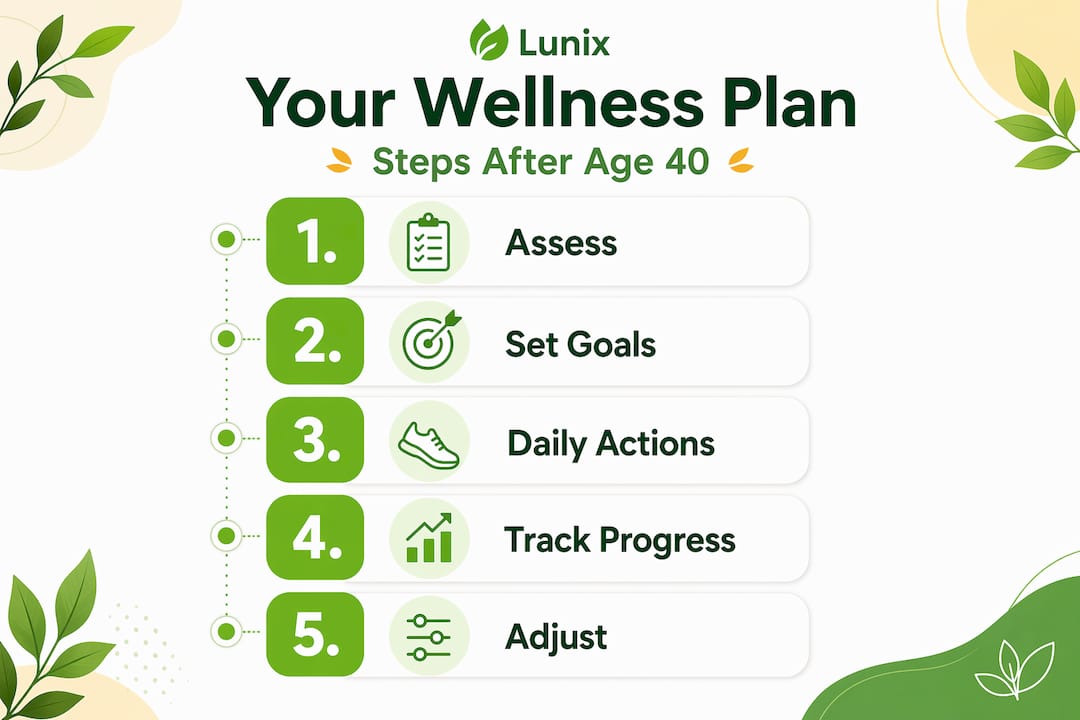
Generic wellness advice rarely works for you. A 45-year-old managing stress, mild joint stiffness, and a demanding schedule has entirely different needs than a 25-year-old training for their first race. Yet most wellness content treats everyone the same. This personalized wellness plan guide changes that. You’ll walk through four concrete stages: assessing where you are now, setting goals that actually fit your life, building daily habits that stick, and tracking progress so your plan grows with you. Every step is designed for adults between 40 and 65 who want real results, not recycled advice.
Table of Contents
- Key takeaways
- Your personalized wellness plan guide: start with a real assessment
- Setting goals that actually fit your life
- Building your daily action plan
- Tracking progress and staying motivated
- Overcoming common obstacles along the way
- What I have learned about plans that actually stick
- Support your wellness plan with the right tools
- FAQ
Key takeaways
| Point | Details |
|---|---|
| Start with a baseline audit | Track your sleep, nutrition, movement, and mood for 3 to 7 days before setting any goals. |
| Use SMART goals | Personalized health strategies increase adherence by up to 40% compared to generic plans. |
| Build habits in layers | Break goals into small daily actions and use habit stacking to make new routines automatic. |
| Define your monitoring cadence | Plans without a review schedule lose momentum within 4 to 8 weeks. |
| Lean on support systems | Social support boosts wellness plan adherence by 28%, so build accountability into your plan. |
Your personalized wellness plan guide: start with a real assessment
Before you write a single goal or buy a new piece of equipment, you need an honest picture of where you are right now. This is the step most people skip, and it is also the reason most plans collapse within the first month.
A baseline audit means observing your actual habits, not the habits you think you have. Spend three to seven days logging the following without trying to change anything:
- Sleep: What time do you fall asleep and wake up? How rested do you feel in the morning?
- Nutrition: What do you actually eat and drink, including portion sizes and meal timing?
- Movement: How many steps do you take? Do you have any structured exercise, even a short walk?
- Stress and mood: Note moments of tension, anxiety, or low energy throughout each day.
- Energy patterns: When do you feel sharp, and when do you hit a wall?
Regular self-assessment improves health outcomes by 25%, which is significant for something that costs nothing but a few minutes of honest observation. A simple notebook works. Apps like Bearable or Cronometer work just as well if you prefer digital tools.
If you have not had a physical exam recently, this is a good time to schedule one. Knowing your blood pressure, cholesterol, blood sugar, and hormone levels gives your wellness strategy a factual foundation rather than a guessed one. Clinicians who individualize wellness planning factor in a patient’s motivations, current activity levels, and realistic capacity for change. You should too.
Pro Tip: Track for at least five full days, including a weekend. Weekday and weekend habits often differ more than people expect, and your plan needs to account for both patterns.
Setting goals that actually fit your life
Once you have your baseline data, patterns will emerge. Maybe you sleep well but barely move your body. Maybe your diet is solid but stress is quietly draining everything else. Those patterns tell you where to focus first. Now you can set goals that mean something.
The SMART framework is the most practical tool for this stage. A SMART goal is Specific, Measurable, Achievable, Relevant, and Time-bound. Applying it to wellness is straightforward once you see the contrast:
-
Vague goal: “I want to eat better.”
-
SMART goal: “I will eat a vegetable-based lunch five days per week for the next 30 days.”
-
Vague goal: “I want to exercise more.”
-
SMART goal: “I will walk for 25 minutes three mornings per week through the end of the month.”
-
Vague goal: “I want to stress less.”
-
SMART goal: “I will spend 10 minutes on deep breathing before bed each night for the next three weeks.”
Applying SMART goals boosts success rates by 30% compared to setting intentions without structure. That number matters because motivation alone fades. Structure is what carries you through low-energy weeks.
One common mistake at this stage is setting too many goals at once. Choose two or three priorities, not seven. Your personal health roadmap should feel manageable at the start. You can always add more once the first habits become automatic. Short-term wins, like hitting your sleep target for two straight weeks, build the confidence to pursue longer-term goals like sustained weight loss or improved cardiovascular health.
Pro Tip: Schedule a 15-minute goal review at the end of each month. Life changes, and your goals should too. Adjusting your targets is not failure. It is what a smart, flexible plan looks like in practice.
Building your daily action plan
Goals without a daily plan are just wishes. This is where your custom wellness plan takes physical form in your calendar and your routines. The goal is to translate each big objective into something small enough to do on a Tuesday when you are tired.
Here is a practical approach to building your action plan across four key wellness areas:
-
Nutrition: Identify one meal to improve first, typically breakfast or lunch. Add one whole food, remove one processed item, and repeat weekly. Small changes compound faster than dramatic overhauls.
-
Movement: Start with whatever you can fit in 20 minutes or less. A short walk, a few sets of bodyweight exercises, or light stretching after waking. Diverse routines increase adherence by 35%, so rotate your activities to keep boredom from killing momentum.
-
Mental and emotional health: Schedule one activity per day that lowers stress. This can be a phone call with someone you trust, five minutes of journaling, or sitting outside without your phone. Do not leave this to chance.
-
Sleep: Sleep quality directly affects appetite hormones, decision-making, and your body’s ability to recover. Set a consistent bedtime, limit screen time 30 minutes before bed, and treat sleep as a non-negotiable part of your wellness plan, not a reward.
Habit stacking is one of the most underrated strategies available. Attach a new habit to something you already do reliably. Drink a glass of water every time you make coffee. Do five minutes of stretching right after brushing your teeth at night. Link new behaviors to existing anchors and the friction of starting disappears.
You can find evidence-based guidance on how home health tools support adherence to wellness goals, including recovery and relaxation tools that fit easily into a daily routine.

Pro Tip: Schedule your wellness activities like appointments. Write them in your calendar with a specific time. “I’ll exercise when I get around to it” becomes “I exercise at 7:00 a.m. on Monday, Wednesday, and Friday.” The specificity is what makes it real.
Tracking progress and staying motivated
You cannot manage what you do not measure. Tracking your progress is not about being obsessive. It is about having enough information to know what is working and what needs to change.
Here are the most effective methods for tracking at this stage of life:
- Weekly logs: Write down what you did, how you felt, and what you noticed. Even three sentences per day gives you useful data over time.
- Apps: Tools like MyFitnessPal, Oura, or even a simple Google Sheet let you visualize patterns across weeks and months.
- Monthly photos or measurements: For physical goals, objective data beats guesswork every time.
- Mood and energy scores: Rate your energy and mood on a simple 1 to 5 scale daily. Patterns here often reveal hidden blockers like poor sleep or social stress.
Without a defined monitoring cadence, plans lose momentum within four to eight weeks. Deciding in advance when you will review your plan, whether weekly, biweekly, or monthly, keeps you accountable before a slump becomes a stall.
Celebrating small wins matters more than most people admit. Completing a week of your plan deserves recognition, even if the recognition is just a checkmark on a wall calendar. Visual markers of progress are surprisingly powerful. They give your brain evidence that the plan is working, which makes continuing feel worth it.
When setbacks happen, and they will, avoid the trap of treating one missed day as a failed week. Social support networks increase long-term wellness success significantly. A check-in partner, a small group, or even an online community can provide the kind of encouragement that keeps you on track through real life interruptions.
Pro Tip: Create a simple visual tracker on paper or a whiteboard. Mark each day you complete your core habits. After two weeks of marks, you will not want to break the chain. It is a low-tech trick that works surprisingly well.
Overcoming common obstacles along the way
Every wellness plan eventually meets resistance. The difference between people who succeed and those who quit is not willpower. It is preparation.
Here are the most common obstacles and practical ways through them:
- Time pressure: When a full session is not possible, do a 10-minute version instead. Something is always better than nothing, and micro-sessions protect the habit even when the full routine is not realistic.
- Motivation dips: Go back to your original “why.” Write it somewhere visible. Motivation fluctuates, but a written reminder of your reason for starting can reset your perspective quickly.
- Unrealistic expectations: Starting with a baseline audit and realistic goals prevents the burnout that comes from trying to change everything at once.
- Life disruptions: Travel, illness, or family demands will happen. Build flexibility into your plan by identifying your “minimum viable” version of each habit in advance.
The most effective wellness strategy is not the most aggressive one. It is the one you can maintain when life gets messy.
Being kind to yourself through setbacks is not a soft suggestion. It is a practical strategy. Perfectionism kills more wellness plans than laziness ever has.
What I have learned about plans that actually stick
I’ve worked with adults over 40 long enough to know that the most common failure point is not effort. It is the mismatch between a plan and the person living it.
I’ve seen people launch aggressive plans with the best intentions, only to burn out by week three because the plan was built for someone else’s life. What I’ve learned is this: the baseline audit is not optional. It is the single most valuable thing you can do before any goal-setting happens. Most people want to skip it because it feels passive. But those three to seven days of honest observation tell you more about where to start than any wellness quiz ever will.
I’ve also found that the monitoring cadence is the part people undervalue most. Deciding in advance when you will review and adjust your plan is what separates a living strategy from a forgotten document. Weekly check-ins do not need to be long. Fifteen minutes on Sunday evening is enough to stay connected to your progress.
My perspective on personalization is this: you are not looking for a perfect plan. You are looking for an honest one. One that reflects your real schedule, your real preferences, and your real starting point. Progress over perfection is not just a phrase. For adults over 40 building sustainable wellness after 40, it is the entire strategy.
— Lunix
Support your wellness plan with the right tools
Building a personalized wellness plan takes commitment. The right tools make it easier to stay consistent and recover well. At Lunixinc, the Recovery collection is designed specifically for adults who want smart, at-home solutions that complement a personal health roadmap.

Whether you are focused on muscle recovery after a tailored fitness program, improving sleep quality, or creating a dedicated relaxation space at home, Lunixinc’s recovery products integrate directly into the daily routines you are building. From targeted relief devices to ergonomic comfort solutions, each product is built to support your body through the recovery it needs to keep performing. Explore the collection and find the tools that fit where you are in your wellness plan right now.
FAQ
What is a personalized wellness plan?
A personalized wellness plan is a structured, individualized approach to improving your health that is built around your specific goals, habits, and lifestyle. Unlike generic programs, it accounts for your current baseline and adapts over time.
How do I start creating my own wellness plan?
Begin with a baseline audit by tracking your sleep, nutrition, movement, stress, and energy for three to seven days. Use that data to set two or three SMART goals before building your daily routines.
How often should I review and adjust my wellness plan?
Review your plan at least once a month. Without regular monitoring, most plans lose momentum within four to eight weeks. Monthly reviews let you adjust goals as your life and body change.
Why do most wellness plans fail?
Most plans fail because they try to change too much at once or are not tailored to the individual’s real habits and schedule. Personalized strategies increase adherence by up to 40% compared to generic approaches.
What role does sleep play in a wellness plan after 40?
Sleep is foundational. It directly affects hormone balance, recovery capacity, and the ability to make consistent decisions about food and exercise. Treating sleep as a core wellness priority, not an afterthought, changes outcomes measurably.