


TL;DR:
- Women live longer than men but spend more years in poor health, revealing systemic healthcare gaps. Women’s leadership in wellness is crucial for advancing equitable research, education, and systemic change that benefits all. Small, targeted lifestyle and advocacy efforts can help midlife women navigate barriers and improve their health outcomes effectively.
Women live longer than men on average, yet that extra time often comes with a catch. The role of women in wellness is far more complex than popular culture suggests, and the gap between lifespan and healthspan tells a story that too few people are paying attention to. You may be living those extra years, but the question is: how well are you living them? From systemic research biases to the growing wave of female wellness advocates reshaping healthcare, this guide untangles what is holding women back and what is moving them forward.
Table of Contents
- Understanding the role of women in wellness: the health gap explained
- Barriers to women’s wellness: financial strain, awareness gaps, and research biases
- Women’s leadership in wellness: advancing education, advocacy, and systemic change
- Practical wellness strategies: prevention, navigation, and behavior change for midlife women
- Why women’s wellness leadership is the key to true health equity
- Explore recovery solutions designed for women’s wellness journeys
- Frequently asked questions
Understanding the role of women in wellness: the health gap explained
Women experience a paradox that rarely gets discussed openly. You live longer, but women spend 25% more of their lives in poor health or with disability than men, accounting for 75 million years of life lost globally. That is not just a personal health issue. It is a systemic one.
The health gap shows up in every layer of daily life, from the ability to work to the ability to move without pain. Women in health research often point to a fundamental mismatch: medical systems were largely built around male biology, and that legacy still shapes how conditions are diagnosed, treated, and funded.
“The health gap is not simply a medical problem. It is an economic and social one. When women are unwell, families, workplaces, and communities bear the cost.”
Here is a closer look at how the gap plays out across key dimensions:
| Health dimension | Impact on women | Broader consequence |
|---|---|---|
| Years in poor health | 25% more than men | Reduced quality of life and productivity |
| Workforce participation | Health-related absences rise | Economic losses at individual and national levels |
| Diagnosis accuracy | Delayed or missed diagnoses | Worse treatment outcomes |
| Research representation | Male biology as default | Treatments that underperform for women |
Understanding these disparities is the first step toward changing them. Exploring women’s wellness tips that speak to these realities, rather than generic health advice, makes a real difference in how you approach your own care.
Barriers to women’s wellness: financial strain, awareness gaps, and research biases
The health gap does not appear out of nowhere. It is built on a foundation of practical and structural barriers that compound over time. When you understand them, they become much easier to address.
Financial strain is a significant factor. A national report found that 45% of women rate their financial health as fair or poor, which directly affects when and whether they seek care. Preventive appointments get postponed. Medications get skipped. Small issues become bigger ones.

Awareness gaps around menopause are widespread. That same report revealed that over 40% of women are unaware that menopause affects heart health, brain function, and bone density. These are not minor side effects. They are major risk areas that go unaddressed because the conversation simply has not reached enough women.
Biomedical research still underrepresents women. Sex and gender disparities persist across biomedical research, with women consistently underrepresented in clinical trials. This causes treatments to default to male biology, leaving women with less accurate diagnoses and less effective protocols.
Here are the core barriers worth knowing:
- Delaying or skipping preventive care due to cost
- Limited access to menopause-specific health education
- Treatments designed around male physiology that underperform for women
- Emotional labor and caregiving responsibilities that crowd out personal health time
- Geographic gaps in access to female-focused healthcare providers
Pro Tip: Before your next appointment, write down three questions specifically about your cardiovascular health, bone density, and cognitive changes. These are the three areas most affected by menopause, yet least likely to be raised unless you initiate the conversation.
Adapting your wellness routines for midlife around these known risk areas gives you a meaningful edge. Pairing that with targeted well-being improvement tips helps you build routines that actually account for the barriers you are navigating.
Women’s leadership in wellness: advancing education, advocacy, and systemic change
When women move into leadership roles in health and wellness, the priorities change. The research that gets funded changes. The conditions that get studied change. The way care gets delivered changes. That is not a coincidence. That is the impact of women in health leadership.
Organizational interventions designed to enhance female leadership in healthcare focus on three overlapping areas: individual leadership development, expanding access to networks and mentorship, and reforming institutional policies that quietly block advancement. Each layer matters, because barriers at any one level can stall progress at the others.
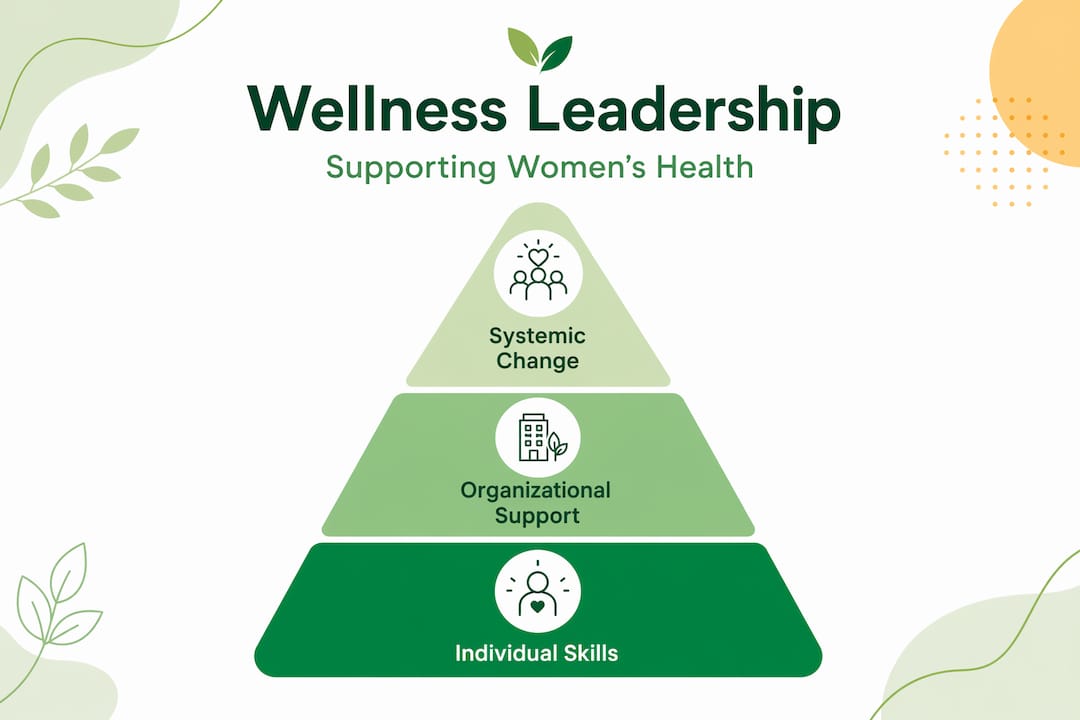
The importance of women in health also plays out in investment decisions. Women-led wellness innovation is urgently needed to redirect research and funding toward conditions that uniquely or disproportionately affect women. Without that leadership at the table, the funding follows historical patterns that favor conditions studied in male populations.
Here is how women’s leadership is actively reshaping the wellness landscape:
- Redefining research priorities. Female wellness advocates are pushing for studies that include women across the full hormonal lifespan, not just during reproductive years.
- Expanding education at the community level. Women leading wellness programs in community health settings are closing awareness gaps that formal medical systems leave open.
- Challenging institutional norms. From hospital boards to government health policy, female leaders are reshaping how care standards get written and enforced.
- Mentoring the next generation. Leadership pipelines that connect established female health professionals with emerging voices create sustained, compounding change.
“When women lead in wellness, they do not just improve care for themselves. They improve care for everyone by exposing the blind spots that default systems miss.”
How women influence wellness goes beyond individual health decisions. It reaches the infrastructure that shapes every woman’s access to care. Learning how to balance work and wellness is part of that infrastructure too, especially for women in midlife who are managing careers, family, and their own health simultaneously.
Practical wellness strategies: prevention, navigation, and behavior change for midlife women
Knowing the barriers is one thing. Building a life that works around them is another. The good news is that small, targeted changes in how you approach prevention and daily movement can create a ripple effect across your health.
Start with physical activity, because the numbers demand it. Fewer than 25% of women aged 18 to 44 meet both aerobic and muscle-strengthening activity recommendations. For women 40 and older, that gap does not close on its own. It requires programs designed around real constraints, including caregiving schedules, joint health, and energy fluctuations tied to hormonal changes.
Then address the financial and information barriers head-on. Financial strain and knowledge gaps together influence whether women seek care and how well they understand the health risks they face. You can close both gaps with a little planning.
Practical steps to take right now:
- Set a quarterly “health budget” that includes one preventive screening per quarter
- Keep a written symptom log before appointments so nothing gets forgotten in the room
- Ask your provider specifically about heart health, bone density, and cognitive function at every annual visit
- Choose physical activities you genuinely enjoy, because consistency matters more than intensity
- Seek out mobility exercises for midlife that support joint flexibility and muscle strength without high injury risk
- Review your posture habits regularly, since posture changes accelerate during perimenopause and beyond
| Wellness area | Common gap | Action to take |
|---|---|---|
| Physical activity | Under 25% meet full guidelines | Add two 20-minute strength sessions weekly |
| Preventive care | Cost-related delays | Budget one screening per quarter |
| Menopause education | 40%+ lack basic awareness | Request a dedicated hormone health review |
| Recovery and rest | Often deprioritized | Build structured rest into your weekly plan |
Pro Tip: Pair your wellness routine with a women’s wellness checklist so you are tracking progress in each category, not just the ones that feel most urgent right now.
Why women’s wellness leadership is the key to true health equity
Here is an angle that rarely gets said plainly: women’s wellness is not just a healthcare issue. It is an economic infrastructure issue. When women are unwell or disconnected from care, economic participation drops and workforce resilience weakens. That makes women’s leadership in wellness a dual priority, serving both individual health equity and the broader stability of communities and economies.
Most wellness conversations aimed at women focus on personal habits, nutrition, and stress management. Those things matter. But they do not address the systemic reasons why women face worse outcomes despite longer lives. The real leverage point is leadership, because leaders change the rules, not just their own behavior.
What makes this especially relevant for you as a midlife woman is that the same skills that drive effective leadership in healthcare, asking harder questions, building networks, advocating for better information, apply directly to managing your own health. You do not have to run a hospital board to use this framework. You can apply it at your next appointment, in your community, and in the choices you make about your recovery and rest.
The biases baked into medical research are not going away without active accountability. Women who have spent decades navigating health systems with subpar tools are positioned to demand something better. Not as patients waiting for the system to improve, but as advocates, educators, and decision-makers who know the gaps from the inside. That is where investing in wellness technology becomes more than a convenience. It becomes a statement about what you are worth.
Explore recovery solutions designed for women’s wellness journeys
Your wellness strategy deserves tools that are as serious as you are. Whether you are managing recovery after physical activity, addressing joint discomfort, or simply building a more consistent self-care routine, Lunix offers women’s recovery solutions designed to support your body through every stage of midlife.

Combining expert-informed women’s wellness guidance with the right recovery tools creates a daily routine that actually restores you, not just one that fills your calendar. Explore wellness routines during midlife to find approaches that fit your life, and then give your body the recovery support it needs to keep moving forward.
Frequently asked questions
What are the main reasons women experience more years in poor health compared to men?
Women face a combination of structural healthcare gaps, limited research on female-specific conditions, and social factors like caregiving responsibilities that contribute to longer periods of poor health. Specifically, women spend 25% more of their lives in poor health or with disability than men, largely due to barriers in care access and male-biased treatment defaults.
How does financial strain affect women’s wellness and healthcare decisions?
Financial difficulties often cause women to delay or avoid preventive care, which allows manageable health issues to grow into more serious ones. Research confirms that 45% of women rate their financial health as fair or poor, directly influencing when and how they seek care.
Why is women’s representation in clinical trials important for wellness?
Without adequate representation, research defaults to male biology, producing treatments that may miss or misread women’s symptoms entirely. Only 5% of clinical trials report sex-disaggregated data, which causes male-centric treatment protocols and later diagnoses for women.
What practical steps can midlife women take to improve their wellness?
Focus on prevention through quarterly health budgets, ask providers specifically about heart health and bone density, and adopt physical activity routines tailored to your schedule and energy levels. Both financial strain and knowledge gaps affect care decisions, so addressing both together creates the strongest foundation for lasting wellness.