


Most people assume that comfort is a one-size-fits-all setting, like a thermostat dialed to 72°F for an entire building. But that assumption quietly undermines your sleep, your energy levels, and your long-term well-being. Personalized comfort leads to better outcomes than building-wide solutions, and the difference is measurable. This guide walks you through what personalized comfort actually means, the technologies behind it, and how you can apply it to your bedroom and daily routine for real, lasting results.
Table of Contents
- What is personalized comfort?
- Categories and technologies: How personalized comfort works
- Evidence-based benefits for health and well-being
- Personalized comfort in the bedroom: Mattresses and pillows
- Nuances, challenges, and expert tips for choosing personalized comfort solutions
- Upgrade your comfort with Lunix
- Frequently asked questions
Key Takeaways
| Point | Details |
|---|---|
| Individualized control | Personalized comfort lets you set your own environment for maximum well-being and energy savings. |
| Proven health benefits | PCS can improve comfort scores and reduce pain, especially in sleep solutions like adjustable mattresses and pillows. |
| Science-backed options | Hybrid and certified products offer the best performance and safety for long-term use. |
| Smart shopping | Always verify warranty, certification, and trial options before buying comfort technology. |
What is personalized comfort?
With the misconception clarified, let’s lay out exactly what personalized comfort means and how it differs from what most people expect.
Personalized comfort refers to systems that give you direct control over your immediate thermal and physical environment, rather than relying on a shared setting that tries to satisfy everyone at once. These are often called Personal Comfort Systems (PCS) or Personalized Environmental Control Systems (PECS). According to published research, PCS allow localized thermal control for individual occupants, improving comfort and reducing energy use at the same time.
The category is broader than most people realize. It includes:
- Wearables: Heated or cooled garments worn directly on the body
- Portable devices: Small fans, personal heating pads, and handheld cooling tools
- Fixed systems: Smart beds, adjustable pillows, and zone-controlled climate furniture
These solutions focus on your individual needs, not the average preference of a group. That shift matters enormously for comfort solutions for recovery and for anyone managing chronic aches, poor sleep, or temperature sensitivity.
“Personal Comfort Systems reduce thermal stress and productivity loss by giving individuals direct control over their microenvironment, rather than relying on centralized HVAC adjustments that rarely satisfy everyone in a shared space.”
Exploring personalized comfort measures across different health contexts reinforces one consistent finding: individual control produces better outcomes. And when you apply that principle to optimizing home comfort, the benefits extend well beyond temperature.
Categories and technologies: How personalized comfort works
Now that personalized comfort has a clear definition, let’s explore the innovative technologies that bring it into daily life.
PCS methods include wearables, portable devices, and fixed systems, each categorized by their heat transfer method: conductive (direct contact), convective (airflow), radiative (infrared), or combinative (a blend of two or more). Understanding these modes helps you choose the right tool for your specific situation.
| System type | Category | Example product |
|---|---|---|
| Heated vest | Wearable | Personal warming garment |
| Desk fan with misting | Portable | Personal cooling unit |
| Smart adjustable bed | Fixed | Dual-zone sleep system |
| Cooling pillow cover | Fixed | Certified fabric pillow cover |
| Infrared heating pad | Portable | Targeted pain relief pad |
Here is how to evaluate any PCS product before bringing it into your home:
- Identify your primary need. Is it temperature regulation, pain relief, or better sleep posture?
- Match the heat transfer mode to your lifestyle. Conductive systems work best for direct body contact; convective systems suit ambient cooling.
- Check for material certifications. Look for CertiPUR-US or OEKO-TEX labels on any fabric-based product.
- Review trial periods and warranties. A quality product should offer at least a 30-night trial.
- Consider hybrid options. Products that combine cooling gel with app-based controls give you the most flexibility.
Pro Tip: Combining a cooling certified pillow cover with a supportive pillow for pain relief creates a hybrid sleep environment that addresses both temperature and spinal alignment simultaneously.
Evidence-based benefits for health and well-being
Knowing what’s available, let’s look at the proven impact of personalized comfort on real outcomes for your health, sleep quality, and daily life.
The numbers are compelling. Empirical data shows PCS improve thermal sensation by 1 Likert scale point, shift the comfort temperature range by 2.2°C, and reduce energy use by 30 to 42 kWh per occupant. That is not a marginal improvement. That is a meaningful shift in how your body feels and how much energy your home consumes.
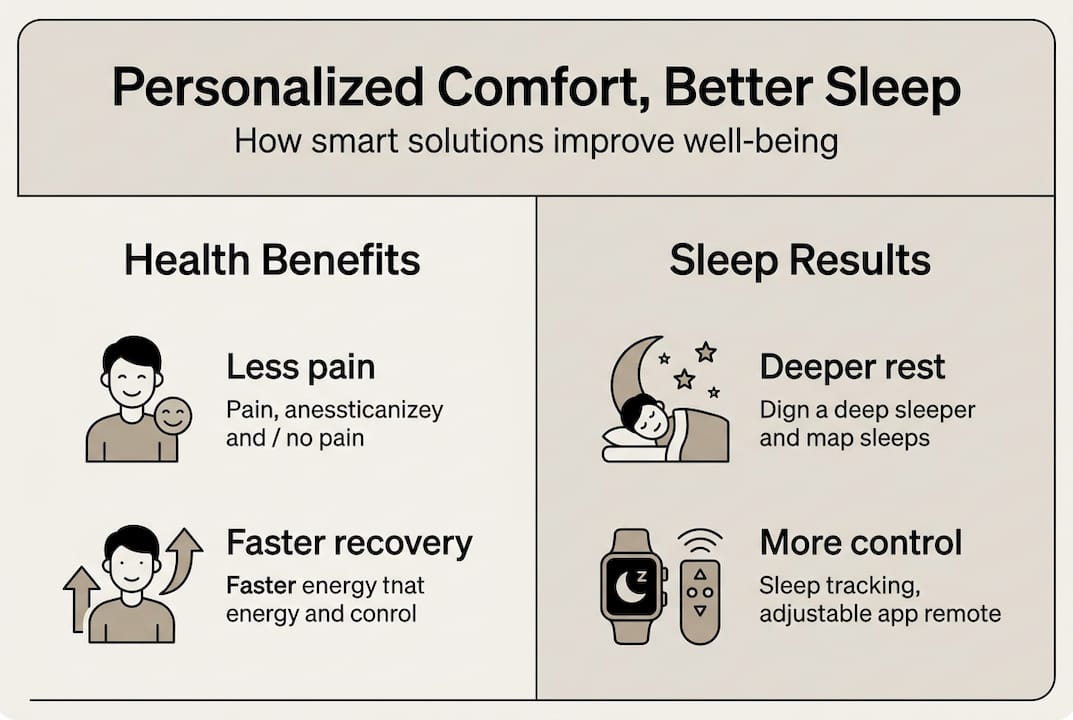
It is worth noting that field studies remain less common than lab studies, so real-world results can vary. Still, the energy savings are well-substantiated, and the comfort improvements are consistent across multiple research settings.
Here are the key benefits you can realistically expect:
- Reduced aches and tension from targeted thermal support at pressure points
- Better sleep quality through temperature regulation during the night
- Lower thermal stress during the day, especially in shared or poorly ventilated spaces
- Reduced utility bills from more efficient, localized heating and cooling
- Improved daily energy levels as your body spends less effort regulating its own temperature
For anyone already exploring faster recovery solutions, adding a PCS layer to your routine can accelerate results noticeably.
Pro Tip: Hybrid PCS products, those that combine passive materials like gel foam with active controls like app-based temperature settings, consistently outperform single-mode systems in both comfort scores and user satisfaction.
Personalized comfort in the bedroom: Mattresses and pillows
Among all applications, personalized comfort delivers dramatic results in the bedroom. Here are the best options for healthy sleep.
Adjustable mattresses now offer up to 45 firmness settings, letting each sleeper dial in exactly the right support level. Adjustable mattresses and custom pillows like the Nexi and Pluto models support spinal alignment and pain relief with measurable outcomes. This is not marketing language. It is the result of engineering that treats your body as an individual system, not an average.
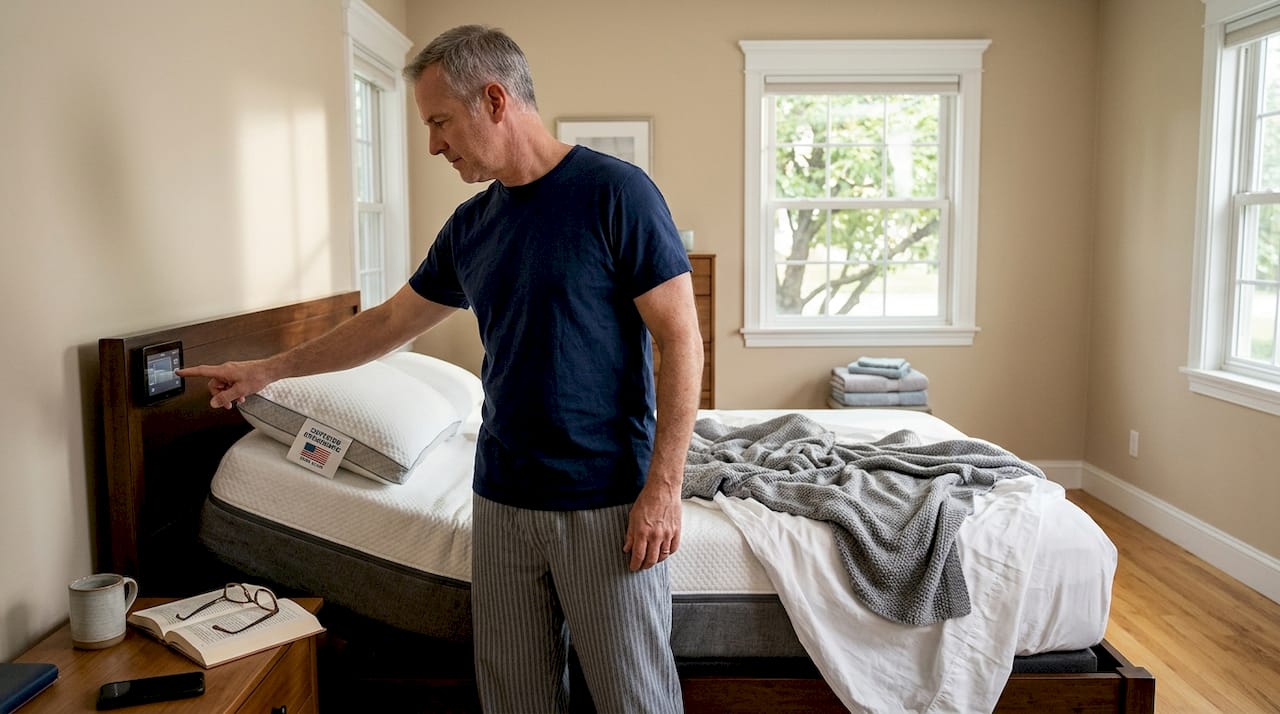
| Solution | Adjustability | Key outcome | Trial period |
|---|---|---|---|
| Adjustable mattress | Up to 45 settings | Spinal alignment, pain relief | 90 nights |
| Custom pillow | Shape and fill | Neck support, posture | 30 nights |
| Wedge device | Fixed angle options | Acid reflux, sleep apnea | Varies |
Signs your bedroom setup is not personalized:
- You wake up with neck or lower back stiffness regularly
- You frequently adjust your pillow position during the night
- One partner sleeps comfortably while the other does not
- You feel too warm or too cold regardless of the room temperature
- Your mattress has visible sagging or uneven wear
If wedge pillows for sleep apnea are relevant to your situation, positional therapy through an angled sleep surface can reduce symptoms without medication. The LX8 wedge pillow set is a practical starting point that combines orthopedic support with hot and cold therapy in one product.
Material certifications matter here too. CertiPUR-US certification ensures foam products meet standards for emissions, content, and durability. Always check before you buy.
Nuances, challenges, and expert tips for choosing personalized comfort solutions
As with any innovation, understanding potential limitations helps you get the most from personalized comfort solutions.
No product is perfect for every situation. Here are the most common challenges to be aware of:
- Shared spaces: PCS work best for individuals. In a shared bed or room, one person’s ideal setting may conflict with another’s.
- Neutral thermal zones: PCS are less effective in neutral conditions where the ambient temperature is already comfortable for most people.
- Off-gassing: New foam products may have an initial odor that takes a few days to dissipate. Ventilate the room well during the break-in period.
- Adaptation time: Your body may need one to two weeks to fully adjust to a new firmness level or sleep position.
- Motion transfer: In adjustable beds, movement on one side can sometimes be felt on the other, which matters for light sleepers.
When it comes to product selection, experts recommend verifying standards, warranties, and trial periods before committing. A 20-year warranty on a mattress signals genuine confidence in the product’s durability. Anything shorter deserves a closer look.
Heavier sleepers or those with non-standard body proportions may need firmer support or larger product dimensions than standard offerings provide. Always check weight limits and size options before purchasing.
Pro Tip: Before investing in a full adjustable mattress system, start with a high-quality pillow cover with certified fabric. It is a low-cost, low-risk way to experience the difference that material quality and personalized support can make.
Upgrade your comfort with Lunix
If this guide has shown you anything, it is that your body deserves more than a generic setup. Personalized comfort is not a luxury. It is a practical strategy for better sleep, less pain, and more energy every day.
At Lunix, we design smart recovery and comfort products that fit your individual needs, not the average. From orthopedic wedge pillow sets with hot and cold therapy to certified pillow covers built for long-term wellness, every product is engineered to help your body restore and perform at its best. Explore our full range at lunixinc.com and find the solution that fits your life, your body, and your sleep goals.
Frequently asked questions
Is personalized comfort worth the investment?
PCS improve comfort and reduce energy use, making personalized comfort a smart, evidence-backed investment for health-conscious adults who want real results from their wellness routine.
Do adjustable mattresses and pillows really help with pain and spinal health?
Custom sleep products support spinal health and pain relief, with adjustable mattresses offering measurable improvements in alignment compared to standard, fixed-firmness options.
How do I care for and maintain personalized comfort products?
Follow the manufacturer’s care instructions, wash pillow covers regularly, and check that all materials carry relevant certifications for long-term safety and durability.
Are there any drawbacks to using PCS or smart sleep technology?
Off-gassing and motion transfer are the most common drawbacks, along with a short adaptation period as your body adjusts to new support levels.
Can I use PCS and smart comfort products if I share my bed or room?
Shared spaces create challenges for PCS use, so look for dual-zone or individually controlled models specifically designed to accommodate two different comfort preferences.
Recommended
- 7 Key Advantages of Home Wellness for Enhanced Living – Lunix
- 7 At-Home Comfort Tips for Better Relaxation and Recovery – Lunix
- Why home wellness matters: insights for better living 2026 – Lunix
- 6 Comfort Solutions with 30% Faster Recovery & Pain Relief – Lunix
- Top comfort measures during labor for a personalized birth