


Work deadlines, family demands, and city noise can turn daily life into a constant challenge for many Americans. For those seeking relief, understanding and addressing your personal stress triggers is more than a luxury, it is the foundation of true well-being. By focusing on individual stress patterns and tailoring relaxation techniques to fit your needs, you open the door to solutions designed to restore calm, comfort, and resilience.
Table of Contents
- Step 1: Assess Individual Needs And Stressors
- Step 2: Select Targeted Relaxation Techniques
- Step 3: Establish Your Optimal Relaxation Environment
- Step 4: Integrate Lunix Solutions For Enhanced Comfort
- Step 5: Evaluate Results And Refine Your Routine
Quick Summary
| Key Message | Explanation |
|---|---|
| 1. Assess your unique stress profile | Track triggers, emotional reactions, and physical responses to understand your individual stress landscape. |
| 2. Choose personalized relaxation techniques | Experiment with various methods like meditation, yoga, or deep breathing to find what suits you best. |
| 3. Create an optimal relaxation environment | Design your space with elements like natural light, minimal clutter, and comfort to facilitate relaxation. |
| 4. Integrate smart technology for comfort | Use personalized devices, like Lunix solutions, to enhance your relaxation based on specific stress symptoms. |
| 5. Continuously evaluate and refine your approach | Regularly assess your stress management effectiveness and adapt strategies based on measurable outcomes. |
Step 1: Assess individual needs and stressors
Understanding your unique stress profile is the first critical step in developing a personalized relaxation strategy. Your individual stress landscape is as unique as your fingerprint, influenced by personal history, work environment, lifestyle, and emotional resilience.
To effectively map your stress sources, start by conducting a comprehensive self-assessment. This involves tracking your physical and emotional responses across different situations. Consider maintaining a stress journal where you document daily experiences, noting specific triggers, emotional reactions, and bodily sensations. Academic stress investigation methods recommend a holistic approach to understanding individual stressors.
Your assessment should encompass multiple dimensions:
- Physical indicators like muscle tension, headaches, sleep disruptions
- Emotional responses such as anxiety, irritability, mood swings
- Professional pressures including workload, deadlines, interpersonal dynamics
- Personal life stressors like relationship challenges, financial concerns
Your stress pattern is not a weakness - it’s valuable information waiting to be decoded.
Pay special attention to stress and recovery dynamics that might reveal recurring patterns. Some individuals experience heightened stress during specific times of day or in particular settings. By meticulously tracking these nuances, you’ll develop a sophisticated understanding of your personal stress ecosystem.
Pro tip: Consider using a digital tracking app or a dedicated notebook to consistently log your stress triggers and bodily responses for more accurate insights.
Step 2: Select targeted relaxation techniques
Once you’ve mapped your individual stress profile, it’s time to strategically select relaxation techniques that align with your specific needs and lifestyle. Not all relaxation methods work equally for everyone, so personalization is key to finding your optimal stress management approach.
Systematic reviews of relaxation techniques reveal multiple effective strategies for managing stress and anxiety. Your selection should consider your unique physical and emotional responses, work environment, and personal preferences.
Consider these targeted relaxation techniques:
- Progressive muscle relaxation for physical tension release
- Guided imagery to calm mental stress and create positive mental landscapes
- Deep breathing exercises for immediate anxiety reduction
- Meditation to improve emotional regulation
- Yoga for holistic mind-body stress management
The most effective relaxation technique is the one you’ll consistently practice.
The National Center for Complementary and Integrative Health recommends exploring multiple techniques to find your personal fit. Some individuals respond better to physical techniques like progressive relaxation, while others find mental techniques like meditation more effective.
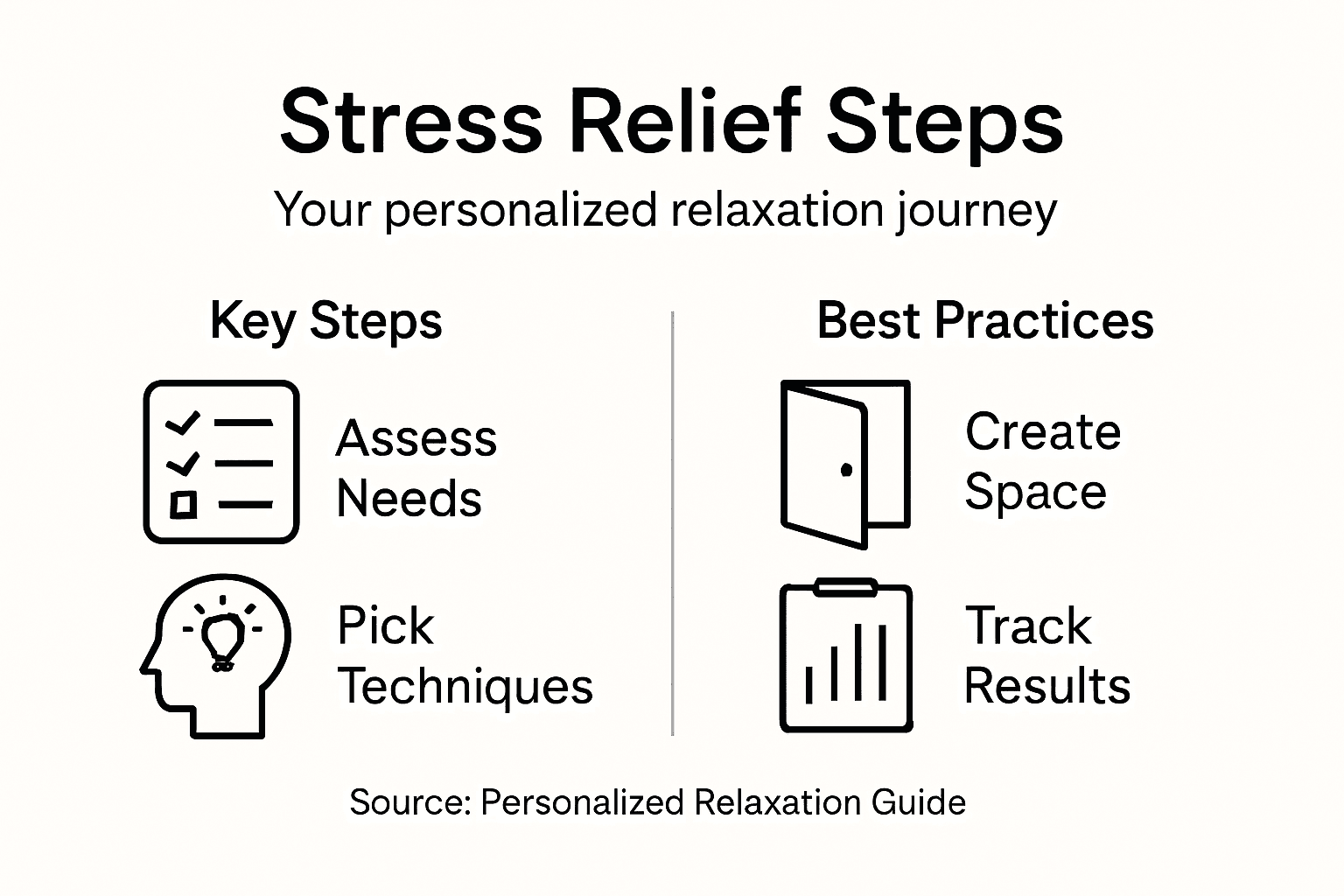
Here’s a quick comparison of targeted relaxation techniques and their primary benefits:
| Technique | Main Benefit | Best For |
|---|---|---|
| Progressive Muscle Relaxation | Reduces muscle tension | Physical stress symptoms |
| Guided Imagery | Enhances mental calm | Visual thinkers |
| Deep Breathing Exercises | Rapid anxiety relief | Acute stress episodes |
| Meditation | Improves emotional control | Ongoing mood management |
| Yoga | Mind-body integration | Holistic stress relief |
Pro tip: Experiment with 2-3 different relaxation techniques for at least two weeks each to determine which resonates most with your stress response pattern.
Step 3: Establish your optimal relaxation environment
Creating a personalized sanctuary for stress relief is more than just arranging a few pillows - it’s about intentionally designing a space that signals your nervous system to downshift and unwind. Your relaxation environment should be a carefully curated haven that supports your unique stress management needs.
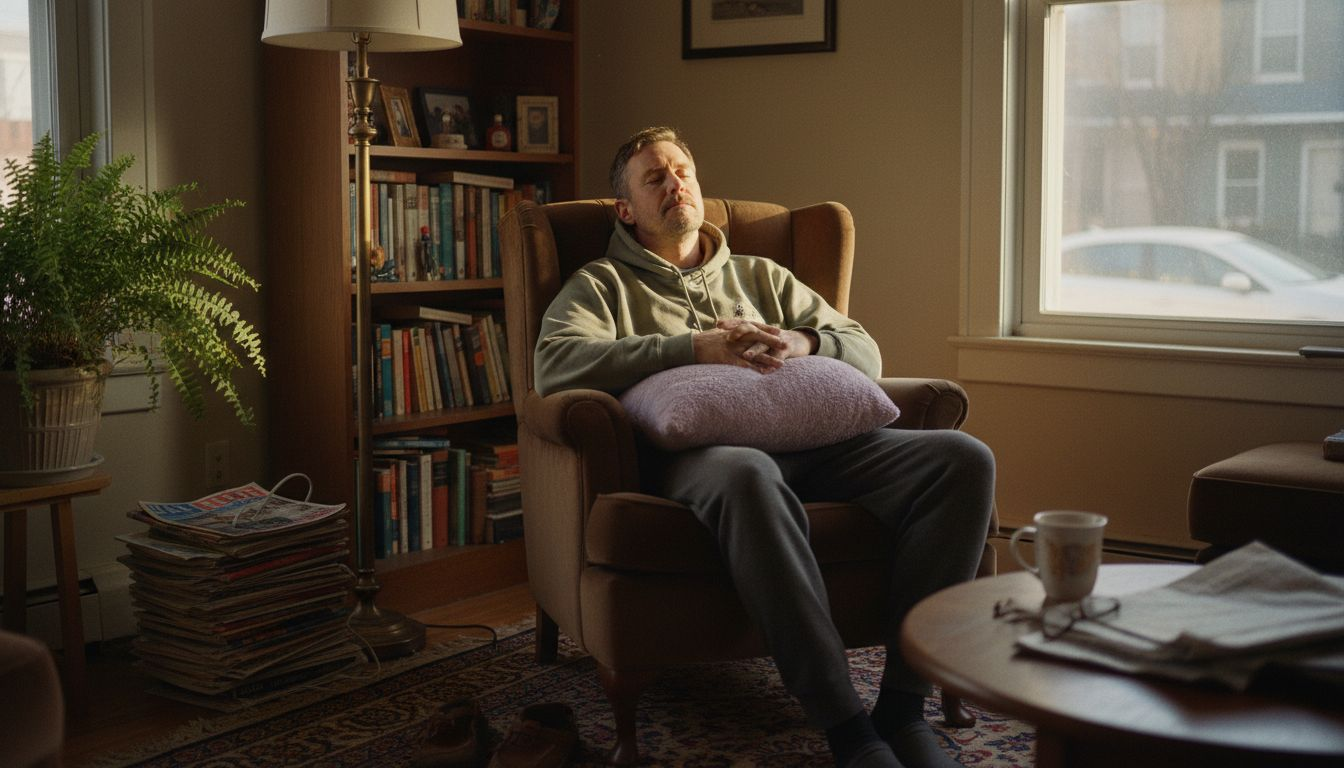
Research on restorative environments demonstrates that thoughtfully designed spaces can significantly reduce physiological stress and mental fatigue. This means transforming your surroundings into a deliberate tool for emotional and physical recovery.
Key elements of an optimal relaxation environment include:
- Natural lighting to support circadian rhythms
- Minimal visual clutter that reduces cognitive overload
- Comfortable temperature between 68-72 degrees
- Soft, neutral color palette promoting calmness
- Noise-reducing elements like sound-absorbing materials
Your environment is a silent partner in your stress management journey.
Studies from university stress research highlight how environmental design directly influences stress reduction. Some individuals might prefer a minimalist space, while others find comfort in carefully curated personal items that evoke positive emotions.
Pro tip: Dedicate a specific physical space exclusively for relaxation, even if it’s just a corner of a room, to create a powerful psychological trigger for unwinding.
Step 4: Integrate Lunix solutions for enhanced comfort
Transitioning from traditional stress management to personalized wellness solutions requires strategic integration of smart technology designed to support your unique relaxation needs. Lunix products offer targeted approaches to creating a holistic comfort ecosystem tailored to your individual stress response patterns.
Personalized thermal comfort systems demonstrate how intelligent devices can dynamically adapt to individual preferences, transforming your relaxation environment into a responsive wellness zone. By selecting Lunix solutions that align with your specific stress indicators, you create a comprehensive recovery strategy.
Consider integrating these Lunix solutions:
- Hand massagers for tension release and circulation improvement
- Orthopedic pillows to support proper body alignment
- Heat and vibration therapy devices for muscle relaxation
- Ergonomic support systems for posture correction
- Compact recovery tools for targeted stress relief
Technology becomes truly powerful when it adapts to human needs, not the other way around.
Indoor environmental science research highlights how intelligent systems can optimize personal comfort by dynamically responding to individual physiological signals. Your Lunix devices become more than just tools - they’re personalized wellness companions.
Pro tip: Start with one Lunix solution that directly addresses your most prominent stress symptom, and gradually build a comprehensive wellness toolkit.
Step 5: Evaluate results and refine your routine
The journey of stress management is an evolving process that requires consistent reflection, measurement, and adaptation. Successful relaxation strategies are not static but dynamic frameworks that adjust to your changing physiological and emotional landscape.
Relaxation technique effectiveness studies emphasize the critical importance of ongoing assessment and personalized customization. Your stress relief approach should be treated like a living document - continuously monitored, analyzed, and refined based on tangible results.
Key evaluation metrics include:
- Physiological indicators like heart rate variability
- Sleep quality and duration
- Emotional state tracking
- Stress hormone levels
- Energy and productivity changes
Progress is not linear - it’s a series of informed adjustments.
University student research highlights the importance of monitoring psychological indicators to ensure your relaxation practices remain effective. This means being willing to experiment, pivot, and recalibrate your approach as you gain deeper insights into your unique stress response patterns.
To support your evaluation, here are key metrics to track progress in your relaxation routine:
| Metric | What It Measures | Why It Matters |
|---|---|---|
| Heart Rate Variability | Stress recovery ability | Tracks physiological changes |
| Sleep Quality | Rest and restoration | Indicates recovery progress |
| Emotional State | Mood and resilience | Shows effectiveness on mood |
| Productivity Levels | Energy and focus | Gauges mental performance |
| Stress Hormone Levels | Physiological stress markers | Reveals underlying stress |
Pro tip: Create a monthly stress management journal to track your progress, noting which techniques provide the most significant relief and which might need modification.
Discover Your Personalized Path to Lasting Stress Relief with Lunix
Managing stress effectively starts with understanding your unique stress patterns and selecting targeted relaxation methods that fit your lifestyle. If you have identified key pain points like muscle tension, emotional overwhelm, or difficulty creating a calming environment this guide and Lunix bring the solution to life. By integrating smart recovery and comfort solutions such as ergonomic support systems and heat therapy devices you transform your relaxation routine into a deeply personalized experience that evolves with your needs.

Elevate your wellness journey by exploring our range of innovative products designed to enhance your recovery and emotional balance. Visit Lunix today to build your optimal relaxation environment and embrace effective stress management that works for you now and long term. Your personal sanctuary of comfort and restoration awaits.
Frequently Asked Questions
How can I assess my individual stress profile?
Start by conducting a self-assessment, which includes keeping a stress journal to document daily triggers and emotional responses. Track your physical symptoms and emotional states for at least two weeks to identify patterns more clearly.
What relaxation techniques should I try for personalized stress relief?
Select relaxation techniques that resonate with you based on your unique stress indicators. Consider experimenting with methods such as deep breathing exercises, progressive muscle relaxation, or guided imagery, and practice each for at least two weeks to find the best fit for you.
How do I create an optimal relaxation environment?
Design a personal relaxation space that minimizes visual clutter and promotes calmness. Focus on elements like comfortable temperature, soft lighting, and sound-absorbing materials to ensure your environment effectively supports your relaxation efforts.
What Lunix solutions can enhance my relaxation routine?
Integrate specific Lunix products that address your stress symptoms, such as hand massagers or orthopedic pillows. Start with one solution that targets your most significant stressor and evaluate its impact on your comfort and relaxation within a month.
How can I evaluate the effectiveness of my relaxation strategies?
Monitor key metrics such as sleep quality, emotional state, and heart rate variability to gauge the success of your relaxation routine. Regularly reflect on these indicators and make adjustments to your techniques as needed to improve your stress management outcomes.
Recommended
- The Power of Visualization: Using Your Mind to Melt Away Pain and Stre – Lunix
- Traveling Without Leaving Home: How to Create an At-Home Spa Vacation – Lunix
- How Stress Affects Your Body and How to Manage It Naturally – Lunix
- Mindfulness and Meditation: Techniques for Reducing Stress – Lunix
- How to Stay Calm Naturally: Proven Relaxation Steps - Mastering Conflict
- Coping with Stress - Dr. Stephen Oreski & Associates
- Find your Stress Level - Free PSS Stress Calculator