


Many adults aged 40 to 65 wake up feeling stressed, stiff, or low on energy, which affects overall wellness and comfort throughout the day. A consistent morning relaxation routine can reduce stress, improve mood, and support smart recovery by activating your body’s natural relaxation response. This guide provides evidence-based steps tailored for midlife adults to enhance daily recovery, covering preparation, a practical 10 to 15 minute routine, troubleshooting tips, and progress tracking methods. By dedicating a small amount of time each morning, you can transform how you feel and perform all day long.
Table of Contents
- Preparing For Your Morning Relaxation Routine
- Step-By-Step Morning Relaxation Routine For Smart Recovery
- Common Challenges And How To Troubleshoot Your Morning Routine
- Expected Results And How To Track Your Progress
- Explore Recovery Solutions To Complement Your Relaxation Routine
- FAQ
Key takeaways
| Point | Details |
|---|---|
| Deep breathing reduces cortisol | Controlled breathing lowers stress hormones and improves mood within minutes. |
| Progressive muscle relaxation releases tension | Mindful muscle engagement and release supports physical recovery and comfort. |
| Hydration and sunlight boost circadian rhythms | Morning water and natural light enhance alertness and regulate sleep cycles. |
| Avoid screens to enhance relaxation | Skipping early screen time prevents melatonin disruption and maximizes routine benefits. |
| Consistency shows results in 2 to 4 weeks | Daily practice leads to measurable stress reduction and sustained wellness gains. |
Preparing for your morning relaxation routine
Before diving into specific exercises, you need to create the right conditions for your morning relaxation routine to succeed. Consistent wake times, hydration, sunlight, and gentle movement enhance circadian alignment and energy for adults aged 40 to 65. Waking at the same time daily, even on weekends, trains your body’s internal clock and makes it easier to maintain the routine long term. Start by drinking a glass of warm water with lemon to rehydrate after sleep and gently wake up your digestive system.
Exposure to natural morning sunlight within 30 minutes of waking signals your brain to suppress melatonin and increase alertness. Step outside for a few minutes or open your curtains wide to let light flood your space. This simple act supports your circadian rhythm and sets a positive tone for the day. Pair sunlight exposure with gentle, joint-friendly movements like stretching or a short walk to increase blood flow without straining your body. These joint-friendly morning habits prepare your muscles and joints for the day ahead.
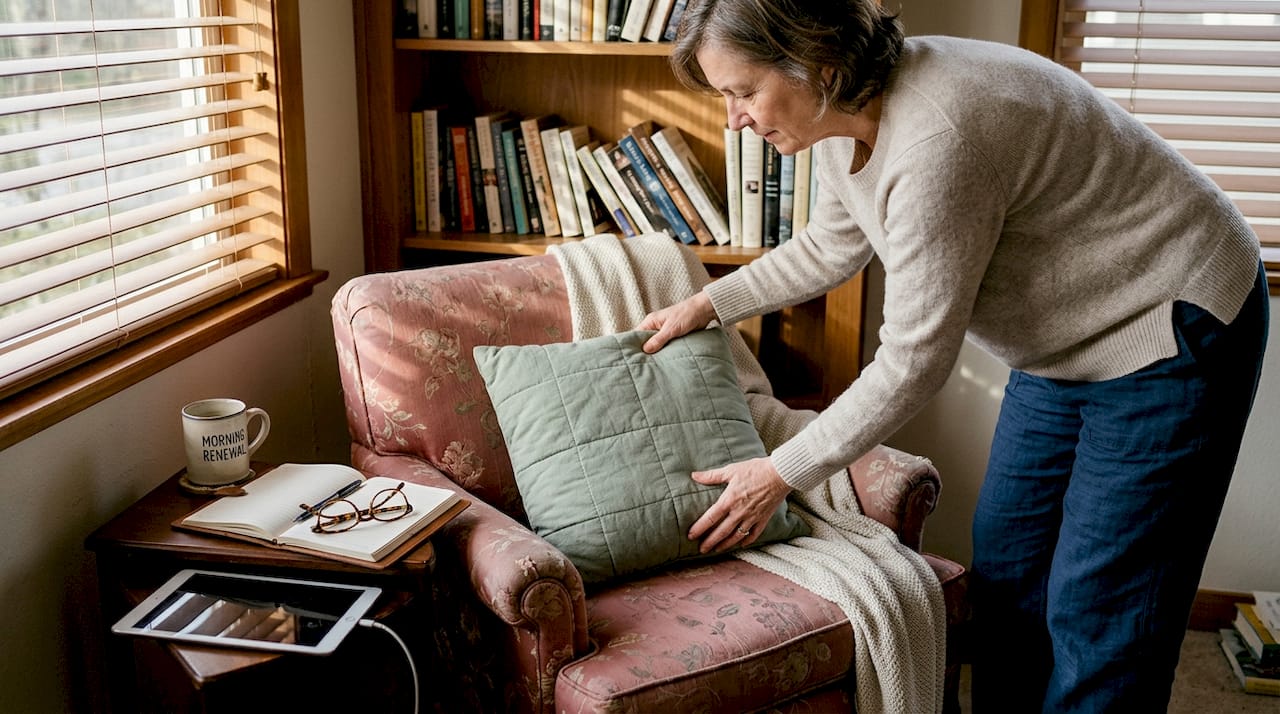
Prepare a quiet, comfortable space free from screens and distractions where you can focus on relaxation. This could be a corner of your bedroom, a cozy chair by a window, or any spot where you feel calm. Keep your phone in another room or on silent mode to avoid the temptation to check messages or news. Consider exploring morning rituals for adults 40 and over to discover additional ideas that resonate with your lifestyle. Setting up these foundational elements ensures you can practice your routine consistently and reap maximum benefits. Integrating practical self-care tips for adults 40-65 into your preparation phase reinforces the importance of prioritizing your wellness.
Step-by-step morning relaxation routine for smart recovery
Now that your environment is ready, follow this practical 10 to 15 minute routine designed to reduce stress, release tension, and support recovery. A routine with hydration, 2 to 3 minutes of deep breathing and progressive muscle relaxation, 5 minutes of meditation, and sunlight improves wellness for midlife adults. Begin by sitting comfortably with your feet flat on the floor and your hands resting gently on your thighs. Take a moment to notice your breath without changing it, then proceed through the following steps in order.
-
Hydration (1 minute): Drink a full glass of water slowly, focusing on the sensation of the liquid moving through your body. This rehydrates cells and prepares your system for the exercises ahead.
-
Deep breathing (2 to 3 minutes): Inhale slowly through your nose for a count of four, hold for four, then exhale through your mouth for six. Repeat this cycle five to seven times. Deep breathing activates the parasympathetic nervous system, which counters stress and promotes calm. Keep your shoulders relaxed and your posture upright.
-
Progressive muscle relaxation (2 to 3 minutes): Starting with your feet, tense each muscle group for five seconds, then release completely. Move upward through your calves, thighs, abdomen, chest, arms, and face. Progressive muscle relaxation combined with mindfulness improves anxiety, depression, and sleep in clinical populations. This technique teaches your body to recognize and release tension, supporting physical recovery. For detailed guidance, refer to this step-by-step muscle tension relief guide.
-
Guided meditation (5 minutes): Close your eyes and focus on your breath, allowing thoughts to pass without judgment. Visualize a peaceful scene, such as a quiet beach or forest, and imagine yourself there. If your mind wanders, gently return your attention to your breath. Meditation enhances mindfulness and vitality by training your brain to stay present. Explore additional step-by-step relaxation techniques to expand your practice.
-
Sunlight exposure (2 to 3 minutes): Stand by a window or step outside to absorb natural light. Combine this with gentle stretches or a short walk if time allows. Sunlight and movement work together to boost energy and regulate your internal clock.
Pro Tip: Set a timer for each step to stay on track without constantly checking the clock. This keeps you focused and prevents the routine from feeling rushed.
The table below compares the primary benefits of each component to help you understand how they work together.
| Component | Primary Benefit | Time Required |
|---|---|---|
| Deep breathing | Reduces cortisol and calms nervous system | 2 to 3 minutes |
| Progressive muscle relaxation | Releases physical tension and supports recovery | 2 to 3 minutes |
| Guided meditation | Enhances mindfulness and emotional balance | 5 minutes |
| Sunlight exposure | Boosts alertness and regulates circadian rhythm | 2 to 3 minutes |
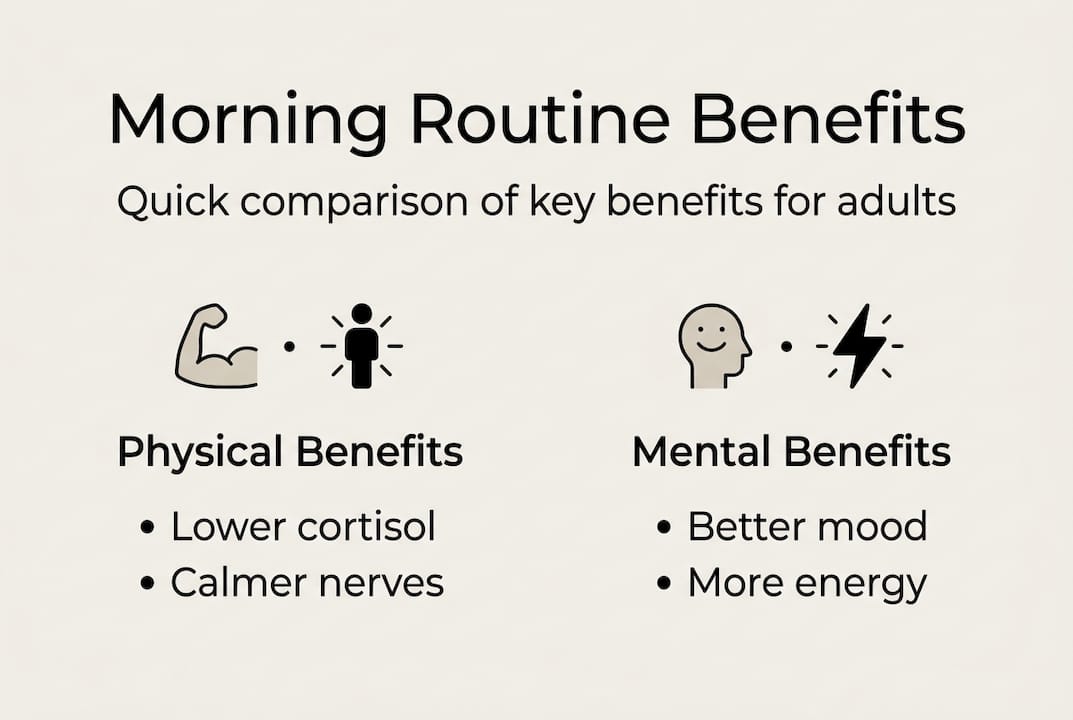
Research shows that morning routines incorporating these elements improve cortisol regulation and mood in adults, making this combination highly effective for stress relief and wellness.
Common challenges and how to troubleshoot your morning routine
Even with the best intentions, you may encounter obstacles that disrupt your routine. Common issues include screen temptation, rushed mornings, and joint stiffness. Recognizing these challenges early allows you to adjust and maintain consistency. Avoiding screens in the first hour and maintaining consistent routines reduce stress within 2 to 4 weeks, so prioritize protecting your morning space from digital distractions.
If you feel rushed, wake up 15 minutes earlier or simplify your routine by focusing on just breathing and meditation initially. You can gradually add components as the habit becomes automatic. Joint stiffness is common for adults in this age group, so modify progressive muscle relaxation by using lighter tension and slower movements. Never push through pain. Instead, focus on mindful awareness of each muscle group without forcing intensity. Patience is essential because your body needs time to adapt and respond to the new routine.
Screen temptation is one of the biggest routine killers. Place your phone in another room overnight or use an old-fashioned alarm clock to avoid reaching for your device first thing. If you must check your phone, do so only after completing your routine. This prevents melatonin disruption and preserves the calming effects of your practice. Another helpful strategy is to prepare your relaxation space the night before, laying out water, a cushion, or any props you need. This removes friction and makes it easier to start immediately upon waking.
Pro Tip: Use a habit tracking app or a simple journal to log each day you complete your routine. Seeing your progress visually reinforces commitment and helps you identify patterns or obstacles. Tracking also provides accountability and celebrates small wins along the way.
Consistency matters more than perfection. If you miss a day, simply resume the next morning without guilt. Over time, the routine becomes second nature, and the benefits compound. Refer to self-care routines and consistency tips for additional strategies to sustain long-term habits. Remember that building a new routine takes effort initially, but the payoff in stress reduction and improved wellness is well worth it.
Expected results and how to track your progress
Understanding what to expect from your morning relaxation routine helps you stay motivated and recognize improvements as they occur. Key measurable improvements include reduced anxiety, better mood, increased vitality, and enhanced comfort throughout the day. Daily practice for 2 to 4 weeks leads to measurable stress reduction and mood improvement, so commit to at least a month before evaluating results. Some people notice immediate effects like feeling calmer after breathing exercises, but sustained change requires consistent repetition.
You can track progress using both subjective and objective measures. Subjective measures include journaling how you feel each morning, rating your stress level on a scale of one to ten, and noting any changes in mood or energy. Objective measures might include tracking sleep quality with an app, monitoring heart rate variability if you have a wearable device, or counting how many days you complete the routine each week. Combining both types of data gives you a comprehensive view of your wellness journey.
The table below compares subjective and objective tracking methods to help you choose what works best.
| Tracking Method | Type | Example |
|---|---|---|
| Mood journaling | Subjective | Rate daily stress and energy levels in a notebook |
| Stress scale rating | Subjective | Score anxiety from 1 to 10 each morning |
| Sleep quality app | Objective | Use technology to monitor sleep cycles and duration |
| Heart rate variability | Objective | Track HRV with a wearable device to measure recovery |
| Routine completion log | Objective | Mark each day you finish the full routine |
Simple methods like journaling stress levels or using reminder apps are often the most effective because they require minimal effort and provide immediate feedback. Set a daily reminder on your phone to prompt you to practice and log your results. Over time, you will notice patterns, such as feeling more energized on days when you complete the routine or experiencing less tension in your shoulders and neck. These insights reinforce the value of your practice and encourage continued commitment.
Maintaining your routine for sustained benefits is crucial. Once you experience positive changes, it can be tempting to skip days or shorten your practice. Resist this urge by viewing your morning routine as a non-negotiable part of your day, like brushing your teeth. The benefits of relaxation routines extend beyond immediate stress relief, supporting long-term physical and mental health. If you want additional guidance, explore morning routine progress tracking resources to refine your approach. Celebrate milestones, such as completing 30 consecutive days, to keep motivation high and acknowledge your dedication to wellness.
Explore recovery solutions to complement your relaxation routine
Your morning relaxation routine lays a strong foundation for daily wellness, but pairing it with supportive recovery tools can amplify results. Lunix offers a range of recovery products for wellness designed to integrate seamlessly into your lifestyle, helping your body restore, relax, and perform at its best. From smart recovery devices to comfort solutions, these products enhance the benefits of your routine by targeting muscle tension, improving circulation, and promoting deeper relaxation.

Combining physical products with relaxation routines creates a holistic approach to wellness that addresses both mental and physical recovery. Whether you need support for joint comfort, muscle relaxation, or overall stress relief, Lunix provides thoughtfully designed solutions that fit naturally into your daily life. Explore the full range of Lunix wellness solutions to discover how you can elevate your recovery and transform everyday spaces into personalized stations for relaxation and long-term health.
FAQ
What is the best time to start a morning relaxation routine?
Start your morning routine immediately after waking, ideally before any screen use to avoid melatonin disruption and maximize relaxation benefits. Consistent wake times support routine effectiveness by training your circadian rhythm and making the practice easier to maintain long term. Begin with small sessions, such as five minutes, and gradually increase duration as you become more comfortable with the exercises.
How long does it take to see benefits from a morning relaxation routine?
Most adults notice reduced stress and improved mood after 2 to 4 weeks of consistent daily practice. Benefits accumulate with repetition and habit formation, so patience is essential during the initial phase. Some immediate effects, like feeling calmer after breathing exercises, can occur right away, but sustained change in overall wellness requires ongoing commitment and consistency.
Can I do this routine if I have joint pain or physical limitations?
Yes, the routine prioritizes gentle, joint-friendly activities like breathwork, light movements, and mindful muscle engagement that do not strain your body. Progressive muscle relaxation focuses on awareness and controlled tension release, which you can modify by using lighter pressure and slower movements. Consult a healthcare provider for personalized modifications if you have specific concerns. Refer to joint-friendly exercise tips for safe adaptations tailored to your needs.
Do I need any special equipment or apps to practice this routine?
No special equipment is required to practice this morning relaxation routine. All you need is a quiet, comfortable space, a glass of water, and access to natural light. Optional tools like a meditation cushion, timer app, or habit tracker can enhance your experience, but they are not necessary. The routine is designed to be simple, accessible, and easy to integrate into any lifestyle without added cost or complexity.
What if I miss a day or fall out of the routine?
Missing a day is normal and does not erase your progress. Simply resume your routine the next morning without guilt or self-criticism. Consistency matters more than perfection, and occasional breaks do not prevent you from achieving long-term benefits. If you find yourself skipping frequently, reassess your schedule and identify barriers, such as waking too late or feeling overwhelmed. Simplify the routine temporarily or adjust your wake time to make it more sustainable and realistic for your daily life.