


After a demanding workday, chronic stress takes a serious toll on professionals aged 40-65, increasing risks of cardiovascular disease, burnout, and diminished productivity. Effective relaxation routines combining physical recovery, mindful breathing, and environmental optimization can reverse these effects, improving both immediate wellbeing and long-term health. This guide provides proven, science-backed strategies to help you unwind efficiently and restore balance every evening.
Table of Contents
- Prerequisites: What You Need Before Starting Your Relaxation Routine
- Core Steps To Relax After Work: Physical, Mindful, And Environment Techniques
- Alternative Relaxation Approaches With Tradeoffs
- Common Mistakes And Troubleshooting For Effective Relaxation
- Expected Results And Measurable Outcomes From Regular Relaxation
- Conclusion And Next Steps For Continuous Wellness
- Enhance Your Relaxation With Professional Recovery Tools
- Frequently Asked Questions
Key takeaways
| Point | Details |
|---|---|
| Combine techniques | Physical relaxation, mindful breathing, and environment optimization work best together for stress reduction. |
| Digital detox matters | Avoiding screens for 30 minutes after work significantly improves relaxation biomarkers. |
| Progressive muscle relaxation | This technique reduces stress markers by 40% within 20 minutes. |
| Consistency drives results | Daily practice for 2-4 weeks produces noticeable improvements in stress levels and sleep quality. |
| Alternatives available | Aromatherapy and music therapy offer benefits but require investment and personal preference matching. |
Prerequisites: what you need before starting your relaxation routine
Before diving into relaxation techniques, establishing the right foundation ensures maximum effectiveness. Your environment, mindset, and basic preparation directly influence how quickly you decompress after work.
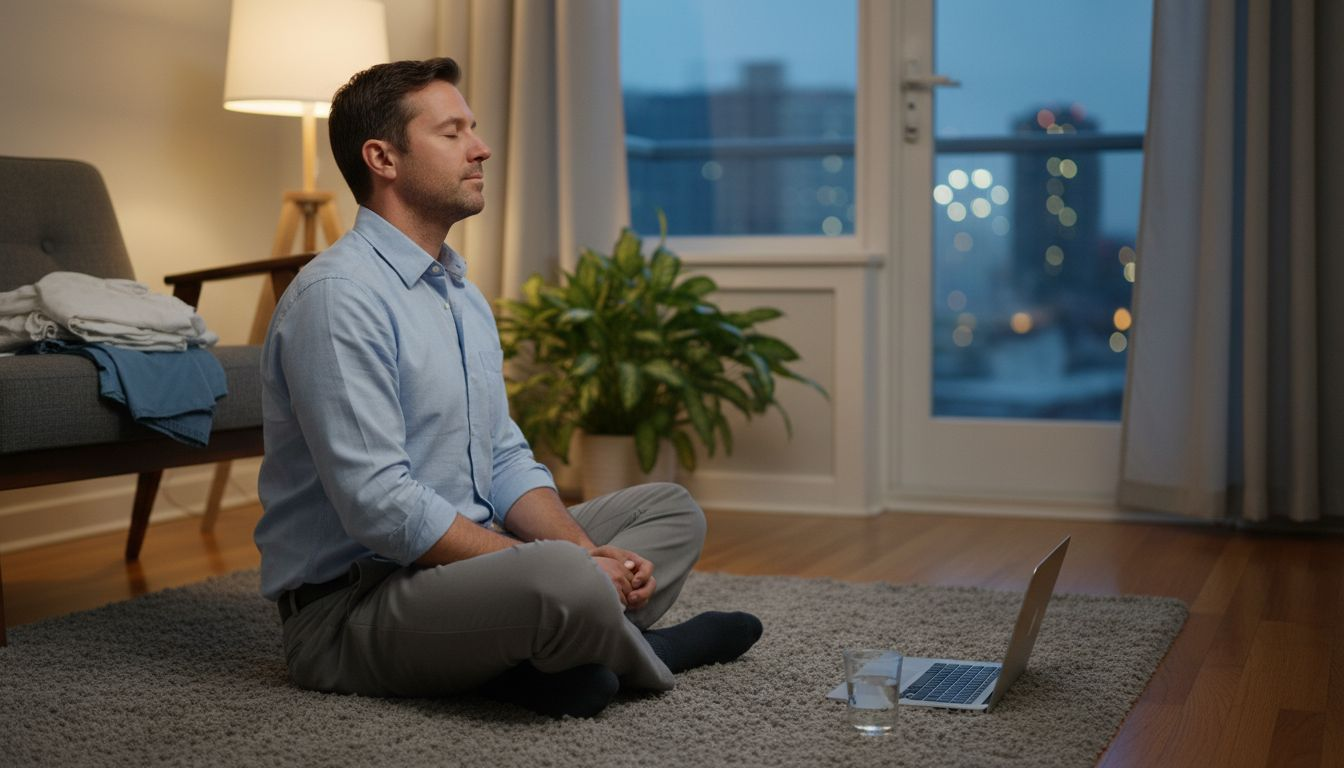
First, identify a quiet space dedicated to relaxation. This could be a corner of your bedroom, a home office after hours, or even a comfortable chair away from household traffic. The key is consistency: your brain begins associating this space with rest, making it easier to shift gears.
Comfortable seating is non-negotiable. Poor support leads to physical discomfort that undermines mental relaxation. Choose ergonomic options that maintain proper spinal alignment while allowing your muscles to release tension. Many professionals find recliners or supportive cushions ideal for extended relaxation sessions.
Basic breathing and mindfulness knowledge amplifies your results. You don’t need formal training, but understanding how controlled breathing activates your parasympathetic nervous system helps you engage more intentionally. Simple techniques like box breathing or 4-7-8 breathing provide immediate stress relief.
Screen time before relaxation sabotages your efforts. The blue light and mental stimulation from devices keep stress hormones elevated, making it harder to transition into rest mode. Commit to a device-free buffer period to protect your relaxation window.
Key preparation elements:
- Dedicated quiet space with minimal distractions
- Ergonomic seating that supports proper posture
- Comfortable clothing that doesn’t restrict movement
- Basic understanding of breathing techniques
- Commitment to screen-free time immediately after work
Pro Tip: Set up your relaxation space in the morning before work. When you arrive home tired, the last thing you want is to arrange cushions or dim lights. Having everything ready removes friction and makes it easier to stick with your routine.
For more guidance on creating the ideal environment, explore these at-home comfort tips designed specifically for busy professionals.
Core steps to relax after work: physical, mindful, and environment techniques
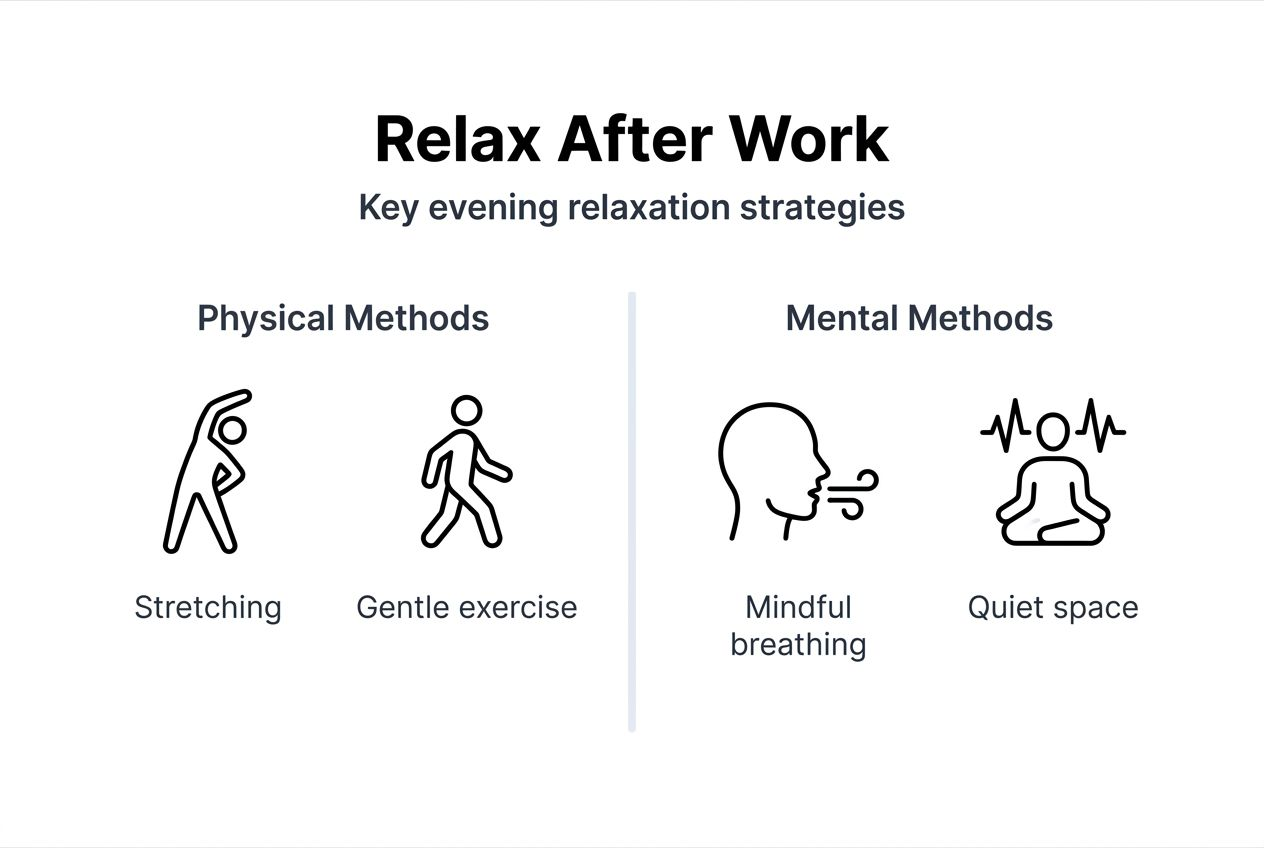
The most effective relaxation routine combines physical recovery, mental decompression, and environmental optimization. This three-pronged approach addresses stress on multiple levels simultaneously.
Your complete relaxation sequence:
-
Prepare your environment: Immediately upon arriving home, dim the lights to signal your brain that work mode is ending. Adjust room temperature to 68-72°F, the ideal range for relaxation. Sit in your designated comfortable spot.
-
Begin progressive muscle relaxation: Starting with your feet, tense each muscle group for 5 seconds, then release completely. Move upward through calves, thighs, abdomen, chest, arms, and face. This technique reduces physiological stress markers by 40% and takes only 15-20 minutes.
-
Alternative physical option: If muscle tensing feels uncomfortable, take a 15-minute light walk outside. Gentle movement releases accumulated physical tension while exposure to natural light helps regulate cortisol levels.
-
Engage mindful breathing: Spend 10 minutes on focused breathing exercises. Try the 4-7-8 technique: inhale for 4 counts, hold for 7, exhale for 8. This activates your vagal nerve, triggering your body’s natural calming response.
-
Maintain digital detox: Research shows that digital detox periods of at least 30 minutes significantly increase relaxation biomarkers. Keep phones, tablets, and computers out of reach during this window.
-
Optional enhancement: Consider aromatherapy with lavender or chamomile, or use smart recovery devices that provide gentle compression or heat therapy to deepen physical relaxation.
Timing breakdown for maximum effectiveness:
| Activity | Duration | Primary Benefit |
|---|---|---|
| Environment setup | 2-3 minutes | Mental transition from work to rest |
| Progressive muscle relaxation | 15-20 minutes | Physical tension release |
| Mindful breathing | 10 minutes | Stress hormone reduction |
| Digital detox buffer | 30+ minutes | Prevents stress reactivation |
| Optional enhancements | 10-15 minutes | Deepened relaxation response |
Pro Tip: Your first week will feel awkward as you establish new habits. Stick with it. By week two, your body starts anticipating this routine, making the transition smoother and more automatic.
For detailed instructions on each technique, review these step by step relaxation techniques and explore mindfulness and meditation techniques tailored to working professionals.
Alternative relaxation approaches with tradeoffs
While the core routine works for most professionals, alternative methods offer flexibility based on personal preferences and constraints. Each approach has distinct advantages and limitations worth considering.
Aromatherapy uses essential oils to trigger relaxation responses. Studies indicate that lavender increases perceived relaxation by 20% through olfactory pathways connected to emotional processing. However, this method requires purchasing quality oils, a diffuser, and finding scents that appeal to you personally. Some people find certain aromas overwhelming or unpleasant.
Music therapy leverages sound to shift emotional states. Research confirms that music therapy improves relaxation quality by 18% when selections match individual preferences. The challenge lies in choosing appropriate music: too energetic and it stimulates rather than calms, too unfamiliar and it becomes a distraction rather than background support.
Smart recovery technology includes devices providing compression, heat, or vibration therapy. These tools offer convenience and consistent results without requiring active participation. The downside is cost: quality devices range from $100 to $500, making them a significant investment.
Comparison of alternative approaches:
| Method | Key Benefit | Main Limitation | Best For |
|---|---|---|---|
| Aromatherapy | Passive, ambient relaxation | Requires product investment and scent matching | Those who respond well to sensory cues |
| Music therapy | Mood improvement and distraction from stress | Effectiveness varies by music selection | Auditory learners and music enthusiasts |
| Smart recovery devices | Consistent physical relief without effort | Higher upfront cost | Professionals with muscle tension or limited time |
| Gentle yoga or stretching | Combines physical and mental benefits | Requires space and basic knowledge | Active individuals seeking movement |
Key considerations when choosing alternatives:
- Budget constraints: aromatherapy and music are low cost; smart devices require investment
- Personal sensitivity: some people don’t respond to scents or find music distracting
- Physical needs: chronic muscle tension benefits most from compression or heat therapy
- Time availability: passive methods like aromatherapy work during other activities
Explore additional better relaxation tips to customize your approach based on what resonates with your lifestyle and preferences.
Common mistakes and troubleshooting for effective relaxation
Even with good intentions, several common errors undermine relaxation effectiveness. Recognizing and fixing these pitfalls ensures you get full benefits from your routine.
Immediate device use after work is the most prevalent mistake. Checking emails, scrolling social media, or watching intense content keeps your sympathetic nervous system activated. Fix this by implementing a strict 30-minute digital detox immediately upon arriving home. Place devices in another room if necessary.
Poor posture during relaxation creates new physical tension while trying to release existing stress. Slouching compresses your diaphragm, limiting breathing effectiveness. Ensure your seating supports your lower back and allows your shoulders to drop naturally. Adjust pillows or cushions until you can maintain proper alignment without effort.
Inconsistent practice delays noticeable benefits. Your nervous system needs repetition to establish new response patterns. Skipping days or practicing sporadically prevents this adaptation. Commit to the same time daily, even if you reduce duration on busy days. Ten consistent minutes beats 30 minutes done irregularly.
Neglecting physical recovery while focusing only on mental techniques misses half the equation. Stress manifests physically through muscle tension, elevated heart rate, and shallow breathing. Address both dimensions for complete relief.
Relying solely on passive methods limits deeper stress relief. While aromatherapy or background music help, active techniques like progressive muscle relaxation or controlled breathing produce stronger physiological changes.
Common fixes that work:
- Set a phone alarm for your relaxation start time to build consistency
- Use airplane mode during your detox window to eliminate temptation
- Invest in proper ergonomic support rather than settling for uncomfortable seating
- Track your practice in a simple calendar to visualize consistency
- Combine one active technique with one passive enhancement for balanced benefits
Pro Tip: If you struggle with consistency, pair relaxation with an existing habit. For example, always relax immediately after changing out of work clothes. This habit stacking makes the new routine feel more automatic.
For targeted relief of physical tension, review this guide on how to relieve muscle tension naturally to complement your mental relaxation practices.
Expected results and measurable outcomes from regular relaxation
Understanding realistic timelines and measurable indicators helps you stay motivated and adjust your approach as needed.
Timeline for noticeable improvements:
Most professionals experience initial stress reduction within the first week, but substantial changes require 2-4 weeks of consistent daily practice. Your nervous system needs this time to recalibrate its baseline stress response. Early signs include falling asleep faster and feeling less irritable in the evenings.
Measurable physical indicators:
- Resting heart rate decrease: Expect a drop of 5-8 beats per minute after 3-4 weeks. Check your pulse before starting your routine and again after 30 days.
- Sleep quality improvement: Many users report 10% better sleep scores on tracking devices within three weeks, with fewer nighttime awakenings.
- Blood pressure reduction: Consistent relaxation can lower systolic pressure by 4-6 points, though this varies individually.
- Muscle tension relief: Subjective reduction in neck, shoulder, and back tightness becomes apparent within two weeks.
Subjective improvements to notice:
- Faster mental transition from work to personal time
- Reduced rumination about work issues during evenings
- Improved mood and patience with family members
- Greater energy for personal activities after work
- Enhanced focus during the following workday
Signs your routine is working:
- You naturally gravitate toward your relaxation space at the designated time
- The duration required to feel relaxed decreases over time
- You notice when you skip a session because stress feels more prominent
- Physical symptoms like headaches or digestive issues become less frequent
Learn more about the comprehensive benefits of consistent practice through this resource on relaxation routines benefits backed by current research.
Conclusion and next steps for continuous wellness
Effective relaxation after work isn’t optional for professionals managing demanding careers and personal responsibilities. It’s essential preventive care that protects both immediate wellbeing and long-term health.
The strategies outlined here, combining physical recovery, mindful breathing, and environmental optimization, provide a comprehensive approach proven to reduce stress biomarkers and improve quality of life. Consistency matters more than perfection. Even imperfect daily practice outperforms sporadic intensive sessions.
Your supportive environment and positive mindset sustain long-term adherence. As benefits compound over weeks and months, relaxation transforms from a deliberate practice into an automatic habit your body craves. Consider integrating smart recovery tools to further enhance physical relief and make your routine more effective.
Start tonight. Choose one core technique and one environmental adjustment. Build from there. Your future self will thank you for the investment in sustainable wellness practices that support both professional performance and personal vitality.
For ongoing guidance on maintaining these benefits long term, explore the long-term relaxation benefits of establishing daily routines.
Enhance your relaxation with professional recovery tools
The techniques you’ve learned create powerful results on their own. Pairing them with quality recovery products amplifies those benefits, helping you decompress faster and more completely.

Professionals facing chronic muscle tension find that ergonomic cushions and smart recovery devices complement breathing and mindfulness practices perfectly. These tools work passively while you focus on mental relaxation, addressing physical stress simultaneously.
Explore our curated collection of professional recovery products designed specifically for busy professionals seeking efficient wellness solutions. For additional techniques to incorporate, visit our comprehensive relaxation techniques guide with step-by-step instructions.
Frequently asked questions
What is the best time immediately after work to start relaxing?
Start your relaxation routine within 15 minutes of arriving home to prevent stress buildup. This immediate transition signals your nervous system that work mode is ending. Delaying allows stress hormones to remain elevated longer, making relaxation harder to achieve.
How long does it take to notice improvements from a relaxation routine?
Most professionals notice reduced stress and improved sleep within 2-4 weeks of consistent daily practice. Initial changes like faster sleep onset may appear within one week. Significant physiological adaptations, including lower resting heart rate, typically require three to four weeks of regular practice.
Can I use relaxation techniques if I have limited mobility?
Yes, focus on mindful breathing exercises and environmental optimization, which require minimal physical movement. Techniques like 4-7-8 breathing or visualization provide substantial stress relief without demanding physical flexibility. Consult your healthcare provider for personalized recommendations based on your specific mobility constraints.
Are digital devices always harmful during relaxation?
Using devices immediately after work delays relaxation by 30-45 minutes due to increased stress hormone production from blue light and mental stimulation. However, brief, mindful device use after completing your 30-minute relaxation period typically causes less disruption. The critical window is the first half hour post-work when your nervous system is most receptive to calming signals.