


Finding a real sense of calm can feel impossible when daily demands never let up. For many American adults, building a true escape at home is the missing piece for lasting stress relief and wellness. By focusing on a personalized relaxation space and supporting it with smart tools and proven techniques, you can discover meaningful ways to reset and restore—right in your own home.
Table of Contents
- Step 1: Set Up Your Personalized Relaxation Space
- Step 2: Integrate Smart Stress Relief Tools
- Step 3: Practice Guided Relaxation Techniques
- Step 4: Evaluate Your Stress Reduction Progress
Quick Summary
| Key Insight | Explanation |
|---|---|
| 1. Create a Calm Relaxation Space | Designate a quiet area free from distractions to foster relaxation. Focus on lighting, temperature, scent, and sound. |
| 2. Utilize Personalized Stress Relief Tools | Choose technology like wearables or meditation apps that fit your lifestyle and track your stress levels. |
| 3. Practice Consistent Relaxation Techniques | Start with a single relaxation method and practice it daily to build effectiveness over time. |
| 4. Monitor Your Stress Reduction Progress | Track metrics like sleep quality and stress levels to identify effective techniques and make adjustments as needed. |
| 5. Integrate Tools Into Your Environment | Connect devices and apps with your relaxation space for a seamless experience that enhances your calming routine. |
Step 1: Set Up Your Personalized Relaxation Space
Your relaxation space is your personal sanctuary. It’s the place where stress dissolves and your body can truly unwind. Before you get started, gather a few essentials and designate one corner of your home as your calm zone.
Choose your location thoughtfully. Pick a spot away from high traffic areas, televisions, or work zones. A bedroom corner, quiet living room nook, or even a bathroom works well. The goal is creating physical separation from daily demands.
Next, address the sensory elements that make spaces restorative:
- Lighting: Use soft, warm lighting instead of bright overhead bulbs. Lamps, candles, or string lights create a calm atmosphere
- Temperature: Keep the space cool and comfortable, around 65-68 degrees Fahrenheit
- Scent: Add subtle aromas through diffusers, candles, or fresh plants
- Sound: Choose soft background sounds like nature recordings or white noise
Your senses are powerful tools for triggering relaxation—when you engage them intentionally, your nervous system responds by calming down.
Focus on comfort elements next. Add a plush chair, cushions, or a yoga mat depending on your preference. Creating personalized relaxation environments means selecting textures that feel soothing to your specific body. Some people love weighted blankets; others prefer soft throws.
Remove clutter completely. Mental calm starts with visual calm. Clear out work papers, bills, or anything that triggers stress. This isn’t just tidiness—it’s removing reminders of what you’re trying to escape.
Consider adding one focal point. A plant, a piece of art you love, or a small water fountain gives your mind something peaceful to rest on. This helps prevent the wandering thoughts that can interfere with relaxation.
Pro tip: Start small and build gradually—don’t try to create the perfect space overnight. Add one element at a time and notice what actually makes you feel calmer, then expand from there.
Step 2: Integrate Smart Stress Relief Tools
Smart stress relief tools amplify your relaxation efforts by providing real-time feedback and personalized support. These devices and apps work alongside your physical space to create a complete stress management system.
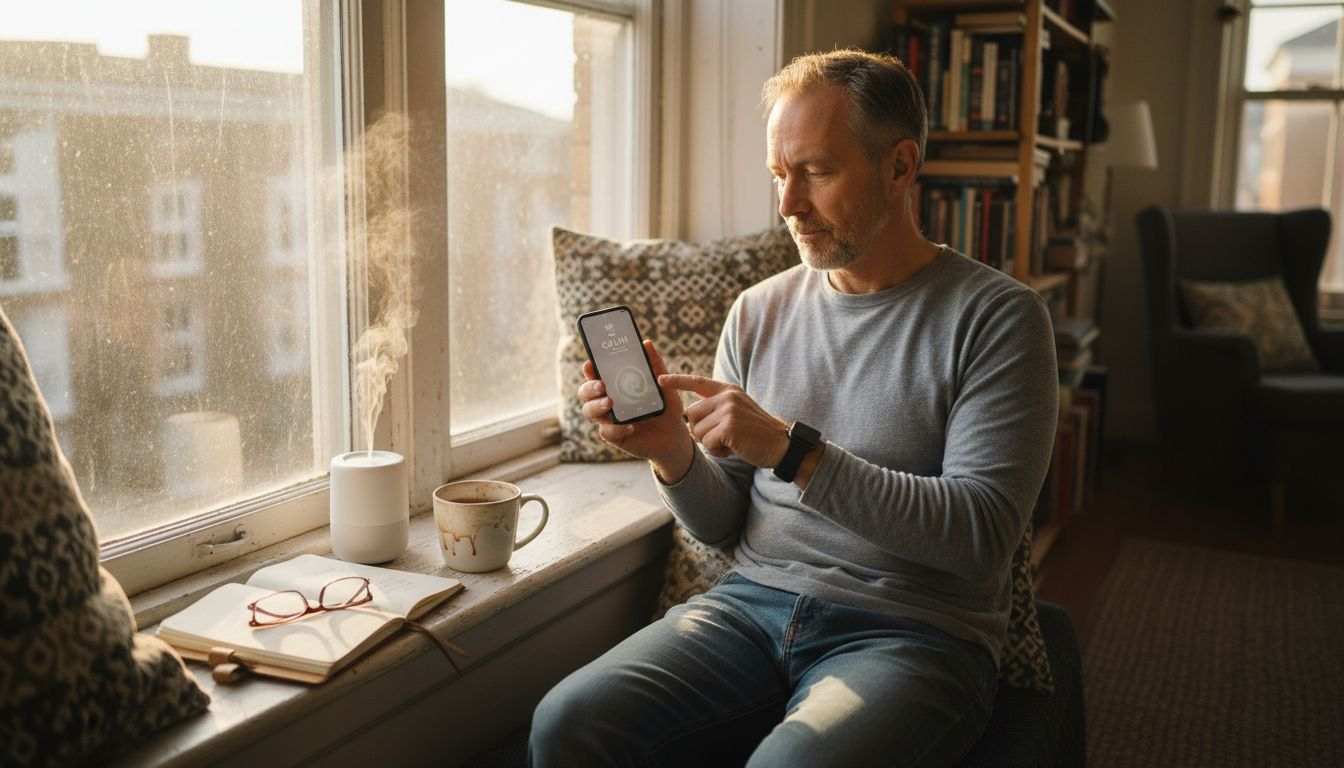
Start by identifying which tools match your lifestyle. Consider your daily routine, preferences, and stress triggers when choosing technology. Not every tool works for everyone, so pick what resonates with you.
Key tools to consider include:
- Wearable devices: Smartwatches and fitness trackers monitor heart rate variability and sleep quality, showing you exactly how stress affects your body
- Meditation apps: Guided audio programs deliver consistent mindfulness practice directly to your phone
- Biofeedback tools: Real-time sensors help you see immediate connections between breathing, muscle tension, and relaxation
- Smart diffusers: Devices that release calming scents on a timer coordinate with your relaxation schedule
- White noise machines: Specialized devices create ambient soundscapes without relying on phone batteries
Wearable devices and mobile apps provide consistent monitoring and support, helping you track progress and maintain regular practice over time.
Start simple. Download one meditation app or invest in one wearable device rather than trying everything at once. Use it consistently for at least two weeks before adding more tools.
Connect your tools to your space. Place a diffuser near your chair, set up your meditation app on a small speaker, or wear your fitness tracker during relaxation sessions. Integration means these tools become part of your environment, not distractions from it.
Check in with your data weekly. Most apps and wearables show trends that reveal what actually reduces your stress. Use this information to refine your approach.
Pro tip: Choose one primary tool that excites you most, then build around it—enthusiasm drives consistency, and consistency drives results.
Step 3: Practice Guided Relaxation Techniques
Guided relaxation techniques teach your body and mind how to shift from stress mode to calm mode. These structured practices become more effective the more you repeat them, creating lasting changes in how you respond to tension.
Begin with one technique that appeals to you most. You don’t need to master everything at once. Pick what resonates and commit to it for two weeks before exploring others.
Core techniques to try include:
- Deep breathing: Slow, intentional breathing activates your parasympathetic nervous system, the body’s natural brake for stress
- Progressive muscle relaxation: Systematically tense and release muscle groups to identify where you hold stress
- Guided visualization: Mental imagery of calm places engages your senses and distracts from worries
- Mindfulness meditation: Observing your thoughts without judgment builds awareness and reduces anxiety
- Body scan: Slowly directing attention through your body releases physical tension
Guided relaxation methods work best when practiced consistently—daily practice produces measurable improvements in stress levels and emotional resilience.
Start with just five minutes daily. Set a specific time, like right after breakfast or before bed. Consistency matters far more than duration at the beginning.
Use guided audio to stay focused. Apps, YouTube channels, or even simple recordings prevent your mind from wandering and ensure proper technique. Listen to the same guide repeatedly until it becomes familiar.
Track subtle changes. Notice your breath, muscle tension, sleep quality, and mood throughout the week. These small improvements build motivation to continue practicing.
Here’s a comparison of common relaxation techniques and their key effects:
| Technique | Primary Benefit | Best For |
|---|---|---|
| Deep Breathing | Lowers heart rate | Quick stress response |
| Progressive Muscle Relaxation | Relieves physical tension | Muscle awareness |
| Guided Visualization | Disrupts anxious thinking | Mental escapism |
| Mindfulness Meditation | Increases emotional resilience | Daily routine support |
| Body Scan | Promotes full-body relaxation | Evening wind-down |
Pro tip: Practice your relaxation technique at the first sign of stress, not just in your dedicated space—this trains your nervous system to calm down faster whenever you need it.
Step 4: Evaluate Your Stress Reduction Progress
Measuring your progress transforms relaxation from a vague practice into a concrete, evidence-based strategy. Tracking what actually works helps you stay motivated and refine your approach over time.
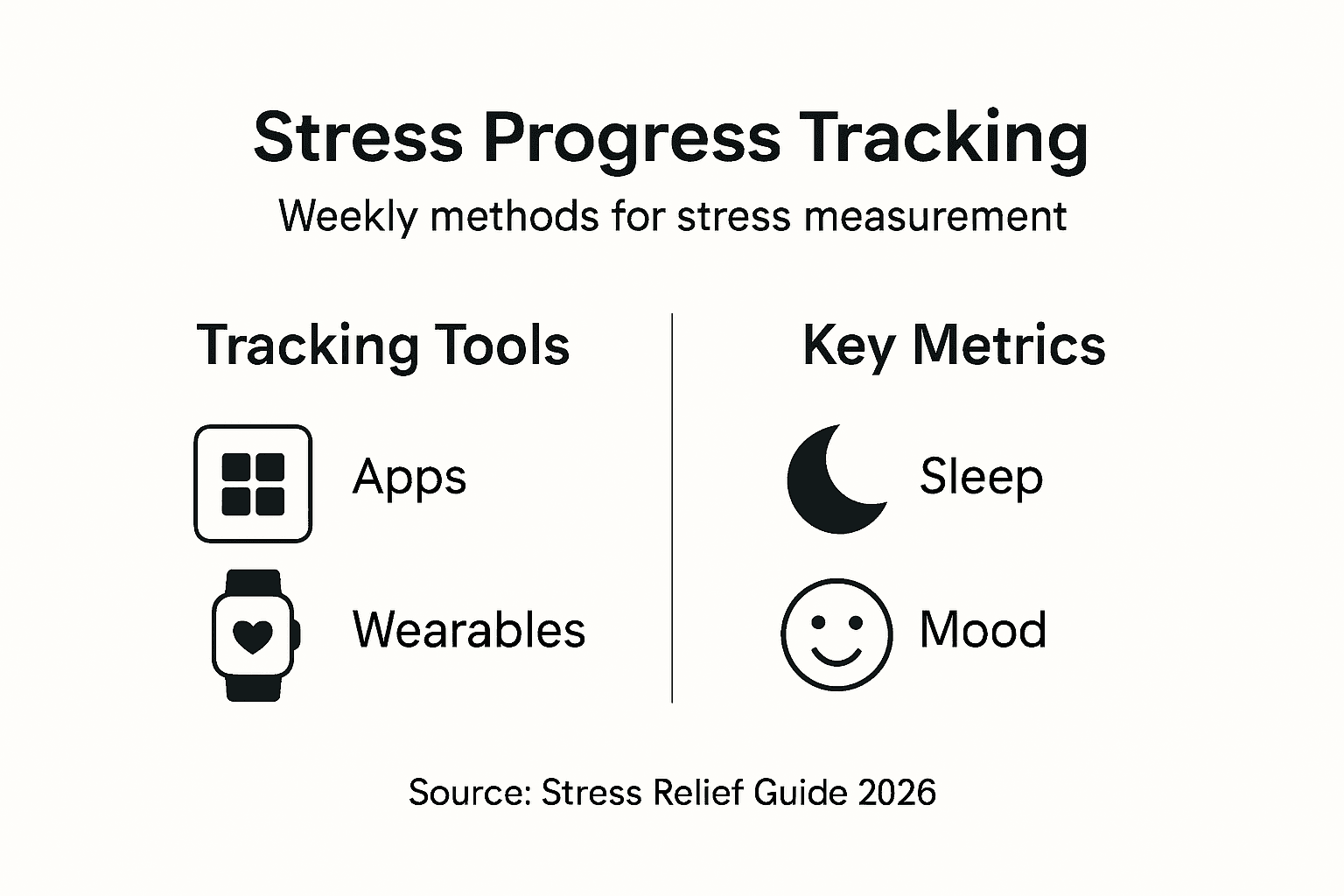
Start tracking baseline metrics before you’ve been practicing for long. These numbers give you something to compare against later. Write down your starting point so the changes become obvious.
Key metrics to monitor include:
- Sleep quality: Track hours slept and how rested you feel upon waking
- Stress levels: Rate your daily stress on a simple 1-10 scale each evening
- Physical tension: Note where you carry tension and how intense it feels
- Mood and irritability: Observe emotional stability and reaction to minor frustrations
- Energy levels: Monitor alertness throughout the day and afternoon crashes
- Breathing patterns: Notice if your resting breath becomes slower and deeper
Systematic progress evaluation using consistent metrics helps you identify which relaxation techniques actually reduce your stress most effectively.
Check your data weekly, not daily. Daily fluctuations are normal and can discourage you from continuing. A weekly review reveals actual trends rather than temporary variations.
Use this table to identify which stress metrics can be tracked with popular tools:
| Metric | Wearable Devices | Meditation Apps | Manual Tracking |
|---|---|---|---|
| Sleep Quality | Yes | Sometimes | Yes |
| Heart Rate Trend | Yes | No | No |
| Mood Changes | Sometimes | Yes | Yes |
| Stress Rating | Yes | Sometimes | Yes |
| Physical Tension | No | No | Yes |
Look for patterns across your data. Maybe your stress drops significantly after meditation but only slightly after breathing exercises. Or perhaps you sleep best on nights when you use your diffuser. These patterns show what works uniquely for your body and mind.
Adjust your routine based on what the data reveals. If one technique isn’t showing results after three weeks, try something different. Let evidence guide your choices, not just intuition.
Pro tip: Use a simple spreadsheet or notes app to track metrics—you don’t need anything fancy, just consistent records that let you spot real improvements over four to eight weeks.
Create Your Ultimate Stress Relief Sanctuary Today
The key challenge highlighted in the “Stress Relief Guide 2026” is overcoming daily stress with effective, personalized relaxation methods that fit your lifestyle and environment. Many face difficulties in setting up a calming space, integrating smart tools for stress monitoring, and practicing consistent guided relaxation to truly transform their well-being. If you are looking to remove clutter, improve your sleep quality, and use technology to support your body’s natural recovery, Lunix offers tailored solutions designed to meet these exact needs.
Enhance your relaxation journey by exploring our carefully curated collection of Stress Reduction – Relaxation Tools – Lunix. Our premium wellness products combine innovative technology with thoughtful design to help you build a sanctuary where stress fades and comfort takes priority.

Take the first step now to elevate your daily relaxation routine by visiting Relaxation – Lunix and discover smart recovery solutions that integrate seamlessly into your home environment. Your path to lasting calm and enhanced performance begins at Lunix. Start transforming your space and your life today.
Frequently Asked Questions
How can I create an effective relaxation space at home?
To create an effective relaxation space, designate a quiet corner of your home away from distractions like traffic and electronics. Focus on sensory elements such as soft lighting, comfortable seating, and calming scents to enhance your environment.
What are some simple stress relief tools I can incorporate into my daily routine?
You can incorporate simple stress relief tools like wearable devices to monitor your heart rate, meditation apps for guided practices, or white noise machines for ambient sound. Start with one tool that excites you and use it consistently to enhance your relaxation efforts over time.
How often should I practice guided relaxation techniques?
Aim to practice guided relaxation techniques daily, even if it’s just for five minutes. Consistent practice, such as deep breathing or mindfulness meditation, can lead to measurable improvements in your stress levels within a few weeks.
What metrics should I track to measure my stress reduction progress?
Track metrics such as sleep quality, daily stress ratings on a scale of 1-10, and levels of physical tension. Regularly reviewing these measurements will help you identify what relaxation techniques are most effective for you.
How can I adjust my relaxation techniques if I’m not seeing results?
If you notice that a particular relaxation technique isn’t showing results after a few weeks, consider trying a different method that may resonate more with you. Adjust your routine based on the data you’ve collected to find what works best for your body and mind.
What is the best way to start reducing stress with limited time?
Begin with a simple relaxation technique like deep breathing or a short guided meditation, allocating just five minutes a day. Consistency is key—over time, even brief daily practices can significantly lower your stress levels.