


Many health-conscious professionals in the United States discover that relaxation is not a one-size-fits-all solution. Each person brings their own personality, preferences, and daily routines to the stress relief process, making a tailored approach not just a luxury but a necessity. Backed by research from ScienceDirect, adapting relaxation techniques to individual characteristics and emotional states creates better outcomes than standardized methods, which is why personalizing your stress relief is crucial for sustainable well-being. This guide explains how personalized relaxation transforms everyday stress management into lasting improvements for your mind and body.
Table of Contents
- Personalized Relaxation Defined And Common Misconceptions
- Key Types Of Personalized Relaxation Techniques
- How Personalized Relaxation Works In Daily Life
- Science-Backed Benefits For Health And Well-Being
- Comparing Personalized Relaxation To Traditional Methods
Key Takeaways
| Point | Details |
|---|---|
| Personalized Relaxation is Unique | Tailor your relaxation methods to suit your individual preferences and lifestyle for better effectiveness. |
| Shorter, Intentional Practices are Effective | Incorporate brief, focused relaxation sessions into your routine rather than lengthy, generic practices. |
| Create Anchor Points for Consistency | Identify specific times and locations in your daily life where relaxation techniques can be seamlessly integrated. |
| Personalized Environments Improve Engagement | Design your relaxation space to include elements that you find calming to enhance your practice’s effectiveness. |
Personalized Relaxation Defined and Common Misconceptions
Personalized relaxation means tailoring your stress relief approach to match your unique personality, preferences, and lifestyle. It’s not a generic meditation script or a one-size-fits-all breathing exercise. Instead, it’s about intentionally choosing techniques that resonate with you, whether that’s visualization, physical recovery methods, or environmental adjustments. The core idea recognizes that what calms your colleague might energize you, and what worked for you at 35 might need adjustment at 55.
Think of personalized relaxation like customizing your home office. You wouldn’t use someone else’s exact setup without modifications. You’d adjust the lighting, chair height, desk position, and background noise to match your specific needs. Your relaxation practice works the same way. Research on personalized digital interventions shows that adapting techniques to individual characteristics and emotional states significantly improves outcomes compared to standardized approaches.
The One-Size-Fits-All Misconception
Many professionals assume all relaxation techniques work equally for everyone. This is simply untrue. What research demonstrates is that customized relaxation environments enhance your sense of presence and effectiveness far more than generic spaces or methods. A high-pressure executive might find true peace through guided visualization of a mountain vista, while another person might relax more effectively through physical recovery techniques or adjusting their environment’s lighting and sound.
Another common misconception is that relaxation requires significant time investment. Personalized approaches actually work better in shorter, intentional sessions tailored to your schedule than lengthy practices you’ll abandon. A 10-minute personalized routine you actually do beats a 30-minute practice gathering dust.
Moving Beyond Quick Fixes
People often believe relaxation is something you add to your life, not something you integrate into it. True personalized relaxation becomes part of your daily rhythm. It might mean adjusting your workspace with recovery solutions designed for your body, choosing specific times that match your natural energy dips, or selecting techniques that align with your actual lifestyle rather than aspirational routines.
Pro tip: Start by identifying which relaxation method you naturally gravitated toward in the past—whether it was movement, visualization, quiet time, or environmental comfort—and build your personalized practice around that existing preference rather than forcing yourself into unfamiliar techniques.
Key Types of Personalized Relaxation Techniques
Relaxation techniques fall into several distinct categories, and your job is finding which ones actually work for your body and mind. The main types include muscle-focused methods, breathing practices, visualization approaches, and movement-based techniques. Each activates your relaxation response differently, which is why one person’s favorite might do nothing for another. The key is experimenting to discover your personal preference.
Muscle Relaxation and Physical Recovery
Progressive muscle relaxation involves systematically tensing and releasing muscle groups throughout your body. For professionals spending eight hours at a desk, this technique directly addresses where stress accumulates. You tense your shoulders for five seconds, then release and notice the difference. This awareness retrains your body to recognize tension before it becomes chronic pain.
Physical recovery solutions designed for your specific body needs work alongside these techniques. Whether you spend your day hunched over a laptop or standing in meetings, personalized recovery addresses your actual tension points rather than generic wellness claims.
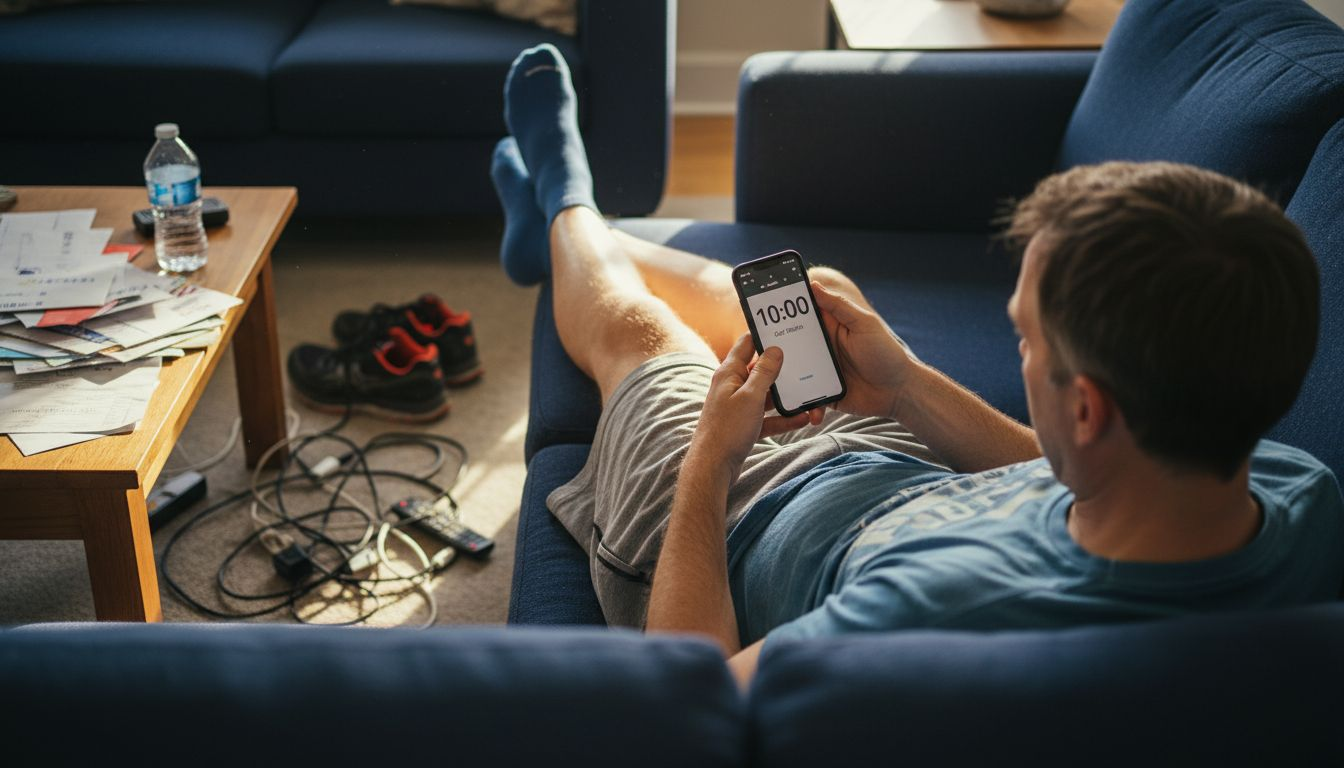
Breath Work and Mental Clarity
Breathing techniques range from simple deep breathing to structured patterns like box breathing, where you inhale for four counts, hold for four, exhale for four, and hold again. Your nervous system responds directly to breathing patterns. Slower, deeper breathing signals safety to your brain, activating your parasympathetic nervous system within minutes. This is why breath work works so reliably, but the specific pattern matters for your preferences.
Some people prefer slow, extended exhales. Others find counting rhythms more effective. Your personalized approach matches the breathing pattern that feels natural rather than forced.
Visualization and Mental Imagery
Using visualization to reduce stress taps into your mind’s ability to create calm states. A guided visualization of a specific place works better when that place actually resonates with you. If mountains calm you, mountain imagery works. If you prefer ocean sounds and sandy beaches, that’s your personalized scene.
This isn’t generic meditation. It’s using your imagination deliberately to activate relaxation responses that work specifically for your brain.
Movement and Active Relaxation
Mindfulness practices, yoga, and tai chi combine movement with mental focus. Unlike strenuous exercise, these techniques emphasize slow, intentional motion paired with breath awareness. A morning yoga practice works perfectly for some people while others find evening tai chi more effective. Your schedule, physical capabilities, and movement preferences determine which approach fits your life.
Pro tip: Try one technique from each category for two weeks before deciding if it works, since your nervous system needs time to develop the relaxation response rather than judging effectiveness after a single session.
Below is a summary of major personalized relaxation techniques and their key benefits:
| Technique Type | Main Benefit | Suitability |
|---|---|---|
| Muscle Relaxation | Reduces physical tension | Desk workers, sedentary jobs |
| Breath Work | Calms nervous system quickly | Anyone needing fast relief |
| Visualization | Boosts mental calm | Visual thinkers, goal-setters |
| Movement-Based | Combines mind and body focus | Active individuals, stress movers |
How Personalized Relaxation Works in Daily Life
Personalized relaxation becomes effective only when it integrates seamlessly into your actual schedule and environment. This isn’t about adding another obligation to your already packed day. Instead, it’s about intentionally designing moments that fit naturally into routines you already maintain. The difference between a relaxation practice that lasts and one that fades within weeks comes down to how well it matches your real life.
Consider your typical Tuesday afternoon. You have back-to-back meetings, emails piling up, and a deadline looming. A relaxation technique that requires traveling to a spa won’t work. But one you can access at your desk, during lunch, or in those five minutes between calls actually gets used. That’s personalization in action.
Creating Your Relaxation Anchor Points
Think of anchor points as specific times and places in your day where relaxation fits naturally. Maybe it’s your morning coffee ritual, your commute home, or right before bed. Research on personalized relaxation practices demonstrates that when individuals select environments, sounds, and visual elements matching their preferences, they engage more consistently with stress relief methods.
Your anchor point might be your home office corner transformed into a personal recovery space, your car during your commute, or even a quiet conference room before that presentation. The key is choosing a location and time you already occupy.
The Consistency Advantage
Personalized approaches work better than generic ones because they match your preferences enough to become habit. You’re not forcing yourself through meditation when you actually prefer movement. You’re not enduring ocean sounds when forest ambience actually calms you. This genuine preference drives consistency, and consistency is what transforms relaxation from a nice idea into a practiced skill your nervous system learns.
Research shows sustained engagement with personalized relaxation improves stress management over time, especially for people managing ongoing health challenges. The relaxation response strengthens the more you practice it.
Building Your Personalized Environment
Your relaxation space doesn’t need to be elaborate. It simply needs to contain elements that genuinely relax you. For some professionals, this means soft lighting and silence. For others, it means specific music, temperature control, or comfortable seating designed for recovery. You might create an at-home spa environment that matches luxury experiences, or simply designate one corner of your bedroom as your calm zone.
The environment reinforces the behavior. When you sit in that specific spot, your brain begins associating it with relaxation before you even start your technique.
Micro-Practices Throughout Your Day
Personalized relaxation isn’t just a formal twenty-minute session. It’s also the two minute breathing break between calls, the thirty second pause to notice your shoulders before they tighten, the moment you step outside and consciously slow your breath. These micro-practices accumulate and prevent stress from building to crisis levels.
Your personalized approach might combine one longer practice with several shorter moments strategically placed throughout your day where you actually work.
Pro tip: Anchor your personalized relaxation practice to an existing daily habit like your morning coffee, lunch break, or post-work wind-down rather than trying to create an entirely new time slot, which increases the likelihood you’ll actually maintain the practice.
Science-Backed Benefits for Health and Well-Being
Personalized relaxation isn’t just something that feels nice. Research consistently demonstrates measurable improvements in your physical and mental health. The science shows that tailored stress relief approaches work better than generic techniques because they match how your individual nervous system actually responds. This matters because your specific brain chemistry, your life circumstances, and your personal preferences all influence which relaxation methods create real change.
The benefits accumulate over time. You’re not looking for a single perfect relaxation session that solves everything. Instead, consistent personalized practice rewires how your nervous system handles stress, making you more resilient both during crises and in ordinary moments.
Anxiety and Distress Reduction
Personalized relaxation techniques significantly reduce anxiety and psychological distress across populations. When you choose relaxation methods matching your preferences, your engagement increases, which means you actually practice consistently. This consistency is what drives results. A breathing technique you enjoy gets used daily. A visualization you find genuinely calming becomes part of your routine. These practices trigger your parasympathetic nervous system, essentially telling your body it’s safe to relax.
For professionals in high-stress roles, this shift matters enormously. Your baseline anxiety decreases, which means you handle unexpected crises with more composure and less physical stress response.
Improved Mood and Depression Symptoms
Beyond anxiety relief, personalized relaxation improves mood regulation and addresses depressive symptoms. When your nervous system learns that you can reliably access calm states, your whole outlook shifts. You’re no longer constantly operating in fight-or-flight mode. That permanent tension eases.
This creates a positive cycle. You practice relaxation, feel better, find the practice more rewarding, practice more consistently, feel even better. The biological changes are real, involving hormone regulation, inflammation reduction, and improved neurotransmitter balance.
Clinical Applications and Palliative Care
The therapeutic potential extends beyond general stress management. Personalized virtual reality relaxation therapy demonstrates effectiveness in clinical settings, addressing both psychological and physical needs while enhancing peace and relaxation. When patients customize their healing environments, they experience greater symptom reduction and improved well-being.
This tells us something crucial. Your nervous system responds better to environments and practices you’ve deliberately chosen rather than those prescribed generically.
Long-Term Health Markers
Regular personalized relaxation practice improves measurable health markers. Blood pressure decreases. Sleep quality improves. Inflammation markers decline. Your immune function strengthens. These aren’t placebo effects. These are measurable physiological changes that accumulate over weeks and months of consistent practice.
For health-conscious professionals managing aging, these changes have real implications for longevity and quality of life. You’re not just feeling calmer. You’re making structural improvements to how your body functions.
Pro tip: Track one specific health marker you care about like sleep quality, morning tension, or your ability to stay calm during meetings, and measure it before starting your personalized relaxation practice and monthly afterward to maintain motivation based on concrete improvements rather than general feelings.
Comparing Personalized Relaxation to Traditional Methods
You’ve probably heard about traditional relaxation approaches like meditation, deep breathing exercises, or guided imagery that people have used for decades. These methods work. They have solid research backing them and they help millions of people manage stress. The real question isn’t whether traditional methods work, but whether personalized approaches offer meaningful advantages over these established practices.
The answer is nuanced. Personalized relaxation and traditional methods produce similar relaxation outcomes. What differs is engagement, consistency, and how naturally they fit into your actual life. Traditional approaches prescribe a specific technique and assume it works for everyone. Personalized approaches let you choose techniques matching your preferences, which changes the game in one crucial way.
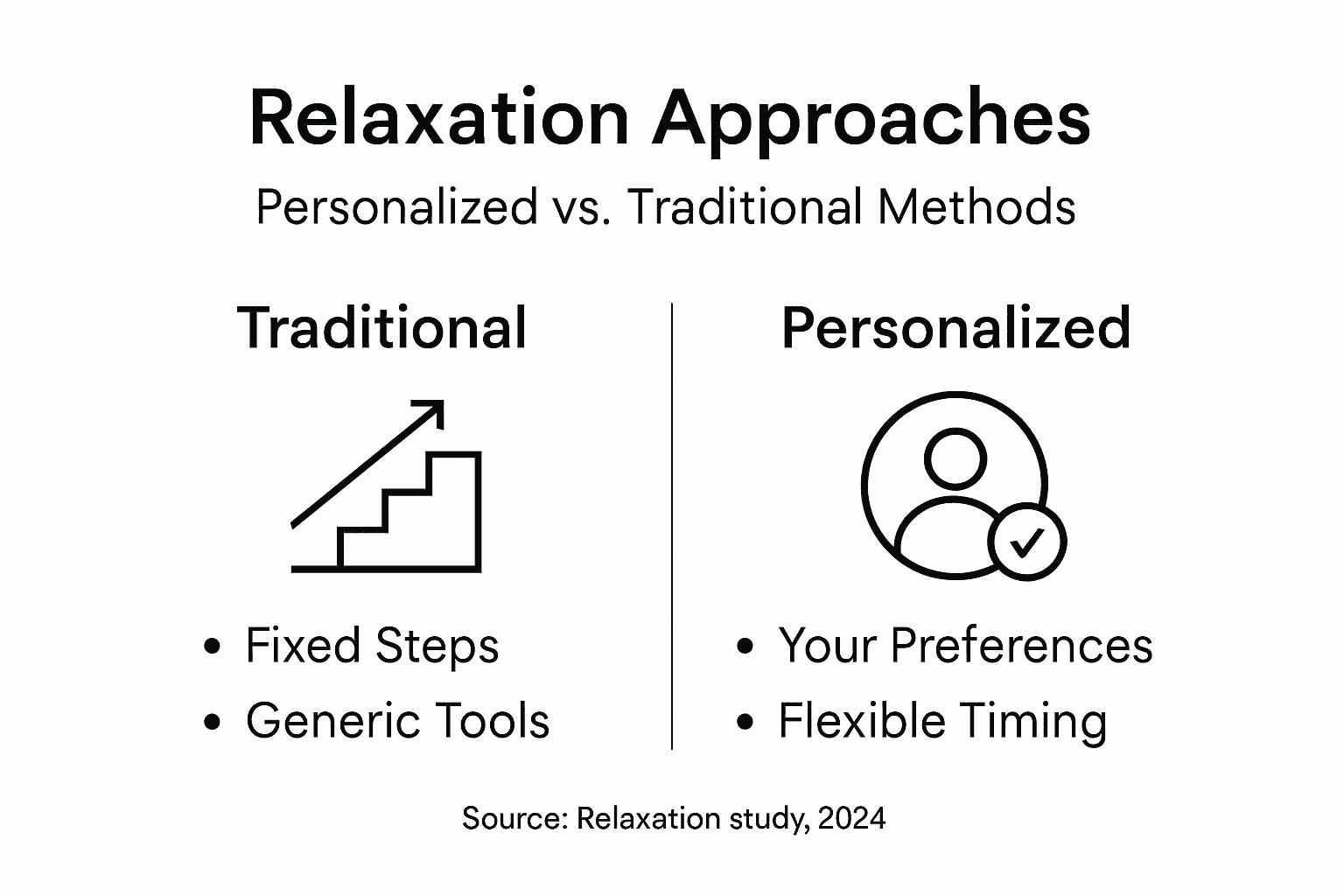
Here is a comparison of traditional and personalized relaxation approaches:
| Aspect | Traditional Methods | Personalized Approaches |
|---|---|---|
| Technique Selection | Standard, one-size-fits-all | Tailored to individual preferences |
| Engagement | May decrease over time | Remains high with personal relevance |
| Adaptability | Fixed routine and setting | Flexible to lifestyle and needs |
| Long-term Consistency | Often challenging to sustain | Easier to maintain and integrate |
| Typical Outcome | Stress reduction possible | Improved consistency and health impact |
Comparable Effectiveness, Different Mechanisms
Research comparing personalized virtual reality relaxation with traditional imagination-based techniques shows both increase relaxation similarly. A guided imagery meditation where you imagine a beach works just as well as a personalized virtual environment where you’ve customized every element to match your preferences. The relaxation response happens either way.
But here’s where personalization wins. You’re more likely to actually do a relaxation practice you’ve personally designed than one prescribed generically. You pick the environment, the sounds, the pacing. That ownership matters for long-term consistency.
The Consistency Advantage
Traditional methods often feel like obligations. You’re supposed to meditate for twenty minutes daily, whether that timing works or you actually enjoy the specific meditation. Many people start these practices with genuine enthusiasm and abandon them within weeks because something doesn’t fit.
Personalized approaches solve this problem by design. You’re not forcing yourself through a practice that feels wrong. You’re actively choosing methods you genuinely prefer, which means you actually maintain the habit long-term.
Traditional Methods as Your Foundation
Personalization doesn’t mean abandoning traditional techniques. Instead, it means adapting them to work for your specific life. A traditional meditation practice becomes personalized when you choose your meditation style, time of day, and environment based on what actually works for you. Deep breathing becomes personalized when you select the specific breathing pattern that calms your nervous system.
Think of traditional methods as the toolkit. Personalization is selecting which tools from that kit genuinely fit your hands and your needs. A professional might combine traditional breathwork during her commute with personalized visualization before sleep, while another person uses traditional yoga adapted to their specific physical needs.
The Real Difference
Both personalized and traditional relaxation reduce your stress and improve your health. The difference is that personalized approaches increase the likelihood you’ll actually stick with them. You’re not relying on willpower to maintain a practice that doesn’t truly resonate. You’re enjoying a practice you deliberately designed for yourself.
Pro tip: Start with a traditional relaxation method you’re curious about, then personalize it by adjusting the timing, environment, or specific technique until it becomes something you genuinely look forward to rather than something you force yourself to do.
Discover Personalized Relaxation Solutions Designed for You
The article highlights the challenge of finding truly personalized relaxation techniques that fit individual lifestyles and preferences. You want effective stress relief methods that work with your daily routine rather than forcing you into generic or time-consuming practices. You value comfort that addresses your specific tension points and environments that support sustained relaxation and recovery.
At Lunix, we understand how crucial it is to integrate recovery seamlessly into everyday life. Our smart recovery and comfort solutions are thoughtfully designed to create your own personalized relaxation space that restores your body and calms your mind. By combining innovative technology with elegant design, we help you transform ordinary places into stations for rejuvenation that meet your unique needs.
Experience how personalized relaxation can elevate your well-being today. Explore our carefully crafted collection of recovery essentials at Lunix.
Take the next step towards tailored stress relief with solutions made for your lifestyle. Visit Lunix now to unlock comfort that supports your body’s natural ability to relax and perform at its best.
Frequently Asked Questions
What is personalized relaxation?
Personalized relaxation refers to customizing stress relief techniques to fit your unique personality, preferences, and lifestyle, ensuring that the methods chosen work effectively for you.
How do I find the right relaxation technique for me?
To find the right technique, experiment with various approaches such as muscle relaxation, breathing exercises, visualization, and movement-based practices. Pay attention to which methods resonate most and bring you the most calm.
Can personalized relaxation be integrated into a busy schedule?
Yes, personalized relaxation can be seamlessly integrated into your daily routine by creating ‘anchor points’ within your existing habits, such as taking brief breaks or adjusting your workspace to foster a calming environment.
What are the benefits of personalized relaxation compared to traditional methods?
Personalized relaxation can lead to better engagement and consistency in practice. It allows for tailored techniques that fit your preferences, making it easier to sustain relaxation efforts over time, resulting in improved health and well-being.
Recommended
- The Power of Visualization: Using Your Mind to Melt Away Pain and Stre – Lunix
- Traveling Without Leaving Home: How to Create an At-Home Spa Vacation – Lunix
- How Stress Affects Your Body and How to Manage It Naturally – Lunix
- Mindfulness and Meditation: Techniques for Reducing Stress – Lunix
- 7-Step Stress Management Checklist for Busy Professionals