


TL;DR:
- Biofeedback uses sensors to monitor physiological functions and helps adults actively learn self-regulation techniques. It enhances relaxation, recovery, and pain management by providing real-time feedback on body signals like heart rate, muscle tension, and brainwaves. Suitable for midlife individuals, it offers scientifically grounded tools to improve stress resilience and overall wellness when integrated into a comprehensive health routine.
Most people think relaxation is something that just happens to you when you finally sit still long enough. Biofeedback challenges that idea entirely. It’s a technique that uses sensors to monitor physiological functions like heart rate variability, EMG, and EEG in real time, then feeds that information back to you through visual or auditory cues so you can actually learn to shift those responses on purpose. That’s not passive recovery. That’s active self-regulation, and for adults in their 40s, 50s, and 60s, it’s one of the most overlooked tools in the modern wellness toolkit.
Table of Contents
- What is biofeedback? How it works for wellness
- Key biofeedback methods for adults: HRV, EMG, EEG, and more
- Evidence-backed benefits: Relaxation, recovery, and beyond
- Limitations, risks, and expert tips before starting
- Expert perspective: What most guides miss about biofeedback and midlife wellness
- Next steps: Bring innovation to your wellness journey
- Frequently asked questions
Key Takeaways
| Point | Details |
|---|---|
| Active stress relief | Biofeedback empowers you to actively lower stress and enhance relaxation through real-time physiological feedback. |
| Multiple modalities | Options like HRV, EMG, and EEG biofeedback can be personalized for your specific wellness goals. |
| Proven, but variable | Benefits for stress, anxiety, and recovery are backed by evidence but results vary by individual and routine. |
| Safe for most adults | Biofeedback is drug-free with minimal risk, making it accessible and safe for most people seeking wellness support. |
| Integration is key | Biofeedback works best when part of a holistic wellness plan that includes mindfulness and lifestyle practices. |
What is biofeedback? How it works for wellness
Think of biofeedback as a live mirror for your body’s inner workings. Normally, processes like your heart rate, muscle tension, and skin temperature run quietly in the background, outside your conscious control. Biofeedback changes that by making those invisible signals visible.
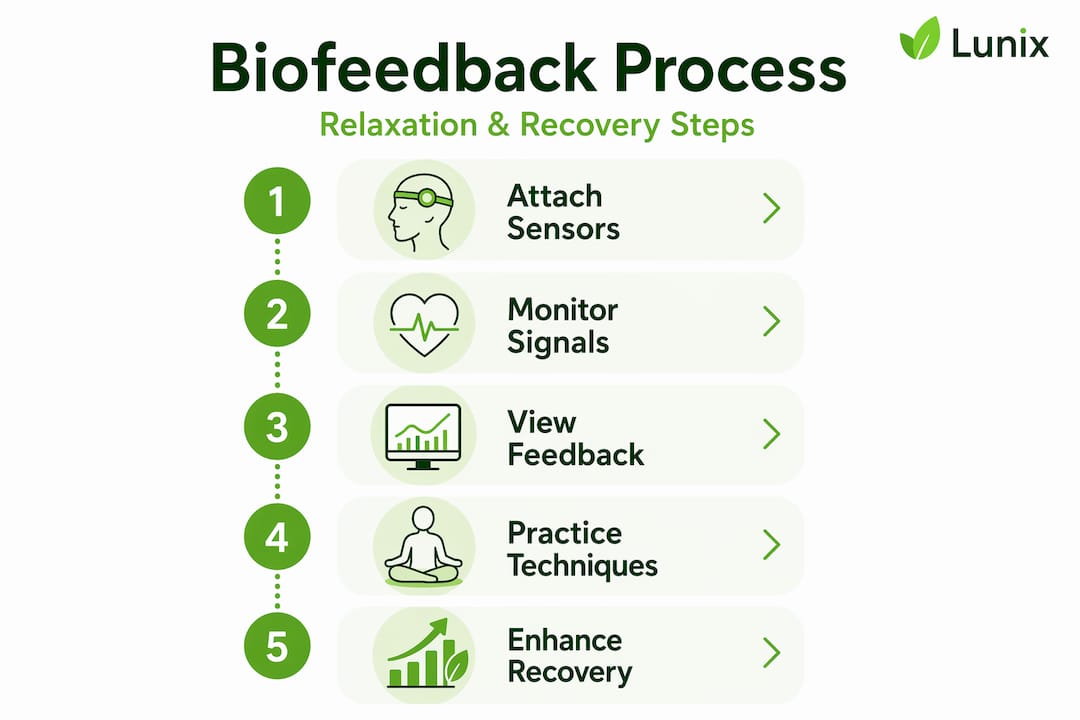
Here’s the basic flow: sensors attach to your body and measure a specific physiological signal. That data streams to a display, often a screen or an audio tone, in real time. You watch or listen, experiment with breathing patterns, mental focus, or muscle release, and observe how your body responds. Over time, you learn which mental and physical adjustments actually move the needle. Eventually, you can trigger those same calming responses without the equipment.
The biofeedback overview from the Mayo Clinic describes this process clearly: sensors monitor physiological functions and provide real-time feedback via visual or auditory cues to enable voluntary control over involuntary processes. That’s the key word: voluntary. You’re not just hoping to feel calmer. You’re training your body to get there on command.
The main biofeedback modalities at a glance
| Modality | What it measures | Primary wellness use |
|---|---|---|
| HRV (heart rate variability) | Variation between heartbeats | Stress reduction, recovery |
| EMG (electromyography) | Muscle tension levels | Pain relief, relaxation |
| EEG (electroencephalography) | Brainwave activity | Focus, sleep, mental calm |
| Thermal | Skin temperature | Anxiety, circulation support |
| Electrodermal (skin conductance) | Sweat gland activity | Stress response awareness |
Each modality gives you a different window into your nervous system. The right choice depends on what you’re trying to address.
“Biofeedback transforms the body into a classroom. You’re not being told what to do; you’re watching yourself learn.”
If you’re curious about how wellness tech for relaxation fits into a broader recovery plan, biofeedback is one of the most scientifically grounded options available today. It also opens the door to personalized relaxation in a way that generic breathing apps simply can’t match, because it responds to your actual physiology, not a preset program.
Key biofeedback methods for adults: HRV, EMG, EEG, and more
Now that you understand the core mechanism, let’s look at the specific methods most relevant for adults between 40 and 65, and when to use each one.
HRV biofeedback
Heart rate variability biofeedback is probably the most researched and widely accessible form today. It involves breathing at a resonance frequency, typically around 4.5 to 6.5 breaths per minute, which is slower than your normal resting rate. This pacing synchronizes your heart rhythm with your breathing pattern and activates the parasympathetic nervous system, the part of your body responsible for rest and recovery.
Portable HRV devices and smartphone apps make this method easy to try at home. Many clip to your earlobe or finger and connect wirelessly to a display. Sessions typically run 20 minutes, and many people notice a calming effect within the first few tries.
EMG biofeedback
Electromyography measures electrical activity in your muscles. If you carry chronic tension in your shoulders, jaw, or lower back, EMG biofeedback can help you recognize when you’re clenching without realizing it. Sensors placed on the target muscle group give you audio or visual feedback that signals when tension rises. You then practice letting it go, and you can actually watch the reading drop in real time.
This method is particularly useful for adults managing tension headaches, neck tightness, or stress-related pain patterns.
EEG and neurofeedback
EEG biofeedback, often called neurofeedback, monitors brainwave frequencies. Different brain states produce different wave patterns. Alpha waves (8 to 12 Hz) are associated with calm alertness, while theta waves (4 to 8 Hz) relate to deep relaxation and creativity. Neurofeedback sessions train you to produce more of the desired states on demand.
This is one of the more complex modalities and often requires working with a trained practitioner initially. That said, consumer-grade headbands have made neurofeedback more accessible for home use.
Thermal and electrodermal biofeedback
Thermal biofeedback measures the temperature of your skin, which drops when you’re stressed and rises when you’re relaxed. It’s a surprisingly sensitive indicator of anxiety. Electrodermal biofeedback (also called galvanic skin response) measures tiny changes in sweat gland activity, which also shift with emotional arousal.
Both are often used in clinical settings for anxiety management and can serve as entry points for people new to the practice.
What a typical biofeedback session looks like
- You attach sensors to the appropriate location (fingertip, scalp, forearm, etc.)
- You sit quietly for a few minutes as the system establishes your baseline
- A screen or audio tone begins reflecting your physiological signal in real time
- You experiment with slow breathing, mental imagery, or muscle relaxation
- You observe how each technique affects the feedback display
- Over multiple sessions, your body learns to produce the desired response more easily
Building these practices into your wellness routines for midlife doesn’t require a clinical appointment every week. Many technology options for midlife wellness now put effective biofeedback tools directly in your hands.
Pro Tip: Match your modality to your goal. Struggling with racing thoughts? Start with HRV or EEG. Carrying physical tension? EMG is your most direct path. Feeling generally anxious but not sure where it lives in your body? Electrodermal biofeedback offers a useful starting point.
Evidence-backed benefits: Relaxation, recovery, and beyond
The research picture for biofeedback is genuinely encouraging, especially for the kinds of challenges that tend to accumulate after 40. Here’s what the evidence actually shows.
Stress, anxiety, and emotional balance
HRV biofeedback consistently reduces perceived stress and anxiety across multiple studies. Research on biofeedback health outcomes shows improvements in HRV measures like SDNN and LF power, alongside reductions in self-reported anxiety and depression symptoms. For adults navigating midlife stress, work pressures, or caregiving demands, this kind of measurable shift in the nervous system matters.
Key benefits backed by research:
- Reduced perceived stress and cortisol-related tension
- Lower anxiety and depression symptom scores
- Improved heart rate variability, a reliable marker of recovery capacity
- Modest blood pressure reductions in cardiovascular disease patients
- Decreased migraine frequency and severity compared to waitlist controls
- Improved athletic performance (SMD = 0.88) and mental health in athletes (SMD = 0.76)
Recovery and physical performance
For adults focused on staying active and bouncing back faster, HRV biofeedback has particular appeal. Your HRV score reflects how well your nervous system has recovered from physical or emotional stress. Training that score upward isn’t just a number game. It means your body is genuinely more resilient.
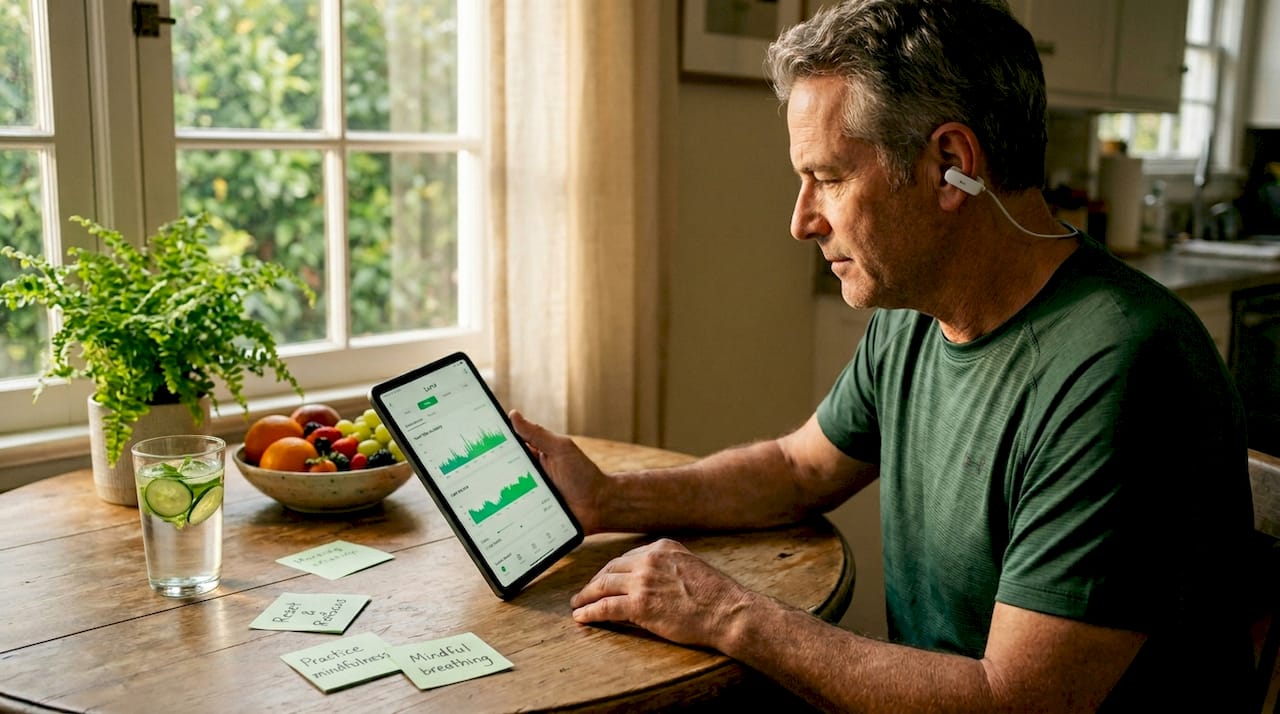
This matters for weekend athletes, active retirees, and anyone who wants their 50s and 60s to feel as vital as their earlier decades. Combining biofeedback with mindfulness for stress creates a compound effect that neither approach achieves alone.
Migraine and pain support
Biofeedback has solid evidence for migraine management. Thermal and EMG biofeedback in particular help reduce the frequency of tension and vascular headaches. For adults who prefer drug-free approaches or want to reduce medication reliance, this is a meaningful option worth discussing with a provider.
Pro Tip: Biofeedback works even better when paired with cognitive behavioral therapy (CBT) or structured relaxation strategies. The combination addresses both the physiological and mental sides of stress simultaneously, which tends to produce deeper and more lasting results than either approach used alone.
Limitations, risks, and expert tips before starting
Biofeedback deserves honest context. It’s a powerful tool, but it’s not a cure-all, and the evidence isn’t uniformly strong across every application.
Safety profile
The good news is that biofeedback carries very little risk. It is safe with no significant adverse effects reported in clinical literature. It also supports self-efficacy (your belief in your own ability to manage your health) and can reduce reliance on medication when used as part of a comprehensive care plan. For most midlife adults, there’s little downside to trying it.
Where the evidence gets complicated
Not every claim about biofeedback holds up equally well under scrutiny. Variable and conflicting results appear in several areas, particularly hypertension. Some studies find no significant advantage over active control conditions like general relaxation or guided breathing. Neurofeedback research faces methodological challenges around blinding participants, which makes it harder to isolate the specific effect of the brainwave training itself.
Key limitations to keep in mind:
- Some studies are small or lack standardized protocols
- Non-responders exist: biofeedback doesn’t work equally for everyone
- Results in hypertension are inconsistent compared to other applications
- EEG and neurofeedback research has methodological blind spots
- The quality of home devices varies widely
“Biofeedback is best understood as a skill-building tool, not a one-size-fits-all treatment. The strongest outcomes come when it’s woven into a broader wellness plan rather than used in isolation.”
Practical tips for informed use
- Start with a clear, specific goal (stress reduction, better sleep, tension relief)
- Work with a certified biofeedback practitioner if possible, at least initially
- Track your own results over 6 to 8 weeks before drawing conclusions
- Pair it with mindfulness therapy approaches for a fuller effect
- Don’t abandon foundational habits: sleep, movement, and nutrition remain non-negotiable
- If you have heart conditions, chronic illness, or neurological disorders, consult your doctor before starting
Expert perspective: What most guides miss about biofeedback and midlife wellness
Most articles about biofeedback focus on the technology itself, the devices, the waveforms, the numbers on the screen. What they often skip is the more important conversation: who biofeedback actually works for, and what makes it stick.
Here’s what we’ve observed: biofeedback is most powerful for people who are already paying attention to their bodies. If you’re already curious about your stress patterns, already experimenting with breathwork or movement, biofeedback gives you a more precise feedback loop. It accelerates something you’re already doing. If you’re hoping the device will do the work for you, the results tend to be disappointing.
The other thing most guides miss is the importance of well-being fundamentals in midlife. Biofeedback doesn’t replace sleep, consistent movement, or nutrition. It amplifies what’s already in place. Adults who see the best outcomes are those who treat biofeedback as one layer of a multi-layered approach rather than a shortcut.
There’s also the question of non-responders. Some people simply don’t show strong responses to biofeedback training, and that’s okay. The honest approach is to try it, track your own data, and make a decision based on your actual experience rather than on marketing claims. At-home recovery strategies work best when they’re personalized, and biofeedback is no exception to that rule.
Our perspective: biofeedback is worth exploring for midlife adults who want more control over their stress and recovery. But it’s a tool, not a transformation. The transformation comes from the habits you build around it.
Next steps: Bring innovation to your wellness journey
You now have a clear, honest picture of what biofeedback can and can’t do. The next step is putting that knowledge to work in a recovery environment that supports real results.

At Lunix, we design smart recovery and comfort solutions built for this stage of life. Whether you’re looking to improve daily relaxation, support your body after activity, or create a more restorative home environment, our recovery solution options are built to complement the wellness practices you’re already building, including approaches like biofeedback. Explore what it looks like to make your space work for your health, not against it.
Frequently asked questions
How quickly do people notice benefits from biofeedback?
Many users feel less stress or better relaxation after just a few sessions, but consistent, measurable improvements in markers like HRV typically take several weeks of regular practice to develop fully.
Is biofeedback truly drug-free and safe for adults over 40?
Yes. Biofeedback is completely drug-free and reported as safe with no significant adverse effects in clinical research, making it a practical option for most midlife adults looking for non-pharmaceutical wellness support.
Are expensive biofeedback devices necessary for effective wellness results?
Not necessarily. Many effective approaches use affordable wearables or app-based tools, and portable home devices have made biofeedback widely accessible. Personalized guidance from a trained practitioner does tend to improve outcomes, especially at the start.
Who should talk to a health provider before starting biofeedback?
Anyone managing a heart condition, chronic illness, or neurological disorder should consult their doctor before beginning biofeedback, as these conditions may affect how certain modalities are applied safely.