


TL;DR:
- Effective at-home recovery for adults over 40 involves active movement, nutrition, sleep, and intentional practices.
- Structured routines can reduce injury risk by 31% and improve muscle repair, mobility, and soreness.
- Personalizing recovery strategies with tools, mindset shifts, and consistency supports healthy aging and physical resilience.
Recovery routines reduce injury risk by 31% in adults over 40, yet most people still treat rest and recovery as the same thing. They are not. Simply sitting on the couch after a hard workout or a long day is rest. At-home recovery is something more intentional, more structured, and far more powerful. For adults between 40 and 65, the body’s ability to bounce back slows down, which means what you do between activity sessions matters just as much as the activity itself. This article walks you through the science, the methods, and the practical steps to build a recovery routine that actually works.
Table of Contents
- Defining at-home recovery for adults 40-65
- Core methods: Evidence-backed at-home recovery practices
- How at-home recovery transforms outcomes: Key data and real-life results
- Adapting at-home recovery: Customizing for individual and advanced needs
- What most guides miss about at-home recovery after 40
- Explore expert tools for your at-home recovery journey
- Frequently asked questions
Key Takeaways
| Point | Details |
|---|---|
| Multi-method approach | At-home recovery includes movement, rest, nutrition, and self-assessment to restore wellness over 40. |
| Measurable benefits | Evidence shows up to 31 percent lower injury risk and faster muscle repair with structured recovery. |
| Personalized adaptation | The most effective routines are adjusted for individual needs, health status, and home environment. |
| Consistency matters | Small daily recovery habits compound over time for healthier aging and lasting vitality. |
Defining at-home recovery for adults 40-65
At-home recovery is not a single activity. It is a collection of physical, nutritional, and psychological strategies that work together to restore your body after exercise, surgery, daily stress, or the gradual wear that comes with aging. As recovery experts note, at-home recovery includes both active and passive modalities to restore function and well-being post-exercise, surgery, or stressors for adults 40-65.
After 40, your body produces less human growth hormone, your muscles take longer to repair, and inflammation lingers longer than it used to. These changes are not signs of decline. They are signals that your recovery strategy needs to evolve with you.
Here is what separates true recovery from simple rest:
- Rest is passive. It means stopping activity and allowing time to pass.
- Recovery is active and intentional. It combines movement, nutrition, sleep, and sometimes technology to accelerate the body’s natural repair process.
- Inactivity without structure can actually slow healing and reduce mobility over time.
Common triggers that make recovery essential for this age group include:
- Strength training or cardio sessions
- Post-surgery rehabilitation
- Chronic stress and poor sleep
- Age-related muscle loss, known as sarcopenia
“Recovery is not the absence of effort. It is effort applied in a smarter direction.”
The benefits are real and measurable. Adults who follow structured recovery routines report fewer injuries, better mobility, and improved daily functioning. Understanding muscle recovery after 40 is one of the most important steps you can take for your long-term health. For practical guidance on home rehab essentials, AARP offers a solid starting point.
Now that you understand why at-home recovery is more than just rest, let’s explore the core methods you can use.
Core methods: Evidence-backed at-home recovery practices
Not all recovery methods are equal, and knowing when to use each one makes a real difference. The four pillars of effective at-home recovery are active recovery, passive recovery, nutrition, and sleep.
| Method | Best used when | Key benefit |
|---|---|---|
| Active recovery | Day after intense exercise | Boosts circulation, reduces soreness |
| Passive recovery | Post-surgery, illness, exhaustion | Allows deep tissue repair |
| Nutrition and hydration | Daily, especially post-workout | Fuels muscle protein synthesis |
| Sleep (7-9 hours) | Every night | Peak hormone release and repair |
As research confirms, active recovery, sleep, strength training, and nutrition are critical components for effective at-home recovery post-40.
Here is a practical framework to follow:
- Move gently on rest days. A 20-minute walk or light yoga session keeps blood flowing without adding stress to tired muscles.
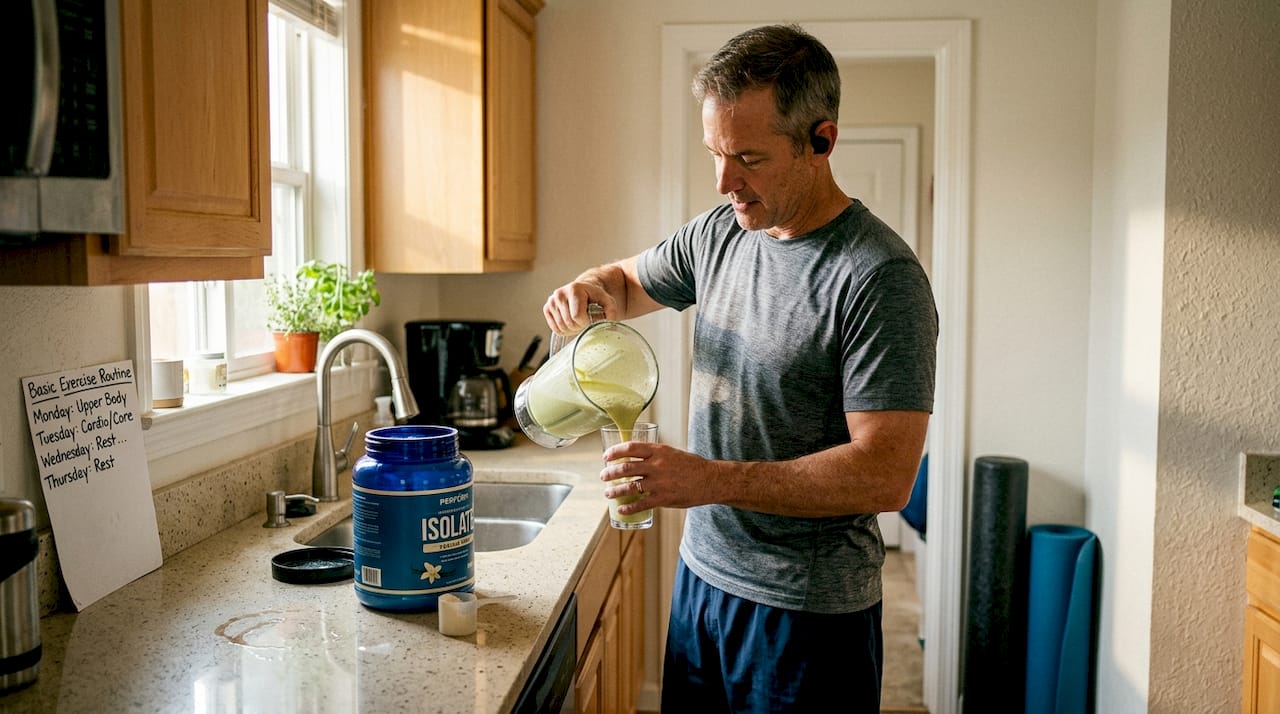
- Prioritize protein. Aim for 25-30 grams of protein per meal to support muscle repair. Anti-inflammatory foods like berries, leafy greens, and fatty fish also speed healing.
- Hydrate consistently. Even mild dehydration slows recovery and increases muscle stiffness.
- Strength train twice a week. Resistance training preserves muscle mass and bone density, both of which decline after 40.
- Protect your sleep. Seven to nine hours is not a luxury. It is when your body does its most important repair work.
Pro Tip: If you are managing a specific injury or post-surgical recovery, home-based rehab with wearables can match clinical supervision for improving knee function and pain outcomes. Technology is now a legitimate part of the recovery toolkit.
Building recovery routines after 40 does not require expensive equipment or hours of extra time. It requires consistency and the right mix of methods. For a deeper look at evidence-based recovery tips, we have put together a full resource to guide you. Harvard Health also outlines helpful post-surgery at-home routines for those returning to activity after joint replacement.
With these methods in mind, it’s vital to understand the measurable outcomes you can expect from consistent recovery practices.
How at-home recovery transforms outcomes: Key data and real-life results
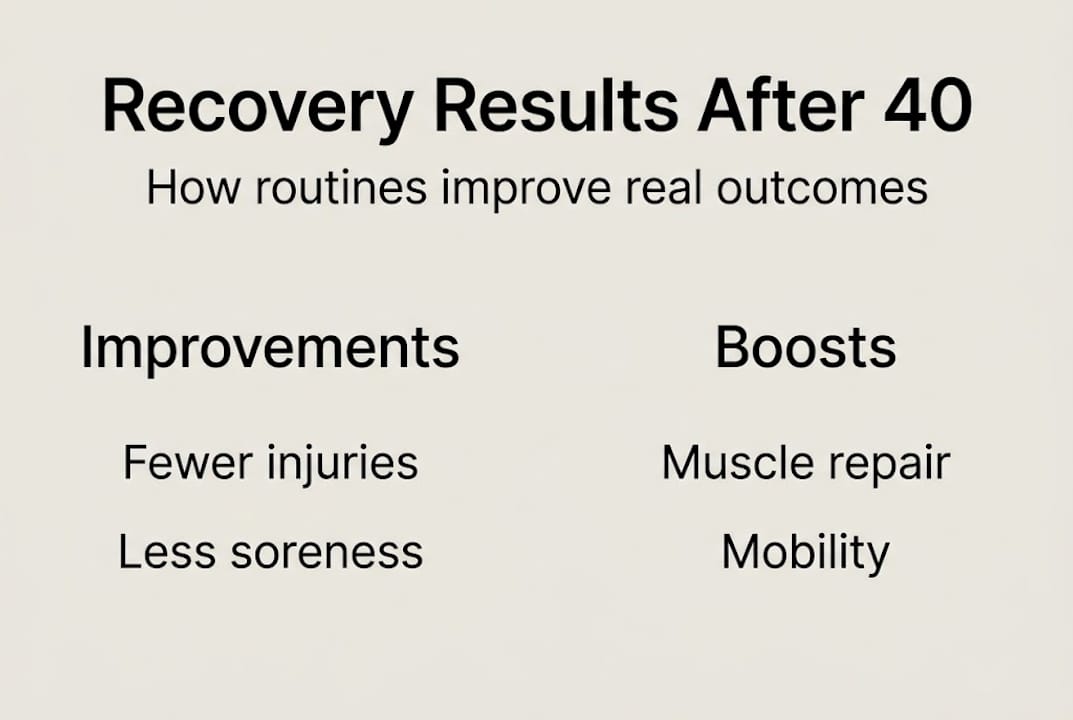
The numbers behind at-home recovery are genuinely impressive. Recovery routines can reduce injury risk by 31%, active recovery boosts muscle repair by up to 27%, and foam rolling cuts delayed onset muscle soreness (DOMS) by 37%.
Think about what that means in daily life. Less soreness means you can stay consistent with your workouts. Fewer injuries mean fewer setbacks and less time lost. Better muscle repair means more strength and energy for the things you love.
| Outcome | Improvement with recovery |
|---|---|
| Injury risk reduction | Up to 31% |
| Muscle repair speed | Up to 27% faster |
| Reduction in muscle soreness | Up to 37% less |
| Functional mobility gains | Significant for adults 40-65 |
Foam rolling deserves special mention. It works by applying gentle pressure to muscle tissue, which improves circulation and breaks up adhesions (tight spots in the muscle). Five to ten minutes after a workout can meaningfully reduce next-day stiffness.
Here is what consistent recovery looks like in real life:
- Waking up with less stiffness and more energy
- Getting through a full day without the afternoon crash
- Returning to favorite activities faster after a tough workout
- Feeling more confident in your body’s ability to handle physical demands
For adults who follow proven injury reduction routines, the cumulative effect over months and years is significant. Recovery is not just about feeling better tomorrow. It is about staying active, independent, and strong for decades to come.
Outcomes are impressive, but it’s also critical to adapt recovery plans for individual differences and advanced needs as we age.
Adapting at-home recovery: Customizing for individual and advanced needs
No two people recover the same way. Your recovery plan should reflect your health history, activity level, goals, and even your home environment. Recovery should be seen as a strategic investment, not laziness, and methods and tools should align to what feels best for the individual.
Here are key factors to consider when personalizing your approach:
- Medical vs. wellness recovery. Post-surgery protocols differ from general fitness recovery. Always follow your physician’s guidance after a procedure.
- Activity level. A competitive cyclist needs different recovery than someone walking 30 minutes a day. Match intensity to your output.
- Tech use. Wearables, apps, and telehealth options can add structure and accountability without requiring clinic visits.
- Home setup. Your environment matters more than you might think. Home environment adaptations, such as biophilic design elements and safety modifications, enhance outcomes for at-home recovery.
Sleep hygiene is another area worth personalizing. Consistent bedtimes, a cool room, and limiting screens before bed all support the deep sleep your body needs for repair. Overtraining is a real risk too. If you feel chronically fatigued, irritable, or notice declining performance, that is your body asking for more recovery, not more effort.
Pro Tip: Start with one change at a time. Add a foam rolling session, improve your protein intake, or set a consistent bedtime. Small wins build momentum.
You can also explore home recovery environment tips to set up a space that supports your routine. Thermal therapy is another effective tool, using heat and cold strategically to reduce inflammation and ease muscle tension. Pairing that with at-home stretching routines creates a well-rounded daily practice. For age-specific recovery adjustments, recent research offers detailed guidance on tailoring protocols to older adults.
Having seen how recovery plans must be flexible, let’s explore how these approaches can shift your perspective on aging, activity, and wellness.
What most guides miss about at-home recovery after 40
Most recovery guides focus on what to do. Very few address the mindset shift required to actually do it consistently. The biggest myth we see is “no pain, no gain.” For adults over 40, chronic discomfort is not a badge of effort. It is a warning sign.
Another common mistake is leaning on supplements as a shortcut. Supplements can support recovery, but they cannot replace whole foods, sleep, and movement. No pill replaces a good night’s rest or a protein-rich meal.
What actually drives long-term results? Small, consistent daily habits offset muscle loss and drive healthy aging far more effectively than occasional intense efforts. A 10-minute stretch every morning beats a two-hour recovery session once a month.
We also believe recovery is an opportunity, not just maintenance. It is a chance to tune into your body, notice what it needs, and respond with care. That kind of self-awareness compounds over time. People who treat recovery as a daily practice tend to feel more energized, more resilient, and more connected to their physical well-being.
For practical tools to support that mindset, explore our tips for healthy aging recovery. The goal is not perfection. It is progress, repeated daily.
Explore expert tools for your at-home recovery journey
Building a recovery routine that sticks is easier when you have the right tools supporting you. Whether you are managing post-workout soreness, recovering from a procedure, or simply looking to feel better every day, the right equipment makes a real difference.

At Lunix, we design recovery solutions specifically for adults who want to feel their best at home, without the hassle of clinic visits or complicated setups. From ergonomic support to thermal comfort tools, everything we create is built around your body’s real recovery needs. Visit Lunix home wellness to explore our full range and find the tools that fit your lifestyle and your goals.
Frequently asked questions
What are the key components of an effective at-home recovery routine for adults over 40?
Core components include a mix of active movement such as walking or yoga, rest days, strength and flexibility training, proper nutrition with adequate protein, and seven to nine hours of quality sleep each night.
How does at-home recovery lower injury risk after age 40?
Consistent recovery routines have been shown to reduce injury risk by 31% in adults over 40 by supporting muscle repair, reducing inflammation, and maintaining mobility between training sessions.
Can I use technology or wearables for effective at-home recovery?
Yes. Home-based rehab with wearables has been shown to be as effective as supervised clinical programs for many functional goals, including knee function and pain management after surgery.
Is there a difference between rest and recovery?
Rest is passive, meaning sleep or time off, while recovery is a holistic investment that combines active and passive methods to restore circulation, repair muscle, and support overall function.