


TL;DR:
- Regular, purposeful movement with strength and balance exercises supports midlife vitality.
- Smart nutrition focusing on calcium, vitamin D, and protein maintains health and muscle mass.
- Prioritizing restorative sleep and stress management techniques improves overall well-being.
Midlife wellness advice can feel like a flood of contradictions. Eat less, move more, sleep better, stress less. But when you’re managing real responsibilities, shifting hormones, and a body that’s genuinely changing, generic checklists don’t cut it. Women between 40 and 65 face a unique cluster of health shifts, from declining estrogen and muscle loss to increased cardiovascular risk and sleep disruption. You deserve guidance that’s grounded in evidence and built around your actual life. This article covers five practical, research-backed areas of wellness that work together to support your body and mind through midlife and beyond.
Table of Contents
- 1. Move with purpose: Exercise routines for vitality
- 2. Nourish for strength: Smart eating in midlife
- 3. Prioritize rest: Sleep tips for managing midlife changes
- 4. Build resilience: Stress management and emotional health
- 5. Stay proactive: Key health screenings and prevention tips
- Why most wellness lists fail and how to actually use these tips
- Take the next step in your wellness journey
- Frequently asked questions
Key Takeaways
| Point | Details |
|---|---|
| Exercise and move | Aim for at least 150 minutes of aerobic activity and 2 strength sessions weekly for vitality. |
| Eat smart for age | Prioritize protein, calcium, and vitamin D to preserve muscle and bone strength. |
| Protect your sleep | Routine, cool room, and avoiding stimulants improve midlife sleep quality. |
| Manage stress daily | Try short relaxation practices like meditation or yoga for better emotional health. |
| Stay ahead with screenings | Regular mammograms and bone checks support long-term health after 40. |
1. Move with purpose: Exercise routines for vitality
Your body was built to move, and midlife is not the time to stop. In fact, it may be the most important decade to start being intentional about exercise. Research confirms that women 40-65 need 150 minutes of moderate aerobic activity weekly, plus muscle-strengthening on at least 2 days, with balance exercises added after age 60 to prevent falls.
The challenge? Most women aren’t meeting that bar. Only about 25% of reproductive-age women meet full physical activity guidelines, and that number drops further in midlife. That’s not a judgment. It’s a signal that the system isn’t making movement easy enough.
Here’s the good news: small changes have real impact. A 20-minute brisk walk counts. So does dancing in your kitchen. The key is consistency, not perfection.
A simple weekly framework to get you started:
- Monday, Wednesday, Friday: 30-minute brisk walk, swimming, or cycling
- Tuesday, Thursday: Strength training with light weights, resistance bands, or bodyweight moves
- Saturday: Yoga, stretching, or a balance-focused class
- Sunday: Active rest, a leisurely walk, or gentle stretching
Strength training is especially worth prioritizing. After 40, women lose muscle at a faster rate due to hormonal shifts, and maintaining it protects your metabolism, your bones, and your independence. Building recovery routines after 40 into your week helps your body adapt without burning out.
“Exercise isn’t just a physical act. It’s one of the most powerful mood-regulating tools available, and it’s free.”
Pro Tip: Pair your workouts with something you genuinely enjoy. A podcast you love, a walking buddy, or a class with a friend transforms movement from a chore into something you look forward to. That social connection makes it far easier to stay consistent, especially on low-motivation days.
If pain is a barrier, explore lower-impact options and look into home recovery strategies that support your joints and muscles between sessions.
With activity as a foundational wellness pillar, nutrition works hand-in-hand to support optimal aging.
2. Nourish for strength: Smart eating in midlife
What you eat in midlife does more than fuel your day. It shapes your bone density, heart health, hormone balance, and mood. The good news is that eating well doesn’t require obsessing over every bite. It means making informed choices consistently.
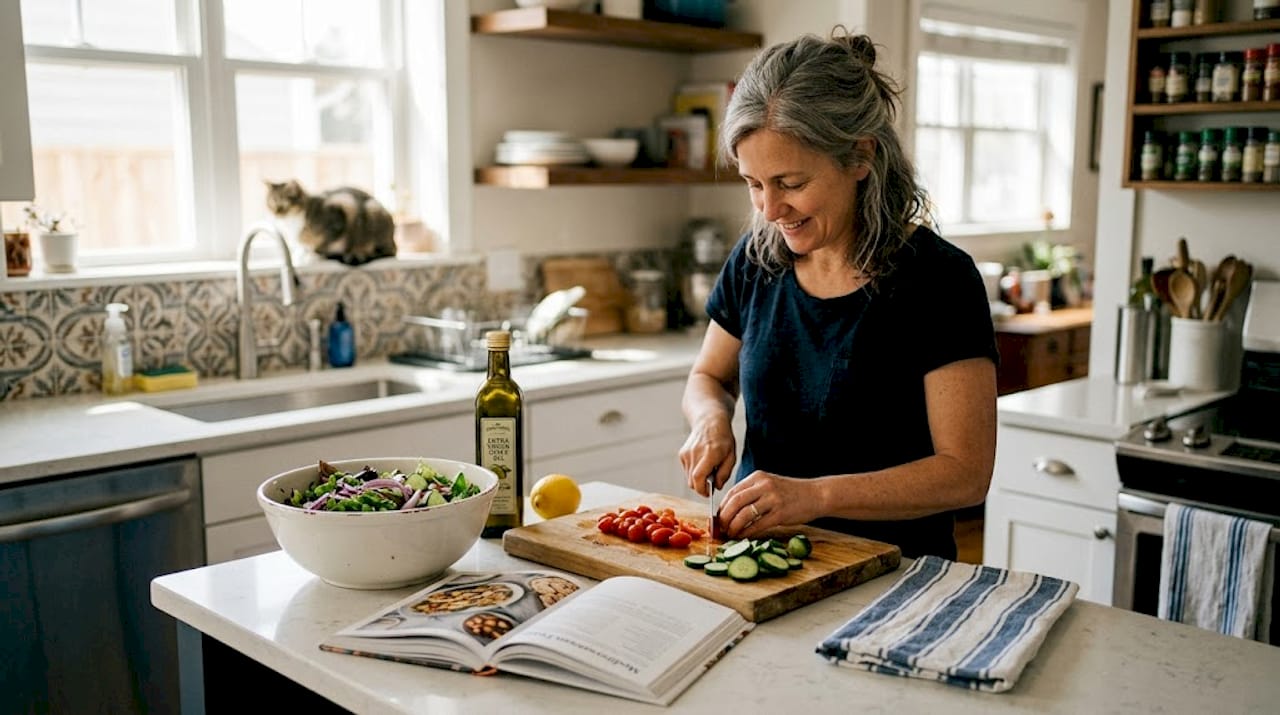
According to the Mayo Clinic, a plant-based, calcium-rich diet with 1,200mg of calcium daily and 600 to 800 IU of vitamin D is recommended for midlife women, along with protein at every meal to preserve muscle mass.
Key nutrients your body needs more of now:
- Calcium: Dairy, leafy greens, fortified plant milks
- Vitamin D: Salmon, eggs, sunlight, and supplements if needed
- Protein: Aim for 25 to 30 grams per meal to maintain muscle
- Fiber: Beans, whole grains, and vegetables to support gut health and satiety
- Healthy fats: Olive oil, avocado, and walnuts for heart and brain support
Comparing popular midlife-friendly eating approaches:
| Eating Style | Main Focus | Best For |
|---|---|---|
| Mediterranean | Olive oil, fish, vegetables, whole grains | Heart health, inflammation |
| Plant-forward | Vegetables, legumes, minimal animal products | Cholesterol, weight management |
| DASH | Low sodium, high potassium foods | Blood pressure control |
All three approaches share a common thread: whole foods over processed ones, and plenty of color on your plate.
For well-being tips for adults 40-65, meal timing also matters. Eating protein spread throughout the day rather than loading it all at dinner helps your muscles use it more effectively.
Pro Tip: Pre-portion small bags of nuts, hard-boiled eggs, or sliced cheese so healthy snacking is as easy as grabbing a bag of chips. When the convenient option is also the nutritious one, cravings become much easier to manage.
Explore wellness routines in midlife that integrate smart eating with movement and rest for lasting results.
Proper nutrition sets the foundation, but restorative sleep is another essential for wellness in midlife.
3. Prioritize rest: Sleep tips for managing midlife changes
Sleep is not a luxury. For midlife women, it’s a critical health function that affects everything from weight and immunity to mood and cognitive sharpness. Yet hormonal fluctuations during perimenopause and menopause directly contribute to sleep disruption, hot flashes, and mood instability. And here’s the striking part: more than 80% of women experiencing these symptoms never seek care, often accepting poor sleep as just part of getting older.
It doesn’t have to be.
The CDC recommends 7 to 9 hours of sleep each night, along with lifestyle steps to manage nighttime disruptions like cooling your bedroom, cutting off caffeine after noon, and keeping a consistent sleep and wake time.
Practical fixes for common midlife sleep disruptors:
- Set your bedroom temperature between 65 and 68 degrees Fahrenheit
- Use moisture-wicking sheets and layered bedding so you can adjust during the night
- Avoid alcohol within 3 hours of bedtime, as it fragments sleep
- Limit screens for at least 30 minutes before sleep, since blue light suppresses melatonin
- Try a warm bath or shower before bed to trigger your body’s natural cooling response
Understanding how sleep and light exposure interact can give you powerful tools for improving your sleep quality naturally.
Pro Tip: Keep a small sleep journal on your nightstand. Jot down what you ate, your stress levels, and when hot flashes occurred. Patterns often emerge within a week, helping you identify personal triggers that no generic advice can predict.
Quality sleep supports stress resilience, making emotional wellness strategies essential.
4. Build resilience: Stress management and emotional health
Stress in midlife isn’t just about a busy schedule. Shifting hormones physically alter how your brain processes emotional experiences, which means anxiety, irritability, or low mood can arise even when life seems fine on paper. That’s not weakness. That’s biology.
The Cleveland Clinic confirms that 10 minutes of deep breathing or meditation daily, paired with regular physical activity, is a first-line approach for managing mood swings, stress, and hormonal anxiety.
Three tools worth knowing:
| Practice | Best Time to Use | Primary Benefit |
|---|---|---|
| Deep breathing | During stress spikes, morning | Lowers cortisol quickly |
| Meditation | Morning or before bed | Builds long-term calm |
| Yoga | Afternoon or evening | Combines movement and relaxation |
Explore meditation techniques for stress or try relaxation techniques you can build into a 10-minute daily ritual.
Signs you may benefit from professional support:
- Persistent sadness or hopelessness lasting more than two weeks
- Anxiety that interferes with daily tasks or sleep
- Feeling disconnected from people or activities you used to enjoy
Self-care is powerful, but it has limits. A therapist, counselor, or your primary care provider can help when symptoms feel bigger than daily habits can handle. Use a wellness checklist for meditation to start building structure into your practice.
Pro Tip: Pair stress relief with something you genuinely love. Play music while journaling, take your breathing practice outside in a park, or combine gentle yoga with your favorite podcast. Pleasure and habit-building are more connected than people realize.
A complete stress management guide 40-65 can help you build a personalized daily rhythm that sticks.
Physical and emotional health go hand-in-hand, but regular checkups help catch risks early and customize strategies.
5. Stay proactive: Key health screenings and prevention tips
Wellness isn’t just about what you do daily. It’s also about what your doctor checks annually. Many of the most serious health risks for women 40 to 65 are preventable or manageable when caught early.
Recommended screening schedule:
| Screening | When to Start | Frequency |
|---|---|---|
| Mammogram | Age 40 | Annual |
| Bone density (DEXA) | Age 65, or earlier if at risk | Every 1 to 2 years |
| Cholesterol and lipids | Age 45 (sooner if at risk) | Every 5 years |
| Blood glucose/diabetes | Age 45 | Every 3 years |
| Blood pressure | Any age | At every visit |
Mammograms starting at 40 and bone density scans at 65 or earlier if risk factors exist are among the most important preventive steps you can take.
Symptoms to never ignore:
- Unusual fatigue that doesn’t improve with rest
- Unexpected weight gain or loss
- Changes in bladder habits or pelvic discomfort
- Chest pain or shortness of breath
- New or unusual joint pain
On the prevention side, losing just 5 to 10% body weight if you’re currently overweight can significantly improve heart health and reduce bladder symptoms. Strength training continues to be a top tool here, fighting the metabolism slowdown that comes with age.
Set a recurring annual reminder on your phone for your screenings. It takes 30 seconds and removes the mental load of remembering. Explore more well-being tips for adults 40-65 to round out your preventive care plan.
With the essentials covered, let’s explore the perspective that brings all these together for real-world results.
Why most wellness lists fail and how to actually use these tips
Here’s the uncomfortable truth about wellness lists, including this one: reading them rarely changes behavior. What changes behavior is picking one thing, doing it imperfectly, and doing it anyway.
Most wellness overhauls fail because they require too much change at once. Your brain treats radical habit shifts as threats, not opportunities. That’s why the woman who adds a 10-minute walk after breakfast and actually sticks with it for three months is healthier than the one who commits to a perfect six-habit routine on January 1 and abandons it by February.
Take Sarah, a 54-year-old teacher who couldn’t commit to any sleep routine until she picked just one change: no phone in the bedroom. One rule. That single habit improved her sleep within two weeks, which gave her energy for morning walks, which reduced her stress. One small habit created a cascade.
The same approach applies here. Choose one tip from this article that fits your current life. Not the one that sounds most impressive. The one that feels most doable. Build from there. If you fall off, that’s normal. Reset the next morning, not next Monday. Explore wellness routines that last for frameworks that help you stay consistent without the all-or-nothing trap.
Take the next step in your wellness journey
You’ve just covered five evidence-based pillars of midlife wellness. That knowledge is powerful, but pairing it with the right tools makes it real. Lunix is designed for exactly this moment in your life, when comfort, recovery, and daily restoration matter more than ever.

From smart recovery products that support your body after workouts to a library of wellness resources, Lunix helps you turn good intentions into sustainable routines. Visit Lunix to explore solutions built for elevated, intentional living. Take one actionable step today and let your wellness journey build momentum from there.
Frequently asked questions
What is the best exercise for women over 50 to stay healthy?
A mix of moderate aerobic exercise, strength training, and balance activities is best for women over 50. Women 40-65 should aim for 150 minutes of aerobic activity weekly with strength work twice a week to boost heart health, maintain muscle, and prevent falls.
How can women in midlife improve their sleep quality?
Women 40 to 65 can improve sleep by keeping a cool bedroom, avoiding caffeine and alcohol in the evening, and sticking to a consistent sleep schedule. The CDC recommends 7 to 9 hours of quality sleep nightly for overall health.
What screenings are recommended for women ages 40 to 65?
Women should get annual mammograms starting at 40 and a DEXA bone scan at 65 or earlier if risk factors are present. Screenings starting at 40 for breast health and bladder monitoring are among the most critical preventive steps.
How can midlife women manage stress and mood changes?
Daily meditation, deep breathing, or yoga combined with regular physical activity are effective first steps. The Cleveland Clinic notes that 10 minutes of daily stress management through breathing or movement helps regulate mood and hormonal anxiety.
Recommended
- Kids’ Wellness: 10 Nurturing Healthy Habits for a Lifetime of Well-bei – Lunix
- 7 Key Advantages of Home Wellness for Enhanced Living – Lunix
- Top well-being improvement tips for adults 40-65 – Lunix
- 5 Simple Ways to Prevent Back Pain – Lunix
- 5 Powerful Ways to Prepare Your Mind and Body for Labor and Birth - Serenity Doula