


TL;DR:
- The global wellness economy surpassed $6.8 trillion in 2024, driven mainly by adults aged 40 to 65.
- Wellness technology focuses on prevention, cost reduction, and long-term health support for midlife adults.
- Successful use depends on engagement, choosing validated products, and actively managing health feedback.
The global wellness economy reached $6.8 trillion in 2024, growing nearly 8% year over year and outpacing global GDP. That’s not a trend driven by 25-year-olds buying protein powders. The real engine behind this surge is adults aged 40 to 65, a generation that has lived through enough health scares, rising insurance premiums, and slow recoveries to know that waiting for something to go wrong is no longer a strategy. Wellness technology is emerging as one of the most practical, evidence-backed ways to take back control of your health, your energy, and your peace of mind before problems stack up.
Table of Contents
- The wellness tech boom: What’s fueling the demand?
- How wellness tech delivers measurable results
- What to watch out for: Risks and choosing wisely
- Where wellness tech makes the biggest impact for 40-65 year olds
- The uncomfortable truth about wellness tech: long-term value requires smart engagement
- Take the next step toward wellness: Invest in proven tools
- Frequently asked questions
Key Takeaways
| Point | Details |
|---|---|
| Wellness tech market surges | Investing in wellness tech is driven by soaring growth and new needs among adults aged 40–65. |
| Evidence-based ROI | Digital therapies and precision nutrition tools can deliver real savings and measurable health improvements. |
| Know the risks | Critical to vet tech for certification, privacy, and clinical backing before investing. |
| Everyday benefits | Wellness tech supports bone health, fall prevention, better sleep, and more active aging in daily routines. |
| Active engagement key | Long-term wellness gains require consistent, thoughtful use of technology tailored to your evolving needs. |
The wellness tech boom: What’s fueling the demand?
The numbers alone tell a compelling story. The US wellness economy surpassed $2.3 trillion in 2025, projected to climb toward $3.7 trillion by 2034. Globally, the market is on track to reach $9.8 trillion by 2029. These aren’t bubble numbers. They reflect a genuine, structural shift in how people approach health.
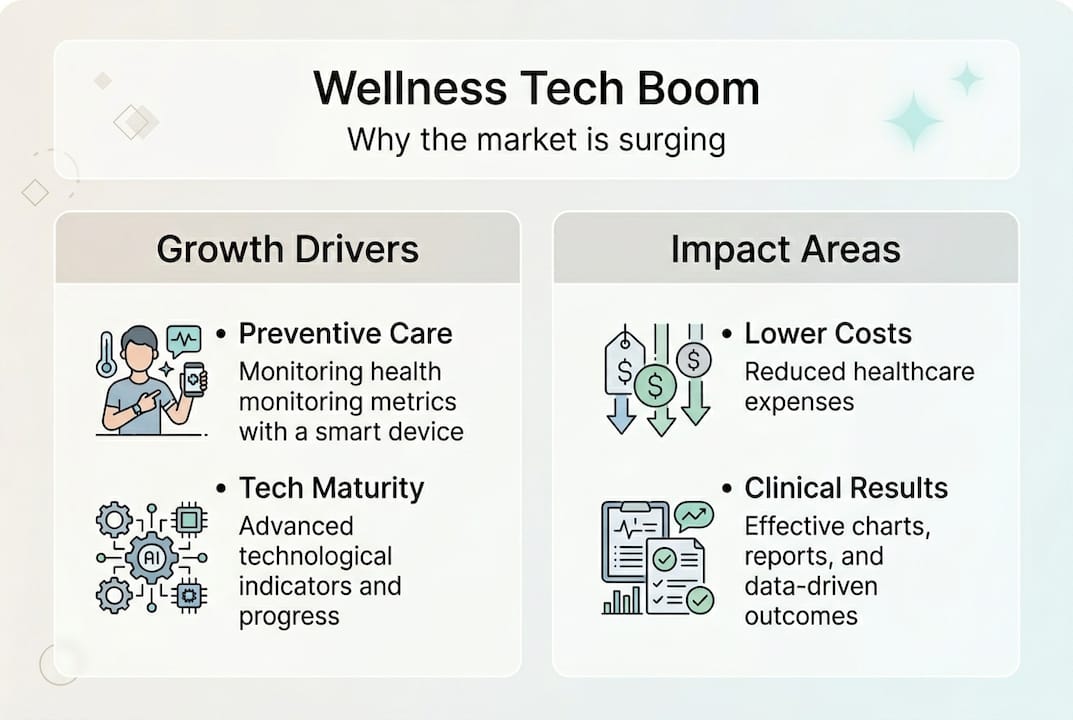
So what’s driving it? Three forces are working together.
Preventive care is replacing reactive care. Decades of evidence have shown that addressing risk factors early, whether that’s poor sleep, chronic stress, or sedentary habits, costs far less and produces far better outcomes than treating full-blown conditions later. Wellness tech makes prevention practical and personalized, not just a recommendation from your doctor you promptly forget.
Healthcare costs keep climbing. Out-of-pocket spending on prescriptions, specialist visits, and hospital care has pushed millions of Americans into a position where they’d rather invest in self-care tools now than face a larger bill later. That mindset shift is especially strong in the 40 to 65 age group.
Technology has matured. Early fitness trackers were novelty items. Today’s tools, from AI-adjusted training platforms to medically validated sleep therapy apps, are backed by clinical research and designed for long-term daily use.
Here’s a snapshot of the wellness tech landscape right now:
| Category | Examples | Primary benefit |
|---|---|---|
| Sleep technology | Digital CBT-I apps, smart mattresses | Improved sleep quality and duration |
| Recovery devices | Red-light therapy, massage tools | Reduced soreness, faster muscle repair |
| Fitness and mobility | AI-powered training apps, resistance bands with sensors | Strength, balance, injury prevention |
| Mental wellness | Mindfulness apps, biofeedback wearables | Stress and anxiety reduction |
| Nutrition and metabolic | Precision nutrition platforms, CGMs | Weight management, digestive health |
| Home safety | Smart fall-detection sensors, balance trainers | Fall prevention, independence |
Understanding wellness technology for adults 40-65 matters because this demographic has specific needs. Bone density begins declining more sharply after 40. Muscle mass drops by roughly 3 to 8 percent per decade after 30. Recovery from exertion takes longer. These are biological facts, not excuses. The right tools address those realities directly, which is why investing early makes a measurable difference.

The broader shift toward home wellness for better living also matters here. More adults are choosing to build recovery and health maintenance into their home routines rather than relying solely on gym memberships or sporadic doctor visits. That shift is smart, sustainable, and increasingly supported by solid science.
How wellness tech delivers measurable results
Benefits feel more real when you can attach numbers to them. Let’s look at what the research actually shows.
Sleep technology is saving people money. Digital cognitive behavioral therapy for insomnia, known as CBT-I, is one of the most studied examples. A clinical analysis of SleepioRx found that digital CBT-I is associated with $2,083 in annual savings per person compared to standard care, a 42% reduction in insomnia-related costs. Better sleep doesn’t just feel good. It reduces your reliance on sleep aids, lowers the risk of associated conditions like high blood pressure and weight gain, and improves daily energy and focus.
Precision nutrition platforms are cutting medical spending. A study on digital therapeutic nutrition found a $3,012 reduction in per-member, per-year medical spending for participants using precision nutrition tools. The biggest gains were in digestive health and obesity-related conditions, two areas that heavily affect adults in this age group.
Mental wellness tools are clinically effective. Mindfulness and CBT-based workplace digital mental health interventions show moderate to strong evidence for reducing stress, anxiety, and depression. For adults managing the compounding pressures of career demands, caregiving responsibilities, and aging-related physical changes, this isn’t a luxury. It’s a meaningful health intervention.
Here’s a side-by-side comparison of standard care versus tech-enabled approaches for common conditions:
| Condition | Standard care approach | Tech-enabled approach | Documented advantage |
|---|---|---|---|
| Insomnia | Sleep aids, occasional therapy | Digital CBT-I (SleepioRx) | $2,083 annual savings per user |
| Poor nutrition/obesity | Dietitian visits, general guidelines | Precision nutrition digital therapeutics | $3,012 PMPY reduction in medical costs |
| Work-related stress | Occasional counseling, medication | Mindfulness and CBT apps | Clinically validated anxiety/stress reduction |
| Muscle recovery | Rest, occasional massage | Red-light therapy, massage devices | Reduced inflammation, faster repair |
Key outcomes that wellness tech consistently supports:
- Improved sleep quality, which cascades into better mood, sharper memory, and healthier metabolism
- Reduced chronic pain, particularly in joints and the lower back, through consistent recovery routines
- Lower resting stress levels, reducing long-term cardiovascular strain
- Greater nutritional awareness, leading to smarter food choices and reduced inflammation
Pro Tip: Start with one category that matches your most pressing health concern. If sleep is your weakest link, begin there. You’ll see faster, more motivating results by focusing before expanding your wellness toolkit.
If you want to explore what tools deliver the most in each category, top wellness tech for relaxation covers a solid breakdown of what’s worth your attention.
What to watch out for: Risks and choosing wisely
Not all wellness tech delivers what it promises. The category has grown fast, and that speed has created some significant gaps in quality, accuracy, and safety. Knowing what to watch for protects both your health and your wallet.
Certification matters more than marketing. There’s a real and important difference between a “wellness” product and a medically validated device. Many apps and wearables on the market lack regulatory certification, leading to inaccurate readings and unverified health claims. The FDA does scrutinize some devices, but the wellness category intentionally sits outside most regulatory frameworks. That means the burden of vetting is on you.
Your data is a valuable asset. Biometric tracking tools collect deeply personal health data. Heart rate patterns, sleep cycles, glucose levels, location habits. This data is attractive to insurers, marketers, and data brokers. Privacy re-identification risks and accuracy limitations are real concerns in the wearable market, especially as AI systems are trained on this information. Always read the privacy policy of any wellness app before you enter your health details.
Accuracy declines without calibration. Many wearables were designed with younger, healthier populations as the baseline. Heart rate variability readings, sleep staging, and VO2 max estimates can be less reliable for older adults unless the device has been specifically validated for your demographic.
Here’s a practical checklist for vetting any wellness tech before you buy:
- Does it have FDA clearance, CE marking, or another recognized certification?
- Is there published, peer-reviewed research supporting its claims?
- What data does it collect, and how is it stored and shared?
- Are there verified reviews from users in your age group?
- Does the company offer a trial period or satisfaction guarantee?
“The right question isn’t ‘Does it work?’ The right question is ‘Has it been tested on people like me, and what did the research actually find?’”
Pro Tip: Look for wellness tools that are transparent about their data practices and publish their clinical evidence publicly. If a company buries its research claims in marketing copy with no links to actual studies, treat that as a red flag.
Investing in well-tested home health tools for recovery and mobility is one of the lower-risk areas of wellness tech, particularly devices designed around physical comfort. Similarly, equipment that supports posture correction for wellness tends to deliver tangible, low-risk benefits without the data privacy concerns of wearable biometric devices.
Where wellness tech makes the biggest impact for 40-65 year olds
Once you know what to look for and what to avoid, the next step is knowing where to focus. Here are the areas where wellness tech delivers the most real-world value for this age group.
-
Bone and joint health. Devices like Osteoboost target perimenopause and post-40 bone loss through vibration therapy. This is a category that conventional healthcare often underserves until a fracture actually happens. Preventive tech fills that gap.
-
Fall prevention and home safety. Smart home sensors and balance-training platforms give older adults a safety net and a feedback loop, helping identify and correct balance deficits before a fall occurs. For adults who want to stay independent longer, this is high-impact.
-
AI-adjusted fitness and strength training. Platforms that adapt workout intensity based on your daily recovery status and biometric data protect you from overtraining while still making consistent progress. This matters more after 40 because recovery windows are longer and injury risk is higher.
-
Relaxation and stress management. Guided meditation platforms, breathing tools, and biofeedback devices help regulate the nervous system. Chronic stress accelerates aging at the cellular level, so this category isn’t soft. It’s biological.
-
At-home recovery. Red-light therapy panels, percussion massage devices, and infrared sauna blankets support muscle repair, reduce inflammation, and improve circulation without requiring a gym or a clinic visit. These tools fit easily into daily home routines.
The urgency around this shift is supported by striking data. 73% of adults 45 and older fear the cost of healthcare in retirement, and that fear is actively driving investment in prevention and longevity technology. The move away from reactive care toward tech-supported, daily self-maintenance is accelerating, and adults in this demographic are leading it.
Building consistent wellness routines for midlife around these tools is what separates people who see lasting results from those who buy a device and let it collect dust. And if you’re starting fresh, at-home recovery strategies after 40 are a practical, low-barrier starting point.
The uncomfortable truth about wellness tech: long-term value requires smart engagement
Here’s what most product reviews and trend articles won’t tell you: the technology itself is rarely the limiting factor. The real variable is you.
Wellness tech doesn’t work on autopilot. The devices and apps that show the most dramatic outcomes in clinical research also show significant variation in real-world results. The main reason? Engagement. People start strong, then taper off. A sleep app used for two weeks then abandoned won’t move your health numbers. A recovery device used three times a month isn’t doing much either.
We’ve seen this pattern repeatedly in both research and customer feedback. Demographic skew in wearable data and low compliance are two of the biggest factors that reduce ROI for older adults specifically. Most wearable AI is trained on younger, healthier users. That means recommendations can be overly conservative for active adults over 50, or poorly calibrated for recovery patterns that differ from a 30-year-old’s baseline. If you’re not getting results, the tool may need adjustment, not replacement.
There’s also a real risk of passive data collection replacing active health engagement. Seeing your sleep score every morning is only useful if you act on what it tells you. The adults who benefit most from wellness tech are those who treat their tools as feedback systems, not scorecards.
The fix is simpler than you’d think. Set a specific goal for each tool you use. Track one metric consistently for at least 30 days before evaluating. Adjust routines based on what you observe, not what you assume. And where possible, choose tools designed with your demographic in mind. Devices and platforms built for the 40-plus market are increasingly available, and they perform noticeably better than repurposed youth fitness tech.
For practical guidance on making these habits stick, well-being tips for adults 40 to 65 is a helpful resource grounded in the same evidence we’ve covered here.
Wellness tech is a genuine investment in your long-term health. But like any investment, it pays back in proportion to how thoughtfully you manage it.
Take the next step toward wellness: Invest in proven tools
You’ve seen the evidence: sleep tech saves money, nutrition platforms reduce medical spending, and consistent recovery routines produce real improvements in daily energy, mobility, and resilience. The next step is putting those insights to work in your own home.

At Lunix, we’ve built our product line specifically for adults who take their well-being seriously. Every tool in our recovery tech collection is designed to fit naturally into your daily routine, supporting the kind of consistent, restorative self-care that compounds into lasting results. Whether you’re focused on muscle recovery, relaxation, or simply sleeping better, we have solutions shaped around how your body actually works after 40. Explore what’s possible, and let your home become your recovery hub.
Frequently asked questions
What counts as wellness tech for adults over 40?
Wellness tech includes digital apps for sleep, meditation, fitness trackers, smart home fall prevention, red-light therapy, and nutrition-focused digital tools. It also covers bone and recovery devices specifically targeting perimenopause, balance, and active aging needs.
Will using wellness tech actually reduce my healthcare costs?
Yes, evidence shows tools like digital CBT-I and precision nutrition apps can significantly reduce annual medical spending. Digital CBT-I is associated with $2,083 in annual savings per person compared to standard insomnia care.
How do I choose safe and effective wellness technology?
Look for certified products, read user reviews, verify privacy protections, and consult your healthcare provider if unsure about clinical claims. Many wellness apps lack regulatory certification, which means doing your research before purchasing is essential.
Are there risks if I rely too much on wearable devices?
Potential risks include data privacy issues, reduced accuracy for older adults, and over-reliance on unregulated measurements. Demographic skew in wearable data means results may be less accurate for users over 50 unless the device is validated for that group.
What’s the single best benefit of wellness tech for people ages 40-65?
Wellness tech empowers proactive management of relaxation, sleep, and recovery, giving you more control over how you age and reducing your dependence on reactive, costly medical care over time.