


TL;DR:
- Digital wellness tools go beyond activity tracking by supporting weight, mental health, and behavior change for adults aged 40 to 65. AI-enhanced features personalize recommendations, improve accessibility, and facilitate long-term health improvements through structured programs. Choosing evidence-based, user-friendly tools helps sustain healthier habits and empowers aging individuals to manage chronic risks proactively.
If you’ve ever dismissed health apps as something built for younger generations, you’re not alone — but you may be missing out on real results. The role of digital wellness tools in supporting adults aged 40 to 65 is broader and more evidence-backed than most people realize. These tools go far beyond step counters. They support weight management, mental health, cardiovascular recovery, and behavior change in ways that integrate naturally into your daily life. This guide breaks down exactly how they work, what the research says, and how you can use them confidently.
Table of Contents
- Understanding digital wellness tools and their health benefits
- How AI enhances digital wellness tools for adults aged 40-65
- Sustaining long-term health with digital behavior change systems
- Digital therapy apps: revolutionizing mental health support
- Choosing and integrating digital wellness tools effectively
- Why embracing digital wellness tools is essential for healthy aging
- Explore Lunix’s recovery and wellness collections for your personal health journey
- Frequently asked questions
Key Takeaways
| Point | Details |
|---|---|
| Digital wellness tools reduce distractions | These tools help adults 40-65 manage technology use, improving focus and quality of interaction. |
| AI enhances accessibility | AI-driven features personalize wellness support, overcoming digital literacy barriers for aging adults. |
| Sustained use needed for lasting health | Long-term engagement with behavior change systems maintains weight loss and cardiovascular benefits. |
| Digital therapy boosts mental health access | Apps increase therapy uptake and deliver long-lasting symptom relief for anxiety and depression. |
| Effective selection improves outcomes | Choosing personalized, user-friendly tools combined with habit learning maximizes wellness gains. |
Understanding digital wellness tools and their health benefits
Digital wellness tools cover a wide range of technologies designed to support healthier living. They include self-control apps that limit screen time, behavior support systems that guide habit formation, therapy platforms delivering cognitive behavioral therapy (CBT) digitally, and health tracking devices that monitor sleep, activity, and heart rate. What they share is a focus on helping you make better decisions about your health, consistently, over time.
Understanding the benefits of self-care for adults 40 to 65 is the first step. Digital tools make that self-care more measurable and sustainable. Here is what these tools typically support:
- Self-monitoring: Tracking your sleep patterns, nutrition, activity levels, and heart rate gives you real data to act on instead of guessing
- Habit formation: Structured reminders and progress tracking help new health behaviors stick over weeks and months
- Distraction reduction: Self-control tools limit the kind of compulsive scrolling that fragments your attention and disrupts rest
- Behavior change support: Guided programs combine education, goal setting, and feedback to shift patterns that affect long-term health
The research backs this up. Digital self-control tools show a small to medium effect size in reducing distractive tech use and improving wellbeing. For weight management specifically, stand-alone digital lifestyle interventions lead to meaningful weight loss in adults with overweight or obesity. These are not marginal results. They represent real shifts in health outcomes that compound over time.
The importance of digital wellness becomes clear when you consider how much of modern health management happens between doctor visits. Most of your choices occur at home, at the table, and late at night. Digital tools meet you there.
How AI enhances digital wellness tools for adults aged 40-65
General wellness apps are useful. AI-powered wellness tools are something else entirely. Artificial intelligence (AI) means the tool learns your patterns, adapts its recommendations, and responds to your actual health data rather than generic population averages. For adults in the 40 to 65 range, that personalization matters more than ever because your health situation is specific to you.
Technology enhancing wellness for adults 40 to 65 now includes tools with voice-activated check-ins for those who find touchscreens frustrating, wearable sensors accurate enough to detect irregular heart rhythms, and AI coaches that adjust your goals based on how well you slept or how much stress you reported that week. These features directly address common barriers.
Here is how AI improves access and effectiveness for this age group:
- Personalized pacing: AI adjusts recommendations based on your current fitness level, chronic conditions, and daily schedule
- Voice and audio interfaces: Reduce friction for adults who are less comfortable with small-screen navigation
- Predictive alerts: Some tools flag patterns associated with cognitive decline or cardiovascular stress before symptoms appear
- Plain-language explanations: AI can translate complex health data into clear, actionable language without requiring you to become a data analyst
Research confirms that AI-driven digital wellness tools address accessibility and digital literacy barriers for older adults, improving quality of life. This is not about replacing your doctor. It is about giving you better information and consistent support between appointments.
Pro Tip: If you are evaluating an AI wellness tool, test whether it explains its suggestions clearly. A good tool should tell you why it is recommending something, not just what to do. That transparency builds trust and keeps you engaged long-term.
The decision to start investing in wellness technology at this stage of life is not about chasing trends. It is about giving yourself the best possible tools for the years ahead.
Sustaining long-term health with digital behavior change systems
One reason many wellness apps fail is that they treat health as a sprint. You log a few weeks, see some results, and then life gets in the way. Health behavior change support systems (HBCSS) are designed differently. They deliver structured, long-term programs that keep you engaged over months and years, not just the first two weeks of January.
The key elements that make these systems effective include:
- CBT-based frameworks: Cognitive behavioral therapy teaches you to identify and change thoughts and behaviors that undermine your health, and digital systems can deliver these exercises consistently
- Regular feedback loops: Weekly check-ins and progress reports keep your goals visible and your motivation active
- Adaptive goal setting: Goals shift based on your progress, so you are always working toward something achievable and meaningful
- Long-term accountability structures: The program does not end after 30 days. It evolves with your health journey
The evidence for this approach is striking. A 52-week digital HBCSS showed sustained significant reductions in 10-year cardiovascular disease risk up to 24 months, particularly for participants with obesity. That is two years of measurable heart health improvement from a structured digital program.
Here is a quick comparison of short-term apps versus long-term structured programs:
| Feature | Short-term apps | Long-term HBCSS programs |
|---|---|---|
| Program duration | 4 to 12 weeks | 52 weeks or more |
| CBT integration | Rarely | Core component |
| Cardiovascular outcome data | Limited | Strong, multi-year evidence |
| Adaptive goal setting | Minimal | Continuous |
| Engagement support | Notifications only | Coaching and feedback |
Exploring home health tools for wellness and recovery alongside structured digital programs creates a powerful combination. Physical recovery tools and digital behavior systems reinforce each other, making healthy choices easier to sustain.

Digital therapy apps: revolutionizing mental health support
Mental health is part of physical health. That connection is not abstract. Chronic stress raises cortisol levels, disrupts sleep, and accelerates cardiovascular aging. For adults aged 40 to 65, managing anxiety and depression is as important as managing blood pressure or blood sugar. Digital therapy apps are changing how accessible that support can be.
The traditional path to mental health care involves a referral, a waiting list, and the logistical challenge of regular appointments. Many people quietly skip that path. Digital therapy apps remove most of those barriers.
- Higher engagement rates: Digital therapy apps demonstrate a 74% uptake compared to 30% for in-person referrals, with greater symptom-free rates at multiple follow-up intervals
- CBT-based messaging: Structured coaching through app messaging improves symptoms of anxiety, depression, and disordered eating
- Lasting results: Symptom-free status holds from 6 weeks to 2 years post-treatment in documented studies
- Proactive support: Apps can identify at-risk users early and offer resources before a condition becomes acute
This is one of the most meaningful digital wellness tools benefits for this age group. You do not need to wait until you are in crisis to get support. An app can help you build mental resilience gradually, the same way physical therapy builds strength gradually.
Pro Tip: Look for apps that use clinically validated frameworks like CBT or acceptance and commitment therapy (ACT). Apps built on evidence-based methods produce significantly better outcomes than those relying only on journaling prompts or motivational quotes.
Creating healthy boundaries with technology is itself a mental health practice. When digital tools are working well, they reduce your cognitive load rather than adding to it.
Choosing and integrating digital wellness tools effectively
Knowing the digital wellness tools benefits is one thing. Choosing the right tools for your life is another. The market is crowded, and not every app that claims to improve your health actually delivers. Here is a practical framework for selecting and using tools that will work for you long-term.
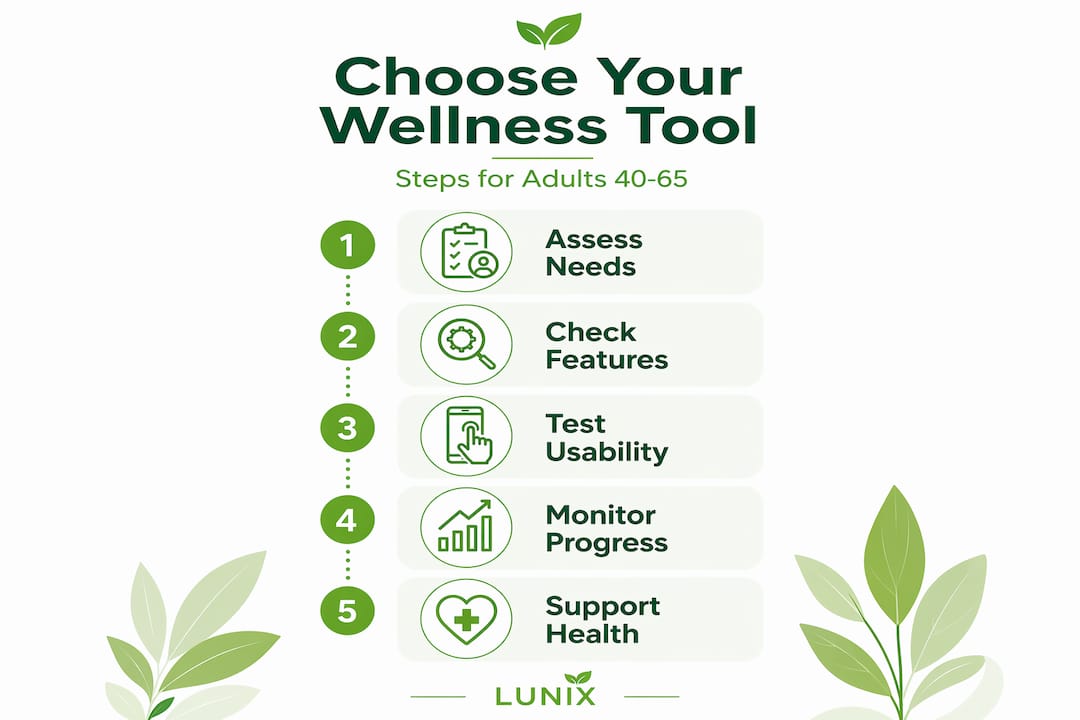
Step-by-step selection process:
- Identify your primary goal: Weight management, mental health support, sleep improvement, and cardiovascular risk reduction each call for different tools
- Check for evidence: Look for apps backed by peer-reviewed research or clinical trials, not just testimonials
- Assess ease of use: A tool you find frustrating will not get used. Prioritize clear interfaces and minimal setup
- Look for personalization features: Generic advice is less effective than recommendations tailored to your health data
- Evaluate long-term support: Does the program continue past 30 days? Does it adapt as you progress?
When comparing your options, keep these categories in mind:
| Tool type | Best for | Key feature to look for |
|---|---|---|
| Self-control apps | Reducing screen time and distraction | Usage tracking with reflection prompts |
| AI health assistants | Daily monitoring and goal support | Adaptive recommendations |
| Digital therapy apps | Anxiety, depression, mental resilience | CBT-based frameworks |
| Wearable devices | Heart rate, sleep, activity tracking | Clinical-grade accuracy |
| HBCSS programs | Long-term behavior change | 52-week structured support |
Research is clear that self-control tools combined with habit learning are significantly more effective than restriction-only approaches. The goal is not to block your access to technology. It is to reshape how you engage with it.
Pair your digital tools with offline practices for the best results:
- Morning movement, even 15 minutes of walking, compounds the effects of activity-tracking apps
- Consistent sleep and wake times make sleep monitoring data more actionable
- Regular nutrition logging works best when paired with an understanding of your own hunger patterns
Revisiting your well-being habits for adults 40 to 65 alongside the right technology and wellness tools creates a foundation that is both flexible and durable.
Why embracing digital wellness tools is essential for healthy aging
Here is an opinion you might not hear often: the fear that technology is fundamentally bad for your health is itself a health risk. When that fear keeps you from using tools that could reduce your cardiovascular risk, improve your sleep, or give you accessible mental health support, it is not protecting you. It is holding you back.
Most conversations about technology and wellness focus on what to limit. Screen time caps, notification blockers, digital detoxes. These have value. But they are only half the picture. The more important question is what technology enables when it is designed well and used intentionally. Designing for digital wellbeing requires engaging ethical considerations beyond simply limiting technology use to truly empower users. The best tools are not about restriction. They are about agency.
For adults in the 40 to 65 window, this matters enormously. These are years when chronic disease risk rises, cognitive changes begin to surface, and recovery takes longer. Waiting for symptoms to appear before engaging with health management is a costly strategy. Digital wellness tools give you the ability to act earlier, more consistently, and with better information. That is not a small advantage.
The invest in wellness technology mindset treats these tools the way you would treat any other investment in your future. You would not skip physical therapy because you were skeptical of the equipment. The same logic applies here. Skepticism is healthy. Avoidance is not.
Choose tools designed with your wellbeing as the actual goal, not your engagement metrics. Ask whether the product makes you healthier and more independent, or just more reliant on the app. That single question will guide you to the tools worth your time.
Explore Lunix’s recovery and wellness collections for your personal health journey
If reading this has sparked a desire to take your wellness more seriously, you are in the right place. At Lunix, we build recovery and comfort solutions designed specifically for people who want their body to restore and perform well at every stage of life.

Our recovery products are crafted to complement the digital wellness practices covered in this guide. Whether you are supporting physical recovery after activity, creating a space that promotes better sleep, or simply building a daily routine that honors your body, Lunix products are designed to work alongside your health goals. Explore our collections and discover how physical comfort tools and technology and wellness for adults 40 to 65 can work together to support the kind of long-term health you are working toward.
Frequently asked questions
What are digital wellness tools and how do they help adults aged 40-65?
Digital wellness tools are apps and devices that support healthier habits, reduce distractions, and promote better physical and mental health. For adults 40 to 65, they offer a practical way to manage chronic health risks and improve daily wellbeing, since these tools target digital overuse and improve interaction quality for overall wellness.
Can AI-driven digital wellness tools benefit older adults?
Yes, significantly. AI digital wellness tools help older adults by bridging the digital divide and providing personalized healthcare support, making health monitoring more accessible and effective for adults aged 40 to 65 and beyond.
Are digital therapy apps effective compared to traditional mental health services?
Digital therapy apps consistently outperform traditional referral pathways in both uptake and lasting results. Digital therapy apps improve mental health support with greater uptake and lasting benefits, making them a strong and accessible option for managing anxiety and depression.
How long should I use digital behavior change tools to see sustained health benefits?
Plan for at least 52 weeks of structured engagement. A 52-week digital behavior change support program sustains cardiovascular risk reduction for up to 24 months, which means the longer you stay engaged with a structured program, the more durable your results become.
What should I consider when selecting a digital wellness tool?
Prioritize ease of use, evidence of effectiveness, personalization, and long-term program structure. Research confirms that combining self-control features with habit learning increases effectiveness significantly compared to restriction-only tools.