


Stress seems to linger a little longer as the years go by, especially for busy adults across North America trying to juggle work, health, and family. The search for real relief is more than just a passing trend—it is a key part of maintaining energy and joy as you move through your 40s, 50s, and beyond. This guide simplifies what actually works by breaking down the core concepts of an effective relaxation routine, offering easy strategies to help you reclaim calm and support your long-term well-being.
Table of Contents
- Defining Relaxation Routines And Core Concepts
- Types Of Relaxation Practices And How They Work
- Proven Health Benefits And Real-Life Applications
- Common Misconceptions And Potential Risks
- Building And Sustaining Effective Relaxation Habits
Key Takeaways
| Point | Details |
|---|---|
| Consistent Practice is Key | Establishing a regular relaxation routine trains your nervous system to relax effectively over time. Aim for 10 minutes daily at the same time to build this habit. |
| Different Techniques for Different Needs | Explore various relaxation practices such as deep breathing, progressive muscle relaxation, and mindfulness to find what works best for you. Each technique triggers a physiological relaxation response in unique ways. |
| Physiological Benefits | Regular relaxation routines lead to measurable health benefits, including reduced stress hormones, improved cardiovascular health, and better sleep quality. Consistent practice compounds these benefits over time. |
| Recognize Challenges | Understand that initial discomfort or lack of noticeable benefits is common. Establishing a practice may require adjustments and should integrate seamlessly into your existing daily habits. |
Defining Relaxation Routines and Core Concepts
A relaxation routine is a structured practice designed to calm your body and mind through intentional, repetitive activities. Unlike sporadic attempts to unwind, these routines work because they train your nervous system to shift into a calmer state consistently.
Think of relaxation routines like brushing your teeth. You don’t expect one brush to keep your teeth clean forever; you do it regularly because repetition works. The same principle applies to your stress response.
What Makes a Relaxation Routine Work
Relaxation routines achieve their power through physical and mental shifts. Relaxation strategies teach specific techniques that reduce your breathing rate and muscle tension, creating what your body recognizes as a “relaxation response.”
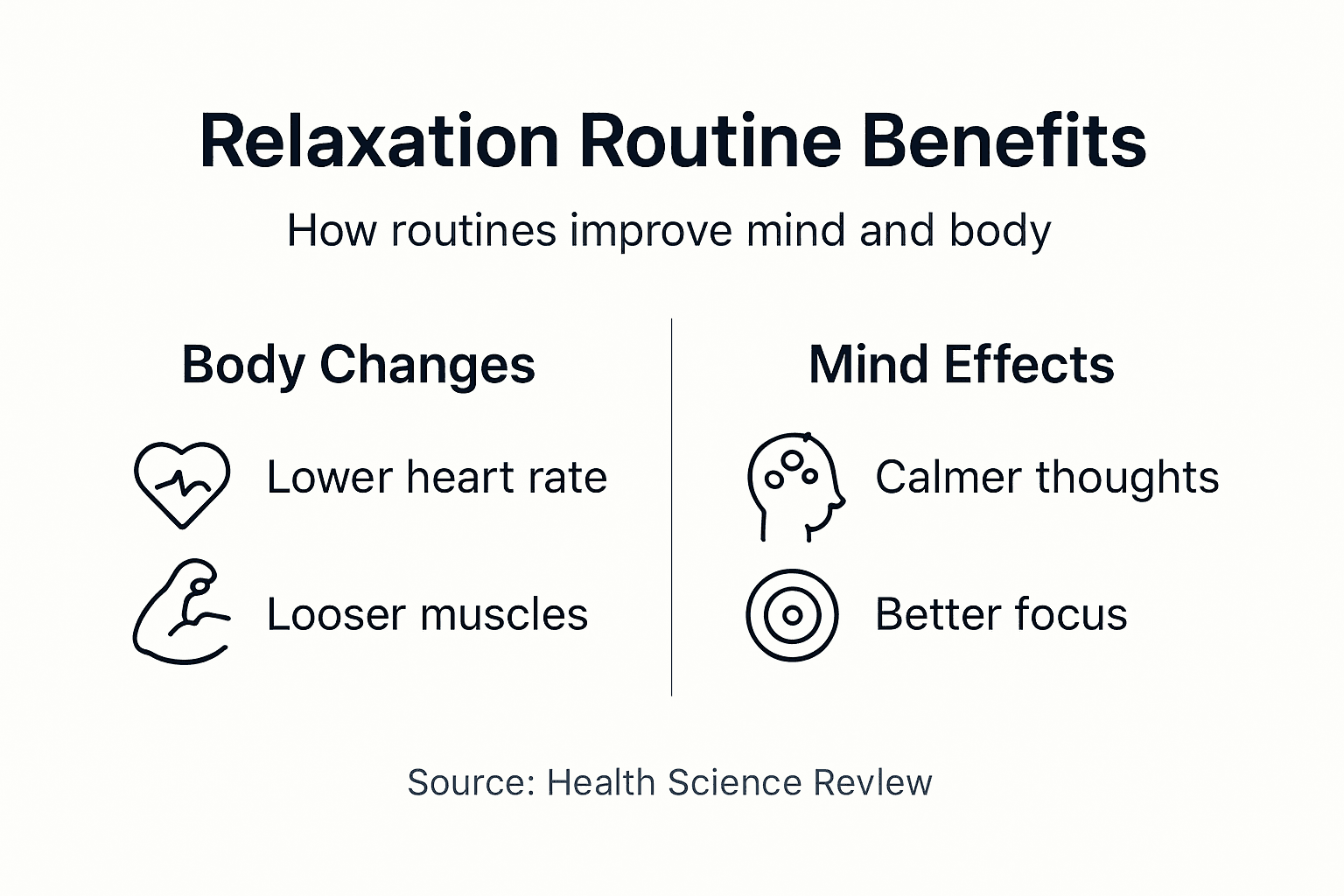
This response is measurable. Your heart rate drops. Your muscles loosen. Your mind becomes quieter. These aren’t imaginary benefits—your physiology actually changes.
The key distinction: random relaxation (collapsing on the couch) differs from intentional relaxation (a planned 15-minute practice). One happens to you; the other you direct.
Core components of effective routines include:
- Present-moment focus: Concentrating on what’s happening right now, not what happened yesterday
- Body awareness: Noticing physical sensations and tension patterns in your muscles
- Controlled breathing: Deliberately slowing and deepening your breath
- Mental acceptance: Allowing thoughts without judgment rather than fighting them
- Consistency: Practicing regularly, not just when stress peaks
Why This Matters for Your Age Group
By your 40s and 50s, stress accumulates differently. Years of work pressure, family responsibilities, and physical demands leave traces in your body. Present-centered awareness and acceptance help counteract this chronic tension.
Your nervous system needs retraining. For decades, you’ve likely operated in high-alert mode. A structured routine tells your body it’s actually safe to relax.
Relaxation routines also support better sleep quality, improved focus, and reduced inflammation—benefits that compound over months and years.
Here’s a quick reference for the physiological changes triggered by effective relaxation routines:
| Body System | Typical Change | Long-Term Impact |
|---|---|---|
| Nervous System | Reduced alertness | Improved stress control |
| Cardiovascular | Lowered heart rate | Reduced heart disease risk |
| Muscular | Decreased tension | Better pain tolerance |
| Endocrine | Less stress hormone | Reduced inflammation |
| Immune | Enhanced function | Stronger immunity |
Effective relaxation routines aren’t luxuries; they’re maintenance for your nervous system, similar to how you maintain your home or vehicle.
The best routine is the one you’ll actually practice. Fancy meditation halls aren’t required. Your bedroom, living room, or even a quiet corner at work works fine.
Pro tip: Start with just 10 minutes daily at the same time each day—your nervous system learns patterns, so consistency matters more than duration.
Types of Relaxation Practices and How They Work
Relaxation isn’t one-size-fits-all. Different practices target your body and mind in different ways, which is why discovering what clicks for you matters.
Each technique works by triggering your relaxation response—a measurable state where your heart rate drops, muscles release, and stress hormones decline. Your nervous system essentially switches gears from fight-or-flight to rest-and-digest mode.
The Main Relaxation Approaches
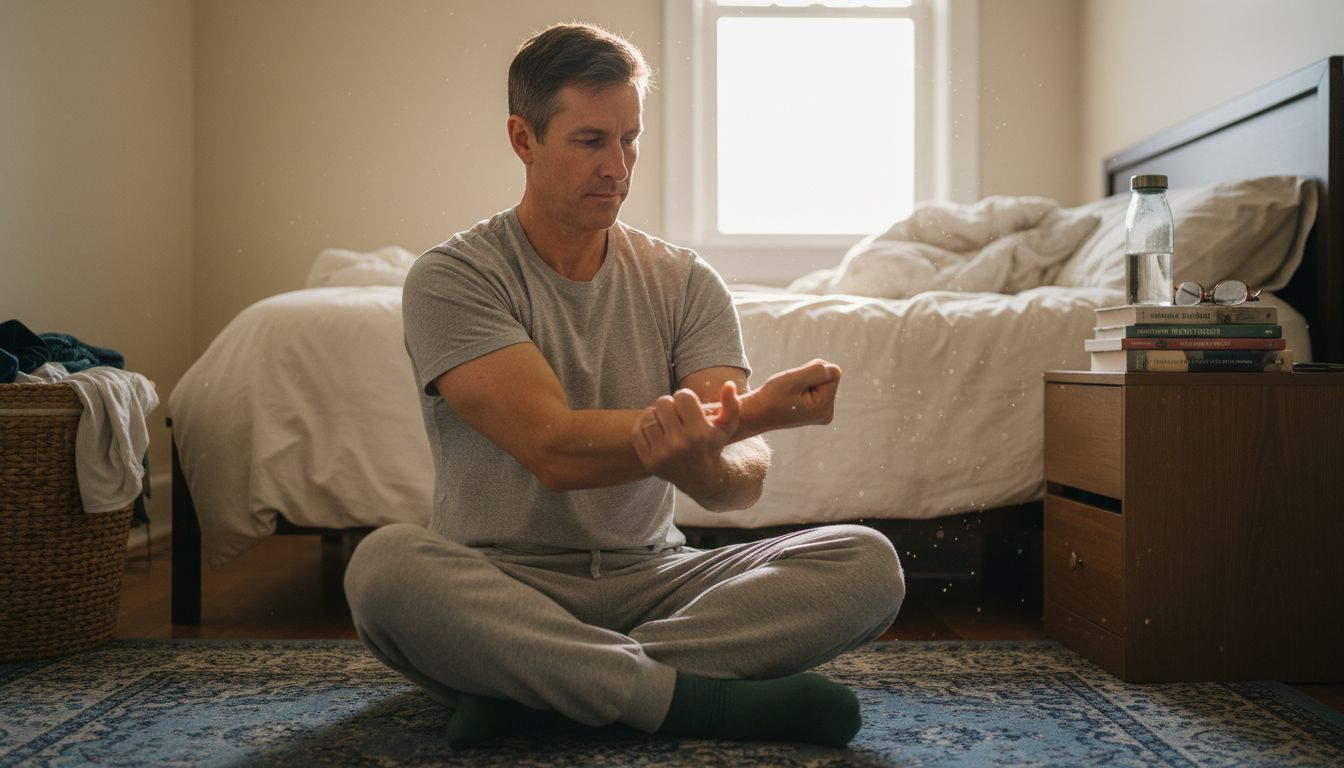
Progressive muscle relaxation systematically tenses and releases muscle groups throughout your body. You start at your toes, squeeze for a few seconds, then release. By the time you reach your head, you’ve created a map of where tension lives and proven to yourself that you can control it.
Deep breathing exercises calm your nervous system directly. Slow, deliberate breaths signal safety to your brain. Most people find these easiest to start with because you can practice anywhere—your desk, your car, waiting in line.
Guided imagery uses visualization to create peaceful mental scenes. Imagine yourself on a quiet beach or in a forest. Your nervous system responds to vivid mental images almost as strongly as real experiences.
Mindfulness meditation trains present-moment awareness without judgment. You notice thoughts, sensations, and emotions as they arise, then let them pass. Unlike relaxation techniques that chase calm, mindfulness accepts whatever appears.
Meditative movement practices like yoga and tai chi blend physical activity with mental focus. You’re moving intentionally while staying present, integrating mind and body simultaneously.
Quick Comparison
Here’s how these practices differ:
Compare the main relaxation practices and their suitability for different goals:
| Practice Type | Ideal Scenario | Typical Time Needed |
|---|---|---|
| Deep Breathing | Immediate stress relief | 2-5 minutes |
| Progressive Muscle Relaxation | Nighttime tension | 10-15 minutes |
| Guided Imagery | Mental refresh | 5-10 minutes |
| Mindfulness Meditation | Building focus | 10-20 minutes |
| Yoga/Tai Chi | Physical and mental balance | 20-30 minutes |
- Fastest results: Deep breathing (can shift your state in 2-3 minutes)
- Best for tension release: Progressive muscle relaxation (targets physical holding patterns)
- Most portable: Breathing exercises and mindfulness (no equipment needed)
- Most engaging: Guided imagery and movement practices (activate different brain regions)
- Best long-term benefits: Consistent practice of any method (benefits compound over weeks)
Finding Your Match
Your age group often responds well to techniques you can feel working immediately. Progressive muscle relaxation gives obvious feedback—you literally feel tension releasing. Deep breathing produces quick nervous system shifts. Both suit people who value tangible results.
The best relaxation practice is the one you’ll actually do consistently, not the one that sounds most impressive.
Start with one technique for two weeks before switching. Your body learns patterns, and real benefits emerge through repetition, not novelty.
Pro tip: Pair your chosen technique with an existing habit—do deep breathing during your morning coffee or progressive muscle relaxation before bed—to anchor the new practice into your routine.
Proven Health Benefits and Real-Life Applications
Relaxation routines aren’t feel-good luxuries—they’re measurable interventions that reshape your physiology. The research backing these practices is substantial and specific.
What the Science Shows
Meditation and mindfulness reduce stress, anxiety, and depression through validated programs like mindfulness-based stress reduction (MBSR). These aren’t minor improvements; participants show measurable changes in brain activity, hormone levels, and emotional resilience.
Your sleep quality improves noticeably. Most people report falling asleep faster and waking less during the night after establishing a relaxation routine. This compounds—better sleep means better stress resilience the next day.
Sleep, rest, and relaxation support your cardiovascular, metabolic, mental, and immune health simultaneously. Regular practice lowers blood pressure, reduces stress hormones, and strengthens immune function.
Benefits Beyond the Obvious
Here’s what accumulates over weeks and months of consistent practice:
- Reduced inflammation: Chronic stress feeds inflammation; relaxation reverses this
- Better emotional regulation: You respond to frustrations rather than react automatically
- Improved focus: A calmer nervous system concentrates better
- Enhanced memory: Sleep and relaxation are when your brain consolidates learning
- Lower disease risk: Chronic relaxation practice reduces cardiovascular disease and metabolic disorders
- Better pain tolerance: Relaxed muscles hurt less; stress amplifies pain perception
Real-Life Applications for Your Situation
These aren’t abstract benefits. Here’s how they show up in your actual life.
That afternoon slump at 3 p.m.? A five-minute breathing practice restores focus without caffeine. Your racing thoughts at 11 p.m. keeping you awake? Progressive muscle relaxation signals your body it’s safe to sleep.
Work stress that used to trigger tension headaches? Regular mindfulness practice creates distance between stress and your physical reaction. You notice the stress but your shoulders stay relaxed.
Family conflicts that escalate quickly? A calmer nervous system means you pause before responding, giving you access to wisdom instead of reactivity.
Relaxation benefits aren’t magical—they’re biological. Your body literally changes its stress chemistry through consistent practice.
The key phrase is “consistent practice.” One relaxation session helps temporarily; three weeks of daily practice rewires your nervous system’s baseline.
Pro tip: Track one specific benefit for four weeks—sleep quality, energy level, or stress response—to notice changes that otherwise blend into daily life.
Common Misconceptions and Potential Risks
Relaxation routines are powerful tools, but they’re not universal panaceas. Understanding what they can and cannot do protects you from disappointment and potential harm.
Myth vs. Reality
Myth: Relaxation practices work for everyone immediately.
Reality: Most people need two to four weeks of consistent practice before noticing significant shifts. Some experience discomfort before relief—old tension surfaces as muscles release awareness.
Myth: More practice always means better results.
Reality: Overdoing meditation or breathing exercises can backfire. You can actually intensify anxiety by pushing too hard. Quality and consistency beat intensity.
Myth: Relaxation replaces medical treatment.
Reality: These practices complement medical care but don’t substitute for it. If you have depression, anxiety disorders, or chronic pain, work with professionals alongside relaxation routines.
When Relaxation Practices Cause Problems
Adverse effects from meditation and mindfulness do occur. Research shows approximately 8 percent of participants report negative experiences, including increased anxiety, panic, or depressive episodes.
This happens most often when:
- You practice without guidance on a pre-existing mental health condition
- You use practices as avoidance rather than acceptance
- You force yourself into practices that don’t fit your temperament
- You sit with intense emotions without proper support
Who Needs Extra Caution
If you have a history of trauma, PTSD, or severe anxiety, start with guidance from a therapist trained in relaxation practices. Certain meditation styles can inadvertently trigger difficult memories.
Similarly, if you’re managing depression, monitor your emotional state carefully. Some people find mindfulness meditation helpful; others find it deepens depressive thoughts without proper support.
Relaxation practices are generally safe for healthy individuals, but they’re not risk-free for everyone—proper guidance matters, especially initially.
A Practical Starting Point
Begin with shorter sessions. Five minutes beats thirty minutes if thirty minutes creates anxiety. Choose practices that feel natural rather than forced—if sitting meditation feels uncomfortable, try walking or breathing instead.
Notice your responses honestly. If a practice consistently increases tension rather than reducing it, switch approaches. Your nervous system will tell you what works.
Pro tip: If you experience increased anxiety or unsettling emotions during practice, stop and return to normal activity; this is feedback that you need a different approach or professional guidance, not a sign to push through.
Building and Sustaining Effective Relaxation Habits
Starting a relaxation routine feels straightforward until life interrupts. The difference between people who stick with it and those who abandon it after three weeks comes down to habit architecture—how you build the practice into your life.
The Stages of Building a Lasting Habit
Forming a sustained meditation habit follows predictable stages. Understanding these stages prevents frustration when progress feels invisible.
Week one brings novelty and motivation. Everything feels fresh. This feeling fades around week two when your nervous system stops responding dramatically and the practice becomes routine.
Week three is critical. Most people quit here, mistaking the normal transition from novelty to habit as evidence the practice isn’t working. Push through this phase.
By week four, your brain begins recognizing the practice as a regular pattern. Benefits compound from here outward.
Integration Strategies That Actually Work
Anchor your practice to an existing routine. Pair relaxation with something you already do daily:
- Morning coffee: Five minutes of breathing while your coffee brews
- Lunch break: Progressive muscle relaxation at your desk
- Evening wind-down: Guided imagery while you sit before dinner
- Bedtime: Body scan meditation under your covers
This removes the willpower burden. You’re not adding a separate task; you’re attaching it to an existing anchor.
Overcoming Real Barriers
Consistency and proper integration of relaxation practices correlate directly with lower mental health risk. Sporadic practice shows minimal effectiveness.
Your actual barriers probably aren’t motivation but logistics. Name them honestly:
-
Barrier: “I forget to practice” Solution: Set a phone reminder at your anchor time
-
Barrier: “I feel awkward sitting still” Solution: Use movement practices like walking meditation or tai chi instead
-
Barrier: “I don’t notice benefits yet” Solution: Track something measurable—sleep quality, energy at 3 p.m., stress response to traffic
-
Barrier: “My schedule changes daily” Solution: Commit to any time that day rather than a fixed time
The most effective relaxation habit is the one that fits your actual life, not the idealized version of yourself.
Variation beats perfection. Missing a day doesn’t reset your progress. What matters is returning the next day without judgment.
Pro tip: After 30 days of daily practice, your relaxation routine shifts from effortful to automatic; stick with consistency through the first month, then maintenance becomes significantly easier.
Enhance Your Relaxation Routine with Lunix Solutions
Struggling to build a consistent and effective relaxation practice that truly transforms your stress response and restores your body is a common challenge. This article highlights how intentional, controlled relaxation routines create lasting changes in your nervous system, improving sleep, focus, and emotional well-being. At Lunix, we understand that building these habits requires more than techniques—it calls for supportive environments and smart tools that seamlessly fit into your daily life to help you relax, restore, and perform at your best.

Explore our curated collection of Stress Reduction – Relaxation Tools designed specifically for consistent practice and effective tension relief. Whether you seek deep breathing aids, guided imagery support, or physical comfort enhancements, Lunix offers thoughtfully designed products tailored for your nervous system’s maintenance. Discover how integrating these tools can anchor your routine, amplify benefits, and help you push past the toughest habit-forming weeks. Start your journey towards a calmer, healthier you at Lunix and browse our full Relaxation – Lunix selection today.
Frequently Asked Questions
What are relaxation routines?
Relaxation routines are structured practices designed to calm the body and mind through intentional, repetitive activities. They help train your nervous system to shift into a calmer state consistently.
How do relaxation routines benefit my health?
Relaxation routines can lead to measurable improvements in physical health, such as reduced heart rate, lower stress hormones, better sleep quality, improved focus, and enhanced immune function. Consistent practice also helps manage stress and anxiety levels.
What are some effective relaxation techniques?
Effective relaxation techniques include deep breathing exercises, progressive muscle relaxation, guided imagery, mindfulness meditation, and meditative movement practices like yoga and tai chi. Each technique targets the body and mind in different ways to trigger a relaxation response.
How long should I practice relaxation routines for them to be effective?
Start with just 10 minutes daily and practice consistently. Most people notice benefits after about two to four weeks of regular practice, as their body learns to respond to the routines more effectively.
Recommended
- Step by Step Relaxation Techniques for Stress Relief – Lunix
- Why Muscle Relaxation Matters for Adult Wellness – Lunix
- Personalized Relaxation: Tailoring Stress Relief to You – Lunix
- Stress Relief Guide 2026: Master Effective Daily Relaxation – Lunix
- Importance of Hearing Health – Key Benefits for Later Life – Audora