


Feeling stiff or limited by lingering aches is a common reality as American adults reach their forties, fifties, and sixties. Restoring ease and confidence in movement matters not just for physical comfort, but for sustaining independence and emotional well-being. With innovative movement therapy solutions, you can bridge the gap between body and mind, unlocking benefits like improved mobility, sharper mental clarity, and reduced daily pain. Discover how movement-based healing can help you move well and feel your best.
Table of Contents
- What Is Movement Therapy And How It Works
- Types Of Movement Therapy Methods For Adults
- Key Benefits For Mobility And Well-Being
- Choosing Safe And Effective Movement Therapy
Key Takeaways
| Point | Details |
|---|---|
| Holistic Approach | Movement therapy connects body and mind, using intentional motion as both a diagnostic and treatment tool for improved well-being. |
| Variety of Methods | Different movement therapy methods, like Dance/Movement Therapy and Tai Chi, cater to various needs, fostering emotional and physical integration. |
| Consistency Matters | Regular and mindful movement enhances mobility, mental clarity, and emotional resilience over time, leading to sustained health benefits. |
| Qualified Practitioners | Choose therapists with proper credentials and a personalized approach to ensure safe and effective movement therapy tailored to individual needs. |
What Is Movement Therapy and How It Works
Movement therapy is a direct and powerful approach to healing that recognizes your body and mind as deeply connected partners in wellness. Rather than treating physical pain or emotional stress separately, movement-based healing uses intentional motion as both a diagnostic tool and a treatment method to address what’s holding you back.
At its core, dance/movement therapy is the psychotherapeutic use of movement to promote emotional, social, cognitive, and physical integration. This isn’t about perfecting dance steps or achieving athletic performance. Instead, it honors that your mind, body, and spirit are interconnected, and movement serves as the bridge connecting all three.
How does this actually work in practice?
Movement therapy operates on a simple truth: your body remembers what your mind struggles to express. When you hold tension from stress, past injuries, or emotional weight, it becomes locked in your muscles, joints, and posture. Through guided, intentional movement, you gradually release these patterns and restore what’s been lost.
The process unfolds through three key mechanisms:
-
Assessment through motion: Your therapist observes how you naturally move, identifying restrictions, compensations, and patterns that reveal underlying physical or emotional challenges.
-
Expression and release: Movement becomes your language. What words can’t capture, your body communicates through gesture, rhythm, and flow.
-
Integration and restoration: Repeated, mindful movement rewires how your nervous system responds, rebuilding strength, flexibility, and emotional resilience.
Movement therapy works because it meets your body where it actually is, not where you think it should be.
Unlike passive treatments where you lie still receiving care, movement therapy makes you an active participant in your own recovery. For adults in their 40s, 50s, and 60s, this distinction matters enormously. You’re not just receiving treatment; you’re rebuilding capability and confidence through your own effort and awareness.
The approach also differs fundamentally from standard exercise routines. While workouts focus on repetition and external goals, movement therapy for wellness emphasizes body awareness, emotional connection, and sustainable mobility gains that translate directly into daily life.
Pro tip: Start noticing how you naturally move during routine activities—climbing stairs, reaching for objects, turning your head. These patterns reveal exactly where your body needs attention, making them your personal roadmap for intentional movement practice.
Types of Movement Therapy Methods for Adults
Movement therapy isn’t one-size-fits-all. Different methods work better for different bodies, goals, and preferences. Understanding your options helps you choose an approach that actually fits your life and addresses what matters most to you.
Dance/Movement Therapy (DMT) is one of the most accessible and versatile approaches. It uses rhythmic movement and creative expression to address emotional, cognitive, physical, and social needs. A typical DMT session flows through warm-ups to prepare your body, assessments to understand your movement patterns, creative movement phases where you explore what feels right, and cool-downs to integrate the experience.
Physical therapy takes a different angle, focusing on optimizing movement through systematic assessment of how your cardiovascular, pulmonary, nervous, and integumentary systems work together. Your therapist identifies specific impairments and restrictions, then designs interventions to restore function and reduce activity limitations.
Yoga-based movement therapy blends physical postures with breathwork and mindfulness. This method suits adults seeking gentle, sustainable strength and flexibility gains without high-impact stress on joints.
Tai Chi emphasizes slow, flowing movements synchronized with breathing. It builds balance, body awareness, and calm—making it ideal if you want something meditative alongside physical benefits.
Here are the main approaches and their strengths:
Here’s a quick comparison of popular movement therapy methods and what adults might gain from each:
| Method | Best For | Typical Session Focus |
|---|---|---|
| Dance/Movement Therapy | Emotional and social integration | Creative movement, self-expression |
| Physical Therapy | Injury recovery and mobility issues | Targeted exercises, functional gains |
| Yoga-Based Therapy | Flexibility and stress reduction | Postures, breathwork, mindfulness |
| Tai Chi | Balance and mental calm | Slow, flowing routines |
| Pilates-Inspired | Core strength and postural alignment | Controlled movement, body alignment |
-
Dance/Movement Therapy: Best for emotional processing, creative expression, and social connection; effective for anxiety, depression, and chronic pain.
-
Physical Therapy: Ideal for post-injury recovery, mobility restoration, and addressing specific movement impairments.
-
Yoga-Based Methods: Excellent for flexibility, strength, and stress reduction with minimal joint impact.
-
Tai Chi: Perfect for balance training, fall prevention, and meditative movement.
-
Pilates-Inspired Therapy: Targets core strength and postural alignment through controlled movements.
The best movement therapy method is the one you’ll actually do consistently, not the one someone told you should work.
What unites these approaches is their fundamental recognition that movement addresses both body and mind simultaneously. Whether you’re recovering from an injury, managing chronic tension, or simply wanting to move with more ease and confidence, there’s a method that matches your needs.
Many adults benefit from combining methods—perhaps physical therapy twice weekly for targeted recovery, then adding Tai Chi or yoga on other days for maintenance and mental clarity.
Pro tip: Try one session of different methods before committing. Your body will tell you immediately which approach feels most natural and sustainable for your lifestyle.
Key Benefits for Mobility and Well-Being
Movement therapy delivers real, measurable improvements across multiple areas of your life. These benefits don’t require perfection or athletic ability—they accumulate naturally as you commit to consistent, intentional movement.
The most immediate payoff is improved physical mobility. When you move with purpose and awareness, your joints regain flexibility, your muscles strengthen, and your body begins moving through daily tasks with noticeably less effort. Climbing stairs, getting out of chairs, and reaching overhead all become easier within weeks of starting.

Physical activity delivers long-term health benefits that extend far beyond what you feel right now. Regular movement reduces your risk for cardiovascular disease, type 2 diabetes, and other chronic conditions. It supports healthy weight management naturally, without restrictive dieting.
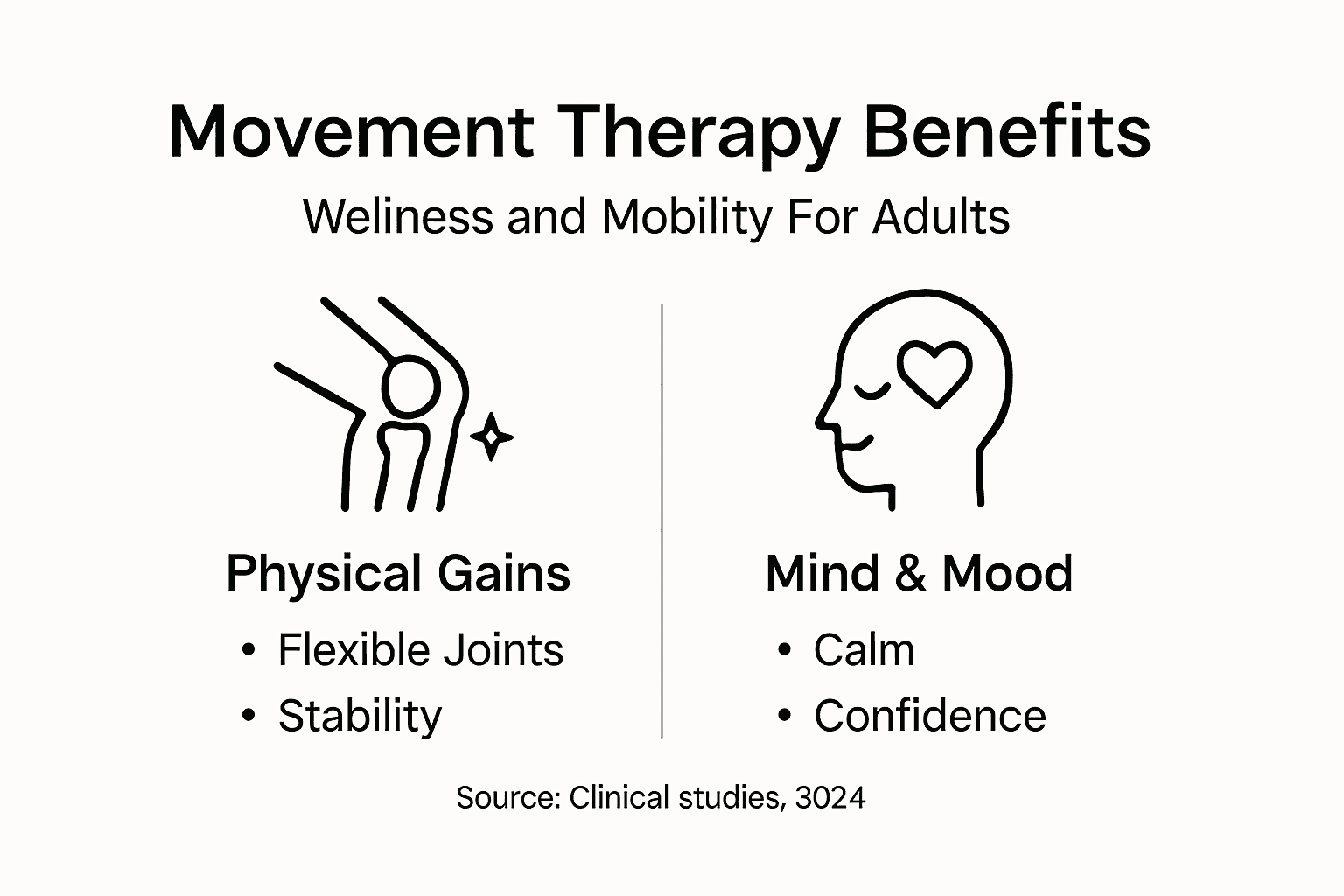
Mental well-being improvements often surprise people. Movement therapy elevates mood through endorphin release and provides a meditative outlet for stress. You’ll notice better sleep quality, sharper focus, and reduced anxiety and depression symptoms.
Here’s what typically shifts within the first 4-6 weeks:
The following table summarizes key short-term and long-term benefits you can expect from consistent movement therapy:
| Benefit Area | Short-Term Effect (Weeks) | Long-Term Effect (Months/Years) |
|---|---|---|
| Flexibility | More joint range of motion | Lasting mobility in daily activities |
| Pain Relief | Reduced aches and stiffness | Lower risk of chronic pain |
| Mood | Improved mood, stress reduction | Sustainable emotional resilience |
| Sleep | Deeper, uninterrupted sleep | Healthy sleep patterns maintained |
| Daily Energy | Increased energy, less fatigue | Consistent stamina throughout life |
-
Physical improvements: Increased flexibility, reduced joint stiffness, improved balance and coordination.
-
Mental clarity: Sharper focus, improved memory, and clearer thinking throughout the day.
-
Emotional resilience: Lower anxiety levels, improved mood stability, and reduced depressive symptoms.
-
Sleep quality: Deeper, more restorative sleep with fewer nighttime interruptions.
-
Daily function: Easier movement in everyday activities with less pain or limitation.
-
Energy levels: Sustained energy without afternoon crashes or fatigue.
Movement therapy works because you’re not just exercising—you’re rebuilding your relationship with your body and how it moves through the world.
For adults in midlife and beyond, the confidence boost matters as much as the physical gains. When your body responds to your intentions, you stop being afraid of movement and start trusting yourself again. This psychological shift often leads to greater overall well-being.
Integrating movement into daily wellness routines means these benefits compound over time rather than plateauing. Consistency matters more than intensity.
Pro tip: Track one specific benefit for two weeks—whether that’s sleep quality, energy at 3 p.m., or ease climbing stairs. Noticing real change builds motivation to continue when willpower alone falters.
Choosing Safe and Effective Movement Therapy
Not all movement therapy is created equal. Choosing an approach that’s both safe and effective means understanding what separates quality practitioners from those who simply guide movement without proper training or evidence-based methods.
The foundation of safety starts with qualified practitioners. Look for therapists with formal credentials, continuing education, and demonstrated expertise in your specific needs. A licensed physical therapist, registered dance/movement therapist, or certified occupational therapist understands anatomy, injury prevention, and how to modify movements for your body’s unique situation.
Evidence-based practice guidelines developed from systematic research reviews provide the blueprint for safe, effective interventions. These guidelines ensure your therapist selects purposeful therapies proven to work for conditions like yours, not just trendy movements that feel good in the moment.
Before committing to any program, ask these critical questions:
-
Does the practitioner assess your current movement patterns and limitations before designing a plan?
-
Can they explain why specific movements address your particular needs?
-
Do they modify exercises based on your feedback and physical response?
-
Are they willing to collaborate with your doctor or other healthcare providers?
-
Do they have professional liability insurance and documented credentials?
Red flags to avoid include practitioners who promise quick fixes, use only one approach for all clients, or ignore pain or discomfort you report during sessions.
Safety also means proper equipment and environment. Your therapy space should be clean, well-lit, and free from obstacles. Equipment should be maintained and appropriate for your body size and fitness level. When recovery solutions integrate therapy tools with practitioner guidance, the combination creates safer, more effective outcomes.
The most effective movement therapy program is one designed specifically for your body and goals, not a generic plan applied to everyone.
Start with a consultation where the practitioner asks detailed questions about your medical history, current medications, past injuries, and lifestyle. This information shapes whether specific movements are safe or contraindicated for you.
Pro tip: Request a trial session before committing to a package. Observe how the practitioner listens to your body’s signals, adjusts the pace based on your needs, and explains their reasoning for each movement choice.
Unlock Your Body’s Potential with Smart Recovery Solutions
Movement therapy highlights the deep connection between your mind and body revealing how intentional motion can unlock emotional and physical wellness. If you are searching for ways to enhance mobility, reduce tension, and build lasting resilience the challenge lies in integrating mindful movement into everyday life while supporting your body through proper recovery and comfort.
At Lunix we understand those key goals. Our premium wellness products are thoughtfully designed to help you restore, relax, and perform at your best by complementing your movement therapy practice. Whether you seek to improve flexibility, relieve pain, or boost energy our smart recovery solutions adapt smoothly into your daily routine making every moment a step toward recovery and long-term health.
Experience how a personalized wellness station transforms your home into a sanctuary for restoration. Explore our innovations at Lunix Wellness Solutions and discover why adults committed to body-mind integration trust our designs for consistent recovery. Don’t wait to feel the confidence that comes from rebuilding your relationship with movement.

Ready to support your movement therapy journey with comfort that truly works? Visit Lunix today and start integrating smart recovery tools that empower you to move with ease every day. Because when your body feels supported stress melts faster and healing happens sooner.
Discover balance, restore mobility, and elevate your wellness now by choosing Lunix as your partner for smart recovery.
Frequently Asked Questions
What is movement therapy?
Movement therapy is a therapeutic approach that uses intentional movement to promote emotional, social, cognitive, and physical integration, addressing both physical pain and emotional stress simultaneously.
How does movement therapy work?
Movement therapy works by guiding individuals through intentional movements that help release physical tension and emotional blockages. It involves assessment through motion, expression and release through movement, and integration to restore overall well-being.
What types of movement therapy are available for adults?
Common types of movement therapy for adults include Dance/Movement Therapy (DMT), Physical Therapy, Yoga-based Movement Therapy, Tai Chi, and Pilates-inspired methods. Each approach targets different needs and goals, from emotional integration to injury recovery and flexibility.
What are the benefits of movement therapy?
Movement therapy offers various benefits, including improved physical mobility, pain relief, enhanced mood and emotional resilience, better sleep quality, and increased energy levels. These benefits contribute to both short-term and long-term well-being.
Recommended
- Role of Touch Therapy: Transforming Adult Wellness – Lunix
- The Surprising Benefits of Whole-Body Vibration Therapy – Lunix
- Soothe Your Soul: Nature Walks as Therapy – Lunix
- March Into Movement: How to Stay Active Without Stepping Foot in a Gym – Lunix
- Voice Therapy Benefits: Transforming Vocal Health - TMRG Solutions