


Home health tools are no longer just for clinical settings. Research shows that remote monitoring devices reduce hospital service use in 72% of randomized controlled trials, with wearables alone showing a 69% reduction. That’s a striking number, and it challenges the idea that serious health management only happens in a doctor’s office. Whether you’re managing blood pressure, recovering from an injury, or simply trying to feel better at home, the right tools can make a real difference. This article breaks down what home health tools actually are, what the evidence says, and how you can put them to work in your daily life.
Table of Contents
- What are home health tools? Definitions and scope
- Evidence-backed benefits of home health tools
- Nuances and limitations: Evidence, accuracy, and engagement barriers
- How home health tools fit into daily wellness and recovery
- Enhance your wellness and recovery with home solutions
- Frequently asked questions
Key Takeaways
| Point | Details |
|---|---|
| Hospital visits reduced | Home health tools can lower hospital service use by up to 69% for common conditions. |
| Supported self-management | Remote monitoring and ergonomic tools make it easier to track your health and manage pain at home. |
| Balance is essential | Success with home health tools comes from realistic use and avoiding obsession with daily numbers. |
| Evidence varies | The strongest benefits are in heart failure, hypertension, and older adults; others may need more research. |
What are home health tools? Definitions and scope
Now that you understand why home health tools are valuable, let’s break down exactly what they are and how they work.
Home health tools cover a wide range of devices and solutions designed to help you monitor, manage, and improve your health without leaving your house. They fall into a few broad categories:
- Remote patient monitoring (RPM) devices: Wearables, blood pressure cuffs, glucose monitors, and smart scales that track vital signs and send data to care teams.
- Ergonomic solutions: Supportive cushions, adjustable furniture, and posture aids that reduce physical strain during daily activities.
- Recovery tools: Compression devices, massage tools, and therapeutic supports that help your body heal and restore after activity or injury.
- Fitness and wellness trackers: Smartwatches and fitness bands that monitor sleep, heart rate, and activity levels.
You can explore the full range of wellness device types to find what fits your lifestyle best.
RPM, in particular, works by collecting daily or continuous data through wearables and smart devices. AI-powered RPM systems analyze that data and send alerts when something looks off, ideally with 24/7 support behind the scenes. Think of it as having a quiet, attentive health assistant running in the background.
“The most effective RPM setups combine continuous data collection with real-time AI alerts and round-the-clock clinical support, turning passive monitoring into active care.”
People who benefit most from these tools include those managing heart failure, hypertension, or diabetes, as well as remote workers dealing with posture and pain issues. If you’re curious about using health monitors effectively, Harvard Health offers a solid starting point for understanding what each device does.
Evidence-backed benefits of home health tools
With clear definitions in mind, let’s move on to the measurable results these tools can deliver.
The numbers are genuinely encouraging. Older adults using remote monitoring gained 3.4 more days at home over a 100-day period compared to those receiving usual care. That might sound modest, but for someone managing a chronic condition, those extra days at home represent real quality of life.
For people with heart failure, the impact is even more significant. RPM programs reduce all-cause mortality by 16% and cut heart failure hospitalizations by 19%. And for Medicare patients dealing with stage 2 hypertension, RPM with coaching resolved the condition in 75% of cases over 12 months. Those are outcomes that rival many medication-based approaches.
| Benefit | Result | Population |
|---|---|---|
| Days at home | +3.4 days per 100 days | Older adults |
| All-cause mortality | 16% reduction | Heart failure patients |
| HF hospitalization | 19% reduction | Heart failure patients |
| Hypertension resolution | 75% success rate | Medicare patients |
| Pain reduction | Up to 61% | Remote workers aged 40-65 |
Beyond clinical outcomes, ergonomic benefits for remote workers are equally compelling. Proper ergonomic setups reduce musculoskeletal pain significantly, and comfort solutions designed for home use can accelerate recovery from everyday strain.
Key takeaways from the evidence:
- RPM tools work best when paired with consistent engagement and clinical support.
- Ergonomic tools deliver measurable pain relief for people who work or spend long hours at home.
- The combination of monitoring and physical comfort tools creates a more complete wellness picture.
Nuances and limitations: Evidence, accuracy, and engagement barriers
While the benefits are substantial, it’s important to understand where home health tools have limitations and how to navigate them.
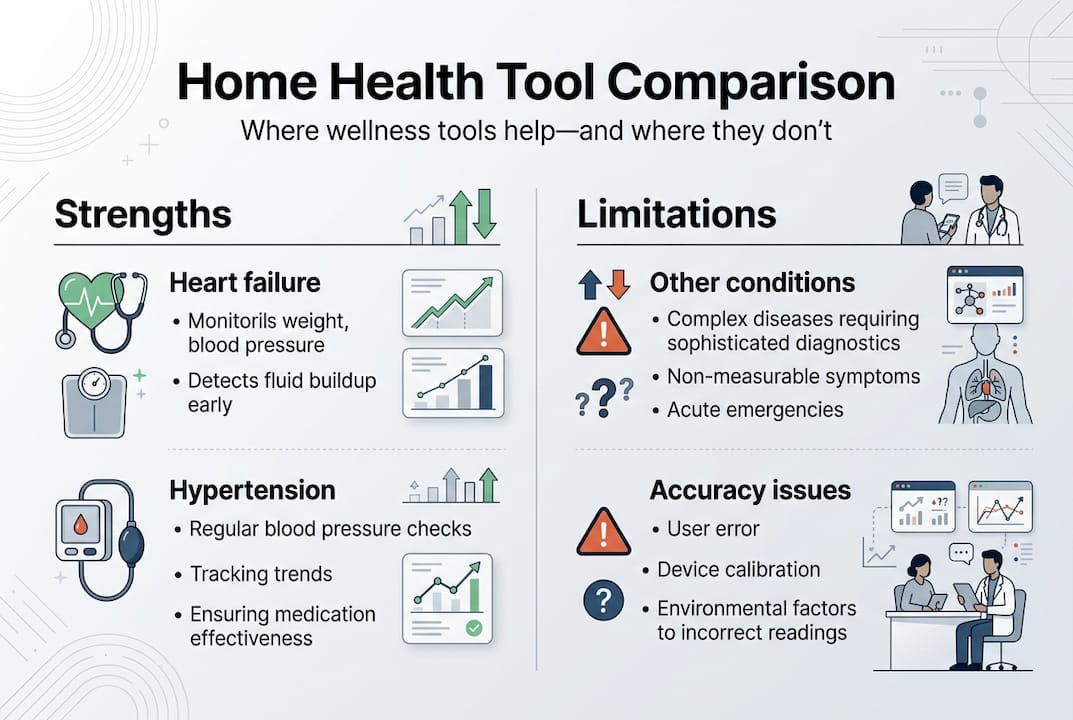
Not every device works equally well for every person. Evidence for RPM clinical benefits is strongest for heart failure and hypertension patients, but for most other health conditions, the research is still catching up. Many studies have methodological gaps, meaning results should be interpreted with some caution.
Accuracy is another real concern. Pulse oximeters (SpO2 monitors) can give less reliable readings for people with darker skin tones or cold hands. Blood pressure monitors may vary depending on cuff placement and body position. Home monitors are genuinely useful for managing blood pressure, glucose, and atrial fibrillation, but there’s a real risk of becoming overly focused on numbers rather than how you actually feel.

Engagement is perhaps the biggest practical barrier. Only 45% of patients enrolled in RPM programs submit any data at all, which limits the effectiveness of even the best devices. Community health settings often lack the resources to support consistent use.
Comparison: Where home health tools shine vs. where they fall short
| Strength | Limitation |
|---|---|
| Strong evidence for heart failure, hypertension | Limited evidence for most other conditions |
| Convenient daily monitoring at home | Accuracy issues in some devices and users |
| Supports self-management and independence | Low engagement rates in real-world settings |
| Ergonomic tools reduce pain reliably | Requires consistent use to see results |
Pro Tip: Focus on one or two tools that address your most pressing health concern. Trying to track everything at once often leads to burnout and disengagement. Consistency with a simple setup beats complexity every time.
For those dealing with physical discomfort, ergonomic product benefits are well-documented and don’t require clinical oversight. And if back pain is your main concern, ergonomic design principles can guide you toward smarter choices for your home setup.
How home health tools fit into daily wellness and recovery
Knowing the evidence and limitations, it’s time to focus on practical applications you can use at home for enhanced outcomes.
Building a home wellness routine doesn’t have to be complicated. The key is starting with what matters most to you and layering in tools gradually. Ergonomic home tools alone can reduce pain by up to 61% for adults aged 40 to 65 who work or spend significant time at home. That’s a powerful starting point.
Here’s a practical framework for integrating home health tools into your daily life:
- Identify your primary concern. Is it blood pressure, back pain, sleep quality, or recovery after activity? Pick one focus area to start.
- Choose one monitoring tool. A blood pressure cuff, glucose monitor, or fitness tracker gives you a baseline to work from.
- Set up your ergonomic environment. Adjust your chair, screen height, and support cushions to reduce physical strain during the hours you spend sitting.
- Build a simple daily check-in. Spend five minutes each morning reviewing your readings and noting how your body feels.
- Track progress weekly, not hourly. Weekly trends are more meaningful than moment-to-moment fluctuations.
- Adjust based on patterns. If your readings or pain levels shift, use that information to modify your habits or consult your care team.
Pro Tip: Pair your monitoring routine with a back pain routine or gentle movement practice. The combination of tracking and physical care creates a feedback loop that keeps you motivated and informed.
Common obstacles and how to work around them:
- Forgetting to use devices: Set a daily reminder on your phone tied to an existing habit, like morning coffee.
- Feeling overwhelmed by data: Focus on one or two key metrics and ignore the rest until you’re comfortable.
- Inconsistent results: Check device placement and follow manufacturer instructions carefully before assuming the device is faulty.
- Pain flare-ups disrupting routines: Have a backup plan, like a simple stretching sequence, for days when your usual routine isn’t possible.
For deeper guidance, pain relief strategies and proven pain relief tips can help you build a more resilient approach to managing discomfort at home.
Enhance your wellness and recovery with home solutions
If you’re ready to start your wellness journey with home health tools, Lunix can help you take the next step. We design recovery and comfort solutions specifically for people who want to feel better at home, without the complexity of clinical-grade equipment.

Our recovery solutions are built around the same principles covered in this article: consistent support, ergonomic design, and tools that fit naturally into your daily routine. Whether you’re managing chronic discomfort, recovering from activity, or simply looking to feel more at ease in your own space, Lunix wellness products offer a thoughtful starting point. Explore our collections and find the tools that match where you are in your wellness journey right now.
Frequently asked questions
Do home health tools really help reduce hospital visits?
Yes, clinical studies show devices like RPM wearables reduce hospital service use in up to 72% of trials. The effect is strongest for people managing heart failure and hypertension.
Are home monitors accurate for tracking glucose and blood pressure?
Most are reliable when used correctly, but accuracy can vary based on device type, placement, and individual factors. Home monitors work best when you follow instructions carefully and cross-check readings with your healthcare provider periodically.
What’s the best way to get started with home health tools?
Start with one device that addresses your most pressing health concern and build a simple weekly tracking habit. Ergonomic tools are a great entry point because they deliver pain relief of up to 61% without requiring any technical setup.
Are there any risks or downsides to using home health tools?
Some users become overly focused on readings, which can increase anxiety rather than support wellbeing. Home monitors also carry accuracy limitations in certain conditions, so expert guidance is always a smart complement to self-monitoring.