


TL;DR:
- A mindful evening self-care routine supports better sleep and reduces work-related stress.
- Essential tools include dim lighting, herbal tea, journaling, gentle movement, reading, and sensory relaxation.
- Consistency and small, enjoyable rituals lead to long-term improvements in sleep quality and well-being.
Transform your evenings: a mindful self-care process
By the time the workday ends, your mind is still running through emails, deadlines, and unfinished tasks. For 83% of U.S. workers, that work stress bleeds directly into home life and disrupts sleep. If you’re between 40 and 65, your body also faces added layers of change, including joint stiffness, hormonal shifts, and lighter sleep cycles. The good news is that a structured, mindful evening self-care process can bridge the gap between a demanding day and genuine rest. In the sections ahead, you’ll learn exactly what to prepare, how to follow a step-by-step routine, how to handle common obstacles, and how to measure real progress.
Table of Contents
- What you need to start your evening self-care process
- Step-by-step evening ritual: The core process
- Troubleshooting common challenges
- How to know it’s working: Results and adjustments
- A holistic perspective: What really matters for sustainable evening self-care
- Enhance your routine with supportive tools from Lunix Wellness
- Frequently asked questions
Key Takeaways
| Point | Details |
|---|---|
| Start with essentials | Simple supplies and a calming environment set the stage for relaxation each night. |
| Follow a stepwise ritual | Consistency in steps like stretching, mindfulness, journaling, and reading supports better sleep and well-being. |
| Adapt for your needs | Modify your routine for physical comfort, menopause symptoms, or chronic sleep issues for optimal benefit. |
| Track and refine | Monitor your sleep and stress response, making adjustments for lasting results. |
| Consistency matters | Regular self-care rituals, even when imperfect, create meaningful improvements over time. |
What you need to start your evening self-care process
Before you can build a meaningful routine, you need the right environment and a handful of simple tools. Think of this stage as setting the stage for your evening, the way a theater dims its lights before a performance begins. The right setting signals to your brain and body that it’s time to slow down.
Essential supplies to gather:
- Soft, warm lighting: Swap overhead lights for a lamp or use a smart bulb set to warm amber tones. Dimming your lights within one hour before bed helps trigger natural melatonin production.
- Cozy textiles: A soft blanket, a supportive pillow, or a weighted blanket can make your wind-down space feel inviting and physically comforting.
- Herbal tea: Chamomile, passionflower, or valerian root teas are gentle options. Herbal tea like chamomile is a well-supported pre-sleep ritual that promotes calm without medication.
- A journal: Even five minutes of writing down thoughts or gratitude clears mental clutter that would otherwise keep you awake.
- A physical book or light reading material: Screen-free reading is a proven way to disengage from the stimulation cycle of devices.
- Calming tools: Aromatherapy items like a lavender diffuser or a rollerball blend can deepen relaxation through scent.
Learning about the self-care benefits for adults in your age group helps you understand why each of these elements matters beyond simple comfort. You’re not just relaxing. You’re actively supporting your nervous system and sleep architecture.
Technology as a supportive tool:
Apps for guided meditation, breathwork, or cognitive behavioral therapy for insomnia (CBT-I) can be genuinely helpful, especially when you’re first building a habit. CBT-I is a structured approach that identifies and changes the thoughts and behaviors that interfere with sleep. Apps like Calm, Headspace, or digital CBT-I programs offer accessible entry points. Pair them with your bedtime routine essentials for the strongest foundation.
Setting your dedicated time and space:
Consistency is the engine of any effective routine. Choose a fixed location in your home, your bedroom, a quiet living room corner, or even a dedicated reading chair. Pick a start time you can realistically protect most nights, ideally 60 to 90 minutes before your target bedtime.

| Supply | Purpose | Budget-friendly option |
|---|---|---|
| Warm lighting | Melatonin support | Lamp with warm bulb |
| Herbal tea | Calming the nervous system | Grocery store chamomile |
| Journal | Mental decompression | Any notebook |
| Physical book | Screen-free distraction | Library book |
| Aromatherapy | Relaxation through scent | Lavender candle |
Pro Tip: If you experience hot flashes or night sweats, keep a small fan nearby and choose lightweight, moisture-wicking textiles. If joint stiffness is a concern, place a foam roller or gentle resistance band near your wind-down space so stretching tools are always within reach.
Step-by-step evening ritual: The core process
With all preparations complete, it’s time to put your evening self-care plan into action. A time-anchored routine gives structure and reduces the mental effort of deciding what to do next. Structure is freedom, especially in the evening when decision fatigue is at its peak.
Here is a sample process you can adapt to your schedule, built around evidence-based steps that blend gentle movement, mindfulness, and sensory cues for sleep:
- 8:00 PM: Light dinner and herbal tea. Keep the meal easy to digest and skip heavy proteins or spicy foods. A consistent mealtime helps anchor your circadian rhythm, which is your body’s internal 24-hour clock, especially useful if hormonal changes have disrupted your natural sleep drive.
- 8:30 PM: Gentle movement. Take a 10-minute walk around the block or do five to ten minutes of light stretching. This releases physical tension that builds during a sedentary day and signals the shift from active mode to rest mode. Focus on the hips, shoulders, and lower back, which are common tension areas for adults.
- 9:00 PM: Journal and meditate. Spend five minutes writing down three things you’re grateful for or a brief brain dump of unfinished thoughts. Follow with five to ten minutes of mindfulness meditation, even guided breathing counts. This is the most researched step in the routine. Consistent mindfulness meditation has shown meaningful improvements in sleep quality, particularly for adults experiencing age-related sleep changes.
- 9:30 PM: Reading and aromatherapy. Switch on a lamp, put on soft instrumental music or silence, and read for 20 to 30 minutes. Add a lavender diffuser or apply a calming essential oil blend to your wrists. This layer of sensory comfort deepens the relaxation response.
- 10:00 PM: Consistent bedtime. Lights out at the same time each night, even on weekends. This one habit alone is one of the most powerful tools for improving sleep quality over time.
Adapting the routine for common midlife changes:
| Challenge | Modification | Key adjustment |
|---|---|---|
| Hot flashes | Lower room temp to 65-68°F | Use a fan and light bedding |
| Joint pain | Add seated stretches at step 2 | Skip floor exercises |
| Nocturia (nighttime urination) | Taper fluids by 7 PM | Reduce herbal tea after 8 PM |
| Difficulty meditating | Use a guided app | Start with 3-minute sessions |
The key is not to follow this plan perfectly every night. What matters most is returning to it consistently, adjusting as life shifts, and keeping the core elements in place most evenings.
Troubleshooting common challenges
Even with the best plan, obstacles can arise. Here’s how to stay on track when challenges occur.
Common barriers don’t have to derail your entire routine. Most of them have simple, practical solutions backed by real evidence.
Barrier 1: Joint pain or stiffness
If getting on the floor for stretching feels uncomfortable, move to a chair or use a bed-based routine. Seated forward folds, ankle circles, and shoulder rolls are effective and gentle. According to Harvard Health guidance, seated stretches and careful fluid management are recommended adaptations for joint stiffness and nocturia. You can also explore ways to manage joint pain at night that go beyond stretching.
Barrier 2: Menopause symptoms
Hot flashes and night sweats are among the most disruptive evening challenges for women in midlife. Keep your bedroom cool, between 65 and 68 degrees Fahrenheit, and use moisture-wicking sheets. A small fan on your nightstand is one of the most underrated tools for better sleep during perimenopause and menopause. Pair cooling strategies with the broader wellness recovery tips that support hormonal balance.
Barrier 3: Work stress that follows you home
When your mind is still processing the workday at 9 PM, journaling becomes even more important. Write a brief “worry list” that externalizes your concerns so your brain stops holding them in active memory. A short body scan meditation, where you mentally scan from head to toe while breathing slowly, is another effective reset. Structured daily routine management strategies can also help you create cleaner boundaries between work and personal time.
Barrier 4: Persistent insomnia
If your sleep troubles have lasted more than three months, it’s time to seek a CBT-I provider. This structured, evidence-based therapy is the first-line treatment for chronic insomnia and is more effective long-term than sleep medication.
Here is a quick reference list of evidence-backed solutions organized by challenge:
- Joint pain: Seated stretches, a supportive pillow between the knees, and a warm bath before bed
- Nocturia: Taper all fluids by 7 PM, reduce herbal tea to early evening only, and discuss any underlying causes with your doctor
- Menopause: Cool room, lightweight bedding, layered clothing for easy adjustment
- Work stress: Journaling, breathwork, and a hard cut-off time for screens and email
- Chronic insomnia: Seek CBT-I, either in person or through a validated digital program
Pro Tip: Avoid alcohol and caffeine after noon. Both are known to fragment sleep architecture, even if you fall asleep easily. Alcohol especially suppresses the deep, restorative sleep stages your body needs most.
How to know it’s working: Results and adjustments
Once you’ve implemented your routine, it’s important to assess how it’s serving you and adjust as needed.
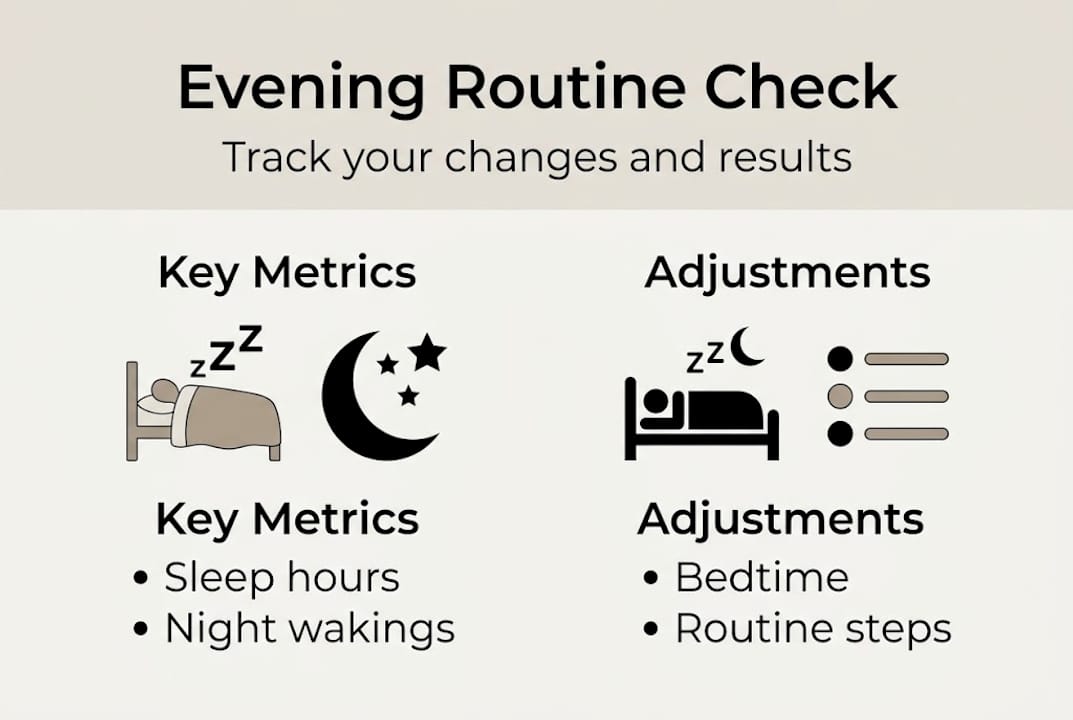
Tracking your progress doesn’t require a sleep lab. A simple notebook or a sleep tracker app gives you enough data to spot patterns and make meaningful changes. The goal is to gather enough information to know what’s helping and what needs tweaking.
Early positive signs to watch for:
- Falling asleep within 20 to 30 minutes of lying down (this is called sleep latency, and shorter is better)
- Waking up fewer times during the night
- Feeling more rested when you wake, even before the alarm
- Improved mood and lower irritability in the morning
- Less mental resistance to starting your routine each evening
Aim for 7 to 9 hours of sleep per night. A consistent bedtime supports your circadian rhythm, and even small evening rituals build measurable gains in well-being over weeks. Mindfulness interventions have shown moderate to significant effects on sleep quality for older adults, with benefits that appear as early as two to four weeks of consistent practice.
Weekly progress tracking table:
| Day | Bedtime | Wake time | Night wakings | Mood (1-5) | Routine completed? |
|---|---|---|---|---|---|
| Monday | 10:05 PM | 6:30 AM | 1 | 4 | Yes |
| Tuesday | 10:15 PM | 6:45 AM | 2 | 3 | Partial |
| Wednesday | 10:00 PM | 6:30 AM | 0 | 5 | Yes |
Use this simple table each morning while the details are still fresh. After two weeks, you’ll start to see which nights went best and what those nights had in common. That data guides your next adjustment.
When to escalate:
If you’ve followed your routine consistently for four to six weeks and sleep issues persist, consider adding a meditation for relaxation practice during the day, not only at night. If symptoms are severe, including prolonged sleep deprivation or significant daytime impairment, reach out to a healthcare provider. CBT-I remains the gold standard, and digital CBT-I programs have shown sustained improvements in sleep efficiency even at 12 months post-treatment.
Small refinements matter more than wholesale overhauls. If the routine is working 80% of the time, it’s working.
A holistic perspective: What really matters for sustainable evening self-care
Here’s something most wellness content won’t tell you directly: the perfect evening routine doesn’t exist. What exists is the routine you actually do most nights, imperfect and adaptive.
For adults navigating midlife, the pressure to “get it right” can become its own source of stress. But consistency over perfection is the actual engine of long-term well-being, especially when hormone fluctuations and life demands mean your needs will shift from season to season.
The most meaningful gains come from stacking small, enjoyable rituals night after night. A five-minute meditation done six nights a week outperforms a 30-minute session done once. A warm cup of chamomile tea at the same time each evening is a more powerful circadian cue than a rigid, complicated protocol that collapses under real-world pressure.
Celebrate the small wins. Fell asleep ten minutes faster? That’s real progress. Woke up one fewer time last week? Your nervous system is responding. The relaxation benefits of consistent evening rituals compound quietly over months, reshaping your baseline stress response and sleep quality in ways that a single good night never could.
The goal is not a perfect performance. It’s a sustainable practice that grows with you.
Enhance your routine with supportive tools from Lunix Wellness
For readers looking to take their routine further, specialized tools can provide added comfort and support where it counts most.
At Lunix, we design recovery and comfort solutions that slot naturally into the routines you’re already building. Whether you’re winding down with gentle stretching, addressing joint tension after a long day, or simply looking for better physical support during your rest time, the right tools can make a meaningful difference.

Explore our full range of recovery aids designed to ease physical tension and support your body through the evening. From targeted support solutions to hand massagers and comfort pillows that enhance relaxation, Lunix products are built for real life and real rest. Small additions to your routine can create lasting comfort you’ll feel every morning.
Frequently asked questions
How long should my evening self-care process last?
Aim for 30 to 60 minutes of wind-down time, starting about one hour before your usual bedtime. Even 20 minutes of consistent effort is a strong starting point if your schedule is tight.
What’s the best way to relax if I have difficulty falling asleep?
Gentle stretching, deep breathing, and mindfulness meditation are your most reliable tools. Mindfulness interventions show moderate to significant effects on sleep quality for adults, with results that build over consistent practice.
How can I adapt my routine for menopause symptoms or joint pain?
Cool your room to 65 to 68°F to reduce hot flash disruption, and shift to seated stretches if floor exercises feel uncomfortable. Small environmental changes can make a large difference in overnight comfort.
When should I seek professional help for sleep issues?
If insomnia has persisted more than three months, reach out to a CBT-I certified provider. This therapy is the most effective long-term treatment for chronic insomnia and is widely available in both in-person and digital formats.
Are digital self-care tools effective for evening routines?
Yes. Digital CBT-I programs have demonstrated meaningful improvements in sleep efficiency and reduced nighttime awakenings for adults, with benefits sustained at 12 months. Meditation apps are equally effective when used consistently as part of your routine.