


TL;DR:
- Sensory stimulation uses deliberate engagement of the five senses to positively influence sleep, mood, and cognitive health. Research shows it is a safe, effective approach that complements mindfulness, with personalized routines yielding the best results. Incorporating simple tools like aromatherapy, gentle massage, or calming music into daily life can enhance relaxation and recovery.
Most people treat relaxation as a mental exercise, something to be achieved through willpower, breathing, or clearing the mind. But your body tells a different story. Sensory stimulation therapy can improve sleep quality, reduce neuropsychiatric symptoms, and enhance well-being with very few adverse effects. That means your eyes, ears, nose, and skin are powerful allies in your pursuit of rest and recovery, and most wellness routines are leaving them completely out of the equation. This article walks you through exactly what sensory stimulation is, what the research actually shows, and how you can bring it into your everyday life starting today.
Table of Contents
- What is sensory stimulation and why does it matter?
- Proven benefits for sleep, stress, and cognitive health
- Types of sensory stimulation: Methods and how they work
- What makes a sensory session effective? Protocols, safety, and limitations
- Bringing sensory stimulation into your daily life
- The real secret: Individualized sensory routines beat one-size-fits-all advice
- Explore supportive tools to enhance your sensory well-being
- Frequently asked questions
Key Takeaways
| Point | Details |
|---|---|
| Sensory input matters | Engaging your senses can measurably improve sleep, stress, and cognitive well-being. |
| Choose methods wisely | Different sensory techniques have specific benefits and should be matched to your goals. |
| Safety is key | Start with gentle techniques, monitor your comfort, and avoid overstimulation. |
| Personalization wins | Tailor your sensory routines and experiment to find what delivers the most benefit for you. |
What is sensory stimulation and why does it matter?
Having set the stage for the power of sensory engagement, let’s clarify exactly what sensory stimulation means and why it really matters for your daily well-being.
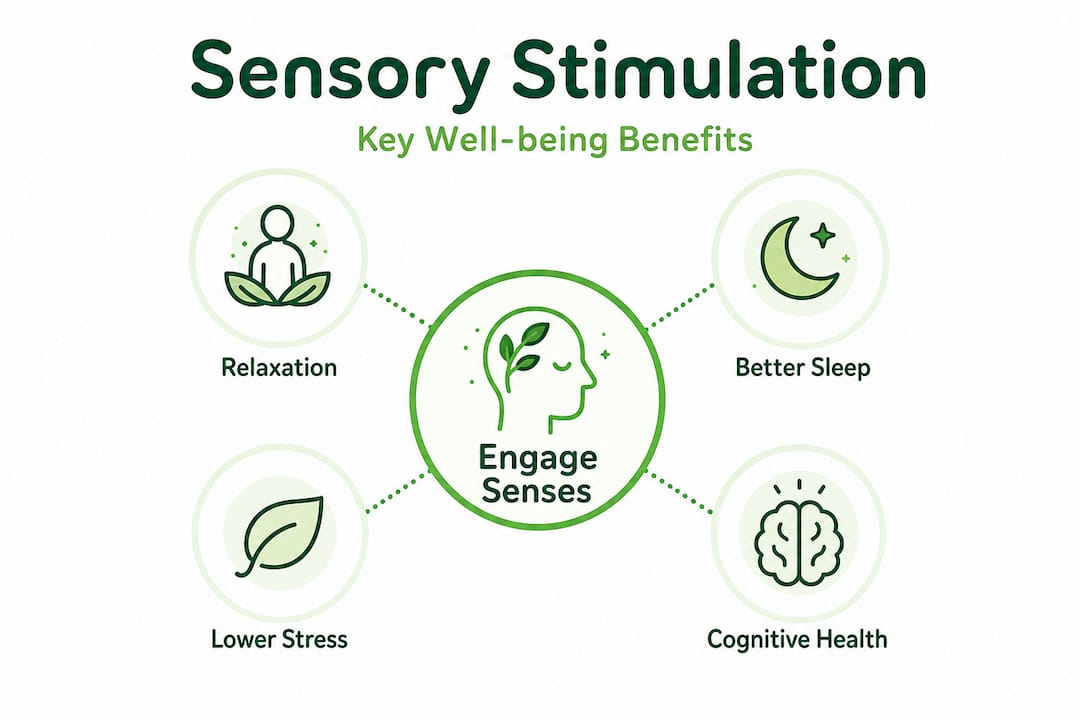
Sensory stimulation refers to the intentional use of input from your five senses to influence your body’s physiological and emotional state. Think of it as a direct conversation between your environment and your nervous system. When you hear gentle music, breathe in a calming scent, or feel warm pressure on your muscles, your brain receives signals that can shift you out of a stressed, alert state and into a calmer, more restorative one.
Mechanistically, sensory stimulation is framed as altering your nervous system state through sensory modulation, meaning it works by engaging multiple sensory channels for regulation. This is not a vague concept. It is a concrete physiological process. Your nervous system is constantly reading environmental cues, and sensory inputs either ramp it up or wind it down.
Common forms of sensory stimulation include:
- Auditory: Music therapy, nature sounds, white noise, binaural audio
- Visual: Soft lighting, color therapy, nature imagery, light therapy lamps
- Olfactory: Aromatherapy using essential oils like lavender, eucalyptus, or chamomile
- Tactile: Massage, weighted blankets, warm baths, compression therapy
- Multi-modal: Combining two or more of the above simultaneously
What makes this approach so compelling is that it goes far beyond simply improving your mood. Engaging your senses intentionally can influence sleep, reduce pain perception, support cognitive function, and even affect heart rate and cortisol levels. Exploring holistic comfort and recovery means recognizing that your body responds to its environment at every level, not just the mental one.
“Relaxation is not just something that happens in your mind. It is a whole-body shift that your senses can help initiate.”
When you pair sensory techniques with mindfulness techniques for reducing stress, the results can be even more noticeable. The two approaches work on overlapping pathways, and together they create a more complete routine.
Proven benefits for sleep, stress, and cognitive health
Now that you understand what sensory stimulation is, let’s look at the real-world benefits backed by scientific studies.
Sensory stimulation therapy has been reported to improve sleep quality metrics including sleep latency (how long it takes you to fall asleep), total sleep time, and subjective sleep experience in populations with sleep disorders. These are meaningful gains. Falling asleep faster and staying asleep longer has cascading benefits for your immune function, hormone balance, mood, and daytime energy.
The benefits extend well beyond sleep. For older adults with cognitive challenges, multisensory stimulation shows evidence of reducing neuropsychiatric symptoms and improving overall cognitive function. This is significant because it points to a therapy that is accessible, non-invasive, and does not carry the side effect profiles of many pharmaceutical approaches.
Benefit domains at a glance
| Domain | Population | Key outcomes |
|---|---|---|
| Sleep quality | Adults with insomnia or sleep difficulties | Shorter sleep latency, longer sleep time, better subjective rest |
| Stress and mood | General adult population | Reduced cortisol, lower self-reported anxiety, improved mood |
| Cognitive function | Older adults with mild to moderate symptoms | Reduced agitation, better orientation, improved engagement |
| Physical comfort | Adults with chronic tension or pain | Decreased muscle tension, improved circulation, relaxation response |
Adults most likely to benefit include:
- People who experience difficulty falling or staying asleep
- Those dealing with chronic stress or work-related tension
- Individuals managing mild cognitive symptoms or age-related memory concerns
- Adults recovering from physical fatigue or muscle soreness
- Anyone seeking non-pharmaceutical approaches to support their mental health
One of the most reassuring findings from this body of research is its safety profile. Nineteen studies reported no adverse events, which suggests sensory stimulation is broadly accessible and low-risk when done with reasonable care. Compare this with other approaches for sleep problems, some of which carry more significant considerations. Sensory-based methods offer a compelling case for being a first-line option in your personal wellness toolkit.
Learning to create a relaxation zone at home is one of the most practical steps you can take. Even small environmental changes, like adding a diffuser and adjusting your lighting before bed, can set the stage for more effective daily relaxation. And if you are new to the whole idea, starting with step-by-step relaxation techniques can make the learning curve much gentler.

Types of sensory stimulation: Methods and how they work
With the benefits in mind, it’s time to explore your practical options and the key differences among sensory techniques.
Research on sleep-related outcomes has used auditory, visual, olfactory, and tactile stimuli as well as multi-modal therapies such as music, light, aromatherapy, and massage, with variable dosing depending on the population studied. The good news is that many of these methods translate easily to home use.
Comparison of sensory stimulation methods
| Method | Sense engaged | Evidence strength | Safety at home | Ideal session length |
|---|---|---|---|---|
| Music therapy | Auditory | Strong | Very high | 20 to 45 minutes |
| Aromatherapy | Olfactory | Moderate to strong | High | 15 to 30 minutes |
| Light therapy | Visual | Moderate to strong | High (use as directed) | 20 to 30 minutes |
| Gentle massage | Tactile | Strong | High | 15 to 30 minutes |
| Multi-modal (combined) | Multiple | Emerging, promising | High with monitoring | 20 to 40 minutes |
How to try each method at home:
- Music therapy: Choose slow-tempo instrumental music (60 to 80 beats per minute works well for relaxation). Listen through headphones or a speaker in a dim room for 20 to 30 minutes before bed.
- Aromatherapy: Add a few drops of lavender or chamomile essential oil to a diffuser. Place it in your bedroom or living room 15 minutes before you want to relax.
- Light therapy: Use a soft-glow lamp with warm color temperatures in the evening. Avoid cool blue light at least an hour before sleep.
- Gentle touch or massage: Apply gentle pressure to your hands, feet, or neck using your own hands or a simple device. Even five minutes of slow, rhythmic pressure can shift your nervous system into a calmer state.
- Multi-modal sessions: Combine two or three methods during a single wind-down period. For example, play soft music while using an aromatherapy diffuser and resting under a weighted blanket.
Pro Tip: Start with the one method that feels most natural to you. If you love music, begin there. If you find scents grounding, lead with aromatherapy. You are more likely to stay consistent with something that already resonates with you.
Safety and feasibility considerations in multisensory environments include careful session structure and monitoring for individual tolerance. Signs of overstimulation to watch for include increased agitation, a feeling of sensory overwhelm, headache, or restlessness. If you notice any of these, simply reduce the intensity or shorten the session. Your bedroom design plays a key role here too. Thoughtfully designing a restful bedroom creates the right foundation. And for broader ideas, exploring at-home relaxation tips can help you build a full routine around your lifestyle. You may also consider adding sleep-support supplements to complement your sensory routine if sleep remains a challenge.
What makes a sensory session effective? Protocols, safety, and limitations
Having explored your options, let’s address what determines success, how to maximize benefits, stay safe, and where caution is needed.
Not all sensory sessions produce equal results. The difference often comes down to protocol quality, consistency, and how well the approach is matched to your personal needs. Physiological autonomic effects from sensory rooms may occur before negative mood and attention subjectively improve, which means your body may be calming down even before you consciously feel it. This is an important reminder to give sessions enough time to work.
Key factors for a successful sensory routine:
- Consistency: Brief daily sessions tend to outperform occasional long ones
- Personalization: Choose modalities that you genuinely enjoy and respond to positively
- Controlled intensity: Start at a low intensity and gradually find your ideal level
- Environment: A quiet, comfortable setting amplifies the effectiveness of any method
- Outcome tracking: Keep a simple journal noting how you feel before and after each session
It is also important to hold realistic expectations. Sensory stimulation is not a cure-all. Earlier Cochrane review findings reported no evidence of efficacy for multisensory stimulation programs for people with dementia overall, which highlights that results are not guaranteed across all populations or conditions. Research on anxiety outcomes also shows mixed results depending on the protocol used.
“Sensory stimulation works best as a personalized practice, not a prescribed formula. The goal is to find what your nervous system responds to, not to follow someone else’s routine exactly.”
This is why personalized relaxation strategies are so valuable. Generic advice about what to do is less useful than a framework for discovering what works for you specifically. If you are navigating more complex concerns like anxiety alongside sensory exploration, referencing practical strategies for anxiety can give you a fuller picture. Similarly, knowing how to recognize and handle potential side effects keeps your practice safe and sustainable.
Pro Tip: Keep a simple notepad or phone note where you log your sensory sessions. Note the method, duration, and how you felt afterward. Even two weeks of data can reveal powerful patterns about what your body genuinely responds to.
Bringing sensory stimulation into your daily life
Equipped with methods and safety tips, here’s how you can put sensory stimulation into practice every day.
The good news is that you don’t need a specialized clinic or expensive equipment to benefit from sensory stimulation. A recharge room style approach using multisensory, naturalistic environments has been associated with large reductions in self-reported stress. You can recreate this at home with intention and a few simple tools.
Setting up a sensory-friendly relaxation space at home:
- Choose a quiet corner of your bedroom or living room where you won’t be interrupted
- Dim the overhead lights or switch to a warm-toned lamp
- Add a small essential oil diffuser and select a calming scent like lavender or sandalwood
- Have a comfortable seat, blanket, or reclining surface ready
- Queue up a playlist of slow instrumental music or nature sounds
- Set a timer for 20 to 30 minutes so you’re not watching the clock
- Limit screen use during the session and allow your senses to take the lead
Practical sensory ideas for different settings:
- At home: Use aromatherapy during your evening wind-down, or apply a warm compress to your neck while listening to calming music
- At work: Keep a small rollerball essential oil at your desk and step outside for five minutes of fresh air and natural light during breaks
- During recovery: Pair gentle tactile stimulation (like a hand warmer or gentle massage tool) with a favorite ambient playlist after physical activity
- Before sleep: Layer two or three techniques together: dim lighting, a diffuser, and slow breathing to compound the calming effect
A straightforward evening example: after work, you change into comfortable clothing, start a lavender diffuser, and play a quiet jazz or acoustic playlist at low volume. You sit or recline for 20 minutes without your phone. Many people report this kind of routine dramatically shifts how they feel entering the rest of their evening.
Incremental adjustments make all the difference. You don’t need to overhaul your entire routine at once. Start with one method for one week, notice how you feel, and build from there. For a more detailed setup guide, exploring home wellness stations can give you a room-by-room framework for creating spaces that support your body and mind. For additional support with managing daily stress, more stress coping strategies can complement what you’re building at home.
The real secret: Individualized sensory routines beat one-size-fits-all advice
As you begin to incorporate these practices, keep this crucial truth in mind.
Most wellness content gives you a protocol: do this for 20 minutes, use that scent, follow this exact sequence. And while structure is helpful as a starting point, the research tells a more nuanced story. What works powerfully for one person may do almost nothing for another. The evidence base for sensory stimulation is genuinely promising, but it is also full of variability. Protocol design, session duration, individual sensitivity, and personal preference all influence outcomes in ways that no universal guide can fully account for.
We believe the most powerful shift you can make is to stop treating your sensory routine as a checklist and start treating it as a conversation with your own nervous system. That means paying attention to what actually relaxes your shoulders, quiets your thoughts, and helps you fall asleep faster. It means being willing to drop something that doesn’t resonate, even if it’s widely recommended.
Small tweaks matter more than dramatic overhauls. Swapping a harsh overhead light for a warmer bulb, or replacing silence with gentle background music, can produce a measurably different physiological response. These are not major investments. They are calibrations. And the people who benefit most from sensory work are often those who approach it with curiosity and patience rather than urgency.
“Real relaxation starts when you tune in to your own senses and signals.”
Use the research as a map, not a rulebook. Your personalized sensory guide is built through experimentation over time, not downloaded from a single article. Trust your responses, keep adjusting, and remember that consistency in any sensory practice will outperform perfection in none.
Explore supportive tools to enhance your sensory well-being
If you’re ready to take your sensory well-being to the next level, here are tools and resources that can help you put new habits into action.
At Lunix, we design products specifically to support the kind of intentional, sensory-rich recovery your body deserves. Our comfort and recovery tools are built to integrate seamlessly into the routines you’ve been reading about, bringing the tactile and therapeutic benefits of sensory stimulation right into your home.

Whether you’re looking to enhance your evening wind-down or support your body after a long day, our recovery solutions are crafted with your comfort in mind. A great place to start is our soothing hand warmer, which delivers gentle warmth and tactile comfort that pairs beautifully with music or aromatherapy during a relaxation session. Explore the full range and find what fits your routine.
Frequently asked questions
What is sensory stimulation, and how is it different from relaxation techniques?
Sensory stimulation activates multiple senses to directly influence your nervous system, while traditional relaxation techniques often focus only on mental reframing or breathing patterns.
Can sensory stimulation help with sleep problems?
Yes. Clinical studies show that both single-sensory and multi-sensory therapies can improve sleep quality metrics including how fast you fall asleep and how long you stay asleep.
Are there any risks or side effects of sensory stimulation?
Research is reassuring, with 19 studies reporting no adverse events. Starting slowly, keeping sessions moderate in intensity, and monitoring your comfort level keeps the practice safe for most adults.
Does sensory stimulation work for everyone?
Results vary. Mixed findings in dementia studies highlight that no single approach works universally, which is why personalizing your sensory routine is so important.