


You can start meditating right now, in the next five minutes, without any experience or special equipment. Sit in a chair with your back supported and feet flat on the floor. Close your eyes, take one slow breath in, and on each exhale silently repeat a short, calming word like “calm,” “peace,” or “here.” When your mind wanders to your to-do list or last night’s dinner, simply notice that it wandered, and return to your word. Set a timer for five minutes. That is the whole practice.
This meditation for beginners guide is built around that one simple sit. Everything else — the techniques, the habit plan, the guided resources — exists to help you repeat it and build on it.
- Sit in a chair, back supported, feet flat.
- Breathe naturally; don’t try to control it.
- Repeat a short positive word silently on each exhale.
- Notice when your mind drifts, then return to your word without judgment.
- Set a timer for 5 minutes. Press start.
Harvard Health research frames this mantra-and-breath approach as one of the most accessible entry points for new practitioners, noting that distraction is expected and that returning to the anchor is the practice itself.
Key Takeaways
Starting with a 5-minute daily sit, anchored to an existing routine and supported by guided audio, is the most reliable path to a lasting meditation practice.
| Point | Details |
|---|---|
| Start with 5 minutes | A short daily sit beats occasional long sessions; begin with breath or mantra and build gradually. |
| Wandering mind is normal | Each time you notice distraction and return to your anchor, you complete one training repetition. |
| Use guided audio early | Free resources like UCLA MARC and Insight Timer reduce self-judgment and provide structure for new practitioners. |
| Anchor to a daily cue | Attach your sit to an existing habit — after coffee, before brushing teeth — to avoid the motivation trap. |
| Lunixinc for comfort support | Orthopedic wedge pillows and cushions from Lunixinc reduce posture discomfort, making it easier to sit consistently. |
Table of Contents
- Why should you try meditation as a beginner?
- What are the main beginner meditation techniques?
- How do you run a beginner meditation session step by step?
- What should you do when meditation feels hard?
- How do you build a meditation habit that actually sticks?
- Where can you find guided meditations as a beginner?
- A reusable 5, 10, and 15-minute practice script
- What most beginners get wrong about meditation
- Simple comfort items that make starting easier
- Sources
Why should you try meditation as a beginner?
The benefits most beginners notice are modest and gradual, which is exactly what makes them stick. You are not chasing a dramatic transformation. You are building a small, reliable shift in how your nervous system responds to stress.
Harvard Health’s clinical program summaries report that consistent practice over weeks produces realistic improvements in stress, sleep, mood, and attention. The NCCIH’s research overview echoes this, noting that meditation can support well-being while being clear that it is not a substitute for medical care.
Here is what you can reasonably expect with a few weeks of regular practice:
- Stress reduction. You may notice a small pause before reacting to frustration — a half-second gap that wasn’t there before.
- Better sleep. Many beginners report falling asleep more easily, often within the first two to three weeks of consistent sits.
- Improved focus. Short daily sessions train the attention muscle the same way a short daily walk trains the legs.
- Greater emotional awareness. You start noticing feelings as they arise rather than only after they’ve already shaped your behavior.
The key word in all of this is consistent. A Harvard Health guide on mindfulness notes that even 15 minutes a day can produce meaningful results, and beginners can start with far less. Five minutes daily beats 45 minutes once a week, every time.
What are the main beginner meditation techniques?
There is no single right technique. The best one is the one you will actually do. Below is a quick overview of the most accessible styles, with a one-line how-to and a note on when each fits best.
| Technique | How to do it | Best for | Typical duration |
|---|---|---|---|
| Breath awareness | Focus on the physical sensation of each breath at the nostrils or belly | General stress relief, first sessions | 5–10 minutes |
| Body scan | Slowly move attention from feet to head, noticing sensations without judgment | Sleep, tension release | several minutes |
| Loving-kindness (metta) | Silently repeat phrases like “May I be well, may I be happy” and extend them to others | Emotional balance, self-compassion | several minutes |
| Mantra | Repeat a short word or phrase silently on each exhale | Beginners, busy minds | 5–15 minutes |
| Walking meditation | Walk slowly and deliberately, placing full attention on each step and foot contact | Movement-friendly, restlessness | several minutes |
| Guided audio | Follow a recorded teacher’s voice through a structured session | Structure, self-judgment, first weeks | 5–20 minutes |
For most beginners, breath awareness or mantra sits are the easiest entry points because they require no memorized phrases and no movement. Mindful specifically for early-stage practitioners because it provides structure and reduces the self-judgment that often derails new practice. Body scan works particularly well as a pre-sleep wind-down, and you can find a detailed walkthrough in this step-by-step relaxation guide.
How do you run a beginner meditation session step by step?
A complete beginner session has six clear steps. Follow them in order and you have a full practice, whether you sit for 5 minutes or 15.
- Arrive. Sit in a chair with your back lightly supported and feet flat on the floor. Rest your hands on your thighs. Harvard Health specifically recommends this chair setup for beginners because it reduces micro-adjustments that break concentration.
- Settle. Close your eyes or soften your gaze downward. Take two or three slightly deeper breaths to signal a transition from activity to stillness.
- Find your anchor. Let your breath return to its natural rhythm. Notice the sensation of air moving in and out. If you are using a mantra, begin repeating your chosen word silently on each exhale.
- Notice wandering. Your mind will drift. This is not failure. The NHS Every Mind Matters guide describes this as a normal part of the process, not a sign that you are doing it wrong.
- Return to your anchor. Gently redirect attention back to the breath or mantra, without self-criticism. Each return is one training repetition.
- Close gently. When your timer sounds, pause for 10–15 seconds before opening your eyes. Notice how you feel. Stand slowly.
To scale from 5 to 10 or 15 minutes, simply extend step 3 through 5. The structure stays identical.
Pro Tip: Use a timer app with a soft chime rather than a jarring alarm. Insight Timer has a free gentle bell option that ends sessions without a jolt.
A few small adjustments make a real difference in comfort:
- Place a folded blanket under your feet if they don’t reach the floor comfortably.
- A wedge cushion or lumbar support behind your lower back reduces the urge to shift position.
- Dim the lights or close curtains to reduce visual distraction.
- Keep the room slightly cool rather than warm — warmth encourages drowsiness.
Pairing breathwork with your sit can deepen the calming effect, and you might also explore tea for relaxation benefits as a soothing complement to your practice. This breathing exercises guide covers simple techniques that complement a short meditation session well.
What should you do when meditation feels hard?
Every beginner hits the same four walls. Here is what each one actually means and how to move past it.
- Wandering mind. This is the most common concern and the least problematic one. A wandering mind is not a broken meditation. Harvard Health frames returning attention to the anchor as the core training repetition — the noticing itself is the rep. The more your mind wanders and you return, the more you are practicing.
- Sleepiness. If you keep nodding off, sit up straighter or move to a walking meditation instead. Lying down for a body scan almost guarantees drowsiness in early practice. Try meditating earlier in the day, or after a glass of water rather than right after a meal.
- Physical discomfort. Discomfort usually means your posture needs adjustment, not that meditation isn’t for you. Shorten the session to 3 minutes, use a chair instead of the floor, and add a cushion or wedge behind your lower back. Most discomfort resolves within the first week once your body adapts.
- Self-judgment. Thoughts like “I’m terrible at this” or “I can’t stop thinking” are just more thoughts. Treat them as data rather than verdicts. Mindful that guided audio is especially helpful here because a teacher’s voice normalizes distraction and models a non-judgmental return.
If a session feels particularly rough, try switching to a 5-minute guided audio instead of sitting solo. One session of structure often resets the habit.
How do you build a meditation habit that actually sticks?
The biggest mistake beginners make is waiting until they feel motivated to sit. Motivation follows action, not the other way around. The practical fix is to attach meditation to something you already do every day.
Harvard Health advises treating the session like a calendar appointment and choosing a realistic time rather than an aspirational one. After morning coffee, before brushing your teeth at night, or right after you sit down at your desk — any existing cue works. This daily habits guide covers the habit-anchoring principle in more detail if you want to apply it beyond meditation.
Here is a simple 7-day starter plan that builds gradually:
- Day 1–2. 3 minutes of breath awareness, chair posture, no guided audio.
- Day 3–4. 5 minutes of mantra sit, using the exhale-word method from the opening of this guide.
- Day 5. 5 minutes with a guided audio from UCLA MARC or Insight Timer.
- Day 6. 7 minutes: 5 minutes of breath awareness plus a 2-minute body scan at the end.
- Day 7. 10 minutes of your preferred technique from the week.
A few behavioral nudges that make the plan easier to follow:
- Block the time in your calendar with a recurring reminder.
- Keep a cushion or folded blanket visible near your usual chair as a physical cue.
- Aim for most days rather than every single day — missing one session is not a reason to quit.
- Track your streak in a simple notes app; even a tally mark per day creates a small reward loop.
Where can you find guided meditations as a beginner?
Guided audio is one of the fastest ways to reduce friction in early practice. Here is a short, curated list of resources, starting with free options:
- UCLA Mindful Awareness Research Center (UCLA MARC). Free guided audio downloads directly from a university research center. Sessions range from 3 to 19 minutes and include breath awareness, body scan, and loving-kindness. Start here if cost is a concern.
- Mindful.org. Free articles, short guided practices, and a structured how-to library. The site’s beginner section is written by experienced teachers and backed by clinical research.
- Tara Brach. A widely respected meditation teacher who offers hundreds of free guided sessions on her website and podcast. Her style is warm, non-dogmatic, and well-suited to beginners who feel self-critical.
- Meditation Oasis. A long-running podcast with free guided sessions covering breath, body scan, and sleep meditations. No account required.
- Insight Timer. A free app with thousands of guided sessions, a gentle timer, and a community feature. The free tier is genuinely generous and includes content from many well-known teachers.
- Headspace. A paid app with a structured beginner course called “Basics.” The animations and clear progression make it particularly good for people who like visual learning. A limited free tier is available.
- Calm. A paid app focused on sleep and stress. Its “Daily Calm” sessions are 10 minutes and work well as a consistent morning or evening anchor.
Pro Tip: Search for “5-minute beginner breath” or “10-minute body scan” in any of these apps rather than browsing broadly. A specific search gets you into a session faster and reduces the decision fatigue that often delays practice.
For a deeper look at how guided sessions support habit formation, this guided meditation overview walks through the mechanics of why audio guidance works so well in the early weeks.
A reusable 5, 10, and 15-minute practice script
This script is drawn from Harvard Health’s mantra-and-breath framework and the NHS’s seven-step structure. Read it slowly, record it on your phone, or simply keep it open on screen.
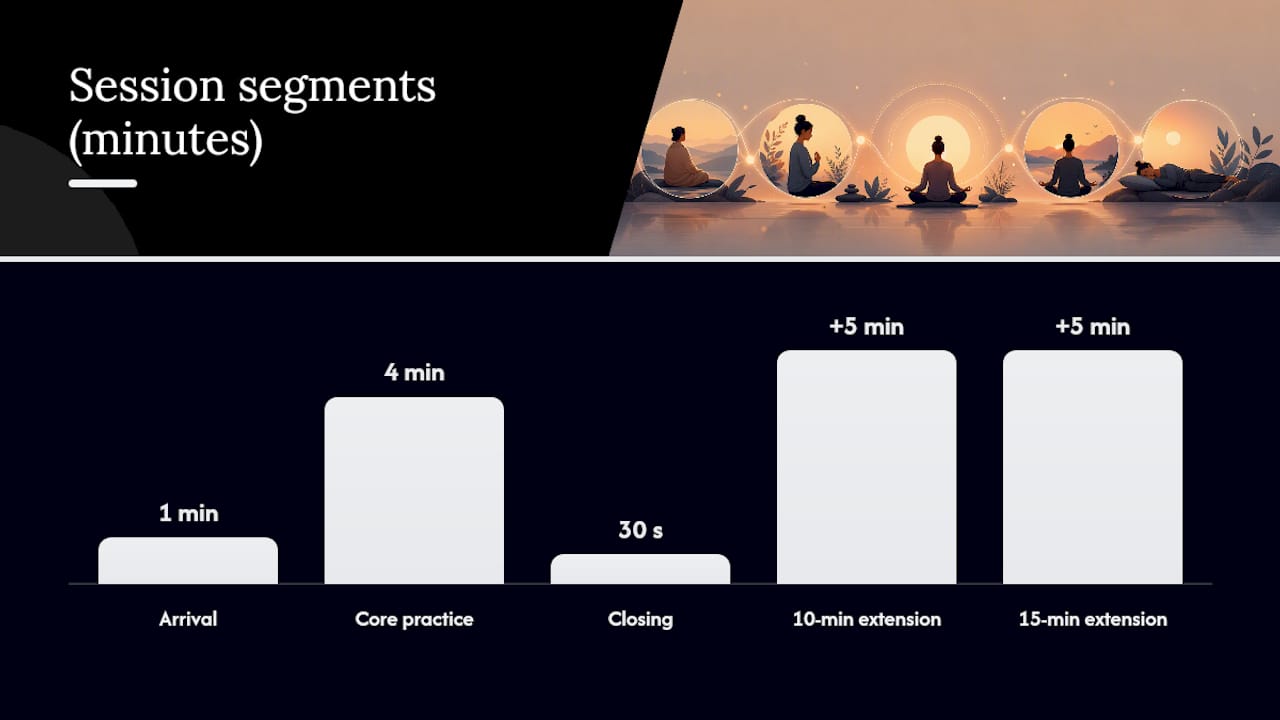
Arrival (all versions — 1 minute)
- Sit in your chair, back lightly supported, feet flat. Hands rest on your thighs.
- Close your eyes or lower your gaze.
- Take three slow breaths, slightly deeper than normal. Let the exhales be long.
Core practice — 5-minute version (4 minutes)
- Let your breath return to its natural pace. Notice the sensation of air at your nostrils or the rise of your belly.
- On each exhale, silently repeat your chosen word: “calm,” “here,” or “peace.”
- When a thought pulls your attention away, notice it without frustration. Label it gently: “thinking.” Then return to your exhale word.
- Repeat steps 5 and 6 until your timer sounds.
Extension — 10-minute version (add 5 minutes after step 7)
- After the first 5 minutes, release the mantra. Simply rest attention on the breath itself, noticing each inhale and exhale as a physical event.
- If the mind wanders, return to the breath without commentary.
Extension — 15-minute version (add 5 more minutes)
- Shift to a brief body scan. Move attention slowly from the soles of your feet upward to the crown of your head, pausing at each area for two or three breaths.
Closing (all versions — 30 seconds)
- When the timer sounds, pause. Notice the quality of the silence.
- Open your eyes slowly. Stand only when you feel ready.
Pro Tip: Consistency matters more than duration. A 5-minute sit every morning for 30 days builds more than a 30-minute sit once a week. Place the practice on your calendar the same way you would a meeting.
For a movement-friendly variation, try a 10-minute walking session: walk slowly in a quiet space, placing full attention on the sensation of each foot lifting, moving forward, and making contact with the ground. For a sleep-friendly version, use the body scan extension (step 10) lying down in bed with no timer.
What most beginners get wrong about meditation
Most people start meditation chasing a feeling — calm, clarity, bliss — and then conclude they are failing when the feeling doesn’t arrive on schedule. That framing sets up a losing game. Meditation is not a state you achieve; it is a skill you practice. The measure of a good session is not how quiet your mind was. It is whether you showed up and returned your attention when it wandered.
The other common trap is waiting for the “right” 20-minute window. Beginners who insist on long sessions often sit less frequently than those who commit to five minutes and actually do it. Short and consistent is the engine. Long and occasional is the stall.
One practical mindset shift: stop evaluating each session as good or bad. Instead, simply note that you sat. That is the only metric that matters in the first month. Over time, the habit creates the conditions for deeper practice — not the other way around.
Finally, physical comfort is not a luxury in meditation. If your lower back aches after two minutes, you will spend the session managing pain rather than practicing. A supportive chair, a wedge cushion behind your lumbar spine, or a folded blanket under your knees removes that friction before it becomes a reason to quit.
Simple comfort items that make starting easier
Physical discomfort is one of the most underrated reasons beginners abandon meditation in the first two weeks. A few small items remove that barrier entirely.

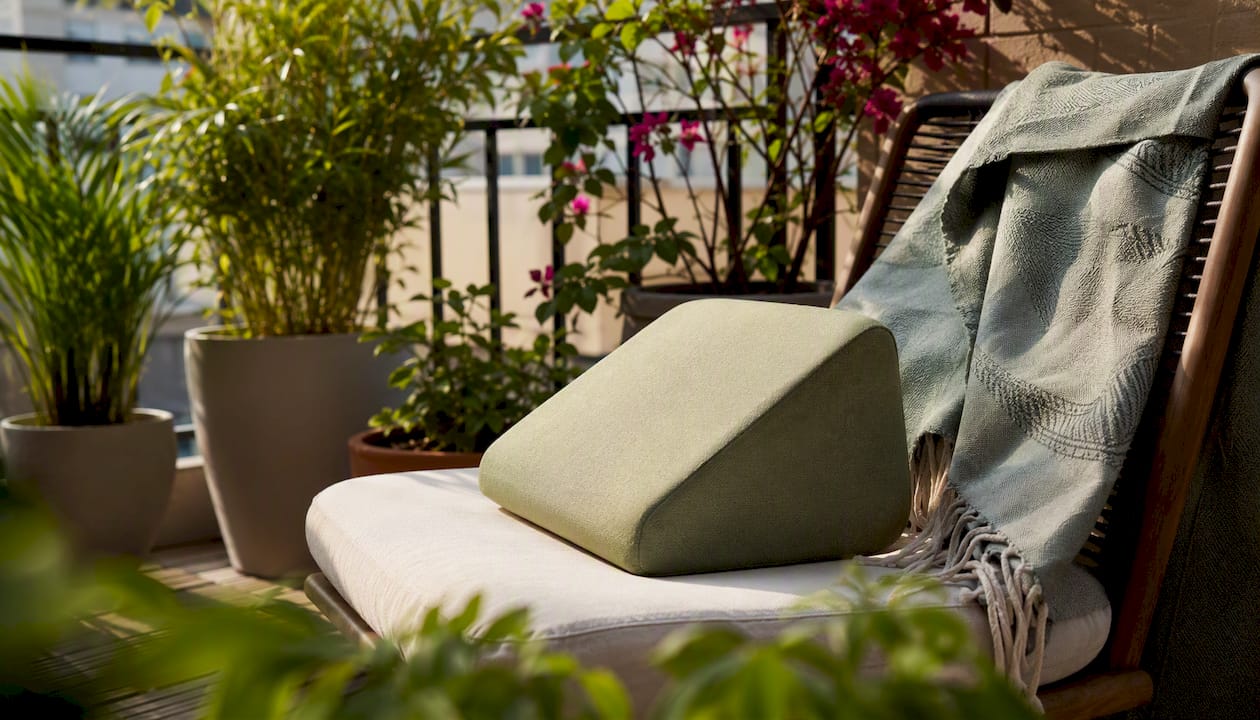
A wedge pillow or lumbar cushion behind your lower back keeps your spine in a supported, neutral position so you can focus on your breath instead of your posture. A lightweight blanket across your lap or shoulders maintains warmth during still, quiet sits without overheating. For floor sitting, a firm meditation cushion raises your hips slightly above your knees, which reduces strain on the lower back and hips during longer sessions.
Lunixinc carries orthopedic wedge pillow sets, supportive cushions, and comfort accessories designed for exactly this kind of daily wellness use. If posture discomfort has been getting in the way of your practice, explore the full range at Lunixinc and find the support that fits your setup. A small ergonomic adjustment today can make the difference between a habit that sticks and one that quietly disappears.
Sources
These are the primary sources behind this guide. Each one is free to access and worth bookmarking.
- Meditation techniques: How to meditate for stress, sleep, and focus - Harvard Health
- Try this: Take a seat - Harvard Health
- Learn How to Meditate: A Mindful Guide to Transform Your Life
- How to meditate for beginners - Mental wellbeing tips - NHS
This article is for general informational purposes only and is not a substitute for professional medical advice. If you have a health condition, consult a qualified healthcare provider before starting a new wellness practice.