


TL;DR:
- Guided meditation simplifies practice by providing structure and reducing the frustration of unguided focus. Research shows brief daily sessions effectively reduce stress, anxiety, and improve mental health, with benefits lasting beyond eight weeks. Building a consistent routine and accepting the process as skill development are key for lasting personal growth.
Most people think meditation means emptying your mind completely. That misconception stops millions of adults from ever trying it. The real role of guided meditation is far more practical: a trained voice, an app, or a structured audio session walks you through the process so your only job is to follow along. Mindfulness meditation benefits mental and physical health at any age without special equipment, and research now shows that brief daily sessions produce measurable results. This article breaks down how guided meditation works, what the science actually says, and how you can build a practice that fits your real life.
Key Takeaways
| Point | Details |
|---|---|
| Guidance lowers the barrier | A teacher or audio guide removes the guesswork so beginners can build a habit in the first critical weeks. |
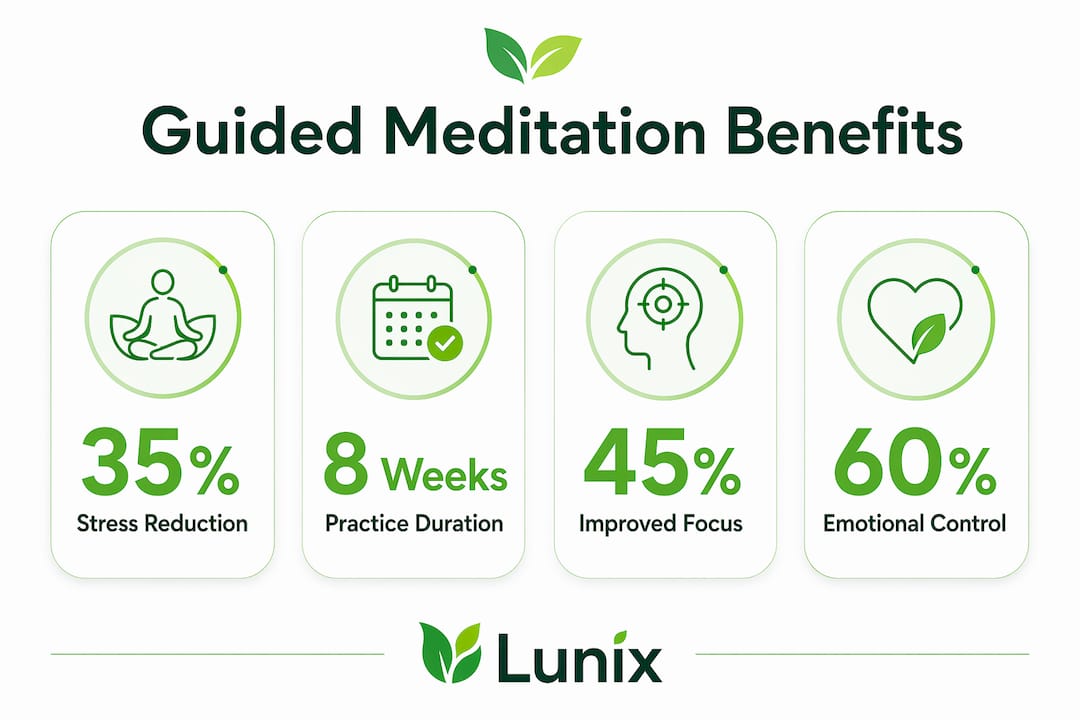
| 10 minutes daily is enough | Clinical trials show meaningful stress reduction from just 10 minutes daily for 8 weeks. |
| Acceptance matters more than relaxation | The stress-reduction benefit comes from changing how you relate to thoughts, not just from calming down. |
| Effects rival medication | A PCORI-funded study found guided mindfulness practice as effective as antidepressants for anxiety, with far fewer side effects. |
| Consistency beats session length | Eight weeks of regular practice produces lasting effects that hold up even four months later. |
The role of guided meditation vs. other forms
Guided meditation is the practice of meditating with real-time or recorded instructions leading you through each step. The clinical term for the most studied version is mindfulness-based meditation, and the structured program most backed by research is Mindfulness-Based Stress Reduction, or MBSR. Understanding the difference between guided and unguided practice matters, especially when you are just starting out.
Unguided meditation asks you to sit quietly and self-direct your focus. That works well once you understand the mechanics, but for most people in their 30s, 40s, and 50s, it feels frustrating and vague at first. Guided meditation solves that by providing a structure your nervous system can follow. The formats available today include:
- Audio apps that deliver daily sessions to your phone
- Video-based programs with a visible instructor for visual learners
- Live virtual classes that offer real-time feedback
- Audio downloads or podcasts for offline or low-data environments
The techniques used in guided sessions vary, but the most common are breath-focused awareness, body scan (moving attention slowly through each body part), visualization, and loving-kindness practice. Each one trains a slightly different mental skill. Breath focus builds moment-to-moment attention. Body scans develop physical awareness and interrupt tension patterns. Visualization creates a deliberate shift in mental state.
Pro Tip: If you have tried unguided meditation and found your mind racing, start with a body scan session instead of breath-only work. It gives your attention something concrete to follow and dramatically reduces the sense of “doing it wrong.”
For more on pairing these techniques with a broader stress management plan, the mindfulness techniques guide from Lunixinc is a solid starting point.
What the science says about stress and mental health
The evidence base for guided meditation has grown substantially in the past decade. This is no longer a fringe topic. It now sits alongside conventional treatments in peer-reviewed journals and clinical guidelines.
A large randomized clinical trial found that 10 minutes daily for 8 weeks reduced stress with an effect size of Cohen d 0.85 at 8 weeks, and those benefits held at a four-month follow-up. That effect size is clinically meaningful. For context, many pharmaceutical interventions for anxiety produce smaller numbers.
One of the more striking findings comes from a PCORI-funded study comparing guided mindfulness practice directly to escitalopram, a widely prescribed antidepressant. The result: similar anxiety reductions for both groups, but only 15% of meditation participants reported side effects compared to 80% in the medication group. That comparison is not an argument against medication. It is an argument for informed choice, and it places guided meditation firmly in the evidence-based category.
Here is a summary of the key research findings:
| Study type | Finding | Duration |
|---|---|---|
| RCT (1,458 adults) | Effect size d 0.85 for stress reduction | 8 weeks |
| PCORI-funded RCT | Equivalent anxiety relief vs. antidepressants | 8 weeks |
| BMC Psychiatry RCT | Lower depression and anxiety via reduced emotional suppression | 8 weeks |
| Nature npj meta-analysis | Small to moderate improvements in sleep and mental health | Varies |
A 2026 systematic review and meta-analysis published in Nature npj Digital Medicine confirmed that digital mindfulness interventions improve both sleep and mental health, with evidence of a dose-response relationship. Longer and more consistent practice produces larger benefits. That finding matters because it tells you that commitment is not just motivational advice. It is a clinical variable.
“Mindfulness meditation fosters acceptance and decoupling from stress reactions, reducing hormone effects beyond simple relaxation.” — The Conversation
The Cleveland Clinic notes that guided meditation improves stress, mood, memory, focus, emotional regulation, pain, and sleep, and considers it a safe complementary treatment. That breadth of benefit is unusual for a single behavioral practice.
How guided meditation builds emotional skills
Most people assume guided meditation works by calming you down. Relaxation is a real outcome, but it is not the primary mechanism driving long-term benefits. The deeper story involves how the practice reshapes your relationship to difficult thoughts and feelings.
Here is the process, step by step:
- Noticing without reacting. Guided sessions train you to observe a thought or physical sensation without immediately reacting to it. You see the thought, and you let it pass. Over time, this weakens the automatic link between a stressor and your emotional response.
- Accepting internal experience. Acceptance is central to the mindfulness approach. Rather than suppressing worry, you acknowledge it without letting it run the show. This is fundamentally different from simply relaxing.
- Reducing emotional suppression. An 8-week online MBSR program showed that emotional suppression decreased, which directly mediated lower levels of depression and anxiety. Suppression, the habit of pushing emotions down, backfires. Mindfulness replaces it with conscious awareness.
- Refocusing attention deliberately. Every time your mind wanders during a session and you bring it back, you are doing a mental rep. The skill of returning attention is the actual exercise, not the absence of distraction.
This is why acceptance-focused guided meditations tend to produce more sustained personal growth than relaxation-only practices. Relaxation feels good in the moment. Acceptance changes how you handle the next difficult conversation, the next work deadline, or the next sleepless night. For adults navigating the pressures of midlife, that distinction is the whole point.
Pro Tip: When a stressful thought appears during your session, try silently labeling it. Say to yourself “thinking” or “worrying” and return to your breath. This labeling technique is a core part of MBSR and it short-circuits rumination faster than trying to ignore the thought.
Building a sustainable daily practice
Knowing the research is one thing. Making meditation a real habit in a busy life is another. The good news is that the clinical bar for meaningful benefit is lower than most people expect.
Start with these foundations:
- Begin with 5 to 10 minutes. You do not need 30-minute sessions to see results. The trial showing an effect size of d 0.85 used just 10 minutes per day. Short sessions remove the “I don’t have time” barrier entirely.
- Choose a consistent time. Morning sessions work well for most adults because the day has not yet filled up with competing demands. If mornings are impossible, immediately after lunch or just before bed both create reliable anchors.
- Pick a format that matches your schedule. An audio app works on a commute. A video class works at a dedicated desk. The format matters less than the consistency.
- Track your practice. Many apps have built-in streak counters. Even a paper calendar with a checkmark creates accountability. Research confirms that reaching 8 weeks of practice is the threshold where lasting change occurs.
- Add mindfulness to existing moments. Washing dishes, waiting in line, or walking between meetings are all opportunities for brief mindful awareness. This is not a replacement for seated practice, but it extends your training hours without adding time to your day.
| Common pitfall | Why it happens | What actually works |
|---|---|---|
| Quitting after a “bad” session | Expecting mental silence every time | Remembering that mind wandering is normal and expected |
| Skipping when busy | Treating sessions as long blocks | Committing to 5 minutes minimum on hard days |
| Switching programs constantly | Searching for the “right” method | Staying with one program for at least 4 weeks before evaluating |
| Judging progress too soon | Expecting immediate results | Tracking practice days, not feelings |
For adults who want a step-by-step approach, the daily relaxation techniques guide from Lunixinc covers how to structure your routine around moments you already have.
My perspective on what meditation practice actually teaches
What I have found, working in wellness for years, is that most people underestimate how much the first two weeks matter. The research confirms it. Guided meditation reduces the need for self-generated instructions early on, which removes the biggest obstacle to habit formation. If you can survive the first 14 days without quitting out of confusion, your chances of reaching the 8-week mark improve dramatically.
What shifted my own thinking was understanding that the goal was never to silence my mind. It was to practice accepting that my mind is loud and to keep showing up anyway. That reframe removed so much of the pressure that usually kills new habits. I stopped grading my sessions as good or bad and started treating each one as a completed rep, regardless of how scattered I felt.
I have also seen that acceptance-based practices produce a fundamentally different result than pure relaxation work. Relaxation apps can lower your heart rate. Acceptance training changes how you respond to the next difficult moment in your actual life. That is the difference between a temporary state and a lasting skill.
One more honest observation: guided meditation is not a quick fix. Expecting dramatic results in week one leads to disappointment. Treating it as a skill you are building over months leads to real, lasting change. The clinical evidence backs that framing completely.
— Lunix
Build your recovery environment with Lunixinc
Guided meditation works best when your physical environment supports rest and recovery. That is exactly where Lunixinc comes in.

At Lunixinc, we design recovery and comfort tools that make relaxation accessible at home, not just in a wellness studio. Our Recovery collection includes products that help your body unwind physically while your practice addresses the mental side. When your space signals rest, settling into a guided session becomes natural rather than forced. Explore the full range and find the tools that complement your practice. Your body and mind both deserve a dedicated space to restore.
FAQ
What is the role of guided meditation in stress relief?
Guided meditation trains your nervous system to recognize stress responses and respond with awareness rather than automatic reaction. Studies show measurable stress reduction in as little as 8 weeks of daily practice.
How does guided meditation differ from unguided practice?
Guided meditation provides real-time or recorded instructions that lead you through each step, removing the guesswork. This structure is especially useful for beginners and significantly improves adherence over time.
How long does it take to see benefits from guided meditation?
Research consistently points to 8 weeks of daily practice as the threshold for lasting benefits, though many people report improvements in mood and focus within the first two weeks. Even 10 minutes daily is enough to start.
Can guided meditation replace medication for anxiety?
A PCORI-funded study found guided mindfulness as effective as antidepressants for anxiety with far fewer side effects. Always consult a healthcare provider before changing any medication plan.
What guided meditation techniques work best for beginners?
Breath-focused awareness and body scan techniques are the most accessible starting points. Both provide a concrete anchor for attention and are covered in most structured mindfulness programs, including digital MBSR programs available today.