


TL;DR:
- Breathing exercises improve lung efficiency, activate the relaxation response, and reduce blood pressure. Regular practice enhances cardiovascular health, mental clarity, and stress resilience through techniques like diaphragmatic, 4-7-8, and box breathing. They are safe, effective, and fit easily into daily routines, especially when paired with physical recovery tools.
Breathing exercises are defined as intentional breath control practices that improve lung efficiency, activate the body’s relaxation response, and regulate the nervous system. The clinical term for this field is “breathwork,” and it covers techniques ranging from diaphragmatic breathing and 4-7-8 breathing to box breathing and Inspiratory Muscle Strength Training (IMST) devices. Research from Harvard Health confirms that 15 minutes of daily practice can reduce systolic blood pressure by up to 10 points. That single finding reframes breathwork from a relaxation trend into a measurable health intervention. The role of breathing exercises extends well beyond stress relief. It touches cardiovascular health, mental clarity, sleep quality, and long-term physical resilience.
How do breathing exercises improve physical health?
Diaphragmatic breathing is the foundation of effective breathwork. The American Lung Association confirms that diaphragmatic breathing retrains the diaphragm as the primary respiratory muscle, reducing reliance on accessory muscles in the neck and shoulders. That shift improves oxygen delivery, increases energy reserves, and builds exercise endurance over time.
Most adults breathe shallowly without realizing it. Shallow breathing leaves stale air trapped in the lower lungs, which limits the oxygen available to your blood and organs. Retraining the diaphragm clears that stale air and allows fresh, oxygen-rich air to fill the full lung volume. The result is better circulation, less fatigue, and a noticeable lift in daily energy levels.
The cardiovascular benefits are well documented. Harvard Health reports that IMST devices, used for just 30 breaths per day, six days a week over six weeks, produce an average 9-point reduction in systolic blood pressure. These devices cost under $20, making them one of the most accessible cardiovascular tools available.
A clinical study involving 326 participants found that structured deep breathing over 10 days significantly reduced dyspnea severity and improved blood oxygenation. That improvement in breathing comfort translates directly into better physical activity tolerance and quality of life.
Here is a quick summary of the physical benefits breathing exercises deliver:
- Improved oxygenation: Deeper breaths replace stale air and increase oxygen saturation in the blood.
- Lower blood pressure: Consistent practice reduces systolic pressure through vasodilation and nervous system regulation.
- Better exercise endurance: A stronger diaphragm supports sustained physical effort with less fatigue.
- Reduced respiratory symptoms: Structured breathing reduces dyspnea and improves lung comfort.
- Higher energy levels: More efficient oxygen use means less energy wasted on poor breathing mechanics.
| Benefit | Mechanism | Evidence |
|---|---|---|
| Blood pressure reduction | Vasodilation via vagus nerve | Up to 10-point systolic drop |
| Improved oxygenation | Diaphragm activation, stale air clearance | Significant improvement in 10-day trial |
| Reduced dyspnea | Structured breathing pattern retraining | Mean Dyspnea-12 score drop of 15 vs. 8 |
| Increased energy | Better oxygen utilization | Reduced accessory muscle fatigue |
Pro Tip: Place one hand on your chest and one on your belly before you start any breathing session. If your chest rises first, your diaphragm is not doing the work. Train yourself to lead with the belly.
What mental health benefits do breathing exercises provide?
Breathing exercises reduce anxiety, depression, and mental fatigue by directly activating the parasympathetic nervous system. Verywell Mind reports that deep breathing activates the vagus nerve, which improves mood, sharpens mental clarity, and supports deeper sleep. The vagus nerve is the body’s primary “rest and digest” pathway. Stimulating it shifts your body out of the stress response and into recovery mode.
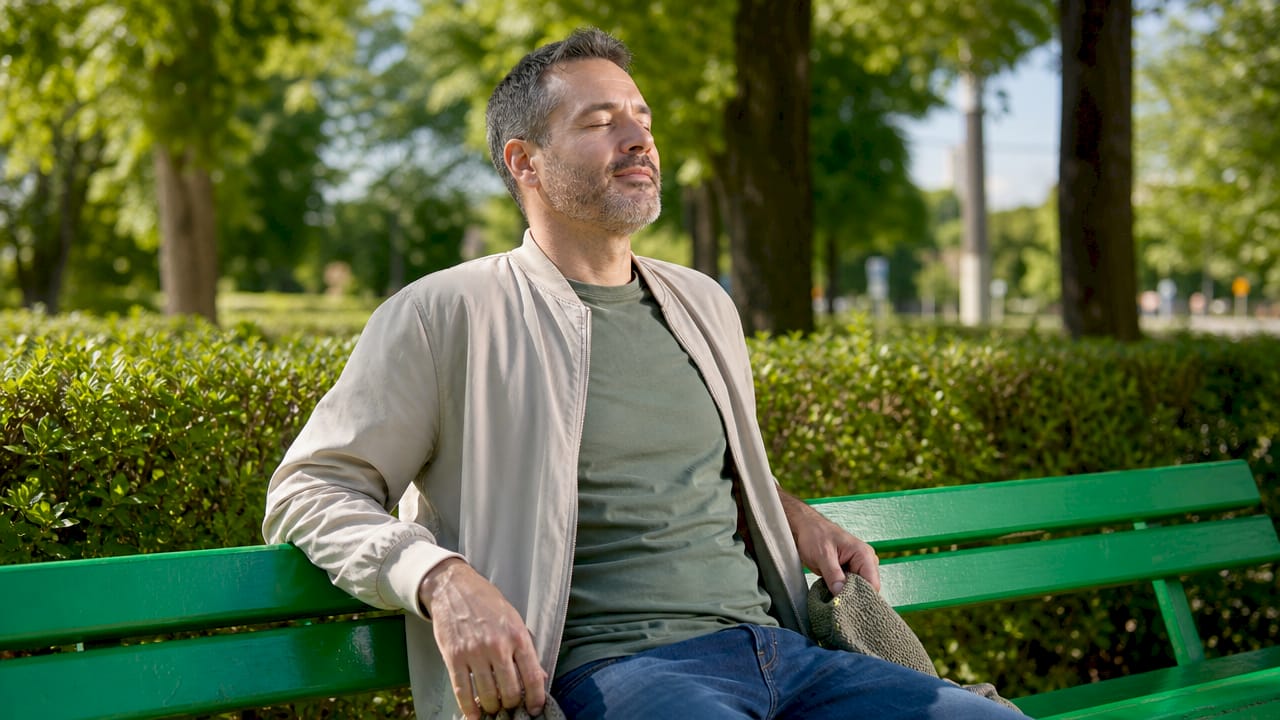
Harvard Health explains that breathing exercises break the stress response by widening blood vessels and lowering heart rate. That physiological shift reduces circulating stress hormones like cortisol and lowers inflammation markers throughout the body. Less inflammation means a calmer mind and a more stable mood.
BBC Future notes that slow nasal breathing activates the parasympathetic nervous system and produces both immediate and lasting stress reduction. Even five minutes of intentional nasal breathing can shift your nervous system state. That makes breathwork one of the fastest, most portable stress relief tools available.
Breathing exercises for anxiety work because they give the mind a concrete focus during moments of overwhelm. Techniques like mindfulness and meditation practices pair naturally with breathwork, reinforcing the calming effect and building long-term emotional resilience.
Key mental health benefits include:
- Anxiety reduction: Vagus nerve activation lowers the physiological intensity of anxious states.
- Better focus: Improved oxygen flow and a calmer nervous system sharpen concentration.
- Improved sleep: Parasympathetic activation before bed reduces the mental chatter that delays sleep onset.
- Mood stabilization: Lower cortisol and reduced inflammation support a more even emotional baseline.
“The power of breathing exercises lies primarily in autonomic nervous system regulation, not just lung capacity improvement.” — BBC Future
How do different breathing techniques compare?
Not every breathing technique serves the same purpose. Matching the right method to the right moment is what makes breathwork effective in practice.
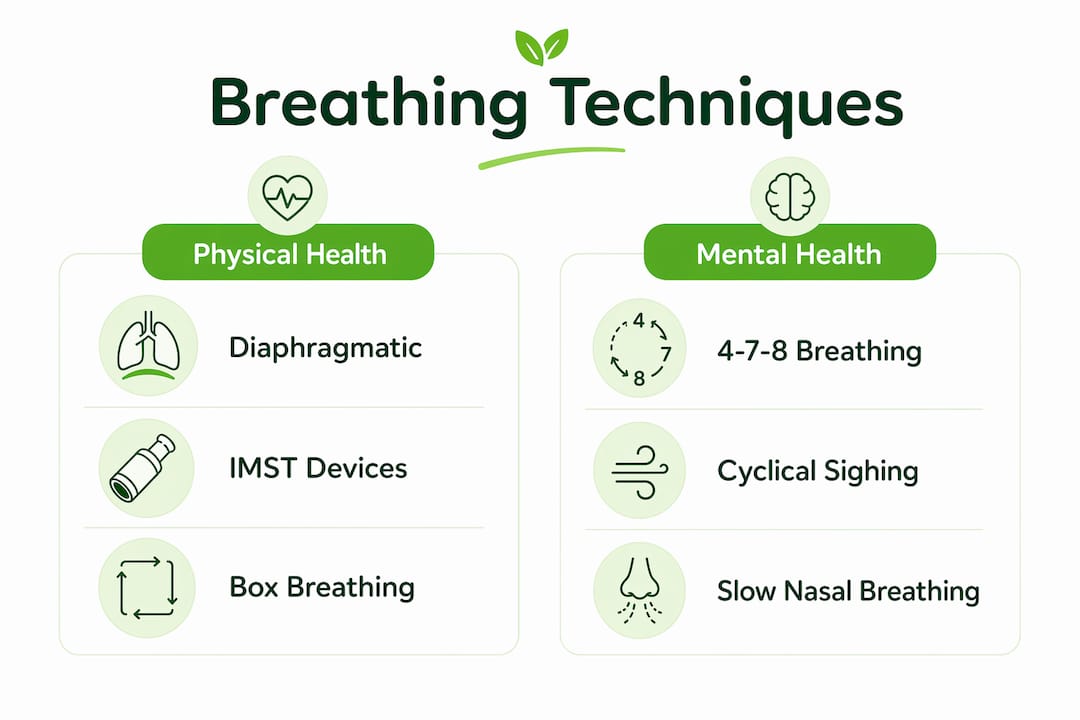
Diaphragmatic breathing is the baseline technique. You breathe in slowly through the nose, letting the belly rise, then exhale fully. The American Lung Association recommends this as the starting point for anyone new to breathwork. It builds the foundational muscle memory that all other techniques rely on.
4-7-8 breathing follows a specific rhythm: inhale for 4 counts, hold for 7, exhale for 8. Verywell Health identifies 4-7-8 breathing as particularly effective for calming acute anxiety and preparing the body for sleep. The extended exhale is the key. It forces a longer parasympathetic activation than a standard breath.
Box breathing uses equal counts for each phase: inhale for 4, hold for 4, exhale for 4, hold for 4. It is widely used by military and emergency responders to maintain focus under pressure. The symmetry of the pattern makes it easy to recall and apply during stressful moments.
Cyclical sighing involves a double inhale through the nose followed by a long exhale through the mouth. Research cited by Verywell Health shows this technique produces rapid stress relief in under two minutes. It is the fastest acting of the common methods.
IMST devices are resistance-based tools that strengthen the inspiratory muscles. Harvard Health confirms they deliver measurable blood pressure benefits with just 30 breaths per day. They require no technique mastery, which makes them accessible for people who struggle with breath-focused attention.
| Technique | Best use | Time needed | Skill level |
|---|---|---|---|
| Diaphragmatic breathing | Daily baseline, energy, endurance | 5–10 minutes | Beginner |
| 4-7-8 breathing | Anxiety, sleep preparation | 3–5 minutes | Beginner to intermediate |
| Box breathing | Focus, stress under pressure | 2–5 minutes | Beginner |
| Cyclical sighing | Rapid stress relief | Under 2 minutes | Beginner |
| IMST device | Blood pressure, cardiovascular health | 5 minutes | No technique required |
Pro Tip: Start with box breathing when you feel stress rising at work. Its equal-count structure is easy to remember without looking anything up, and it works within two to three cycles.
How can you build a daily breathing practice?
Building a consistent breathing habit requires starting in calm conditions, not during moments of peak stress. The American Lung Association confirms that mastering techniques while calm allows the body to recall those patterns reliably when stress hits. Trying breathwork for the first time during a crisis is like learning to swim during a flood.
Follow these steps to build a practice that sticks:
- Start with two minutes. Choose one technique, set a timer, and practice daily at the same time. Morning works well because it sets a calm tone before the day’s demands arrive.
- Practice in a quiet space. Sit upright in a chair or lie flat on your back. Good posture opens the chest and lets the diaphragm move freely.
- Focus on the exhale. Most beginners over-focus on the inhale. A long, complete exhale is what triggers the parasympathetic response.
- Avoid accessory muscle use. If your shoulders rise during inhalation, your diaphragm is not leading. Consciously relax the neck and shoulders before each breath.
- Pair breathwork with an existing habit. Attach your practice to something you already do daily, like morning coffee or an evening wind-down routine. This removes the need for extra motivation.
- Gradually increase duration. Work up to 10–15 minutes per session over two to three weeks. Consistency matters far more than session length.
BBC Future’s research supports the idea that small, consistent changes toward quiet, soft, and slow nasal breathing are more effective than sporadic intense sessions. You do not need an hour of breathwork to see results. You need five focused minutes every day.
Pairing breathwork with step-by-step relaxation techniques deepens the effect and builds a fuller recovery routine around your practice.
Pro Tip: Set a phone reminder labeled “two-minute breath” for the same time each day. The label removes any decision fatigue about which technique to use.
Key Takeaways
Breathing exercises deliver measurable physical and mental health benefits when practiced consistently with the right technique matched to the right need.
| Point | Details |
|---|---|
| Physical health impact | Daily breathwork lowers blood pressure, improves oxygenation, and builds exercise endurance. |
| Mental health benefits | Vagus nerve activation reduces anxiety, sharpens focus, and stabilizes mood. |
| Technique matching | Choose diaphragmatic breathing for daily use, 4-7-8 for sleep, and box breathing for acute stress. |
| Habit formation | Practice in calm states first so your body can recall the technique reliably under stress. |
| Consistency over intensity | Five focused minutes daily outperforms occasional long sessions for lasting results. |
What I have learned from years of watching people breathe wrong
Most people who start breathwork expect dramatic results in the first week. When they do not feel transformed overnight, they quit. That is the biggest mistake I see, and it is entirely avoidable.
The real shift happens quietly. After two to three weeks of consistent practice, people report sleeping better, feeling less reactive during stressful meetings, and noticing that their shoulders are not permanently glued to their ears. Those changes are not dramatic. They are structural. The nervous system is recalibrating.
What surprises most people is that the technique matters less than the commitment. Box breathing, 4-7-8, diaphragmatic breathing. They all work. The one you will actually do every day is the right one for you. I have seen people get meaningful blood pressure improvements from nothing more than five minutes of slow nasal breathing before bed.
The other thing worth saying plainly: breathwork is not a replacement for medical care. It is a complement to it. When you pair consistent breathwork with good sleep, physical recovery tools, and stress management practices, you are building a system. That system compounds over time in ways that any single intervention cannot.
— Lunix
Recovery tools that complement your breathing practice
Breathwork is most effective when it is part of a broader recovery routine. Breathing exercises calm the nervous system and reduce stress hormones, but your body also needs physical support to fully restore between demanding days.

Lunixinc’s Recovery collection is designed to complement exactly what breathwork starts. These products support muscle relaxation, circulation, and physical restoration, the physical side of the recovery equation that breathwork addresses on the nervous system side. If you are already investing five minutes a day in your breath, pairing that with targeted physical recovery tools makes the whole routine more effective. Your body restores faster, and the calm you build through breathwork lasts longer.
FAQ
What is the role of breathing exercises in stress relief?
Breathing exercises reduce stress by activating the vagus nerve and the parasympathetic nervous system, which lowers heart rate and reduces cortisol levels. Even five minutes of slow nasal breathing produces measurable stress reduction.
Can breathing exercises improve focus and mental clarity?
Yes. Deep breathing increases oxygen delivery to the brain and calms the nervous system, both of which sharpen concentration. Verywell Mind links vagus nerve activation directly to improved mood and mental clarity.
How long does it take to see benefits from breathing exercises?
Clinical research shows meaningful improvements in blood pressure and dyspnea within six to ten days of consistent practice. Mental health benefits like reduced anxiety often appear within the first week.
What is the best breathing technique for beginners?
Diaphragmatic breathing is the best starting point. It builds the foundational muscle memory that all other techniques rely on and requires no equipment or prior experience.
Are breathing exercises safe for people with high blood pressure?
Yes. Harvard Health confirms that slow, deep breathing for 15 minutes daily can reduce systolic blood pressure by up to 10 points in people with hypertension. Consult your doctor before making changes to any existing treatment plan.