


How daily habits directly influence your mental and physical wellbeing
Your daily habits are not background noise. They are the single most consistent force shaping your mental clarity, physical health, and emotional resilience over time. Research published in the American Journal of Lifestyle Medicine confirms there is no longer any serious doubt that daily habits and practices profoundly affect both short-term and long-term health and quality of life. What you do each morning, how you eat, when you sleep, and how you manage stress compound quietly until they become your baseline.
The role of daily habits in wellbeing works through structure. When your day has a predictable rhythm, your brain spends less energy deciding what comes next and more energy on the things that actually matter. That shift alone reduces anxiety, steadies your mood, and frees up mental space you did not know you were burning.
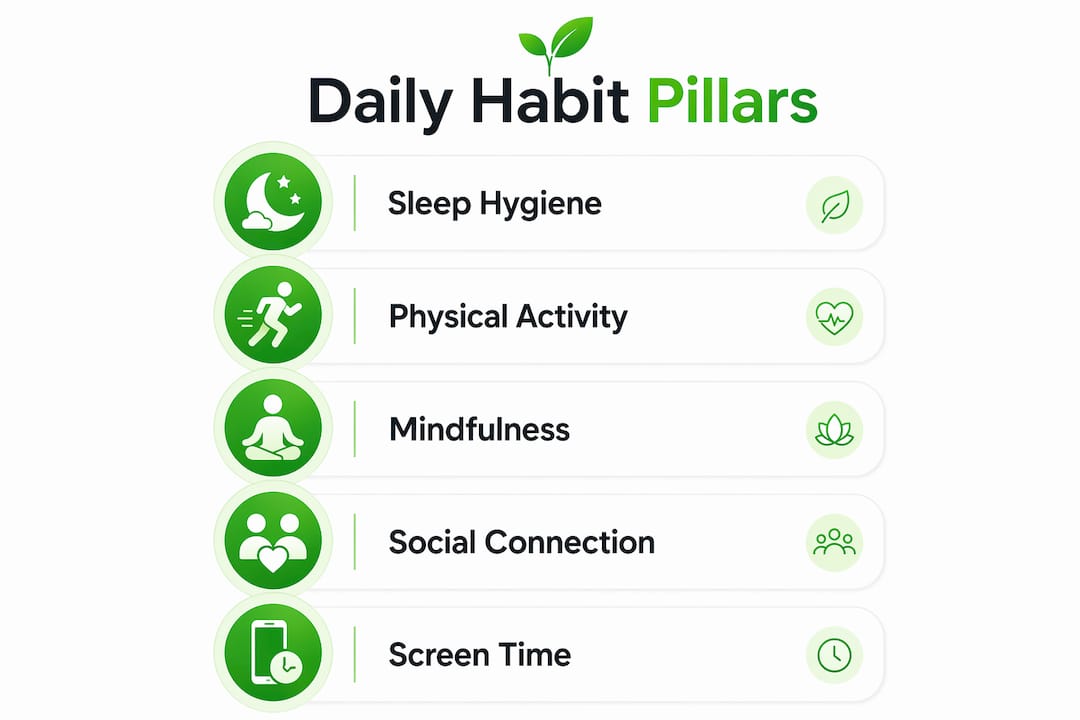
Here is what the research consistently points to as the core habit categories driving wellbeing:
- Sleep: Consistent sleep and wake times regulate your body’s internal clock, directly affecting mood, metabolism, and cognitive function.
- Nutrition: Eating whole foods, fruits, vegetables, and lean proteins at regular intervals stabilizes blood sugar and reduces inflammation.
- Physical activity: Even moderate movement, like a daily walk, lowers your risk of cardiovascular disease, diabetes, and depression.
- Mindfulness and stress management: Brief daily practices like deep breathing or meditation reduce cortisol and improve mood regulation.
- Social connection: Regular, meaningful interaction with others protects against loneliness, cognitive decline, and depression.
- Digital habits: How much screen time you accumulate each day influences anxiety levels and sleep quality more than most people realize.
The effects are both immediate and cumulative. You feel the difference after one good night of sleep. You see the difference after three months of consistent movement. Both matter.
Table of Contents
- Why your brain actually craves a daily routine
- The key pillars of daily habits that protect your health
- What consistent routines actually do for your health
- How to build daily habits that actually stick
- Overcoming the common barriers to habit formation
- What the science says about routines and psychological resilience
- How your environment shapes your daily habits
- Why your habits need to fit your life, not someone else’s
- Key Takeaways
- Support your habits with the right recovery tools
Why your brain actually craves a daily routine
The brain is wired to conserve energy. Every decision you make, from what to eat for breakfast to how to respond to a stressful email, draws from a finite pool of cognitive resources. Establishing routines reduces decision fatigue by automating non-essential choices, freeing cognitive resources and reducing anxiety and stress. When you stop having to think about the small stuff, your mind is calmer and sharper for the things that genuinely require your attention.
Routine also works at the neurochemical level. Predictable, rewarding behaviors trigger the release of dopamine, the neurotransmitter associated with motivation and pleasure. Serotonin, which regulates mood and sleep, is stabilized by consistent daily patterns like regular mealtimes and exercise. Disrupting these patterns, through irregular sleep or skipped meals, creates a ripple effect that shows up as irritability, low energy, and difficulty concentrating.
“Routine provides a predictable rhythm that lowers mental fatigue by outsourcing frequent decisions, reducing emotional distress and impulsive behaviors.” — UCLA Health
Circadian rhythms are another piece of this picture. Your body runs on a roughly 24-hour biological clock that governs sleep, hormone release, digestion, and immune function. When your daily habits align with that clock, such as waking at the same time, eating at consistent intervals, and winding down before bed, your body operates more efficiently. When habits are erratic, that clock gets disrupted, and the downstream effects touch nearly every system in your body.
| Mechanism | How routine supports it |
|---|---|
| Decision fatigue | Automating small choices preserves cognitive energy for complex tasks |
| Dopamine regulation | Rewarding habits reinforce motivation and positive behavior loops |
| Serotonin stability | Consistent sleep and meal timing support mood and emotional balance |
| Circadian rhythm alignment | Regular wake times and light exposure keep the body clock calibrated |
| Cortisol management | Predictable structure prevents the chronic stress response from staying activated |
The key pillars of daily habits that protect your health
Sleep hygiene
Sleep is the foundation everything else rests on. Research shows that people who consistently get less than seven hours of sleep per night have higher rates of obesity, diabetes, and cardiovascular disease by middle age, even after accounting for other lifestyle factors. A consistent wake time, even on weekends, is one of the most effective tools for improving sleep quality. Morning light exposure and a screen-free wind-down routine reinforce the signal your brain needs to shift into rest mode.
Nutrition and hydration
- Eat patterns rich in fruits, vegetables, whole grains, and lean proteins to reduce inflammation and lower the risk of chronic diseases like cardiovascular disease and type 2 diabetes.
- Schedule meals at consistent times to prevent blood sugar dips that tank your energy and mood.
- Staying well hydrated supports digestion, brain performance, and energy throughout the day. Start with a full glass of water when you wake up.
- Reach for unsalted nuts, seeds, or whole-food snacks when cravings hit, rather than processed options.
Physical activity
Regular physical activity has immediate and cumulative benefits for brain health, stress reduction, and overall wellbeing. You do not need a gym membership to get there. Clinical guidance recommends daily walking as an effective, moderate activity to reduce anxiety and depression symptoms, with research pointing to daily walking as a meaningful target for physical activity. For adults in midlife, consistent daily movement is especially worth prioritizing. The Lunixinc guide on daily movement for adults covers why this habit pays off most in your 40s, 50s, and 60s.

Mindfulness and stress reduction
Mindfulness practices incorporated into daily habits reduce cortisol levels and improve mood regulation. Even five minutes of deep breathing, alternate-nostril breathing, or a short body scan can shift your nervous system out of a stress response. Stanford Medicine’s David Spiegel, director of the Stanford Center on Stress and Health, recommends techniques like meditation and self-hypnosis, noting that calming the body first makes it far easier to think clearly through whatever is causing stress.

Social connection as a daily habit
Social interactions protect against loneliness, depression, and cognitive decline. A daily phone call, a brief conversation with a neighbor, or a regular coffee with a friend counts. The habit does not need to be elaborate. What matters is that it is consistent.
Technology and screen time
Digital screen time above two hours per day correlates with increased risk of anxiety and depression. Scheduling intentional digital breaks, especially in the hour before bed, is one of the simplest habit changes with a measurable payoff. Passive scrolling is particularly problematic because it mimics rest without providing any of the recovery your brain actually needs.
What consistent routines actually do for your health
The benefits of a steady daily routine go well beyond feeling organized. Here is what the research shows:
- Lower depression and anxiety risk: People with consistent sleep schedules have a 38% lower risk of depression and a 33% lower risk of anxiety compared to irregular sleepers, even when total sleep hours are similar.
- Stronger psychological resilience: Structured daily habits serve as an anchor during stressful periods, helping you recover faster from setbacks and disruptions.
- Better physical health outcomes: Consistent nutrition, movement, and sleep habits reduce the risk of cardiovascular disease, type 2 diabetes, and obesity over time.
- More energy and sharper focus: Automating small daily decisions preserves mental energy for complex tasks, leaving you more alert and productive throughout the day.
- Improved mood stability: Regular habits stabilize the neurotransmitter systems that regulate how you feel, reducing the emotional swings that come with erratic schedules.
Key stat: A 2025 study found that consistent sleep schedules are linked to a 38% lower risk of depression and a 33% lower risk of anxiety, even when total sleep time is the same as irregular sleepers.
The impact of routines on wellbeing is not just about discipline. It is about giving your body and mind the conditions they need to function at their best, day after day.
How to build daily habits that actually stick
Starting a new habit is easy. Keeping it going past the first two weeks is where most people struggle. These steps make the difference:
- Start smaller than you think you need to. A five-minute walk beats a 45-minute workout you skip. The goal at first is to make the habit feel effortless, not impressive.
- Anchor new habits to existing ones. This is called habit stacking. Want to add a mindfulness practice? Do it right after you pour your morning coffee. The existing cue triggers the new behavior automatically.
- Design your environment to support the habit. Put your running shoes by the door. Keep a water bottle on your desk. Make the healthy choice the path of least resistance.
- Track your progress simply. A checkmark on a paper calendar or a basic habit-tracking app works. Seeing a streak builds momentum and makes you less likely to break it.
- Set a specific time, not a vague intention. “I will walk at 7:30 AM” works far better than “I will walk sometime in the morning.”
- Expect disruptions and plan for them. Travel, illness, and busy weeks will happen. Decide in advance what your minimum version of each habit looks like on a hard day.
- Review and adjust every few weeks. What worked in January may not work in July. Revisiting your habits keeps them aligned with your actual life.
Pro Tip: If you miss a day, the rule is simple: never miss twice. One skipped workout does not break a habit. Two in a row starts a new one.
Overcoming the common barriers to habit formation
Most people do not fail at habits because they lack willpower. They fail because they did not plan for the moments when motivation disappears.
- Decision fatigue: When you are mentally drained, you default to whatever is easiest. Build your habits so the easy choice is already the healthy one.
- All-or-nothing thinking: Missing one day feels like failure, so you abandon the habit entirely. Treat your routine as a flexible guide, not a rigid contract. Resuming your normal routine the day after a miss is the only recovery strategy you need.
- Lack of motivation: Motivation follows action, not the other way around. Start the habit even when you do not feel like it. The feeling usually catches up within a few minutes.
- Stress and overwhelm: High-stress periods are exactly when routines matter most, but they are also when routines feel hardest to maintain. Shrink the habit to its smallest possible version during tough weeks rather than dropping it entirely.
- Negative self-talk: Experts advocate for reframing habits as acts of self-kindness rather than punishment. You are not forcing yourself to do hard things. You are choosing to take care of yourself.
- Environmental misalignment: If your environment makes healthy habits harder, change the environment before trying to change your behavior. A healthy workplace environment or home setup can do more for your habits than any amount of motivation.
What the science says about routines and psychological resilience
The connection between structured daily habits and psychological resilience is one of the clearest findings in recent behavioral health research. Studies show that maintaining structured daily routines is linked to greater psychological resilience and lower anxiety and depression, particularly under extreme stress conditions like a pandemic. When external circumstances become unpredictable, your internal structure becomes the stabilizing force.
“Psychological resilience can be strengthened through adherence to daily structures that anchor individuals during uncontrollable external stressors.” — Cambridge Core, Journal of the International Neuropsychological Society
The mechanism is straightforward. When you know what comes next in your day, your nervous system does not have to stay on alert. That sense of predictability lowers baseline cortisol, reduces the frequency of anxious thoughts, and makes it easier to respond to genuine challenges without being overwhelmed by them.
| Research finding | Practical implication |
|---|---|
| Routine adherence linked to lower anxiety and depression | Build a daily structure even during low-stress periods, before you need it |
| Daily structure acts as an anchor under extreme stress | Maintain at least a minimal version of your routine during crises |
| Consistent sleep schedules reduce depression risk by 38% | Prioritize a fixed wake time above all other sleep habits |
| Mindfulness practices reduce cortisol and improve mood | Even five minutes of daily practice produces measurable effects |
For adults navigating the pressures of midlife, these findings are especially relevant. The Lunixinc mental wellness checklist for adults 40–65 translates this research into concrete daily practices tailored to that life stage.
How your environment shapes your daily habits
Your habits do not happen in a vacuum. The spaces you live and work in either support or undermine the behaviors you are trying to build. This is one of the most underappreciated factors in habit formation.
Light is a good example. Natural light exposure in the morning regulates your circadian rhythm and improves alertness. A workspace with poor lighting, on the other hand, increases eye strain and fatigue, which makes it harder to stay focused and more likely that you will reach for caffeine or sugar to compensate. The environment creates the conditions; the habit follows.
Clutter and noise have a similar effect. Research in environmental psychology consistently shows that disordered spaces increase cognitive load and stress. A tidy, organized environment reduces the mental friction that makes healthy habits harder to start. Something as simple as laying out your workout clothes the night before changes the probability that you will exercise the next morning.
Temperature, air quality, and even the people around you also play a role. Social environments that normalize healthy behaviors, like a household where everyone eats dinner together or a workplace that encourages walking breaks, make individual habit formation significantly easier. You absorb the norms of the people you spend the most time with, often without realizing it. Designing your environment intentionally, at home and at work, is one of the highest-leverage moves you can make for your long-term wellbeing.
Why your habits need to fit your life, not someone else’s
A habit that works perfectly for a 28-year-old athlete is not automatically the right habit for a 55-year-old managing a chronic condition. The science of healthy lifestyle habits is clear on this: personalization is not optional. It is what makes the difference between a routine you maintain and one you abandon.
Age shapes what your body needs most. In your 20s and 30s, Stanford Medicine clinicians emphasize building a foundation through resistance training, aerobic exercise, and sleep hygiene, because the choices made during those decades set the metabolic and cardiovascular trajectory for midlife and beyond. By your 40s and 50s, recovery time lengthens, hormonal shifts affect sleep and mood, and joint health becomes a more active consideration. The habits that serve you best evolve accordingly.
Health conditions add another layer. Someone managing type 2 diabetes needs to prioritize blood sugar stability through meal timing and carbohydrate quality in a way that a metabolically healthy person does not. Someone with chronic back pain benefits from specific movement patterns and ergonomic support that others might not need to think about at all.
Lifestyle context matters too. A parent of young children has different windows for exercise and sleep than someone without caregiving responsibilities. A shift worker’s circadian rhythm challenges are fundamentally different from a nine-to-five schedule. The goal is not to copy someone else’s perfect morning routine. It is to identify the habits that fit your actual life and then make them consistent. Start with one or two changes, build from there, and adjust as your circumstances shift. That flexibility is what makes a routine sustainable rather than something you white-knuckle through for a few weeks before giving up.
Key Takeaways
Consistent daily habits are the most reliable path to better mental and physical health, with structured routines reducing anxiety, depression risk, and cognitive fatigue while building long-term resilience.
| Point | Details |
|---|---|
| Routine reduces cognitive load | Automating small daily choices preserves mental energy and lowers anxiety throughout the day. |
| Sleep consistency cuts depression risk | Consistent sleep schedules are linked to a 38% lower risk of depression and a 33% lower risk of anxiety compared to irregular sleepers. |
| Movement and nutrition compound over time | Regular physical activity and whole-food nutrition reduce chronic disease risk with both immediate and long-term benefits. |
| Environment shapes habit success | Designing your physical space to support healthy choices increases follow-through more than motivation alone. |
| Personalization sustains habits | Habits tailored to your age, health conditions, and lifestyle are far more likely to stick than generic prescriptions. |
Support your habits with the right recovery tools
Building healthy daily habits is one side of the equation. Giving your body the recovery it needs to sustain those habits is the other. Lunixinc designs recovery products built specifically for this, from electric massagers that ease muscle tension after active days to orthopedic and wedge pillows that support restorative sleep posture. When your body recovers well, your habits feel easier to maintain, and the cycle of wellbeing keeps building.