


TL;DR:
- Home-based rehabilitation can achieve outcomes comparable to clinic visits when supported by structured routines, technology, and professional oversight. Building a personalized, evidence-based plan with clear progressions and safety thresholds enhances recovery, safety, and adherence. Utilizing technology and structured protocols transforms home recovery into a sustainable, efficient alternative to traditional clinical care.
Most people assume that real recovery only happens inside a clinic, guided by a professional at every step. That assumption is understandable, but it’s increasingly outdated. Home-based rehabilitation can offer functional outcomes comparable to supervised methods for many conditions, which means the walls of a therapy office are not the only place where healing happens. What matters far more is structure, consistency, and the right tools working together in your own space.
Table of Contents
- What are home recovery solutions?
- Evidence-backed benefits: What the research shows
- Technology’s role: Monitoring and optimizing your recovery at home
- Reducing complications and improving safety: The home care advantage
- Why structured home recovery plans work (and where most people get it wrong)
- Explore innovative home recovery solutions for your best health
- Frequently asked questions
Key Takeaways
| Point | Details |
|---|---|
| Comparable recovery results | Many home-based plans work as well as clinic rehab when they use structured protocols. |
| Oversight matters for safety | Professional feedback helps avoid complications and guides you when risk factors appear. |
| Use devices wisely | Wellness tech can support home recovery, but its data shouldn’t replace clinical judgment. |
| Structured plans outperform unstructured efforts | Following a plan with built-in feedback, checks, and escalation steps leads to better outcomes than going it alone. |
| Prevention of complications | Home recovery helps identify issues early, reducing hospital readmissions and maintaining quality of life. |
What are home recovery solutions?
Home recovery solutions are a broad category of practices, services, and tools that allow you to manage and improve your physical well-being without leaving your residence. Think of them as the bridge between a clinical recommendation and your daily life. They turn the advice you receive from a doctor or therapist into something you can actually do, day after day, in a space that feels comfortable and familiar.
There are three main components worth understanding:
Home-based rehabilitation exercises are structured movement protocols you follow on a set schedule. These range from gentle stretching and range-of-motion work to progressive strengthening routines. They are typically designed by a physical therapist and given to you as a plan you can follow independently.
Home health services involve skilled professionals visiting your home. A nurse, physical therapist, or occupational therapist might come to your house on a scheduled basis. Medicare-covered home health generally requires homebound status and intermittent skilled care as part of an individualized plan of care, which means there is formal structure built right into the model.
Technology-driven supports include wearables, apps, telehealth check-ins, and wellness devices like massage chairs or percussion tools. These help you monitor progress, stay consistent, and enhance comfort between visits or exercise sessions.
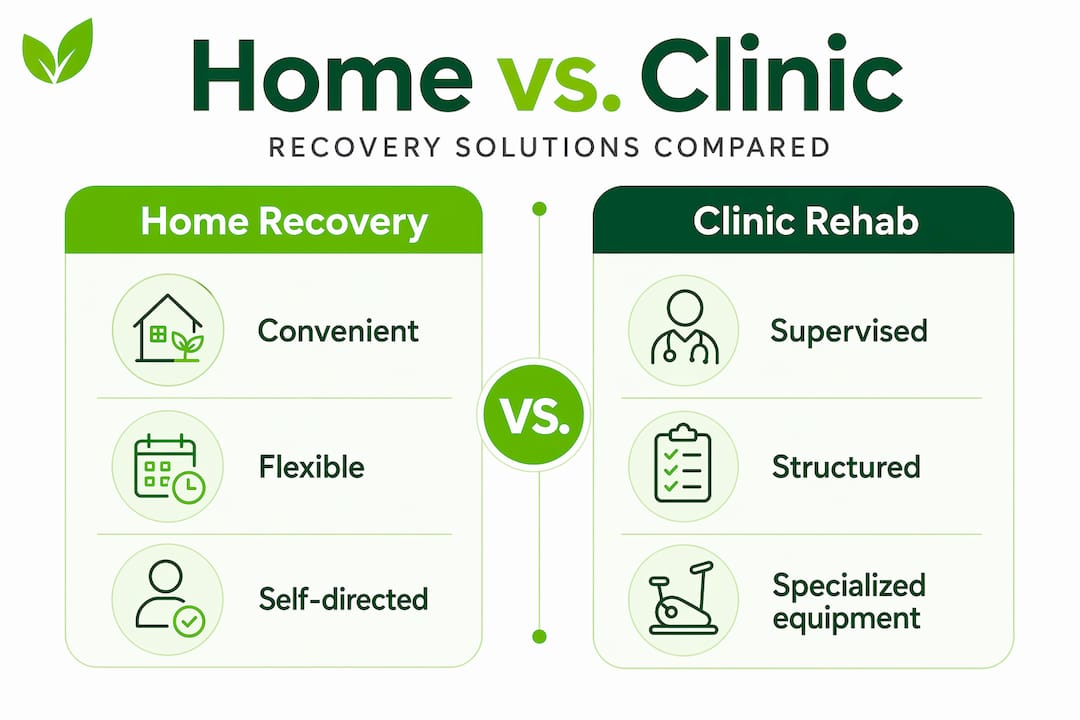
Home vs. clinic: a quick comparison
| Feature | Home recovery | Clinic-based therapy |
|---|---|---|
| Convenience | High: no travel, flexible hours | Lower: fixed appointments |
| Continuity | Daily practice in real environment | Sessions 2 to 3 times per week |
| Personalization | Can be tailored to home setup | Standardized equipment available |
| Adherence | Higher when built into daily routine | Depends on attendance |
| Cost | Often lower after initial setup | Ongoing copays and travel costs |
The benefits of choosing premium wellness approaches at home go beyond convenience:
- Continuity of care: You practice recovery in the same environment where you live, sleep, and move daily.
- Better adherence: Removing the barrier of travel makes it far easier to stay consistent.
- Real-world carryover: Skills practiced at home transfer more naturally to your actual daily tasks.
- Reduced stress: Familiar surroundings lower anxiety, which itself supports faster physical recovery.
If you are working on speeding up post-therapy recovery, building effective recovery routines at home is one of the most reliable strategies available to you.
Evidence-backed benefits: What the research shows
Understanding the components is just the first step. What do studies actually reveal about the real-world impact of home recovery solutions?
The research picture is genuinely encouraging. A systematic review of ACL recovery found that home-based rehabilitation can yield functional outcomes comparable to supervised rehabilitation, though some strength-related domains may still favor clinical supervision. That nuance matters. For everyday movement, function, and quality of life, home protocols hold up remarkably well. For maximum strength gains in specific muscle groups, some additional clinic sessions may offer an edge.
Here is a summary of how home and clinic strategies compare across key outcome areas:
| Outcome area | Home-based protocol | Clinic-based protocol |
|---|---|---|
| Functional mobility | Comparable outcomes | Comparable outcomes |
| Muscle strength | Slightly lower gains | Moderate advantage |
| Patient adherence | Higher in structured plans | Moderate, session-dependent |
| Pain management | Effective with proper tools | Effective with equipment access |
| Quality of life scores | Strong improvements | Strong improvements |
| Risk of complication | Low when monitored | Low with supervision |
Evidence supports home-based protocols being both safe and effective when they are properly structured, though follow-up and occasional in-person check-ins remain important for complex conditions.
“The key distinction in home recovery is not location. It’s structure. A well-designed plan with clear progressions, safety checkpoints, and feedback loops can produce results that surprise both patients and clinicians.”
This is not just optimistic thinking. It reflects the growing body of literature showing that when people follow a clear, structured plan with measurable milestones, their outcomes catch up to and sometimes exceed clinic-based peers simply because they practice more consistently.
Pro Tip: Ask your care provider for a written plan with specific progressions, not just a list of exercises. A plan that tells you when to increase resistance, what warning signs to watch for, and when to check back in gives you the scaffolding that makes home recovery truly effective. Pair that with injury-reducing recovery routines tailored to your age and condition for the best results.
For a broader look at the science behind staying active and healthy, explore these physical recovery tips grounded in healthy aging research.
Technology’s role: Monitoring and optimizing your recovery at home
With research on effectiveness in mind, you may wonder how technology fits into the equation, both as a motivator and as a safety net.
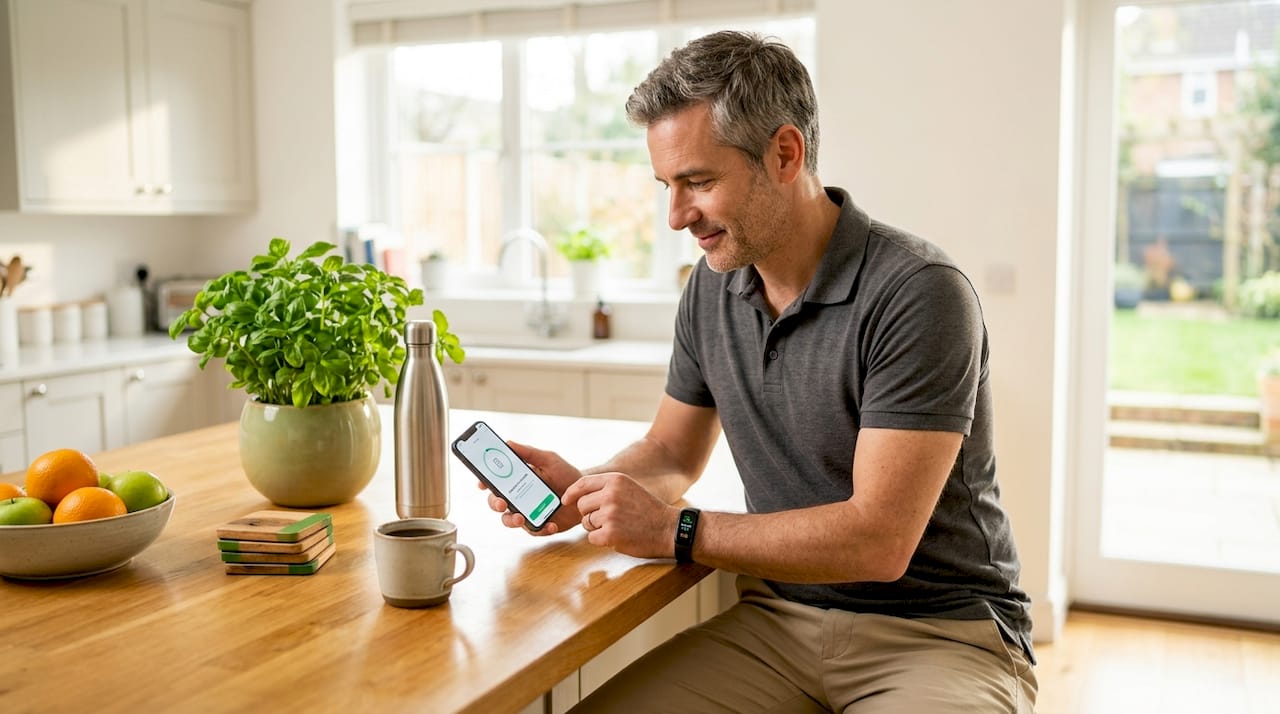
The short answer is that technology has become one of the most powerful enablers of home recovery, but it works best when you understand what it can and cannot do. Wearable recovery solutions primarily influence behavior by turning invisible recovery signals, like sleep quality and heart rate variability (HRV), into readiness guidance you can act on. However, these derived indices require caution when compared to clinical gold standards.
In plain terms: your smartwatch can tell you that your body is under stress and that today may not be the day for a hard workout. But it cannot replace a clinician’s assessment of joint integrity or nerve function.
Here is a practical breakdown of the technology and wellness devices commonly used in home recovery:
- Wearable fitness trackers: Monitor heart rate, sleep stages, steps, and HRV to give you a daily picture of how your body is responding to recovery efforts.
- Smart sleep trackers: Dedicated devices that analyze sleep cycles, which is critical since most physical repair happens during deep sleep phases.
- Massage chairs and percussion devices: Support muscle relaxation, circulation, and tissue recovery between active rehab sessions.
- Telehealth platforms: Allow you to check in with your physical therapist or physician via video, reducing the need for in-person visits while maintaining professional oversight.
- Balance and mobility apps: Guide you through timed exercises, track performance trends, and alert you to significant changes.
- Compression therapy devices: Promote circulation in the legs and feet, which is especially helpful after surgery or during extended rest periods.
The honest pros and cons
| Benefit | Caveat |
|---|---|
| Real-time feedback | Accuracy varies by device and user |
| Increased motivation | Data overload can cause anxiety |
| Better sleep awareness | Sleep staging is approximate |
| Convenient daily monitoring | Cannot replace clinical assessment |
Pro Tip: Use your device metrics as supportive guideposts, not final verdicts. If your tracker says your recovery score is low but you feel strong, trust your body and use the data as context. If both signal fatigue, take it seriously. Explore the range of wellness station devices and key recovery devices available to build a home setup that works for your specific goals.
For a full look at how these tools fit together, check out these lasting wellness strategies designed specifically for adults over 40.
Reducing complications and improving safety: The home care advantage
Embracing technology can boost recovery efforts, but equally important is how home solutions actively prevent setbacks and keep you safe after major health events.
Hospital readmissions represent one of the most significant challenges in modern healthcare. In 2020, there were roughly 3.4 million adult readmissions within 30 days of discharge in the United States. Many of those readmissions stem from complications that develop quietly at home when there is no system in place to catch early warning signs. Home care, structured thoughtfully, is one of the most effective tools for closing that gap.
Here is how structured home recovery models work to improve your safety after discharge:
- Regular symptom monitoring: Scheduled check-ins through telehealth or home visits catch changes in your condition before they escalate.
- Medication management support: Home health nurses help ensure you are taking the right medications at the right doses, reducing the risk of errors that often lead to complications.
- Fall prevention assessments: Occupational therapists evaluate your home environment and make practical adjustments, such as grab bars, non-slip mats, and furniture rearrangement, to reduce fall risk.
- Wound and incision care: Skilled nursing at home manages wound healing and infection prevention for post-surgical patients.
- Nutrition and hydration guidance: Poor nutrition after a hospital stay dramatically slows recovery. Home health teams address this directly.
- Family and caregiver education: Teaching the people around you how to support your recovery safely multiplies the effectiveness of your plan.
“The period immediately after hospital discharge is one of the most vulnerable windows in a patient’s health journey. Home care doesn’t just support recovery. It actively prevents hospitalizations by identifying small problems before they become large setbacks.”
Investing in reducing hospital visits through proactive home care is not just a comfort decision. It is a safety decision with measurable, real-world consequences.
Why structured home recovery plans work (and where most people get it wrong)
Here is the uncomfortable truth: most people who struggle with home recovery are not failing because they lack discipline. They are failing because they are working without a real plan.
There is a meaningful difference between “doing some exercises at home” and following a structured home recovery protocol. The first is informal and inconsistent. The second is a clinical strategy applied in a home setting. That distinction determines outcomes more than almost any other variable.
A truly structured home recovery plan includes:
- Progressive overload: Your exercises or activity levels increase gradually over time, reflecting your body’s adaptation rather than staying static.
- Built-in feedback loops: You track specific markers, pain levels, range of motion, strength, so you know whether you are improving, plateauing, or declining.
- Clear safety thresholds: You know exactly which symptoms mean “keep going” and which ones mean “stop and call your provider.”
- Scheduled reassessments: The plan is reviewed and updated at defined intervals, not left unchanged for weeks.
- An escalation path: You know who to contact and what to do if things are not progressing, removing the guesswork during a stressful moment.
The CMS plan-of-care framework supports this “prescription and plan” model precisely because unstructured efforts have a poor track record. When clinical comparisons are made between home-based rehab and supervised therapy, the home-based groups that perform best are always the ones operating under a defined protocol with professional input.
Unstructured home efforts underperform for predictable reasons. People do exercises they find comfortable rather than the ones that challenge the right systems. They skip progressions. They ignore mild warning signs. Without an external structure holding the plan together, recovery drifts.
The best outcomes we see blend a strong foundational protocol with periodic personalized check-ins. That combination gives you the independence and convenience of home recovery while maintaining the professional insight that keeps progress on track. Explore how personalized home recovery approaches can be adapted to your unique needs and health goals.
The moment most people realize this, the whole approach clicks. Home recovery is not a lesser version of clinical care. It is a different, and often more sustainable, delivery model for the same goal: helping your body restore and perform its best.
Explore innovative home recovery solutions for your best health
You now have a clear picture of what makes home recovery effective, evidence-backed, technology-supported, safety-focused, and above all, structured. The next step is finding the right tools to build your personal recovery space.

At Lunix, we design smart recovery and comfort solutions that fit naturally into your daily life. From ergonomic support products to wellness devices that promote circulation, relaxation, and mobility, every product in our lineup is built to help you recover more effectively without leaving home. Browse our expert-curated recovery solutions to find what matches your goals, or visit our wellness hub for guides, resources, and the full range of options tailored to your path forward. Your recovery space is waiting.
Frequently asked questions
How do I know if home recovery is safe for my condition?
Structured home protocols with professional oversight are generally safe for many conditions and include built-in escalation paths if stronger intervention becomes necessary. Always begin with a plan designed or reviewed by a licensed healthcare provider.
What’s the difference between home recovery and outpatient physical therapy?
Home recovery is delivered in your residence through a structured plan managed remotely or via home visits, while outpatient therapy involves regular in-person sessions at a clinical facility. Medicare-covered home health requires homebound status and intermittent skilled services, which distinguishes it from standard outpatient care.
Can wearable health devices fully replace clinic monitoring for recovery?
No. Wearable recovery indices should be interpreted with caution since they do not always align with clinical physiological measures or functional outcome tests. Use them as supportive tools alongside, not instead of, professional oversight.
Why do structured recovery plans work better than doing exercises on my own?
A “prescription and plan” model includes progressions, safety checkpoints, and feedback that unstructured self-guided efforts typically lack, which is exactly why outcomes tend to be stronger when a formal protocol is in place.