


TL;DR:
- In 2026, wellness trends focus on nervous system regulation, personalized nutrition, and integrated recovery. Adults prioritize sustainable vitality through bio-harmonization, daily practices, and environment improvements rather than extreme measures or constant quantification. Building simple, intentional habits and smart home tech support long-term health without over-optimization.
The fastest-growing wellness trends in 2026 are defined by one core shift: from episodic performance routines to daily nervous system regulation, personalized nutrition, and integrated recovery. The global wellness economy has reached $6.8 trillion, and the growth is not driven by gym memberships or fad diets. It is driven by adults who want sustainable vitality, not just short-term results. This 2026 wellness trends guide covers the top health predictions shaping the year, with practical steps you can start using today. Whether you are focused on longevity, recovery, or mental resilience, the trends ahead are built for real life.
What are the top 2026 wellness trends and how can you use them daily?
The industry term for this year’s dominant shift is “bio-harmonization,” a move away from pushing your body to its limits and toward working with its natural rhythms. Understanding each major trend helps you decide which ones fit your life right now.
Neurowellness: the #1 trend of 2026
Neurowellness is the #1 trend of 2026, defined as the use of technology and somatic practices to regulate the nervous system rather than simply stimulate it. This matters because chronic stress, poor sleep, and digital overload have pushed millions of adults into a state of low-grade nervous system dysregulation. Neurowellness addresses the root cause rather than the symptom.
Practical neurowellness tools include breathwork protocols like box breathing or 4-7-8 breathing, somatic movement practices such as yoga nidra, and wearable devices that track heart rate variability (HRV). HRV is the measure of variation between heartbeats and serves as one of the clearest indicators of nervous system health. A rising HRV score generally signals better recovery and stress resilience.
Longevity-focused wellness: supplements and biomarker testing
The longevity clinic tourism market is valued at $18 billion in 2026 and projected to reach $48.2 billion by 2033. That growth signals a fundamental change in how adults think about aging. Longevity is no longer a medical specialty reserved for the wealthy. It is becoming a daily practice.
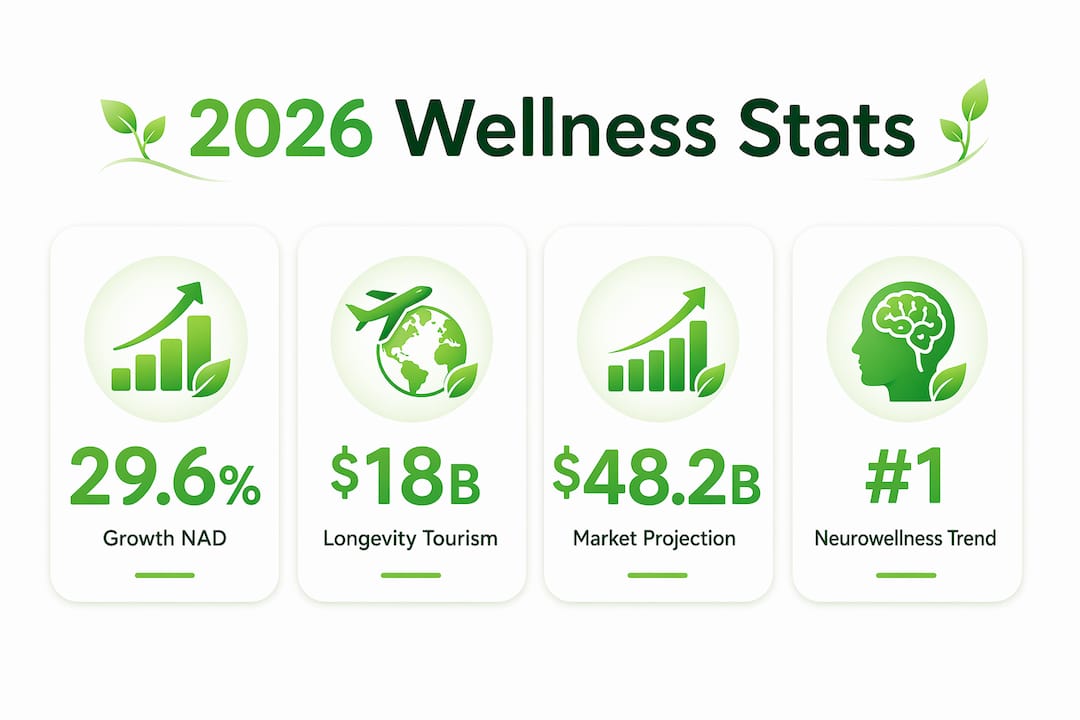
Longevity-focused ingredients like NAD and NMN are forecasted for 29.6% annual growth in 2026. These compounds support cellular energy production and DNA repair, two processes that naturally decline with age. Pairing supplements with regular biomarker testing, such as blood panels for inflammation markers, insulin sensitivity, and hormonal balance, gives you a data-informed picture of how your body is actually aging.
Recovery modalities: cold plunges, saunas, and ergonomic upgrades
Recovery is no longer what you do after a hard workout. It is a daily practice woven into your routine. Cold plunges (brief immersions in water at 50 to 59 degrees Fahrenheit) activate the vagus nerve and reduce systemic inflammation. Infrared saunas support cardiovascular health and promote deep muscle relaxation. These are not luxury add-ons. They are proven recovery methods with measurable physiological benefits.
Ergonomic upgrades at home and at your desk also qualify as recovery investments. Prolonged sitting compresses the lumbar spine and restricts circulation, creating a domino effect of physical strain that compounds over years. Standing desks, lumbar support cushions, and massage tools address this strain before it becomes chronic pain.
Personalized wellness and functional nutrition
Personalized wellness programs combining custom fitness, nutrition, and mindfulness based on biomarker data are now the standard expectation among health-conscious adults. Generic plans built for an average person rarely work for any specific person. Your gut microbiome, metabolic rate, and stress hormones are unique, and your wellness plan should reflect that.
Functional nutrition is the companion trend. Consumers are moving away from restriction-based eating toward better-for-you alternatives that prioritize taste, metabolic support, and sensory satisfaction. Think fermented foods for gut health, adaptogenic mushrooms for stress resilience, and protein-forward meals that support muscle maintenance after 40.
Here is a quick comparison of old-model versus 2026-model wellness approaches:
| Old-Model Wellness | 2026 Wellness Approach |
|---|---|
| Calorie restriction | Functional nutrition with metabolic focus |
| Generic fitness plans | Biomarker-driven personalized programs |
| Performance tracking | Nervous system regulation and HRV monitoring |
| Episodic recovery | Daily recovery as a core habit |
| Siloed health apps | Closed-loop data integration across systems |
Pro Tip: If you are new to biomarker testing, start with a basic metabolic panel and a full blood count from your primary care provider. These two tests reveal inflammation levels, blood sugar trends, and nutrient deficiencies that most people do not know they have.
How to build a daily wellness routine grounded in 2026 trends
An integrated daily approach combining strength training, aerobic movement, and mindfulness stabilizes heart rate variability and supports long-term vitality. The key word is integrated. These habits reinforce each other rather than compete for your time.
Here is a practical daily framework built around the top wellness predictions for 2026:
- Morning nervous system reset. Spend five minutes on breathwork before checking your phone. Box breathing (four counts in, four counts hold, four counts out, four counts hold) activates the parasympathetic nervous system and sets a calm baseline for the day.
- Movement with purpose. Aim for three 20-minute strength sessions per week and daily walking of at least 20 to 30 minutes. Strength training preserves muscle mass and bone density, both of which decline after age 40 without deliberate effort.
- Nutrition timing. Eat your largest meal earlier in the day when insulin sensitivity is highest. Add fermented foods like kefir, kimchi, or plain Greek yogurt to support the gut-brain axis, which directly influences mood and cognitive clarity.
- Sleep optimization. Advanced wearables and circadian rhythm management are now central to sleep health. Set a consistent sleep window, reduce blue light exposure 90 minutes before bed, and keep your bedroom temperature between 65 and 68 degrees Fahrenheit for optimal sleep architecture.
- Social connection. Loneliness poses a systemic health risk comparable to heavy smoking. Schedule one meaningful social interaction daily, whether that is a phone call, a shared meal, or a community fitness class. Purpose-driven micro-communities are one of the fastest-growing wellness lifestyle changes of 2026.
- Evening recovery ritual. Use 10 to 15 minutes before bed for light stretching, a warm shower, or a brief body scan meditation. This signals the nervous system that the performance phase of the day is over.
Pro Tip: Avoid the trap of tracking everything at once. Pick one wearable metric, such as HRV or resting heart rate, and monitor it for 30 days before adding another. Data overload leads to anxiety, not insight.
You can find a deeper breakdown of these habits in this well-being habits guide built specifically for adults over 40.
What does the over-optimization backlash mean for your wellness in 2026?
The wellness industry is experiencing what the Global Wellness Summit calls the “Over-Optimization Backlash.” This is the growing rejection of constant quantification, rigid protocols, and the idea that every moment of your day should be optimized for performance. The backlash is not anti-science. It is a correction toward emotional repair, pleasure, and embodied care.
“The most effective wellness practices in 2026 prioritize ‘invisible care’ using ambient technologies like sound-dampening architecture and smart textiles to regulate the nervous system unobtrusively.” — Global Wellness Summit
What this means practically is that wellness tools are shifting from scoring your body to supporting it. Wearables are being redesigned to offer gentle nudges rather than performance grades. Smart home environments are incorporating sound dampening, circadian lighting, and temperature regulation that work in the background without demanding your attention.
Here is what the backlash looks like in practice:
- Replacing daily calorie logging with intuitive eating supported by occasional biomarker checks
- Choosing restorative yoga or a slow walk over a high-intensity interval session when your body signals fatigue
- Using ambient sound or scent diffusers to create a calming home environment rather than adding another app to your phone
- Prioritizing joy and sensory pleasure in food choices rather than treating every meal as a nutritional calculation
The deeper insight here is that closed-loop data integration of biological signals, environment, and social factors creates better health outcomes than siloed tracking apps. Your nervous system responds to your whole environment, not just your step count.
How do technology and home upgrades support your wellness goals?
Wearable tech and ambient technologies are moving toward nervous system support that regulates rather than scores the body. This is a meaningful shift for anyone who has felt more stressed by their fitness tracker than supported by it.
The most useful technology investments for 2026 wellness fall into three categories:
- Nervous system monitoring. Devices like the Oura Ring and WHOOP track HRV, sleep stages, and recovery readiness. These metrics tell you when to push and when to rest, removing the guesswork from training decisions.
- Metabolic and gut health tools. Continuous glucose monitors (CGMs), once reserved for diabetics, are now used by healthy adults to understand how specific foods affect their blood sugar and energy levels. This is personalized nutrition in its most practical form.
- Home environment upgrades. Air purifiers with HEPA filtration reduce indoor pollutants that disrupt sleep and increase inflammation. Circadian lighting systems adjust color temperature throughout the day to support your natural cortisol and melatonin rhythms. Ergonomic furniture reduces the physical cost of sedentary work.
You can explore how these tools fit into a broader wellness tech investment strategy for long-term health and longevity.
The goal is not to fill your home with gadgets. It is to create an environment that makes healthy choices the default rather than the effort.
Key takeaways
The single most important insight from this health trends guide for 2026 is that sustainable wellness comes from integrating nervous system regulation, personalized nutrition, and daily recovery into one consistent practice rather than chasing isolated interventions.
| Point | Details |
|---|---|
| Neurowellness leads 2026 | Prioritize HRV monitoring and breathwork to regulate your nervous system daily. |
| Longevity starts now | Add NAD or NMN supplements and schedule biomarker testing to track cellular health. |
| Recovery is non-negotiable | Build cold exposure, sauna sessions, or ergonomic upgrades into your weekly routine. |
| Avoid over-optimization | Track one metric at a time and prioritize joy and sensory experience alongside data. |
| Environment shapes health | Upgrade your home with circadian lighting, air purification, and ergonomic support. |
Lunix’s take on building wellness habits that actually last
Here is what years of working in the wellness space have taught us at Lunixinc: most people do not fail at wellness because they lack information. They fail because they try to change everything at once, burn out within three weeks, and conclude that wellness is not for them.
The 2026 holistic health tips circulating right now are genuinely good. Neurowellness is real. Longevity supplements have solid research behind them. Recovery modalities work. But none of them work if you treat them as a sprint rather than a practice. The adults we see thriving are not the ones doing ice baths every morning and tracking 14 biomarkers. They are the ones who picked two or three habits, made them non-negotiable, and built from there.
We are also skeptical of the idea that more data always equals better health. A CGM is a powerful tool. So is knowing how to listen to your own body without a device telling you what to feel. The most resilient wellness routines we have observed combine informed data use with genuine body awareness. You need both.
The over-optimization backlash is not a reason to abandon tracking. It is a reminder that wellness is ultimately about feeling better in your life, not performing better on a dashboard. Start with your sleep. Fix your recovery. Add one supplement with solid evidence behind it. Then build.
— Lunix
How Lunixinc supports your recovery in 2026
Recovery is the foundation every other wellness trend builds on. Without it, your strength training, breathwork, and nutrition strategies cannot deliver their full benefit.

At Lunixinc, we design recovery tools built specifically for the way adults 30 to 60 actually live. Our products support nervous system regulation and physical restoration through thoughtful ergonomic design and smart comfort technology. Whether you are addressing lower back tension from long work hours or looking for tools that help your body wind down after an active day, our recovery collection has options that fit naturally into the daily routines described in this guide. Explore what daily recovery can feel like when it is designed with your body in mind.
FAQ
What is neurowellness and why does it matter in 2026?
Neurowellness is the practice of regulating the nervous system using somatic techniques and technology, and it is the #1 wellness trend of 2026 according to the Global Wellness Summit. It matters because chronic stress and digital overload have made nervous system dysregulation one of the most common underlying causes of fatigue, poor sleep, and mood instability.
What are the best longevity supplements for 2026?
NAD and NMN are the most researched longevity supplements for 2026, with forecasted annual growth of 29.6%. Both support cellular energy production and DNA repair, making them relevant for adults focused on healthy aging.
How do I avoid over-optimization in my wellness routine?
Track one metric at a time and take regular breaks from data monitoring. The Global Wellness Summit’s research confirms that the most effective 2026 wellness practices prioritize emotional regulation and sensory pleasure alongside performance data.
How much does a personalized wellness program cost in 2026?
Costs vary widely depending on the level of biomarker testing and professional guidance involved. You can start affordably with a basic blood panel from your doctor and a single wearable device, then scale up as you identify your specific health priorities.
Is home wellness technology worth the investment?
Yes, for most health-conscious adults. Tools like the Oura Ring, WHOOP, and circadian lighting systems provide data and environmental support that meaningfully improve sleep quality, recovery, and stress management when used consistently alongside good foundational habits.