


Tension and fatigue can build quickly for anyone balancing demanding routines, but misconceptions often cloud the true benefits of self-massage. Many believe only professional hands provide real relief, overlooking this simple, powerful self-care tool. By mastering a few key techniques, you can address stress and muscle discomfort right at home. This guide breaks down what self-massage really is, exposes common myths, and spotlights accessible ways to reclaim control over your well-being.
Table of Contents
- Self-massage Defined and Common Misconceptions
- Popular Self-Massage Techniques and Tools
- Physical and Mental Health Benefits Explained
- Practical Applications for Chronic Stress Relief
- Risks, Costs, and Comparing Alternatives
Key Takeaways
| Point | Details |
|---|---|
| Self-Massage Benefits | Regular self-massage reduces muscle tension, improves flexibility, and supports emotional well-being. |
| Accessibility | Self-massage techniques can be performed easily at home, providing a cost-effective alternative to professional therapy. |
| Effective Techniques | Incorporating various techniques and tools enhances self-massage effectiveness and targets specific muscle groups. |
| Mind-Body Connection | Practicing self-massage fosters emotional regulation and promotes relaxation, helping to manage chronic stress. |
Self-massage Defined and Common Misconceptions
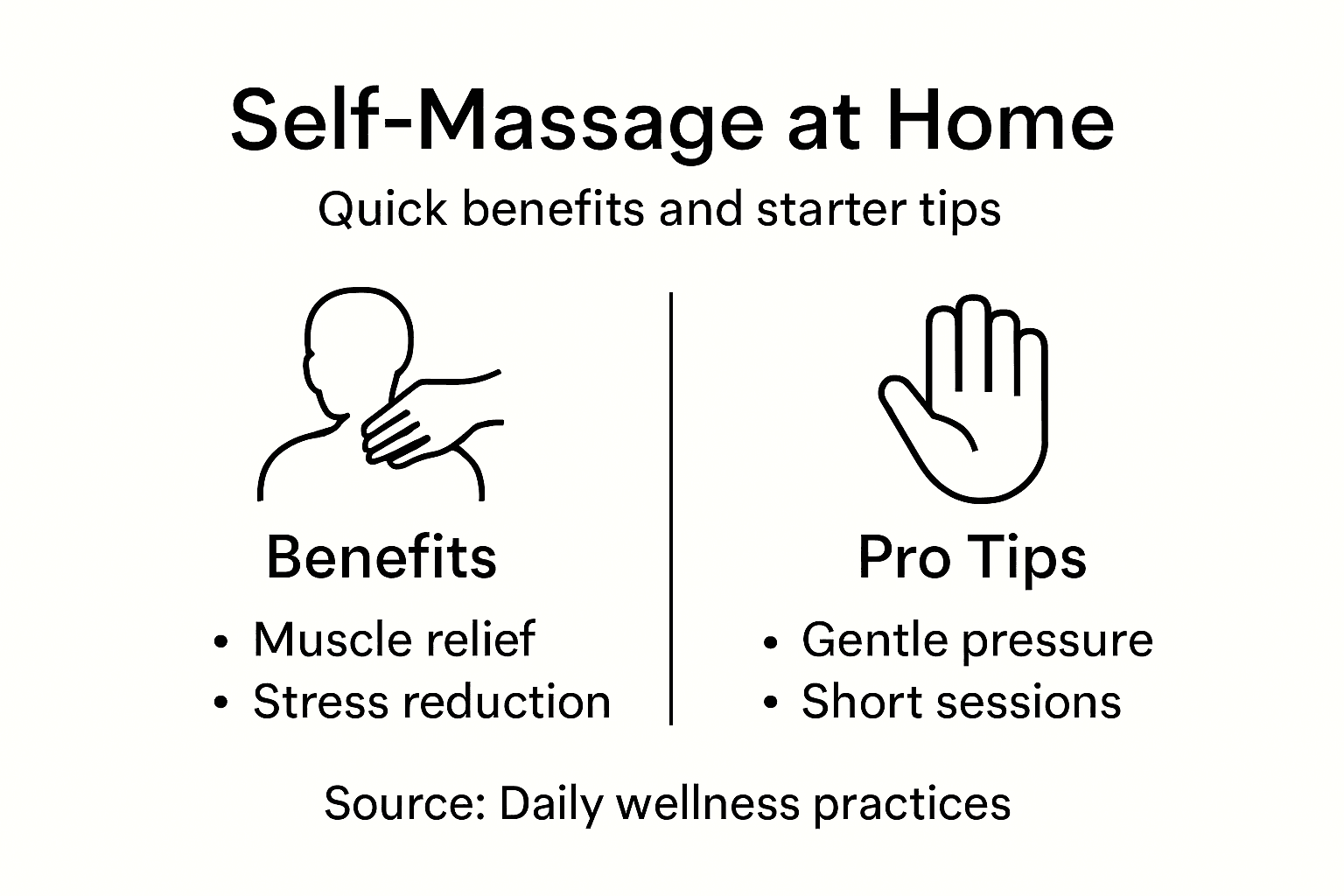
Self-massage is a therapeutic practice where individuals manually manipulate their own muscles and soft tissues to promote relaxation, reduce tension, and support overall physical wellness. Unlike professional massage therapy that requires external practitioners, self-massage empowers individuals to take direct control of their muscle recovery and stress management from the comfort of their own home or workspace.
The core principles of self-massage involve applying strategic pressure, gentle manipulation, and intentional touch to specific muscle groups. Understanding body mechanics and tension points helps practitioners effectively target areas of discomfort and promote muscular relief. Practitioners can enhance their experience through several techniques:
- Using gentle, consistent hand pressure
- Focusing on specific muscle trigger points
- Incorporating deep breathing techniques
- Utilizing aromatic oils for added relaxation
- Practicing mindful body awareness during massage
Many people harbor misconceptions about self-massage, believing it is less effective than professional treatments or requires specialized training. However, research demonstrates that consistent self-massage can yield significant benefits comparable to professional interventions. Self-massage techniques offer accessible emotional and physical regulation without substantial financial investment or scheduling constraints.
Pro tip: Start with gentle, short self-massage sessions and gradually increase duration and pressure as you become more comfortable with different techniques and your body’s responses.
Popular Self-Massage Techniques and Tools
Self-massage techniques have evolved to include a diverse range of methods and tools that cater to different muscle groups and wellness objectives. Roller massagers have become particularly popular for targeting specific muscle areas, especially for athletes and individuals seeking targeted muscle recovery and performance enhancement.
The most common self-massage techniques encompass a variety of approaches designed to address muscle tension and promote relaxation:
- Foam Rolling: Deep tissue technique using cylindrical foam rollers
- Trigger Point Therapy: Applying concentrated pressure on specific muscle knots
- Compression Massage: Using hands or tools to apply sustained pressure
- Rhythmic Tapping: Percussive movements to stimulate muscle circulation
- Acupressure: Targeting specific pressure points to release tension
Massage Tools play a crucial role in enhancing self-massage effectiveness. These range from simple, affordable options to more advanced technological devices. Comprehensive self-massage routines incorporate various tools such as:
- Tennis or massage balls
- Foam rollers
- Handheld massage devices
- Massage sticks
- Percussion massagers
- Massage guns
By understanding and implementing these techniques, individuals can create personalized massage routines that target specific muscle groups, reduce tension, and support overall physical wellness. The key is to experiment with different methods and find the approach that works best for your body’s unique needs.
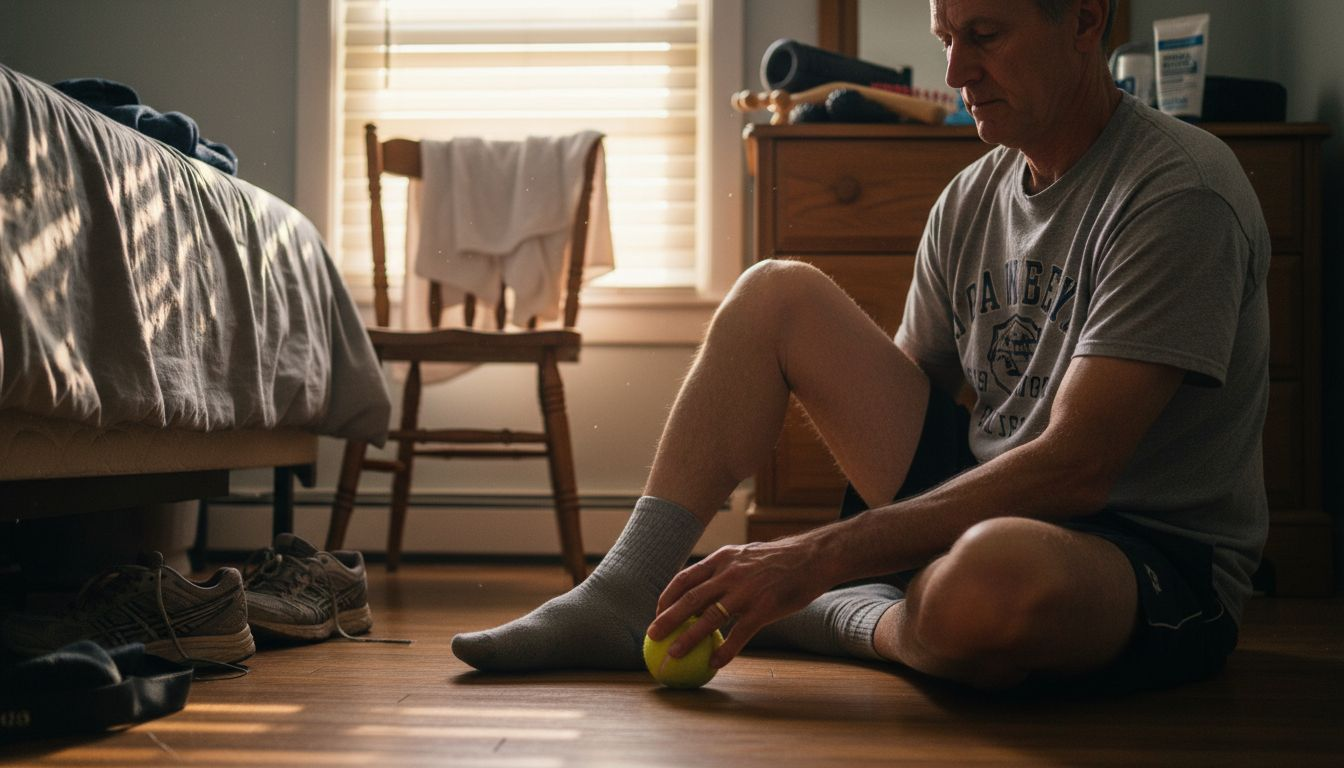
Pro tip: Start with lighter pressure and gradually increase intensity, listening to your body’s response and avoiding areas of acute pain or injury.
Physical and Mental Health Benefits Explained
Massage therapy offers comprehensive benefits for both physical and mental wellness, addressing multiple dimensions of personal health that extend far beyond simple muscle relaxation. The practice provides a holistic approach to managing stress, reducing pain, and improving overall bodily function through targeted self-care techniques.
Physical health benefits of regular self-massage include:
- Reducing low-back, neck, and shoulder pain
- Decreasing muscle soreness after exercise
- Improving blood circulation
- Enhancing muscle flexibility
- Supporting faster post-workout recovery
- Alleviating chronic muscle tension
Mental Wellness plays an equally crucial role in self-massage practices. Manual massage techniques promote neurophysiological responses that contribute to significant psychological benefits. These include stress reduction, anxiety management, improved emotional regulation, and increased overall sense of well-being.
The interconnected nature of physical and mental health means that self-massage serves as a powerful tool for holistic wellness. By engaging in regular self-massage, individuals can create a proactive approach to managing both physical discomfort and emotional stress, ultimately supporting a more balanced and resilient lifestyle.
Pro tip: Integrate short, consistent self-massage sessions into your daily routine to maximize both physical recovery and mental relaxation.
The following table summarizes key mental and physical effects of regular self-massage routines:
| Outcome | Physical Effect | Mental Effect |
|---|---|---|
| After exercise | Less muscle soreness | Quicker stress reduction |
| During stress | Reduced muscle tension | Enhanced emotional control |
| Over time | Improved flexibility | Better mood stability |
| Daily use | Boosted circulation | Increased relaxation |
| Chronic use | Support for injury recovery | Ongoing anxiety relief |
Practical Applications for Chronic Stress Relief
Self-massage offers a strategic approach to managing chronic stress by providing accessible, immediate intervention techniques that can be seamlessly integrated into daily routines. By targeting specific areas of physical tension, individuals can interrupt stress cycles and promote rapid physiological relaxation.
Practical self-massage techniques for stress relief include:
- Neck and shoulder tension release
- Hand and wrist relaxation methods
- Quick desk-based massage strategies
- Breathing-synchronized pressure techniques
- Targeted muscle group stress interruption
Emotional Regulation plays a critical role in stress management. Mindful self-massage activates the parasympathetic nervous system, helping individuals regain emotional balance and reduce anxiety. The practice involves deliberate, slow movements combined with focused breathing, creating a powerful mind-body intervention.
By incorporating short, intentional self-massage sessions throughout the day, individuals can create natural breaks in stress patterns. These moments of physical intervention help reset mental states, reduce muscle tension, and provide a proactive approach to managing chronic stress and emotional overwhelm.
Pro tip: Designate 3-5 minute intervals during high-stress periods for targeted self-massage, focusing on neck, shoulders, and hands to immediately reduce tension.
Risks, Costs, and Comparing Alternatives
Self-massage techniques present a low-cost alternative to professional massage therapy, offering significant financial advantages for individuals seeking regular muscle relief and stress management. Understanding the potential risks, benefits, and comparative approaches helps individuals make informed decisions about their wellness strategies.
Risks associated with self-massage include:
- Potential injury from improper technique
- Risk of aggravating existing muscle conditions
- Temporary performance impairment during intense training
- Possible overexertion or excessive pressure
- Limited effectiveness for severe medical conditions
Cost Comparison reveals substantial financial benefits of self-massage approaches. Roller massager techniques demonstrate minimal investment requirements compared to professional therapeutic interventions. The primary expenses typically involve purchasing basic massage tools like foam rollers, massage balls, or handheld devices, which range from $10 to $150.
When comparing alternatives, professional massage therapy offers deeper therapeutic interventions but requires significantly higher financial commitment and scheduling constraints. Self-massage provides a flexible, accessible option for daily muscle maintenance and stress reduction, allowing individuals to take proactive control of their physical wellness without substantial ongoing expenses.
Here’s a side-by-side comparison of self-massage and professional massage therapy:
| Aspect | Self-Massage | Professional Massage Therapy |
|---|---|---|
| Accessibility | Immediate, at home | Requires appointment |
| Cost | One-time tool purchase | Ongoing session fees |
| Skill Level | Learnable with guidance | Performed by trained therapists |
| Flexibility | Integrates into daily routine | Fixed, scheduled times |
| Customization | Tailored to personal needs | Guided by therapist’s expertise |
Pro tip: Start with affordable, versatile massage tools and gradually invest in more specialized equipment as you develop your self-massage technique and understand your body’s specific needs.
Elevate Your Daily Relief with Smart Self-Massage Solutions
Chronic muscle tension and stress often sneak into our daily lives causing discomfort and limiting performance. This article shows how consistent self-massage can transform your wellness routine by reducing pain, improving circulation, and promoting emotional balance. This simple yet powerful practice addresses key pain points like neck and shoulder tension while fostering long-term recovery and relaxation.
Take control of your daily relief by integrating thoughtfully designed massage tools from Relaxation – Lunix. These solutions combine innovative technology and user-friendly design to help you restore your body and mind effortlessly. From portable devices that fit your lifestyle to premium comfort products, Lunix offers smart recovery options tailored for elevated living.

Experience the benefits of self-massage backed by science and made accessible through Lunix. Begin your journey to better health today by exploring our collection or visit Lunix for a complete range of wellness essentials. Act now to make daily relief and enhanced performance part of your life.
Frequently Asked Questions
What are the benefits of self-massage?
Self-massage offers numerous benefits including reduced muscle tension, decreased soreness after exercise, improved blood circulation, enhanced flexibility, and quicker post-workout recovery. It also promotes emotional well-being by reducing stress and anxiety.
How can I safely perform self-massage at home?
To safely perform self-massage, start with gentle techniques using your hands or simple tools like foam rollers or tennis balls. Focus on specific muscle groups, use consistent pressure, and listen to your body’s responses to avoid injury.
What tools are useful for self-massage?
Common tools for self-massage include foam rollers, massage balls, handheld devices, percussion massagers, and massage guns. These tools help target specific muscle areas and enhance the effectiveness of your self-massage techniques.
How does self-massage compare to professional massage therapy?
Self-massage provides a more accessible and cost-effective way to manage muscle tension and stress compared to professional massage therapy. It allows individuals to control their wellness routine at home without the financial or scheduling commitments of professional sessions.