


Muscle tension that lingers after a long day can make every movement feel harder than it should. For many American adults living with chronic pain, finding lasting relief often means looking beyond quick fixes and searching for therapies that address the root of discomfort. Deep tissue massage stands out for its ability to target underlying muscle layers, offering both pain reduction and improved function—without the myths about pain or toxins. Discover how this approach combines science and skilled care to support your journey toward lasting wellness.
Table of Contents
- Deep Tissue Massage Defined And Common Myths
- Popular Techniques And Targeted Applications
- Comparing Deep Tissue With Other Massage Types
- Key Benefits For Chronic Pain And Injury
- Potential Risks And When To Avoid Treatment
Key Takeaways
| Point | Details |
|---|---|
| Deep Tissue Massage Focus | This technique aims to relieve chronic muscle tension through targeted pressure without inducing maximum pain. |
| Individual Adaptation | Effective deep tissue massage requires therapists to assess and adapt techniques based on each client’s specific needs. |
| Benefits for Chronic Pain | Deep tissue massage can significantly reduce muscular tension, enhance flexibility, and provide natural pain relief for various conditions. |
| Safety Considerations | Individuals with certain medical conditions should avoid deep tissue massage, making professional screening essential before treatment. |
Deep tissue massage defined and common myths
Deep tissue massage is a therapeutic technique designed to address chronic muscle tension and pain by targeting deeper muscle and connective tissue layers. Unlike lighter massage styles, this approach uses slower, more deliberate strokes and deeper pressure to reach underlying muscle groups.
Contrary to popular misconception, deep tissue massage is not about inducing maximum pain. Scientific research challenges common myths surrounding this specialized massage technique. The primary goal is strategic muscle relief, not creating discomfort.
Common myths about deep tissue massage include:
- The belief that massage must be extremely painful to be effective
- Assumptions about “releasing toxins” through massage
- Thinking the technique is identical for every client
Professional massage therapists understand that effective deep tissue work requires:
- Carefully assessing individual muscle conditions
- Adapting pressure to client comfort and therapeutic goals
- Using precise techniques targeting specific muscle groups
- Maintaining consistent communication about pain thresholds
Technique specifics matter significantly. Deep tissue massage involves strategic pressure application targeting muscles’ deeper layers, focusing on areas of chronic tension and restricted movement. Research indicates that proper technique is more important than aggressive force.
Pro tip: Always communicate openly with your massage therapist about your comfort level and specific areas of concern to ensure the most effective and beneficial deep tissue massage experience.
Popular techniques and targeted applications
Deep tissue massage encompasses several specialized techniques designed to address specific muscle and soft tissue concerns. Research indicates athletes particularly benefit from strategic muscle manipulation that promotes recovery and enhances performance.
Key techniques in deep tissue massage include:
- Stripping: Long, gliding pressure along muscle fibers
- Friction: Targeted pressure to break down adhesions
- Trigger point therapy: Concentrated pressure on specific muscle knots
- Cross-fiber manipulation: Pressure applied perpendicular to muscle fiber direction
Targeted applications vary widely, addressing multiple health and wellness needs:
- Athletic muscle recovery
- Chronic pain management
- Posture correction
- Stress-related muscle tension
- Rehabilitation after injuries
Neuromuscular techniques play a critical role in modern deep tissue approaches. Advanced massage strategies now incorporate evidence-based methods that engage sensory neural circuits, expanding beyond traditional massage paradigms.
Deep tissue massage is not a one-size-fits-all treatment, but a nuanced approach tailored to individual physiological needs.
Specialized focus areas require unique massage strategies. Athletes might receive techniques emphasizing rapid muscle recovery, while individuals with chronic pain may require gentler, more sustained pressure approaches.
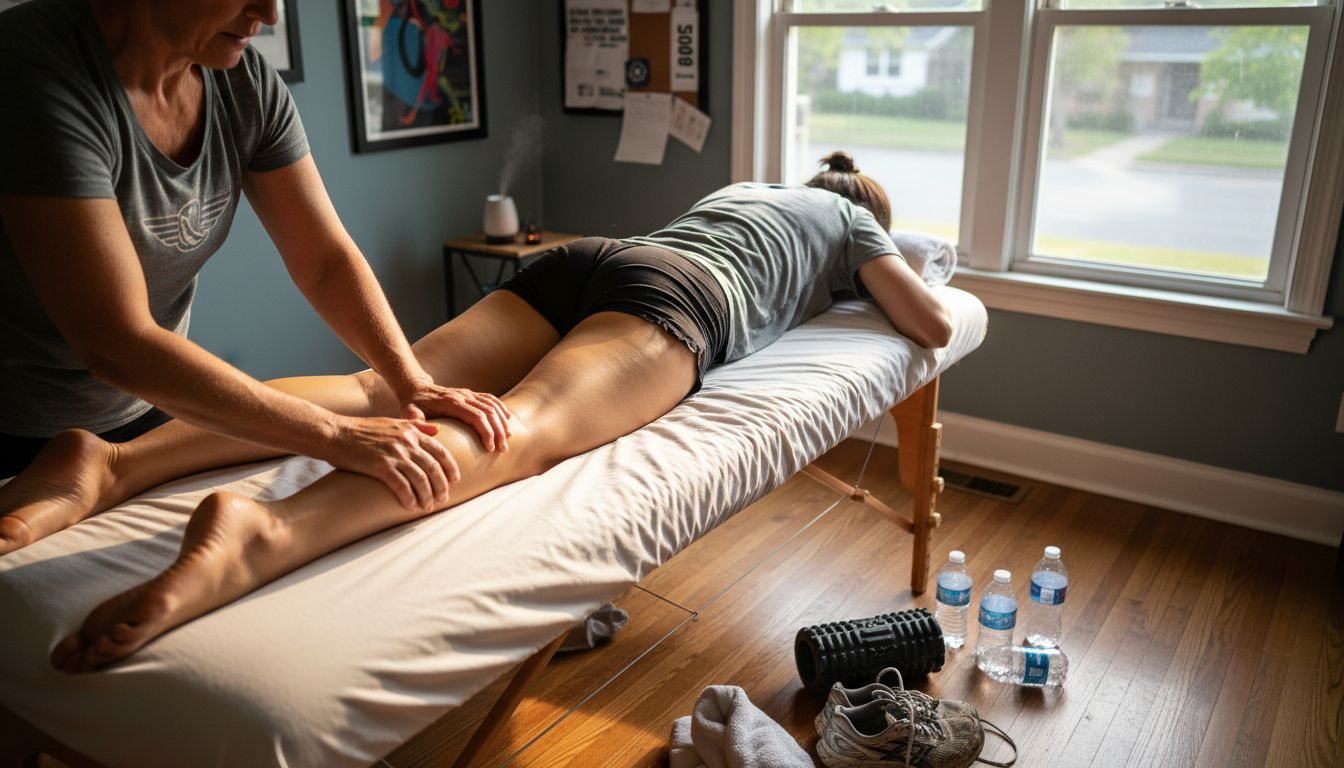
Pro tip: Communicate your specific health goals and pain thresholds with your massage therapist to ensure a personalized and effective deep tissue massage experience.
Comparing deep tissue with other massage types
Research comparing massage techniques reveals significant differences in massage approaches, each designed to address unique physiological needs.
Massage techniques vary dramatically in their approach and intended outcomes:
- Swedish Massage: Gentle, relaxation-focused technique
- Sports Massage: Performance and recovery-oriented
- Deep Tissue Massage: Intense, targeted muscle and connective tissue work
- Trigger Point Therapy: Concentrated pressure on specific muscle knots
- Myofascial Release: Sustained pressure to eliminate fascial restrictions
Key differences between massage types include:
- Pressure intensity
- Targeted muscle layers
- Specific therapeutic goals
- Duration of treatment
- Recipient’s physical condition
Pressure dynamics play a crucial role in distinguishing massage approaches. Physiotherapy comparisons demonstrate that deep tissue massage applies significantly more intense pressure compared to gentler relaxation techniques.
Not all massage techniques are created equal. Each approach offers unique benefits tailored to specific wellness objectives.
While Swedish massage provides surface-level relaxation, deep tissue massage penetrates deeper muscle layers to address chronic tension, adhesions, and structural imbalances. The technique requires advanced training and precise understanding of human anatomy.
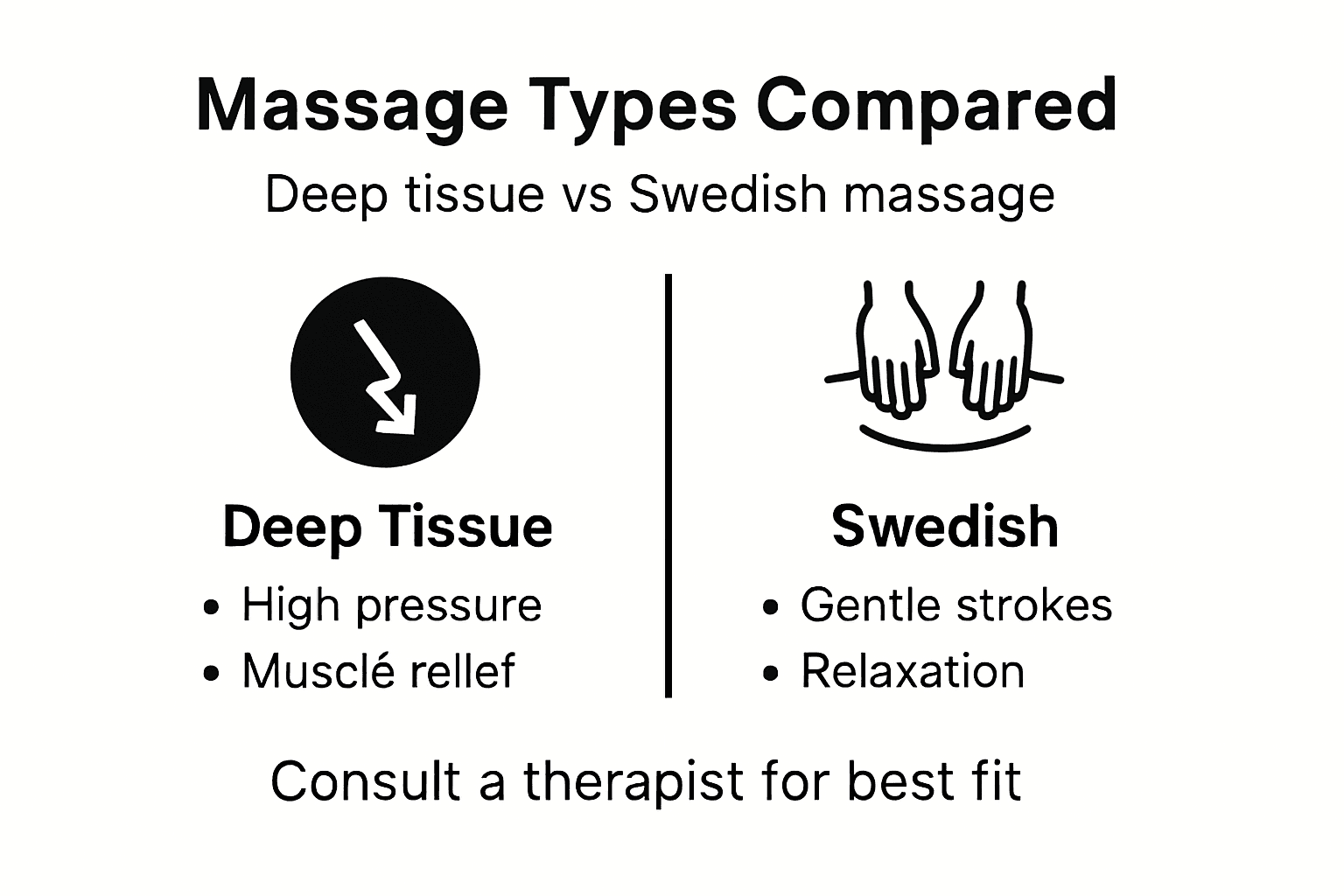
Here is a comparison of common massage techniques and their main uses:
| Massage Type | Primary Purpose | Typical Pressure | Best For |
|---|---|---|---|
| Swedish Massage | Relaxation & stress relief | Light to moderate | General relaxation |
| Deep Tissue Massage | Chronic muscle tension | Deep, focused | Chronic pain sufferers |
| Sports Massage | Injury prevention & recovery | Variable, targeted | Athletes & active people |
| Myofascial Release | Loosening connective tissue | Sustained, gentle | Restricted movement issues |
| Trigger Point Therapy | Releasing muscle knots | Direct, localized | Persistent muscle knots |
Pro tip: Consult with a professional massage therapist to determine the most appropriate massage technique for your specific health and wellness goals.
Key benefits for chronic pain and injury
Recent systematic reviews demonstrate that deep tissue massage offers substantial therapeutic benefits for individuals suffering from chronic pain and musculoskeletal conditions. Understanding these benefits can transform how we approach pain management and physical recovery.
Key benefits of deep tissue massage for chronic pain and injury include:
- Significant reduction in muscular tension
- Improved range of motion and flexibility
- Enhanced circulation to damaged tissues
- Natural pain signal modulation
- Decreased inflammation and muscle adhesions
- Psychological stress reduction
Neurological mechanisms play a crucial role in pain management. Advanced massage research reveals that deep tissue techniques interact directly with the nervous system, helping to interrupt chronic pain pathways and promote healing.
Deep tissue massage is not just a treatment, but a comprehensive approach to understanding and managing chronic pain.
Specific chronic conditions that can benefit from deep tissue massage include:
- Lower back pain syndromes
- Neck and shoulder tension disorders
- Fibromyalgia-related muscle stiffness
- Repetitive strain injuries
- Post-surgical rehabilitation recovery
Holistic pain management requires a multifaceted approach. Deep tissue massage serves as a powerful non-pharmacological intervention, offering relief without the potential side effects associated with long-term medication use.
Pro tip: Combine deep tissue massage with gentle stretching and consistent hydration to maximize pain relief and tissue recovery.
Potential risks and when to avoid treatment
Massage therapy safety guidelines emphasize the critical importance of understanding potential risks associated with deep tissue massage. Not every individual is a suitable candidate for this intensive therapeutic technique.
Individuals should avoid deep tissue massage if they have:
- Active blood clotting disorders
- Severe osteoporosis
- Recent surgical procedures
- Active infections
- Advanced cardiovascular conditions
- Open wounds or skin infections
- Unexplained pain syndromes
Medical screening is essential before treatment. Specific contraindications require professional evaluation, with healthcare providers determining individual suitability based on comprehensive health assessments.
Professional massage therapists prioritize client safety over treatment delivery.
Potential risks of inappropriate deep tissue massage include:
- Tissue damage
- Aggravation of existing injuries
- Increased inflammation
- Potential blood clot displacement
- Nerve compression
Physiological responses vary significantly between individuals. Some clients might experience temporary side effects like bruising, muscle soreness, or heightened sensitivity, which typically resolve within 24-48 hours.
Below is a summary of possible risks of deep tissue massage and recommended actions:
| Potential Risk | Likely Cause | Recommended Precaution |
|---|---|---|
| Tissue damage | Excessive pressure applied | Communicate discomfort |
| Increased inflammation | Aggravation of injuries | Screen for recent trauma |
| Blood clot displacement | Pre-existing clotting issue | Consult physician first |
| Nerve compression | Poor technique or positioning | Use licensed professionals |
| Muscle soreness or bruising | Typical after initial session | Rest and hydrate |
Pro tip: Always disclose your complete medical history and current health conditions to your massage therapist before beginning any deep tissue treatment.
Discover Effective Recovery Solutions to Complement Your Deep Tissue Massage
Addressing chronic muscle tension and pain requires more than occasional massage sessions. As the article highlights, deep tissue massage targets the deeper muscle layers to relieve stubborn knots and improve circulation while managing pain strategically. However, maintaining relief between sessions and enhancing your body’s natural healing process is crucial for long-term comfort and performance.
At Lunix, we understand the importance of smart recovery and comfort solutions designed to seamlessly integrate into your daily routine. Our innovative products support muscle restoration, reduce inflammation, and promote relaxation—empowering you to maximize the benefits of your deep tissue massages. Explore our thoughtfully designed wellness tools that transform your personal space into a dedicated recovery station.

Ready to take control of your muscle health and recovery? Visit Lunix today and discover how our premium solutions complement therapeutic massage to help your body relax and perform at its best. Do not wait to invest in your well-being and unlock enhanced relief with every use.
Frequently Asked Questions
What is deep tissue massage?
Deep tissue massage is a therapeutic technique that targets deeper layers of muscle and connective tissue to relieve chronic tension and pain using slower strokes and deeper pressure.
How does deep tissue massage help with chronic pain?
Deep tissue massage helps alleviate chronic pain by reducing muscular tension, improving circulation, promoting flexibility, and modulating pain signals in the nervous system.
Are there any risks associated with deep tissue massage?
Yes, risks include tissue damage, increased inflammation, and potential blood clot displacement. It’s important to consult with a healthcare provider if you have specific medical conditions before receiving treatment.
How should I communicate with my massage therapist during a deep tissue session?
It’s crucial to communicate openly about your comfort level and any specific areas of pain to ensure that the treatment is effective and tailored to your needs.