


Dynamic cushioning isn’t just extra padding in your shoes. It’s a sophisticated technology that actively responds to how your feet hit the ground, absorbing impact forces and returning energy with each step. For health-conscious adults navigating joint discomfort or seeking better recovery, understanding this technology can transform daily comfort. Unlike traditional foam that simply compresses, dynamic cushioning adapts to movement, reducing stress on knees, hips, and ankles while helping your body bounce back faster from activity. This article breaks down exactly how it works, what makes it different, and how to choose the right cushioning for your wellness goals.
Table of Contents
- Key takeaways
- Understanding dynamic cushioning and how it works
- Comparing cushioning technologies: benefits and trade-offs
- Practical applications: choosing and using dynamic cushioning for daily comfort and recovery
- Enhance your recovery with Lunix dynamic cushioning products
- Frequently asked questions
Key Takeaways
| Point | Details |
|---|---|
| Adaptive cushioning benefits | Dynamic cushioning adapts to impact, absorbing forces and returning energy with each step to reduce joint stress. |
| Joint stress reduction | Dynamic cushioning can reduce loading rates by 20 to 35 percent, translating to less strain on cartilage, tendons, and ligaments. |
| Higher energy return | Advanced materials like PEBA and TPU can deliver energy return up to 85 percent, helping muscles work less and reducing fatigue. |
| Balance and stability | Excessive cushioning can reduce stability, so selecting the right thickness and materials balances comfort with support. |
| Best use case | Dynamic cushioning suits health conscious adults seeking daily comfort and injury prevention through better joint protection and recovery. |
Understanding dynamic cushioning and how it works
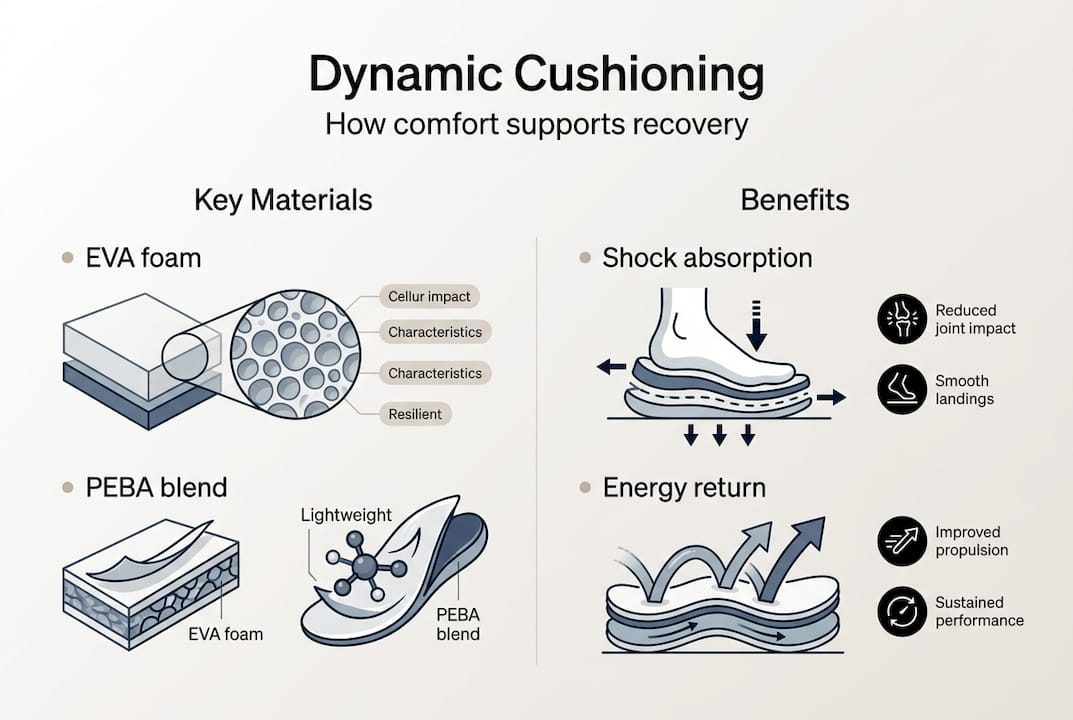
Dynamic cushioning refers to midsole technologies that compress and rebound in direct response to the forces your body generates during walking, running, or standing. Unlike traditional foam that offers the same resistance regardless of impact speed or angle, these systems adjust their stiffness and energy return based on how hard and fast your foot strikes the surface.
The magic happens at the molecular level. Modern dynamic cushioning relies on viscoelastic materials like ethylene-vinyl acetate (EVA), polyether block amide (PEBA), and thermoplastic polyurethane (TPU). When your heel contacts the ground, these materials compress rapidly, spreading impact forces over a longer time period and reducing the peak load your joints experience. The compressed material then rebounds, releasing stored energy to propel your foot forward. This compression-rebound cycle can happen in milliseconds, adapting continuously throughout your stride.
Biomechanically, this matters because peak impact forces directly correlate with joint stress and fatigue. Studies show dynamic cushioning can reduce loading rates by 20-35% compared to minimal cushioning, translating to less strain on cartilage, tendons, and ligaments. For adults over 40 dealing with natural joint wear or recovering from injury, this reduction becomes crucial for maintaining active lifestyles without exacerbating discomfort.
Energy return rates separate good cushioning from exceptional cushioning. Traditional EVA foam returns roughly 55-65% of impact energy, while advanced materials like Nike’s ZoomX (a PEBA-based foam) achieve up to 85% energy return. Higher return means less energy lost to heat and deformation, so your muscles work less hard with each step. Over thousands of daily steps, this efficiency compounds into noticeably reduced fatigue.
Some systems layer multiple materials or incorporate mechanical elements like air units or carbon fiber plates to fine-tune response. Air cushioning compresses and expands rapidly, offering plush initial impact absorption. Plates add propulsive snap during toe-off. The combination creates a ride that feels both protective and responsive, adapting to varied surfaces and movement speeds throughout your day.
Pro Tip: Test dynamic cushioning on hard surfaces like concrete or tile, not just carpet. The technology’s adaptive benefits become most apparent when absorbing higher-impact forces, giving you a realistic sense of how it will perform during daily activities.
For health-conscious adults, dynamic cushioning offers a practical path to comfort solutions that support faster recovery from activity. The technology works quietly in the background, letting you focus on movement rather than discomfort.
Comparing cushioning technologies: benefits and trade-offs
Not all cushioning delivers the same experience or outcomes. Understanding the spectrum from minimal to maximal helps you match technology to your specific health needs and activity patterns.
| Cushioning type | Key characteristics | Best for | Potential drawbacks |
|---|---|---|---|
| Minimal/barefoot | Thin sole (3-10mm), firm ground feel | Strengthening foot muscles, short distances | Higher impact forces, adaptation period required |
| Traditional foam | Static EVA, consistent compression | Budget-conscious buyers, casual wear | Limited energy return, faster breakdown |
| Dynamic cushioning | Adaptive materials, high energy return | Joint protection, recovery, daily comfort | Higher cost, may feel too soft initially |
| Maximal cushioning | Extra-thick midsoles (35mm+) | Ultra-distance, severe joint issues | Reduced stability, altered gait mechanics |
Dynamic cushioning occupies the sweet spot for most health-conscious adults. It provides meaningful impact reduction without the instability that comes with excessive stack height. Research indicates excessive cushioning reduces stability and can increase ground contact time, particularly problematic for individuals with balance concerns or neuropathy.
The biomechanical trade-offs become clearer when examining specific populations. For people managing diabetes, moderate cushioning with elastic moduli between 0.3-0.5 MPa offers protection without compromising proprioception (your ability to sense foot position). Too soft, and you lose critical feedback about terrain and balance. Too firm, and peak pressures can damage sensitive tissue.
Arthritis presents different considerations. Dynamic cushioning excels here by absorbing forces that would otherwise stress inflamed joints. The energy return component also reduces the muscular effort needed for movement, allowing longer activity periods before fatigue triggers pain. However, pairing cushioning with appropriate stability features prevents the ankle rolling or knee wobbling that can occur in overly plush shoes.
Minimalist enthusiasts argue that cushioning weakens foot muscles and alters natural gait. There’s truth to this for younger, injury-free individuals. But for mature adults, especially those recovering from meniscus tears and sports injuries, the protective benefits typically outweigh concerns about muscle activation. You can still strengthen feet through targeted exercises while using cushioning during daily activities.
One often-overlooked factor is weight. Lighter individuals (under 150 lbs) may find thick dynamic cushioning feels unstable because they don’t compress the midsole enough to engage the responsive properties. Heavier individuals benefit more dramatically from the impact absorption. This explains why cushioning preferences vary so widely between people.
Pro Tip: If you’re interested in the joy of barefoot living but need joint protection, consider dynamic cushioning for high-impact activities and going barefoot during low-impact home time. This hybrid approach offers both strengthening and protection.
The key is matching cushioning level to your current health status, activity demands, and body mechanics rather than following trends or marketing claims.
Practical applications: choosing and using dynamic cushioning for daily comfort and recovery
Selecting effective dynamic cushioning requires moving beyond marketing language to assess actual performance characteristics. Start by identifying your primary use case: all-day standing, walking, light jogging, or post-activity recovery.
For health-conscious adults 40-65, hybrid responsive systems balance protection and stability. Look for midsoles combining a softer top layer for initial comfort with a firmer base layer for support. This dual-density construction prevents the mushy, unstable feeling while maintaining impact absorption.
-
Assess compression depth. Press your thumb firmly into the midsole. It should compress 3-5mm with moderate pressure, then rebound quickly when released. Too soft means instability; too firm means limited adaptation.
-
Check heel-to-toe drop. A 6-10mm difference between heel and forefoot height suits most adults, promoting natural stride mechanics without forcing aggressive forefoot striking that can strain calves.
-
Test on varied surfaces. Walk on carpet, hard floors, and outdoor pavement. Dynamic cushioning should feel noticeably more responsive on harder surfaces, demonstrating its adaptive capability.
-
Evaluate arch support integration. The best dynamic cushioning works with, not against, your arch structure. If you need custom support, ensure the insole can be removed for orthotic insertion without compromising midsole function.
-
Consider durability markers. Higher-quality foams maintain responsiveness for 400-600 miles of use. Check manufacturer ratings and look for multi-layer construction that protects the cushioning system from premature compression.
Custom solutions like 3D-printed orthotics represent the cutting edge for individuals with specific conditions like arthritis or diabetes. These devices map your exact foot contours and pressure points, then create cushioning that’s firmer under high-pressure areas and softer where you need impact absorption. The precision optimization can reduce pain and improve function beyond what off-the-shelf options achieve.
Integrating dynamic cushioning into recovery routines amplifies benefits. After physical therapy sessions or challenging activities, wearing well-cushioned footwear reduces the cumulative stress your joints absorb during the recovery window. This simple step can speed up recovery after therapy by minimizing additional micro-trauma while tissues heal.
Pair cushioning strategies with complementary recovery practices. Elevating feet while resting enhances circulation and reduces swelling, working synergistically with the impact protection cushioning provides during activity. Understanding benefits of elevating your feet creates a comprehensive approach to joint health.
Pro Tip: Rotate between two pairs of cushioned shoes rather than wearing one pair daily. This allows midsole foams to fully decompress and recover between uses, extending their responsive lifespan by 30-40% while maintaining consistent performance.
Don’t expect instant transformation. Your body needs 2-3 weeks to adapt to new cushioning, especially if switching from minimal to dynamic systems. Initial mild calf soreness is normal as your movement patterns adjust. Gradual transition prevents injury while letting you experience the full benefits.
For individuals managing chronic conditions, document how different cushioning levels affect your symptoms. Track pain levels, fatigue, and activity duration over several weeks. This data-driven approach identifies what actually works for your unique biomechanics rather than relying on general recommendations.
Enhance your recovery with Lunix dynamic cushioning products
After exploring how dynamic cushioning technology supports joint health and daily comfort, you might be wondering how to bring these benefits into your wellness routine. Lunix designs recovery products specifically for health-conscious adults who prioritize both comfort and performance.

Our recovery collection incorporates advanced cushioning principles to create solutions that adapt to your body’s needs. From supportive footwear accessories to targeted recovery tools, each product reflects our commitment to helping you restore, relax, and perform at your best. The same responsive technologies that make dynamic cushioning effective in athletic shoes inform our approach to whole-body recovery and comfort.
Whether you’re managing joint discomfort, recovering from activity, or simply seeking elevated daily comfort, Lunix products transform your living spaces into personalized wellness stations. Discover how thoughtful design and innovative materials can support your long-term health goals.
Frequently asked questions
What exactly is dynamic cushioning and how does it differ from regular padding?
Dynamic cushioning uses advanced viscoelastic materials that actively respond to impact forces, compressing and rebounding based on how hard your foot strikes the ground. Regular padding offers static resistance that doesn’t adapt to movement speed or force. This adaptive response reduces peak joint stress by 20-35% while returning up to 85% of impact energy, making each step more efficient and less fatiguing than traditional foam.
Can dynamic cushioning actually reduce joint pain and improve recovery?
Yes, by lowering peak impact forces and loading rates, dynamic cushioning reduces cumulative stress on cartilage, tendons, and ligaments throughout the day. The energy return component also decreases muscular effort needed for movement, allowing longer activity periods before fatigue triggers pain. For adults over 40 or those recovering from injury, this protection helps maintain active lifestyles while supporting tissue healing between activity sessions.
Is there such a thing as too much cushioning, and what are the risks?
Excessive cushioning, particularly in shoes with 35mm+ stack heights, can reduce stability and proprioception, increasing ground contact time and potentially raising injury risk. Lighter individuals especially may experience ankle instability or altered gait mechanics with overly soft midsoles. The optimal approach balances impact absorption with ground feel, typically achieved through 20-30mm midsoles with dual-density construction that provides both protection and stability.
What materials provide the best dynamic cushioning performance?
PEBA-based foams like ZoomX offer the highest energy return (up to 85%), making them ideal for performance and recovery. TPU provides excellent durability and responsiveness for all-day wear. EVA remains popular for its balance of cushioning, weight, and cost. Air units deliver plush impact absorption. For health-conscious adults, hybrid systems combining multiple materials optimize both protection and stability better than single-material approaches.
How do I know if dynamic cushioning is right for my specific health needs?
Dynamic cushioning benefits most adults over 40, especially those managing joint discomfort, arthritis, or recovering from injury. If you experience knee, hip, or ankle pain after standing or walking, or if fatigue limits your activity duration, responsive cushioning typically helps. Individuals with diabetes should choose moderate firmness (0.3-0.5 MPa) to maintain protective sensation. Those with severe balance issues may need stability features alongside cushioning. Test different options and track how your symptoms respond over 2-3 weeks to identify what works for your unique biomechanics.