


Most people think posture correction means standing up straight and pulling shoulders back. That’s only a small piece of the puzzle. Real posture correction is a comprehensive approach combining biomechanical assessment, targeted exercises, ergonomic adjustments, and sometimes therapy to restore your body’s natural alignment. For adults aged 40 to 65, this process becomes essential for reducing pain, improving comfort, and maintaining long-term well-being. This guide breaks down what posture correction actually involves, how it works, and practical ways you can apply it to transform your daily comfort and health.
Table of Contents
- Key takeaways
- What is posture correction and why does it matter?
- How posture correction works: methods and techniques
- Benefits and expected outcomes of posture correction for midlife adults
- Practical tips for posture correction and ergonomic adjustments at home and work
- Explore posture support products and recovery options at Lunix
- What is posture correction? Frequently asked questions
Key Takeaways
| Point | Details |
|---|---|
| Comprehensive approach | Posture correction combines biomechanical assessment, targeted exercises, ergonomic adjustments, and therapy to restore spinal alignment and ease pain. |
| Age 40 to 65 | For adults aged 40 to 65, maintaining proper alignment and ergonomic changes is essential to reduce pain and preserve long term well being. |
| Time to improvement | Improvements typically appear within four to twelve weeks with consistent practice and proper progression. |
| Individualized plans | Customized exercise and therapy plans based on your postural deviations outperform generic routines. |
| Ergonomics matter | Ergonomic adjustments and daily habit changes support ongoing correction and reduce strain during work and daily activities. |
What is posture correction and why does it matter?
Posture correction is the process of restoring the body’s natural spinal alignment through biomechanical assessment, muscle strengthening, stretching, ergonomic adjustments, and sometimes devices or therapy to alleviate pain, improve comfort, and enhance well-being. It’s not just about appearance. Your spine has three natural curves that need specific angles to function properly. The cervical curve in your neck should measure 20 to 40 degrees, your thoracic curve in the upper back 20 to 45 degrees, and your lumbar curve in the lower back 40 to 60 degrees.
Proper alignment means your ear, shoulder, hip, knee, and ankle form a vertical line when viewed from the side. This applies to both static postures like sitting and standing, and dynamic postures when you’re moving. When these curves deviate from their natural ranges or your body falls out of alignment, you experience increased strain on muscles, ligaments, and joints.
Poor posture creates a cascade of problems. You might notice neck pain, upper back tension, lower back discomfort, or reduced mobility. Over time, misalignment can lead to chronic pain conditions, decreased lung capacity, digestive issues, and accelerated spinal degeneration. For adults between 40 and 65, these risks increase due to lifestyle factors like prolonged sitting, previous injuries, and natural age-related changes in muscle strength and bone density.
Why posture correction matters more as you age:
- Muscle mass naturally decreases after 40, reducing the support your spine needs
- Sedentary work habits compound over decades, creating deeply ingrained postural patterns
- Bone density changes make proper alignment crucial for preventing fractures
- Recovery from postural strain takes longer, making prevention essential
Addressing posture correction now helps you maintain independence, reduce pain, and preserve the quality of life you deserve. The good news is that with consistent effort and the right approach, you can make meaningful improvements regardless of how long you’ve had poor posture. Understanding ergonomic design benefits back pain comfort helps you see how environmental adjustments support your correction efforts.
How posture correction works: methods and techniques
Posture correction uses multiple approaches tailored to your specific needs. Methodologies include targeted exercises like core strengthening, yoga, SNPE, PPCE, Global Postural Re-education, physical therapy, braces for short-term use, ergonomics, and emerging AI biofeedback devices. Each method addresses different aspects of alignment and muscle function.
Targeted exercises form the foundation of most posture correction programs. Core strengthening exercises stabilize your spine by building the muscles that hold you upright. These include planks, bird dogs, dead bugs, and bridges. Stretching exercises address tight muscles that pull your body out of alignment, particularly hip flexors, chest muscles, and hamstrings. Scapular strengthening exercises like rows and reverse flys correct rounded shoulders by activating your upper back muscles.
Physical therapy provides professional assessment and personalized treatment. A physical therapist evaluates your specific postural deviations, identifies muscle imbalances, and creates a customized exercise program. They might use manual therapy techniques to release tight tissues, teach you proper movement patterns, and monitor your progress over time. This individualized approach consistently outperforms generic exercise routines.
Posture braces offer temporary support by physically holding your shoulders back and reminding you to maintain alignment. They work best as short-term tools while you build the muscle strength needed to maintain posture independently. Relying on braces long-term can weaken the muscles you’re trying to strengthen, so use them strategically under professional guidance.
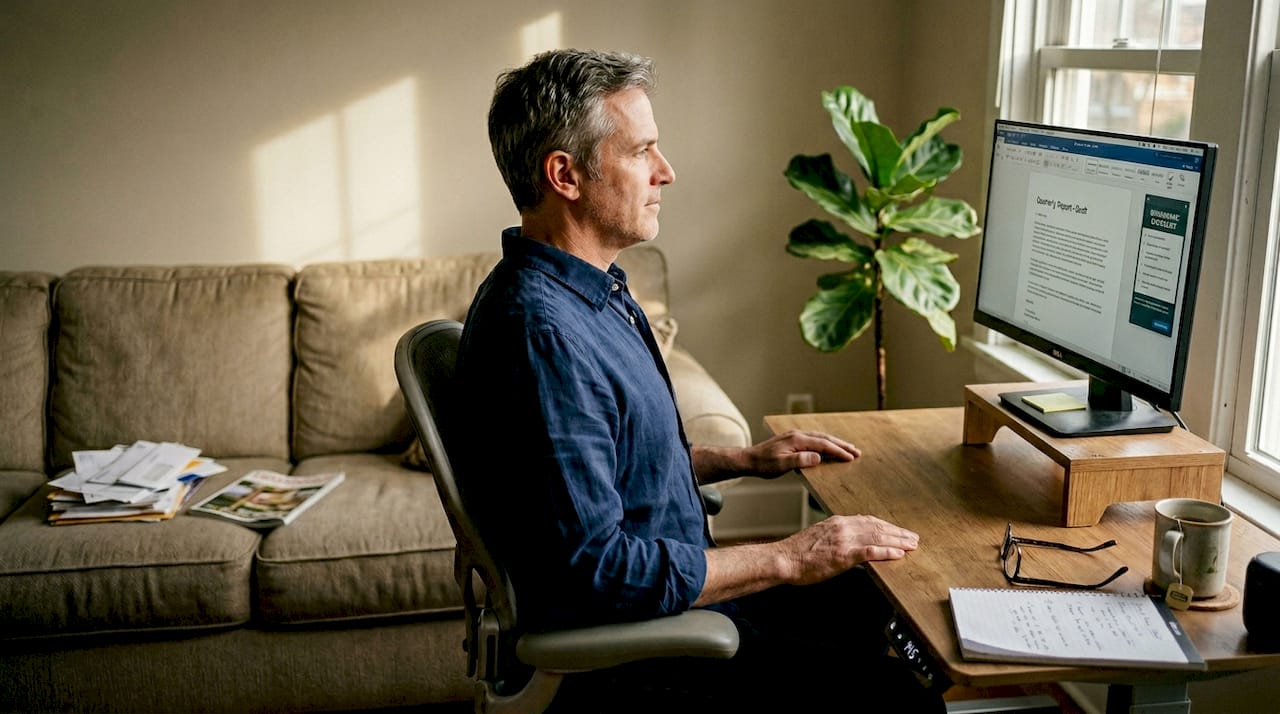
Ergonomic adjustments modify your environment to support better posture naturally. This includes adjusting your desk height, chair position, monitor placement, and keyboard setup. Small changes like raising your computer screen to eye level or using a lumbar support cushion can dramatically reduce the postural strain you experience during daily activities.
AI biofeedback devices represent an emerging technology that provides real-time posture monitoring. These wearable sensors alert you when you slouch, helping you develop awareness and correct your position throughout the day. While still relatively new, early research shows promise for reinforcing good habits.
Pro Tip: Schedule a consultation with a physical therapist who specializes in posture correction. They can identify your specific imbalances and create a targeted program that addresses your unique needs, which is far more effective than following generic online routines. This personalized approach becomes increasingly important between ages 40 and 65 when individual variations in strength, flexibility, and previous injuries significantly impact your correction strategy.
Peer-reviewed data favors individualized methods like CPM and GPR over generic approaches for sustained pain reduction in back and neck issues relevant to your age group. Understanding a proper routine for back pain relief at home and learning ways to relax and recover neck and shoulder pain complement your posture correction work.
Benefits and expected outcomes of posture correction for midlife adults
The benefits of posture correction extend far beyond simply looking better. Clinical research demonstrates measurable improvements in pain, function, and overall well-being when you commit to a structured correction program.
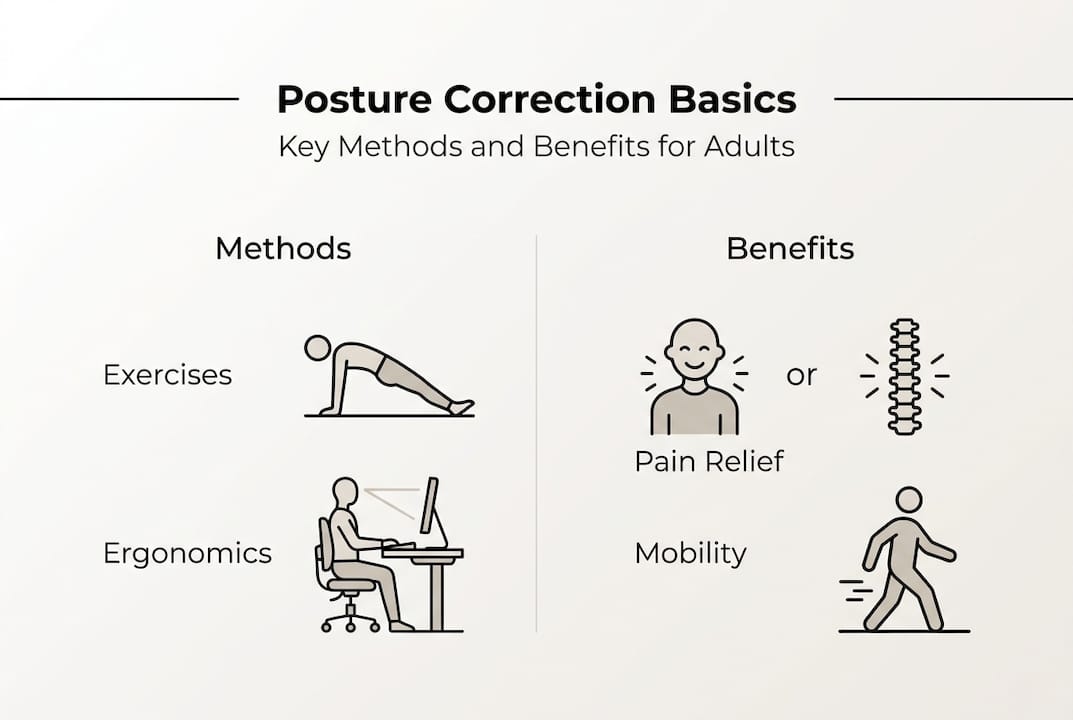
Pain reduction stands out as the most significant benefit. The Canali Postural Method reduced lower back pain VAS scores by 41.2 mm, from 64.6 to 23.4 mm, compared to generic exercises in adults around 40 years old, with superior results at three-month follow-up. SNPE improved pain threshold and alignment in women in their 30s and 40s. These aren’t minor improvements. A reduction of over 40 mm on the visual analog scale represents a dramatic decrease in daily discomfort.
Clinical studies show posture correction can reduce lower back pain by 41.2 mm on the VAS scale, transforming daily comfort for adults in their 40s.
You can expect to see noticeable improvements within a specific timeframe. Evidence supports 4 to 12 weeks for meaningful changes in pain and posture when you combine correction exercises with weight management and increased activity to counter sedentary risks heightened in midlife. The first few weeks focus on building awareness and initial strength. By weeks four to six, most people notice reduced pain during daily activities. Between weeks eight and twelve, postural changes become more automatic and sustainable.
Additional benefits you’ll experience include:
- Increased comfort during prolonged sitting or standing
- Better breathing capacity from improved rib cage position
- Enhanced movement efficiency and reduced fatigue
- Decreased headache frequency from reduced neck tension
- Improved balance and reduced fall risk
- Greater confidence from standing taller and moving more freely
The key to maximizing these benefits lies in combining posture correction with broader lifestyle factors. Maintaining a healthy weight reduces the load on your spine. Staying active through walking, swimming, or other low-impact activities keeps your muscles strong and joints mobile. Managing stress prevents the muscle tension that contributes to poor posture.
Tailored approaches consistently deliver superior outcomes compared to generic routines. A program designed for your specific postural deviations, muscle imbalances, and lifestyle factors produces faster, more lasting relief than one-size-fits-all exercises. This personalization becomes critical as you age because your body’s unique history of injuries, activities, and adaptations shapes how you respond to different interventions.
Learning to prevent back pain tips and exploring pain relief strategies for active adults supports your posture correction journey with complementary approaches to comfort and wellness.
Practical tips for posture correction and ergonomic adjustments at home and work
Implementing posture correction requires specific exercises, environmental modifications, and daily habits that work together to restore and maintain proper alignment.
Core exercises form the foundation of effective posture correction. Planks strengthen your entire core, holding for 20 to 60 seconds and gradually increasing duration. Side planks target obliques that stabilize lateral movement. Bird dogs improve coordination between opposite arm and leg while maintaining spinal stability. Scapular squeezes activate your upper back muscles by pulling shoulder blades together and holding for five seconds. Dead bugs teach core stability while moving your limbs independently.
For adults aged 40 to 65, prioritize practical exercises and core strengthening like planks and scapular squeezes plus ergonomics for pain relief, consult a physical therapist for personalization, and use braces or AI devices as adjuncts. Start with easier variations and progress gradually to avoid injury.
| Environment | Ergonomic Adjustments | Expected Impact |
|---|---|---|
| Home workspace | Adjustable chair with lumbar support, monitor at eye level, keyboard at elbow height | Reduces neck and shoulder strain during extended computer use |
| Office desk | Standing desk converter, footrest, document holder at screen level | Alternates positions and maintains neutral spine alignment |
| Living areas | Supportive seating with proper depth, TV positioned to avoid neck craning | Prevents slouching during relaxation time |
| Bedroom | Medium-firm mattress, pillow supporting neck curve, side-sleeping position | Maintains spinal alignment during sleep for recovery |
Ergonomics can cut back pain by over 50 percent, improving comfort and productivity. These modifications work continuously, supporting good posture even when you’re not actively thinking about it.
Daily habits that promote good posture:
- Set hourly reminders to stand, stretch, and reset your position
- Practice the 20-20-20 rule: every 20 minutes, look 20 feet away for 20 seconds
- Adjust your car seat and mirrors to support upright positioning
- Carry bags evenly distributed or use a backpack with both straps
- Keep frequently used items at heights that don’t require excessive reaching or bending
- Perform posture checks throughout the day by aligning ears over shoulders
Pro Tip: Optimize your workspace by placing your monitor an arm’s length away with the top of the screen at or slightly below eye level. Position your keyboard so your elbows bend at 90 degrees with shoulders relaxed. Use a chair that supports your lower back curve and allows your feet to rest flat on the floor. These simple adjustments dramatically reduce the cumulative strain that undermines your posture correction efforts.
Posture braces and AI devices serve as useful supplements but shouldn’t replace active correction. Wear a brace for one to two hours daily during activities that challenge your posture, gradually reducing use as your muscles strengthen. AI devices work best for building awareness, alerting you to slouching so you can actively correct rather than passively relying on external support.
Seeking professional guidance ensures your approach matches your needs. A physical therapist can assess your specific postural deviations, identify contributing factors like muscle tightness or weakness, and create a progression that safely builds the strength and flexibility you need. They adjust your program as you improve, preventing plateaus and addressing new challenges.
Exploring simple ways to prevent back pain and implementing desk job discomfort pain-free strategies provides additional tools for maintaining the improvements you achieve through posture correction.
Explore posture support products and recovery options at Lunix
Enhancing your posture correction journey often benefits from quality recovery and comfort products designed to support your body’s natural alignment. Lunix offers thoughtfully designed solutions that complement your correction efforts, helping you maintain comfort throughout the day and optimize recovery during rest periods.

Our curated recovery products integrate seamlessly into your daily routine, providing the ergonomic support and therapeutic comfort that reinforce proper posture habits. From lumbar supports that maintain your lower back curve during sitting to therapeutic cushions that reduce pressure points, each product serves as a practical tool in your wellness toolkit. Explore our complete range of Lunix product benefits to discover how smart design and innovative technology can transform your everyday spaces into personalized stations for restoration and long-term health.
What is posture correction? Frequently asked questions
What distinguishes posture correction from just standing up straight?
Posture correction is a comprehensive process involving biomechanical assessment, targeted exercises to strengthen weak muscles and stretch tight ones, ergonomic modifications, and sometimes professional therapy. Simply standing up straight addresses symptoms temporarily but doesn’t fix the underlying muscle imbalances, joint restrictions, or movement patterns causing poor posture. True correction requires systematic work to restore your spine’s natural curves and retrain your body’s default positioning.
How long does it usually take to see improvement with posture correction exercises?
Most people notice meaningful improvements within 4 to 12 weeks of consistent practice. Initial awareness and minor pain reduction often occur in the first two to three weeks. Measurable changes in alignment and significant pain relief typically emerge between weeks four and eight. Sustainable, automatic postural improvements develop around weeks eight to twelve. Your specific timeline depends on the severity of your postural deviations, consistency with exercises, and whether you address contributing factors like ergonomics and daily habits.
Are posture braces necessary or helpful for adults in midlife?
Posture braces can be helpful as short-term tools but aren’t necessary for everyone. They work best when used strategically for one to two hours daily during activities that challenge your posture, while you simultaneously build the muscle strength needed for independent alignment. Long-term reliance on braces can weaken the muscles you’re trying to strengthen, so use them as temporary aids rather than permanent solutions. Focus primarily on active correction through exercises and ergonomic adjustments.
Can posture correction reverse structural issues like dowager’s hump?
Posture correction can significantly improve the appearance and symptoms of dowager’s hump, especially when the condition results from muscular imbalances and postural habits rather than advanced bone changes. Strengthening upper back muscles, stretching tight chest muscles, and improving overall spinal alignment can reduce the forward head position and rounded upper back. Results vary based on how long the condition has existed and whether bone changes have occurred, but most people see noticeable improvement with consistent effort over several months.
What role does ergonomics play in maintaining good posture?
Ergonomics plays a crucial role by modifying your environment to support proper alignment passively throughout the day. Well-designed workspaces, seating, and equipment reduce the muscular effort required to maintain good posture, preventing fatigue that leads to slouching. Ergonomic adjustments work continuously, reinforcing the alignment you’re building through exercises. Research shows ergonomic interventions can reduce back pain by over 50 percent, making them an essential component of any comprehensive posture correction strategy.