


Long days on your feet can leave even the most active adults feeling drained and achy by evening. For health-conscious Americans in their forties and beyond, finding reliable ways to manage swelling and fatigue is more than just a comfort—it supports lasting wellness. By embracing the proven benefits of foot elevation, you can improve circulation, ease discomfort, and speed recovery, all from the comfort of your own home.
Table of Contents
- Elevating Your Feet: Definition and Myths
- Key Physiological Benefits for Adults
- Types of Foot Elevation and Effective Techniques
- Common Medical Uses and Everyday Recovery
- Risks, Precautions, and How to Avoid Mistakes
Key Takeaways
| Point | Details |
|---|---|
| Foot elevation enhances circulation. | Elevating feet above heart level promotes blood flow, aiding in recovery and reducing swelling. |
| Consistency is key. | Short, regular elevation sessions (15-20 minutes) are more effective than infrequent long ones. |
| Not a cure-all. | While beneficial for swelling and fatigue, elevation does not address structural issues or chronic pain conditions. |
| Monitor for complications. | Always check for signs of discomfort or changes in circulation after elevation to ensure safety. |
Elevating Your Feet: Definition and Myths
Elevating your feet simply means placing them above heart level to promote comfort and recovery. Think of it as giving your legs a well-deserved break after hours of standing or sitting. This practice addresses real physical needs, but it’s surrounded by misconceptions that deserve clearing up.
At its core, foot elevation works with your body’s natural circulation. When your feet rest higher than your heart, gravity assists blood flow back toward your chest, reducing the work your heart has to do. This is especially helpful after long days when fatigue and swelling accumulate in your lower extremities.
What Elevation Actually Does
Many people assume elevation solves every foot and leg problem. That’s not quite accurate. Elevation is most effective for specific purposes:
- Reducing swelling from prolonged standing or sitting
- Decreasing fatigue in tired legs after activity
- Improving circulation when done consistently
- Alleviating mild discomfort from daily wear and tear
- Supporting recovery during rest periods
Elevation does not fix structural foot problems or replace proper treatment for conditions like plantar fasciitis. Understanding proper foot biomechanics helps you recognize what elevation can and cannot address.
Common Myths Worth Debunking
Myth 1: Elevation cures all foot problems. False. While helpful for circulation and swelling, elevation isn’t a standalone cure for chronic pain or structural issues.
Myth 2: Only people with circulation issues benefit from elevation. False. Anyone experiencing leg fatigue or swelling can benefit, regardless of existing health conditions.
Myth 3: Any height works equally. False. Feet should be elevated above heart level, not just resting on a low footstool, to maximize the circulatory benefit.
Myth 4: More elevation time means better results. False. Short, consistent sessions (15-20 minutes) work better than long stretches. Your body responds well to regular practice, not marathon sessions.
Elevation works best as part of a consistent routine combined with movement and proper support, not as a miracle fix for every leg complaint.
The reality is simpler and more encouraging: elevating your feet provides measurable relief for swelling and fatigue when done correctly and consistently. It’s one tool in your wellness toolkit, not the entire toolkit.
Pro tip: Elevate your feet for 15-20 minutes in the evening after standing all day, positioning your feet at or slightly above heart level using pillows or a leg rest for maximum comfort and circulation benefits.
Key Physiological Benefits for Adults
Foot elevation delivers real, measurable changes in how your body functions. For adults over 40, these benefits become especially important as your circulatory system works harder and recovery slows naturally with age.
When you elevate your feet above heart level, gravity becomes your ally. Blood doesn’t pool in your lower legs and feet anymore. Instead, it flows more easily back toward your heart, reducing the workload on your cardiovascular system. This shift improves overall circulation and helps your body maintain healthy blood pressure patterns.
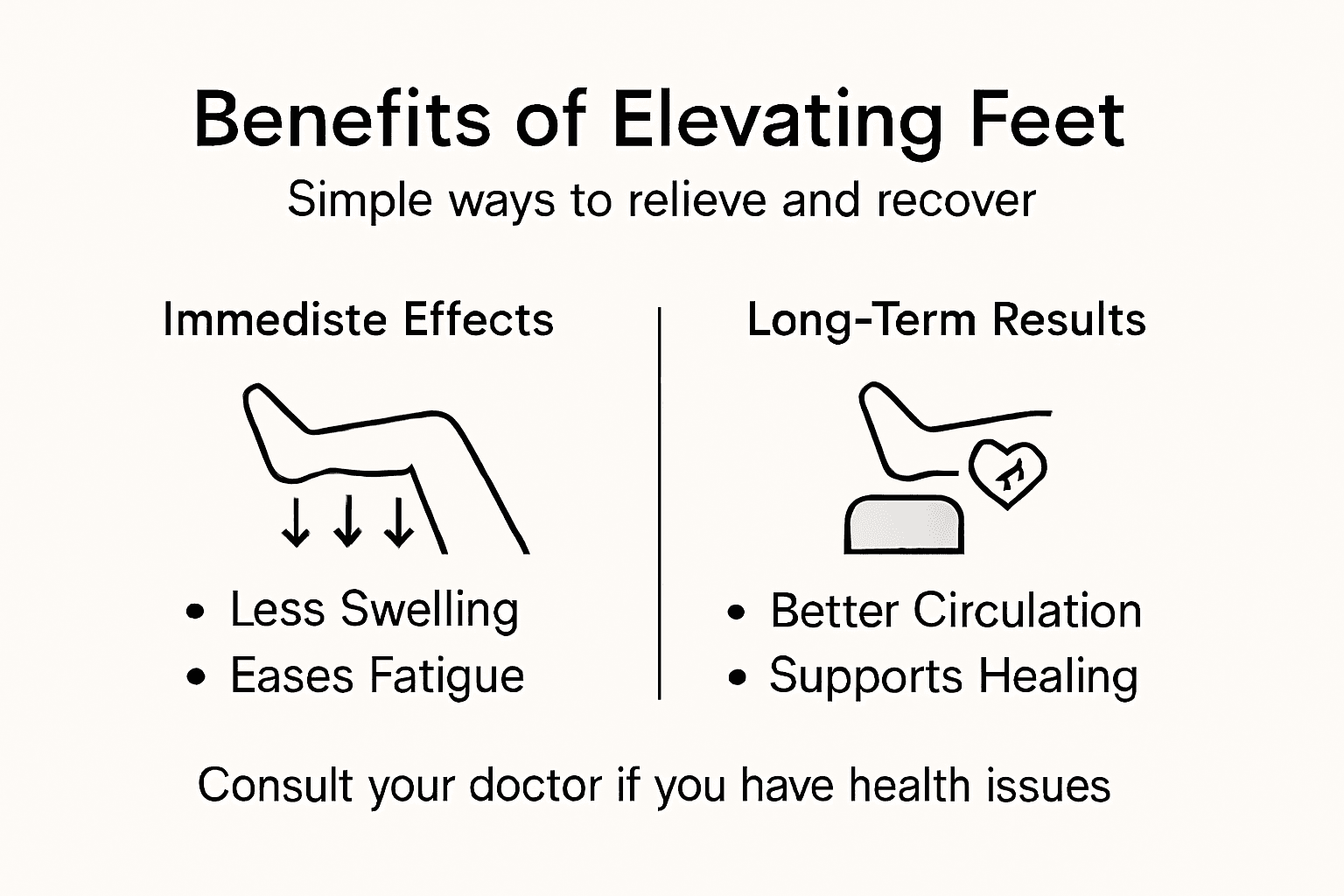
Immediate Relief and Long-Term Benefits
Elevation works on two timescales. Short-term relief happens quickly, often within 15-20 minutes. Long-term benefits develop through consistent practice over weeks and months.
- Reduced swelling: Gravity helps excess fluid drain from tissues, decreasing edema in feet and ankles
- Lower venous pressure: Your veins don’t have to work as hard pushing blood upward
- Decreased discomfort: Pressure on joints and muscles eases after standing all day
- Faster recovery: Improving circulation naturally after exercise reduces inflammation and soreness
- Better sleep quality: Evening elevation promotes relaxation before bed
- Reduced back pressure: Less strain on your lower back from prolonged standing or sitting
How Your Circulation Improves
Gravity assists blood flow back to the heart when your feet rest elevated. This is crucial for adults whose circulation naturally slows with age. Your leg muscles don’t have to contract as forcefully to return blood upward.
The effect compounds over time. Regular elevation trains your circulatory system to work more efficiently, even during daily activities. Your heart doesn’t pump as hard, your veins experience less strain, and oxygen reaches tissues more effectively.
Recovery After Activity
Foot elevation accelerates recovery from exercise, work strain, or injury. Swelling decreases faster, inflammation reduces, and soreness improves more quickly than it would without elevation.
This matters significantly for adults 40 and older, when recovery naturally takes longer. What once resolved overnight may now take several days—unless you actively support the process through elevation.
Consistent foot elevation improves circulation, reduces swelling, and speeds recovery in ways that grow more noticeable and valuable as you age.
Pro tip: Elevate your feet for 20 minutes after any standing-heavy activity, keeping your legs at or slightly above heart level to maximize venous return and minimize next-day soreness.
Types of Foot Elevation and Effective Techniques
Not all elevation is created equal. The way you position your feet determines how much benefit you receive. Small adjustments in angle, support, and duration make the difference between minimal relief and maximum results.
The key is matching your elevation technique to your specific need. Acute swelling requires different positioning than chronic fatigue. Post-workout recovery differs from evening relaxation. Understanding these distinctions helps you get the most from your practice.
Classic Pillow Elevation
This is the simplest and most accessible method. Place pillows under your feet, elevating them above heart level. Your feet should rest at a 45-degree angle or higher for optimal circulation benefit.

Proper alignment matters more than you might think. Your knees should remain slightly bent, not locked straight. This prevents strain on your lower back and allows muscles to relax completely. Support your ankles gently without pressing directly on bones.
Specialized Elevation Equipment
If you spend significant time elevating your feet, dedicated equipment provides superior comfort and support:
Here’s how different foot elevation techniques compare:
| Technique | Support Needed | Best For | Typical Duration |
|---|---|---|---|
| Classic pillow method | Standard bed pillows | Occasional relief at home | 15–20 minutes |
| Leg rest wedge | Contoured foam wedge | Consistent swelling control | 20–30 minutes |
| Reclining chair elevation | Built-in footrest | Comfortable, prolonged sessions | Up to 30 minutes |
| Compression and elevation | Wraps + support pillows | Serious swelling, post-injury | 15–20 minutes |
- Leg rest wedges: Contoured cushions designed specifically for elevation
- Reclining chairs: Built-in footrest elevation with back support
- Foot pillows: Ergonomic shapes that cradle feet naturally
- Compression wraps: Combined elevation and compression for maximum swelling reduction
- Adjustable platforms: Allow angle customization based on comfort
Proper Technique for Maximum Benefit
Effective elevation involves proper alignment to avoid strain on your joints and muscles. Your entire leg from hip to toe should form a straight line when possible. Avoid twisting your ankles or letting your feet splay outward.
Position elevation sessions strategically throughout your day. After standing for hours, elevate for 15-20 minutes. Post-exercise, extend to 30 minutes. Evening elevation before bed promotes better sleep and overnight recovery.
Duration and Frequency Guidelines
Consistency outperforms marathon sessions. Multiple short elevation periods work better than occasional long stretches.
Aim for three to four sessions daily, each lasting 15-20 minutes. Morning elevation combats overnight swelling. Midday elevation breaks up standing or sitting periods. Evening elevation prepares your body for rest. Adjust duration based on how your body responds.
Use this table to match recovery goals with elevation timing:
| Recovery Goal | When to Elevate | How Often |
|---|---|---|
| Reduce work swelling | After long periods of standing | 2–3 sessions daily |
| Exercise recovery | After workouts or strenuous activity | After each session |
| Manage chronic issues | Scheduled breaks, morning & evening | 3–4 sessions daily |
| Improve sleep | 30 minutes before bedtime | Nightly |
Proper elevation positioning prevents strain while maximizing circulation benefits through simple adjustments to angle, support, and body alignment.
Pro tip: Place pillows under both your feet and lower calves to distribute weight evenly, keeping your feet elevated at least 6-12 inches above heart level for consistent swelling reduction.
Common Medical Uses and Everyday Recovery
Foot elevation crosses from wellness practice into medical treatment. Doctors recommend it for specific conditions because it delivers measurable healing benefits. Understanding when and why elevation helps transforms it from casual comfort into a strategic recovery tool.
Elevation addresses real problems your body faces. Swelling, pain, stiffness—these aren’t just uncomfortable. They slow healing and complicate recovery. Elevation tackles each one by improving circulation and reducing inflammation naturally.
Medical Applications
Physicians prescribe elevation as part of formal treatment protocols for several conditions:
- Ankle sprains and fractures: Reduces swelling and accelerates bone healing
- Post-surgical recovery: Minimizes inflammation following foot or ankle procedures
- Chronic venous insufficiency: Helps blood return from legs when veins weaken
- Lymphedema: Assists fluid drainage in tissue swelling conditions
- Blood clot prevention: Reduces pooling that can lead to dangerous clots
Managing swelling from injury and surgery forms a critical part of rehabilitation protocols. Your medical team likely recommends elevation as part of your recovery plan, especially after trauma or surgical intervention.
Everyday Conditions That Respond Well
You don’t need a major injury to benefit from elevation. Common daily problems improve significantly with consistent practice.
Plantar fasciitis pain decreases when you elevate regularly. Varicose veins cause less discomfort and visible swelling. Diabetic neuropathy symptoms improve through enhanced circulation. Stiffness from sitting all day vanishes faster with elevation breaks.
These conditions affect millions of people over 40. Most never realize elevation can help because they think it’s only for serious injuries.
Combining Elevation With Other Therapies
Elevation works best alongside complementary treatments. Compression therapy combined with elevation amplifies swelling reduction. Gentle movement between elevation sessions prevents stiffness. Rest days incorporate elevation to speed muscle repair.
Your recovery accelerates when you layer approaches. Elevation alone helps. Elevation plus compression helps more. Add stretching, and results compound further.
Elevation forms the foundation of recovery protocols because it addresses root causes—poor circulation and fluid pooling—rather than just masking symptoms.
The key is consistency. One elevation session helps temporarily. Daily elevation sessions create cumulative healing that transforms how you feel over weeks and months.
Pro tip: Start elevating your feet daily for just 15-20 minutes, especially if you have any existing foot or leg discomfort, and track how your swelling and stiffness improve over two weeks.
Risks, Precautions, and How to Avoid Mistakes
Elevation is safe for most people when done correctly. But like any wellness practice, improper technique creates problems. Knowing what can go wrong helps you avoid these pitfalls entirely.
The good news: most mistakes are preventable. They stem from simple oversights rather than inherent dangers. A few minutes understanding proper precautions protects you from discomfort and complications.
When Elevation May Not Be Appropriate
Certain medical conditions require caution or make elevation inadvisable. If you have any of these, consult your doctor before starting regular elevation:
- Severe arterial disease: When arteries are blocked, elevation can restrict already limited blood flow
- Uncontrolled heart failure: Some cardiac conditions contraindicate elevation
- Recent blood clots: Certain thrombotic conditions require specific protocols
- Open wounds or severe infections: Elevation without proper wound care risks complications
- Acute deep vein thrombosis: Medical professionals must guide elevation timing and technique
Recognizing when elevation is contraindicated prevents harm. Your healthcare provider understands your complete medical history and can advise whether elevation fits your situation.
Common Mistakes to Avoid
These errors undo elevation’s benefits or create new problems:
Over-elevation causes blood to pool differently, sometimes increasing discomfort. Elevate feet above heart level, not dramatically higher.
Poor support strains ankles, knees, or lower back. Always use pillows or equipment designed for comfort.
Excessive duration reduces effectiveness and causes stiffness. Fifteen to 20 minutes per session works better than longer periods.
Ignoring circulation changes means missing warning signs. Watch for increased swelling, skin discoloration, numbness, or coolness in your feet.
Staying elevated all day prevents necessary movement and muscle engagement. Balance elevation with regular activity.
Monitoring for Problems
Regular self-checks catch issues early. After each elevation session, assess:
- Skin color and temperature in your feet and legs
- Sensation and any numbness or tingling
- Swelling levels compared to before elevation
- Pain or discomfort in joints
- Any visible changes in skin appearance
If swelling increases despite elevation, numbness develops, or skin changes occur, stop elevating and contact your healthcare provider.
Proper technique and timing maximize benefits while proper monitoring catches problems before they develop, making elevation both safe and effective.
Pro tip: Start with 15-minute elevation sessions and monitor how your body responds before extending duration, stopping immediately if you notice any unusual numbness, cooling, or increased swelling.
Elevate Your Recovery with Lunix Solutions
If you struggle with daily swelling, leg fatigue, or the challenge of maintaining proper foot elevation to aid circulation and reduce discomfort you are not alone. The article highlights key pain points such as finding the right elevation angle, avoiding poor support that strains your body, and incorporating consistent sessions into your routine for lasting benefits. These are exactly the challenges Lunix is designed to address through smart recovery and comfort solutions crafted for elevated living.

Discover how Lunix can transform your daily wellness routine by providing thoughtfully designed elevation supports that help you rest your feet above heart level with comfort and precision. Our innovative products integrate seamlessly into your home or office setup enabling ideal positioning for swelling reduction, faster recovery, and improved circulation. Start taking control of your leg and foot health today with easy-to-use tools from Lunix. Visit Lunix now to explore products that make consistent, effective elevation a simple part of your everyday life and embrace true relief and wellness.
Frequently Asked Questions
How does elevating your feet provide relief and recovery?
Elevating your feet helps improve circulation, reduces swelling, and decreases fatigue in your legs. By placing your feet above heart level, gravity aids blood flow back to your heart, alleviating discomfort and promoting recovery after prolonged sitting or standing.
What is the optimal height for elevating my feet?
To maximize the benefits of foot elevation, your feet should be positioned above heart level—ideally at a 45-degree angle or higher. Using pillows or a leg rest can help achieve this optimal position.
How long should I elevate my feet for the best results?
Short, consistent sessions of 15-20 minutes are ideal for effective foot elevation. This allows your body to benefit from improved circulation without causing strain or discomfort.
Are there any medical conditions that make foot elevation unsafe?
Yes, individuals with severe arterial disease, uncontrolled heart failure, recent blood clots, open wounds, or acute deep vein thrombosis should consult a healthcare provider before using foot elevation as a recovery method.