


TL;DR:
- Foam provides critical pressure redistribution, body conformity, and shock absorption, relying on proper density and layering. Its support effectiveness depends on structural design and microclimate management, not softness alone. In clinical settings, layered, high-density foams outperform single blocks, especially for high-risk pressure injury prevention.
Foam is defined as a cellular material engineered to absorb pressure, conform to body contours, and redistribute mechanical stress across a surface. The role of foam in support spans mattresses, clinical cushions, seating, and fitness equipment, making it one of the most versatile materials in wellness and rehabilitation. Three core properties drive its effectiveness: immersion (how far the body sinks in), envelopment (how closely the foam wraps around body contours), and pressure redistribution (how evenly load is spread). Products from Blue Chip Medical, AliMed T-Foam, and foam rolling research by sports scientists all confirm that these properties, not softness alone, determine whether foam truly supports your body.
How does foam deliver effective support in sleep and clinical settings?
Effective therapeutic foam maintains interface pressures below 32 mmHg to prevent pressure injuries. That threshold matters because capillary blood flow to skin tissue shuts down above it, which is why clinical foam design is an engineering challenge, not just a comfort preference.
Blue Chip Medical’s technical analysis shows that layered foam systems outperform single-block designs. Zoned foam and technologies like SCT™ allow different body regions to receive different levels of immersion and support, which a uniform block simply cannot replicate. For sleep surfaces, this means your shoulders can sink deeper while your lumbar region stays firmer.
AliMed’s T-Foam uses an open-cell viscoelastic structure that absorbs up to 90% of impact shock while allowing air to circulate through the material. The slow recovery rate of viscoelastic foam is not a flaw. It is a deliberate feature that holds the compressed shape long enough for capillary vessels to nourish underlying tissue, which is critical during prolonged static postures like sleeping or sitting in a wheelchair.
Key foam properties that define clinical and sleep support performance:
- Immersion depth: Allows bony prominences like heels and sacrum to sink below the surface, reducing peak pressure points
- Envelopment: Wraps the foam surface around body contours to distribute load over a wider area
- Pressure redistribution: Moves mechanical stress away from vulnerable tissue zones
- Open-cell breathability: Manages heat and moisture buildup, which is a separate but equally important tissue risk factor
- Slow recovery rate: Maintains pressure relief during position changes rather than immediately springing back
“Foam support surfaces must manage both mechanical stresses and microclimate, including heat and moisture, to prevent tissue damage and maintain comfort.” — Blue Chip Medical technical overview
Pro Tip: If you are evaluating a foam mattress or therapeutic cushion, press your hand firmly into the surface for 10 seconds and release. Viscoelastic foam should hold the impression for 2 to 5 seconds before recovering. Instant rebound means you are looking at standard polyurethane, not pressure-relieving memory foam.
For clinical patients at higher risk, multilayer silicone foam dressings are conditionally recommended as adjuncts but do not replace repositioning or appropriate support surfaces. Foam dressings protect fragile skin at contact points, but they work alongside repositioning protocols, not instead of them. Understanding this distinction helps you make smarter decisions about foam products for yourself or a family member in recovery.
What types of foam support materials are used and how do they compare?
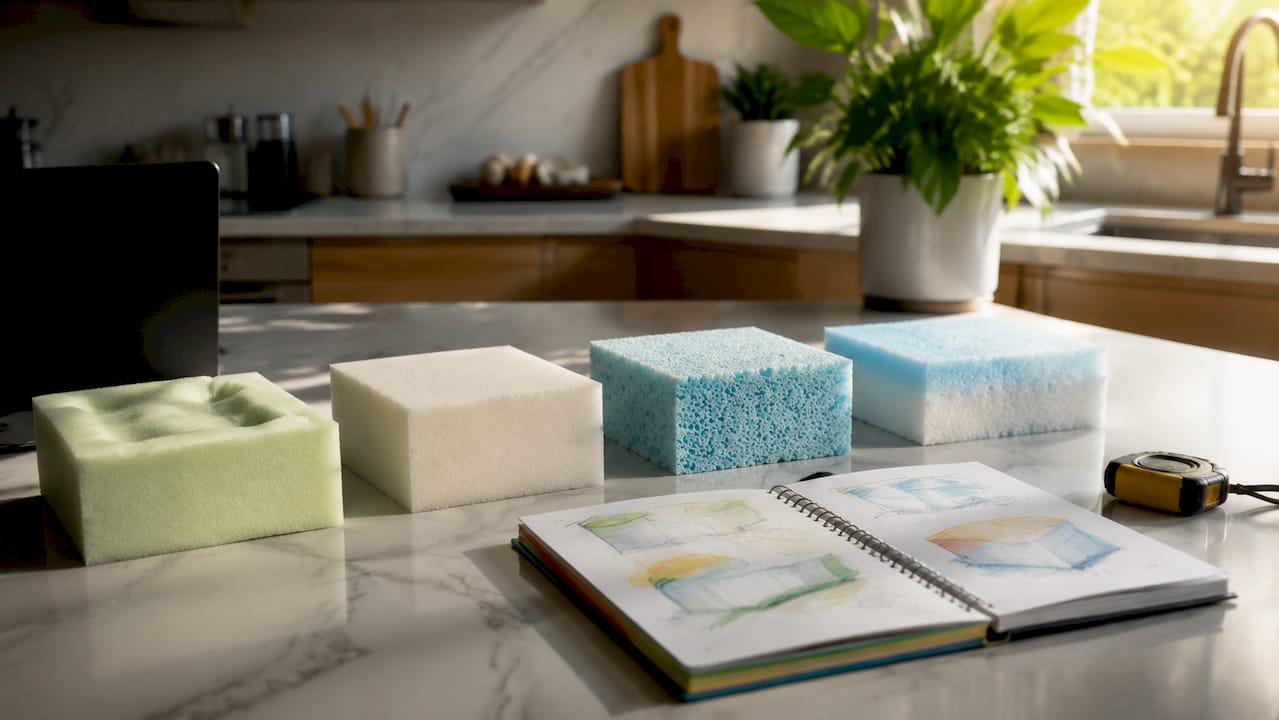
Not all foam support materials perform the same way, and the differences matter more than most product descriptions suggest. Here is a direct comparison of the four main foam types used in support products:
| Foam type | Best use | Rebound rate | Breathability | Durability |
|---|---|---|---|---|
| Viscoelastic memory foam | Mattresses, therapeutic cushions | Slow (2–5 sec) | Moderate (open-cell) | High with quality density |
| High-density polyurethane | Seating bases, sofa support | Fast | Low to moderate | Very high |
| Closed-cell foam | Fitness rollers, protective padding | Very fast | Low | Excellent |
| Open-cell latex foam | Mattress toppers, ergonomic seating | Medium | High | High |

High-density foam, such as the 40D specification used in products like Gorilla Grip’s sofa support foam, reduces sagging and maintains cushion alignment over time. The density rating (measured in kg/m³ or lb/ft³) tells you how much material is packed into the foam, which directly predicts how long it will hold its shape under repeated load.
A common misconception is that soft foam equals good support. Comfort foam and support foam serve different functions. Comfort foam provides the initial feel against your skin. Support foam sits beneath it and prevents the structure from collapsing under your weight. When manufacturers use only comfort foam throughout a product, you get a pleasant first impression that deteriorates within months.
Pro Tip: When buying a foam mattress or cushion, ask for both the comfort layer density and the support core density separately. A quality mattress typically uses 1.5 to 2.0 lb/ft³ comfort foam over a 1.8 to 2.5 lb/ft³ support core. If a retailer cannot provide both numbers, treat that as a red flag.
For ergonomic seating and posture support, the foam type in your chair or cushion affects spinal alignment directly. Open-cell latex and high-density polyurethane are the most common choices for seating because they balance firmness with enough give to accommodate natural postural shifts throughout the day.
How does foam enhance fitness recovery and mobility support?
Foam rolling, the practice of using a cylindrical foam roller to apply pressure to muscles and connective tissue, is one of the most research-supported self-care tools available to you. The foam cushioning effects here work differently than in sleep or seating. Instead of passively redistributing pressure, the roller actively mobilizes tissue.
A meta-analytic review found that foam rolling improves range of motion by 4% on average without significant strength loss, compared to static stretching which reduces strength by 5.5%. That 4% gain may sound modest, but for someone managing chronic tightness or returning from injury, it represents real functional improvement without the performance cost that stretching carries before a workout.
The timing of foam rolling changes its effect on your body. Pre-workout rolling prepares tissue for movement by increasing blood flow and reducing stiffness. Post-workout rolling aids recovery by helping clear metabolic byproducts and reducing delayed onset muscle soreness (DOMS). Using your roller for flexibility and relief at both ends of a session gives you the full benefit.
Here are research-backed foam rolling best practices:
- Roll slowly. Move at roughly 1 inch per second to allow the tissue to respond. Fast rolling is less effective for mobility gains.
- Pause on tender spots. Hold pressure on tight areas for 20 to 30 seconds rather than continuously rolling over them.
- Roll before and after workouts. Pre-workout rolling targets mobility. Post-workout rolling targets recovery. Both have distinct benefits.
- Use a firmer roller for larger muscle groups. Quadriceps, hamstrings, and the thoracic spine respond better to high-density closed-cell foam. Softer rollers suit sensitive areas like the calves.
- Limit sessions to 5 to 10 minutes per muscle group. Longer is not better. Excessive pressure can irritate tissue rather than release it.
Foam’s shock absorption properties also matter in footwear insoles and exercise mats, where repeated impact forces travel up through the joints. Closed-cell foam in these applications damps vibration before it reaches the knee and hip, which is particularly relevant if you run, jump, or stand for extended periods.
What practical challenges exist when choosing foam support products?
Firmness alone does not guarantee foam support longevity. The underlying structure beneath the foam, whether that is a spring system, a rigid base, or a layered foam core, determines whether the foam maintains its position and function over time. A firm foam cushion placed over a worn-out sofa deck will bottom out within weeks because the foam has nothing solid to push against.
Practical challenges to watch for when selecting or designing foam support products:
- Bottoming out: When foam compresses fully under load and the user effectively sits or lies on the base structure. This eliminates all pressure redistribution benefits.
- Misaligned layers: Foam layers that shift relative to each other reduce the envelopment effect and create uneven pressure zones.
- Microclimate buildup: Heat and moisture trapped between the body and foam surface increase skin breakdown risk, particularly for users who are sedentary for long periods.
- Premature foam breakdown: Low-density foam in high-use applications degrades faster, losing both comfort and support properties within 12 to 18 months.
For clinical applications, escalation from foam to dynamic support is necessary for higher-risk patients. Foam-only solutions serve primarily low to moderate pressure injury risk categories. Patients with Category III or IV pressure injuries, or those with severely compromised circulation, require alternating pressure or low-air-loss systems that foam cannot replicate.
Pro Tip: For seating support, always assess the condition of the base structure before replacing foam. If the springs or deck are worn, new foam will fail prematurely regardless of its quality. Pair high-density support foam (at least 40D or 1.8 lb/ft³) with a solid, intact base for lasting results.
Microclimate management is an underappreciated factor in foam selection. Open-cell foams and gel-infused memory foams handle heat and moisture better than closed-cell alternatives. If you tend to sleep warm or use a foam cushion for extended sitting, prioritizing breathability in your foam choice will improve both comfort and skin health over time. Pairing foam support with zero gravity seating principles further reduces pressure concentration at the hips and lumbar spine.
Key takeaways
Foam delivers genuine support only when its density, structure, and layering are matched to the specific mechanical demands of the application.
| Point | Details |
|---|---|
| Pressure threshold matters | Effective foam keeps interface pressure below 32 mmHg to protect tissue during prolonged contact. |
| Layered systems outperform single blocks | Zoned and multi-layer foam designs distribute load more precisely than uniform single-block foam. |
| Foam rolling timing changes outcomes | Pre-workout rolling improves mobility without strength loss; post-workout rolling reduces soreness. |
| Firmness needs structural backing | High-density foam fails prematurely without a solid underlying base to support it. |
| Foam has clinical limits | High-risk pressure injury patients require dynamic support systems beyond what foam alone provides. |
What I’ve learned from watching foam get misunderstood
Most people treat foam as a passive material, something that just sits there and feels soft. After years of working with recovery and comfort products at Lunixinc, I’ve come to see foam as an active biomechanical system. The difference between foam that genuinely supports your body and foam that just feels good for the first two weeks comes down to engineering decisions most consumers never see: cell structure, density gradients, layer sequencing, and base compatibility.
The part that frustrates me most is how often comfort and support get conflated. A plush pillow-top mattress can feel extraordinary in a showroom and leave you waking up stiff within a month. That is not a foam failure. That is a design failure, where the comfort layer was prioritized over the support core.
I also think the fitness world undersells foam rolling. The research on range of motion gains without strength loss is genuinely compelling, yet most people either skip it entirely or use it so casually that they get none of the benefit. Technique and timing matter as much as the foam density of the roller itself.
My honest recommendation: stop shopping for foam by feel and start asking about density, layer structure, and base compatibility. Those three factors predict performance far better than any showroom impression. And if you are managing a clinical condition or recovering from injury, treat foam as one layer of a broader support strategy, not the whole answer.
— Lunix
Discover Lunixinc recovery products built on real foam science

Lunixinc designs recovery and comfort products around the same biomechanical principles covered in this article: pressure redistribution, layered support, and material quality that holds up over time. The Lunixinc recovery collection features products built with high-density and viscoelastic foam technologies selected for their performance in real-world use, not just their initial feel. Whether you are managing post-workout soreness, improving your sleep surface, or supporting a body that needs more intentional care, these products are designed to work with your body’s natural mechanics. Explore the full range and find the support solution that fits your daily routine.
FAQ
What is the role of foam in support systems?
Foam provides pressure redistribution, body conformity, and shock absorption across mattresses, cushions, and fitness equipment. Its effectiveness depends on density, cell structure, and how it is layered within a support system.
How does memory foam differ from regular foam for support?
Viscoelastic memory foam recovers slowly after compression, which allows it to maintain pressure relief during prolonged static postures. Standard polyurethane foam rebounds immediately and provides less sustained pressure redistribution.
Can foam rolling replace stretching before a workout?
Foam rolling improves range of motion by an average of 4% without reducing strength, while static stretching reduces strength by 5.5%. This makes foam rolling the better pre-workout mobility choice for most people.
When is foam support not enough for clinical use?
Foam-only support surfaces are appropriate for low to moderate pressure injury risk. Patients with Category III or IV pressure injuries require dynamic systems like alternating pressure or low-air-loss mattresses that foam cannot replicate.
What foam density should I look for in a support cushion?
For seating support, look for a density of at least 40D (approximately 1.8 lb/ft³) in the support core. Lower-density foam compresses fully under body weight and loses its support function within months of regular use.