


TL;DR:
- Mobility support encompasses tools, habits, and modifications that help individuals move safely and maintain independence through all stages of aging. It includes everything from simple exercises and household adjustments to advanced assistive devices, emphasizing early and personalized intervention for better long-term outcomes. Proactive, lifelong engagement with mobility strategies enhances daily confidence and prevents decline before significant issues arise.
Mobility support is one of those terms that gets quietly misunderstood. Most people picture wheelchairs, walkers, or hospital corridors, and assume it only applies when something has gone seriously wrong. The reality is quite different. Mobility support covers a wide range of tools, habits, and environment adjustments that help you move safely, stay independent, and feel confident in your own body, especially during the years when physical changes start to become more noticeable. This article breaks down what mobility support truly means, which options are available to you, how to personalize a plan, and why starting earlier always works in your favor.
Table of Contents
- What does mobility support really mean?
- Types of mobility support: From simple aids to smart solutions
- Personalizing mobility support: Assessment, training, and fit
- Home environment and caregiver roles in mobility support
- The real secret: Mobility support is about proactive living, not just problem solving
- Enhance your comfort and recovery with proven mobility support solutions
- Frequently asked questions
Key Takeaways
| Point | Details |
|---|---|
| Mobility support defined | Mobility support means using tools, therapies, and changes in your environment to help you move safely and independently. |
| Personalization matters | Getting the right mobility support relies on personalized assessment, proper training, and ongoing review. |
| Simple to advanced options | Support ranges from basic aids and exercise to smart devices and home modifications, depending on individual needs. |
| Home and caregiver roles | Adjusting your environment and involving caregivers when needed can be as important as any device. |
| Proactivity is key | Taking action early for mobility support can help maintain independence and well-being as you age. |
What does mobility support really mean?
Now that you understand why the topic matters, let’s clarify what mobility support actually is and how it impacts day-to-day life.
The phrase “mobility support” tends to trigger images of medical equipment. But the concept is far broader than that. Mobility support generally refers to tools, therapies, and services that help a person move more safely and independently in daily life when mobility is limited or changing with age. That definition covers everything from a targeted stretching routine to a strategically placed grab bar in your bathroom.
Think of mobility support as a spectrum. On one end, you have simple, low-tech interventions like daily walking habits, supportive footwear, or rearranging furniture to reduce trip hazards. On the other end, you have advanced assistive technologies and clinical therapies. Most people’s needs sit somewhere in the middle.
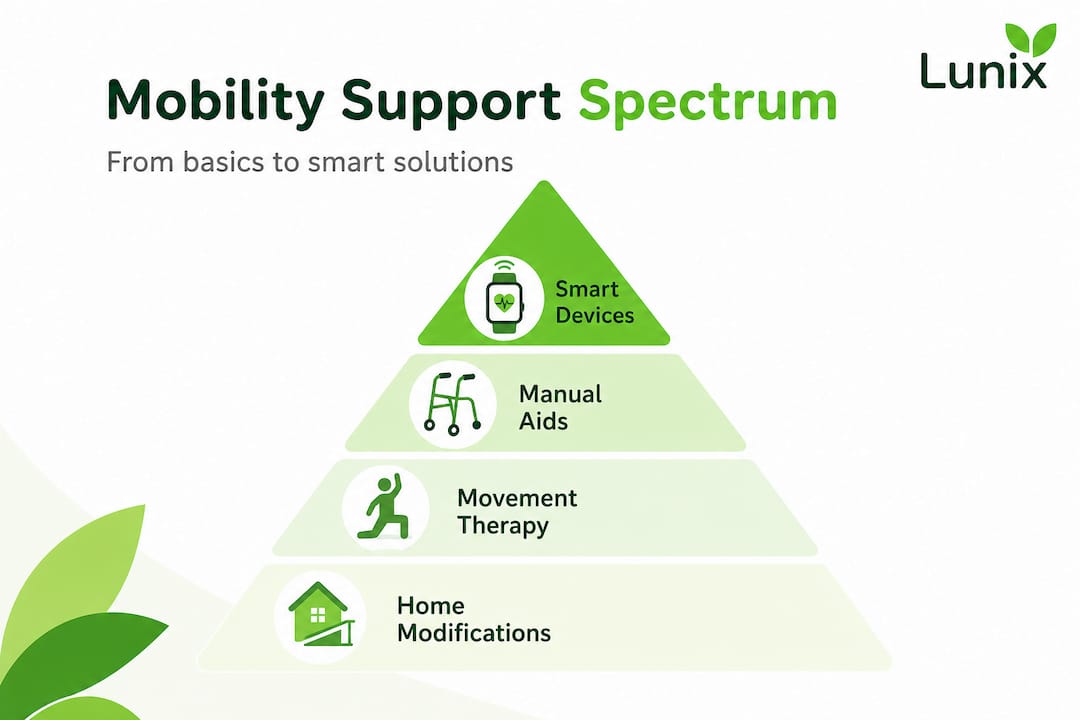
Mobility devices, when used correctly, function as what researchers call environmental interventions, meaning they change how your body interacts with the world around it to reduce limitations and support participation in daily life. That framing matters, because it shifts the conversation from “something is wrong with me” to “I’m using a smart tool to stay active.”
For adults between 40 and 65, the key benefits of proactive mobility support include:
- Reduced risk of falls and injuries by improving balance and stability
- Less joint pain by redistributing load during movement
- Greater independence in everyday tasks like grocery shopping, walking, or climbing stairs
- Improved confidence in social and community settings
- Better long-term outcomes by catching and addressing small declines before they become bigger problems
“The goal of mobility support is never to replace what your body can do. It’s to protect and extend what your body is capable of, for as long as possible.”
Understanding the mobility support basics is the first step toward making informed decisions for your own well-being.
Types of mobility support: From simple aids to smart solutions
With a foundation on what mobility support means, let’s explore the different types of solutions and how to determine which may work best for your needs.
Mobility support is not a one-size-fits-all category. The right choice depends on your current condition, your environment, and your personal goals. Here’s a practical breakdown of the main categories.
Exercise and movement therapy
This is the most accessible starting point for most people. Strength training, balance exercises, flexibility work, and targeted movement therapy all count as mobility support. They build the physical foundation that makes everything else more effective. Research on enhancing joint mobility consistently shows that consistent, low-impact movement preserves range of motion and reduces stiffness better than rest alone.
Manual aids: Canes, walkers, and rollators
These are the tools most people recognize. Assessment and targeted training, combined with appropriate equipment fitting, including choosing the right cane size, handle type, or rollator configuration, can meaningfully improve stability and range of movement for everyday tasks. The key word there is “fitted.” An incorrectly sized cane can actually increase fall risk rather than reduce it.
Advanced and smart mobility devices
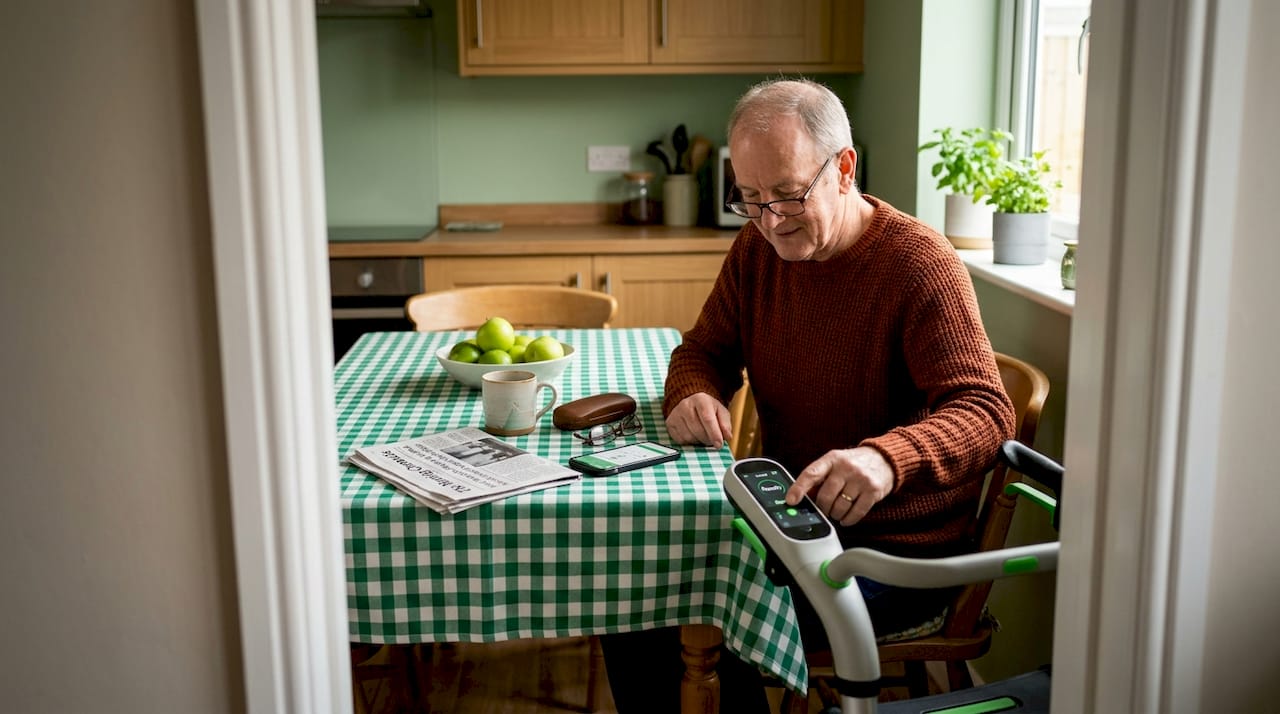
This category includes powered orthoses (devices that support or move joints mechanically), sensor-equipped rollators, and exoskeletons. Assistive technology research confirms these tools can enhance safety and functional mobility, but usability limits and transfer challenges exist, particularly for users with complex conditions.
Home modifications
Sometimes the environment is the problem, not the person. Ramps, raised toilet seats, better lighting, non-slip surfaces, and strategically placed furniture supports can transform a home from a fall risk into a genuinely safe space.
Here’s a quick comparison to help you orient yourself:
| Type | Best for | Complexity | Cost range |
|---|---|---|---|
| Exercise programs | Early declines, general wellness | Low | Low |
| Canes and walkers | Balance issues, joint pain | Low to medium | Low to medium |
| Rollators | Endurance limitations | Medium | Medium |
| Powered orthoses | Moderate to severe limitations | High | High |
| Home modifications | Environmental hazards | Low to high | Variable |
Pro Tip: Start with the simplest effective option. Adding a more complex solution before you’ve optimized the basics often leads to frustration and abandonment. Even a well-designed movement therapy program can outperform expensive devices if it’s the right fit for your stage.
Personalizing mobility support: Assessment, training, and fit
Understanding different solutions is only part of the journey. Making them work for you starts with a personalized evaluation.
Generic advice about mobility support can only take you so far. The real difference comes from matching the right tools and strategies to your specific body, lifestyle, and environment. That requires assessment.
Here’s what a thoughtful, step-by-step mobility support process looks like in practice:
- Initial clinical evaluation: A healthcare provider, physical therapist, or occupational therapist reviews your medical history, current symptoms, and any existing conditions like arthritis, neuropathy, or cardiovascular issues.
- Functional assessment: This looks at how you actually move. Can you rise from a chair without using your arms? How is your gait pattern? Do you lose balance on uneven surfaces? Tests like the Timed Up and Go (TUG) are commonly used here.
- Environment review: A therapist or trained professional walks through your home or daily routes to identify specific hazards or obstacles.
- Equipment fitting and training: If a device is recommended, proper fitting comes next, followed by hands-on training. This step is often skipped in a rush, and that’s where outcomes suffer.
- Ongoing monitoring: Needs change. What works at 48 may not work at 62. Scheduling follow-ups ensures your support evolves with you.
The concept of preclinical mobility limitation is particularly important here. This refers to subtle changes in movement quality that you might not even notice yet but that can precede falls and functional decline. Routine screening catches these early signals, when intervention is easier and more effective.
| Assessment tool | What it measures | Who performs it |
|---|---|---|
| Timed Up and Go (TUG) | Balance and walking speed | Physical therapist |
| Gait analysis | Walking pattern, stride length | PT or movement specialist |
| Home safety check | Environmental fall risks | OT or PT |
| Grip strength test | Upper body functional strength | Healthcare provider |
Understanding the benefits of mobility exercises gives you a clearer picture of why consistent movement is often the cornerstone of every personalized plan.
Pro Tip: Reassessment is not a sign that your plan failed. It’s a sign that you’re paying attention. Even small changes in health status, like a new medication or a recovered injury, can shift which tools are most helpful for you.
Home environment and caregiver roles in mobility support
Beyond devices and exercises, the living environment and the people in it form a critical part of effective mobility support.
Your home can be your greatest asset or your biggest obstacle. Most falls among adults over 40 happen at home, not outside, and many of them are preventable. The good news is that meaningful changes don’t always require major renovations.
Here are some of the most impactful home modifications to consider:
- Non-slip flooring and bath mats: These reduce the risk of slipping on wet or smooth surfaces, particularly in bathrooms and kitchens.
- Grab bars in the bathroom: Near the toilet and inside the shower or bathtub, grab bars provide critical support during transitions from sitting to standing.
- Improved lighting: Stairways, hallways, and bedroom entries should be well-lit, especially at night. Motion-activated nightlights are an easy, affordable upgrade.
- Ramps over steps: Even a single exterior step can be a significant barrier for someone using a walker or rollator. A small ramp changes that entirely.
- Furniture rearrangement: Creating clear, unobstructed pathways reduces the risk of trips and makes navigation easier for anyone using a mobility aid.
Comfort at home directly influences physical health outcomes, and small environmental changes can make a genuine difference in daily confidence and safety. When you feel secure in your space, you move more and rest better.
The role of caregivers is equally worth acknowledging. Mobility support may require caregiver involvement, especially when autonomy-oriented powered devices are undermined by cognitive or motor control issues. In other words, high-tech solutions sometimes need human backup to work safely. This is not a failure of the technology. It’s a recognition that effective support is rarely just about the device.
“A safe home environment is not just about preventing accidents. It’s about creating the conditions where you feel free to move with confidence every single day.”
If you have a family member or caregiver involved in your daily routine, loop them into your mobility plan early. They don’t need to become experts, but understanding the purpose of each tool and how to assist without overcorrecting can be genuinely valuable. Simple habits like optimizing home comfort can be shared efforts that strengthen both safety and connection.
The real secret: Mobility support is about proactive living, not just problem solving
After learning about the tools and strategies for mobility support, it’s time for a candid perspective on what really works for lifelong independence.
Here’s something most mainstream health conversations get wrong about mobility: they treat it as reactive. You notice a problem, you seek a solution. But the adults who maintain the best quality of movement well into their 60s, 70s, and beyond tend to share one common trait. They started paying attention earlier than everyone else.
The body doesn’t decline overnight. It sends signals, often quiet ones, for months or even years before a fall, a surgery, or a diagnosis makes the situation undeniable. A little stiffness in the morning. Taking longer to walk to the car. Avoiding stairs when an elevator is available. These are not just inconveniences. They are early conversations your body is having with you.
We believe that mobility support works best as a lifelong partnership with your body, not as a last resort pulled out after something goes wrong. The mindset shift matters as much as the tools. When you see a cane as a symbol of decline, you avoid it too long. When you see it as a precision tool for protecting your joints and staying active, you use it at exactly the right time.
The underrated strategies here are consistency and micro-adjustment. You don’t need to overhaul your entire routine at once. Small, regular additions like a 10-minute morning stretch, a grab bar installed now rather than after a fall, or an annual mobility screening can create a compounding effect on your long-term independence.
Maintaining natural joint flexibility through simple, consistent habits is one of the most accessible and undervalued strategies available to you right now. It doesn’t require expensive equipment or clinic visits. It requires attention and follow-through.
The most empowering reframe we can offer is this: mobility support is not about managing decline. It’s about actively investing in the version of yourself that stays strong, independent, and engaged in the life you want to live.
Enhance your comfort and recovery with proven mobility support solutions
Equipped with knowledge and a proactive mindset, you can explore specialized solutions tailored to your comfort and recovery needs.
At Lunix, we design products with exactly this kind of informed, proactive person in mind. You already know that mobility support is about more than devices. It’s about thoughtful design that fits seamlessly into your daily life and supports your body where it needs it most. Our range of mobility recovery solutions is built around real comfort, smart ergonomic principles, and the kind of quality that holds up over time.

Whether you’re looking to ease joint tension after a long day, improve your recovery routine, or simply make your home environment more supportive, the next step is exploring what fits your life. Visit our mobility support benefits page to see how our solutions are designed to restore, relax, and help your body perform at its best every day.
Frequently asked questions
What are the most common mobility supports for adults age 40-65?
Popular options include exercise routines, walking aids like canes and walkers, ergonomic home modifications, and supportive footwear. Mobility aids like canes and walkers specifically help by improving stability and reducing load on painful joints.
How do I know if I need mobility support?
If you notice trouble with balance, pain during movement, or a gradual reduction in activity, an assessment by a healthcare professional can clarify your needs. Preclinical mobility limitation can precede overt decline and is best identified through routine screening and individualized follow-up.
Do smart devices work better than traditional aids?
Smart devices offer useful added features, but they are not suitable for everyone. Traditional powered devices can fall short when cognitive decline, motor control loss, or neurological conditions are present, making simpler options or caregiver-assisted solutions the better fit.
How often should mobility support be reviewed?
Periodic reassessment, at least annually or following significant health changes, ensures your support matches your current needs. Annual mobility screening identifies those at risk and provides individualized follow-up recommendations to keep your plan relevant and effective.