


TL;DR:
- Zero gravity seating mimics NASA-inspired neutral body posture to evenly distribute body weight and reduce musculoskeletal stress. It offers significant health benefits, including relief from back pain, improved circulation, and decreased muscle tension through reclined and leg-elevated positioning. This ergonomic support is suitable for anyone seeking enhanced comfort, recovery, or long-term postural health.
Most chairs are designed to look good, not to support your body well. After just a few hours in a conventional seat, many people notice tightness in the lower back, stiffness in the hips, and a general sense of fatigue that builds slowly through the day. Zero gravity seating flips this experience by drawing on the same principles NASA researchers identified for keeping astronauts comfortable in space. This article breaks down the science behind zero gravity seating, explores its real health benefits, and helps you figure out whether it belongs in your daily wellness routine.
Table of Contents
- Understanding zero gravity seating: The science of comfort
- Health benefits: Why zero gravity seating stands out
- Is zero gravity seating right for you? Practical considerations
- What to expect: Real-world experiences and tips for best results
- What most people get wrong about comfort and seating
- Discover comfort engineered for you
- Frequently asked questions
Key Takeaways
| Point | Details |
|---|---|
| Even weight distribution | Zero gravity seating eases spinal pressure by spreading body weight more evenly. |
| Evidence-backed relief | Comfort studies confirm that proper zero gravity posture significantly improves relaxation. |
| Daily use advantages | Adopting zero gravity seating can reduce back discomfort and support well-being every day. |
| Simple to integrate | Zero gravity chairs are easy to use at home and fit many relaxation routines. |
Understanding zero gravity seating: The science of comfort
Now that we’ve introduced the idea of innovative seating, let’s break down what sets zero gravity seating apart from everything else.
Zero gravity seating is rooted in a concept called neutral body posture. NASA scientists first observed this natural posture when astronauts floated weightlessly in space, finding that the body relaxes into a specific alignment: knees slightly raised above heart level, hips and thighs angled to reduce tension, and the spine elongated with its natural curves preserved. Furniture designers adapted this principle into reclining chairs that recreate those same supportive conditions right in your living room.
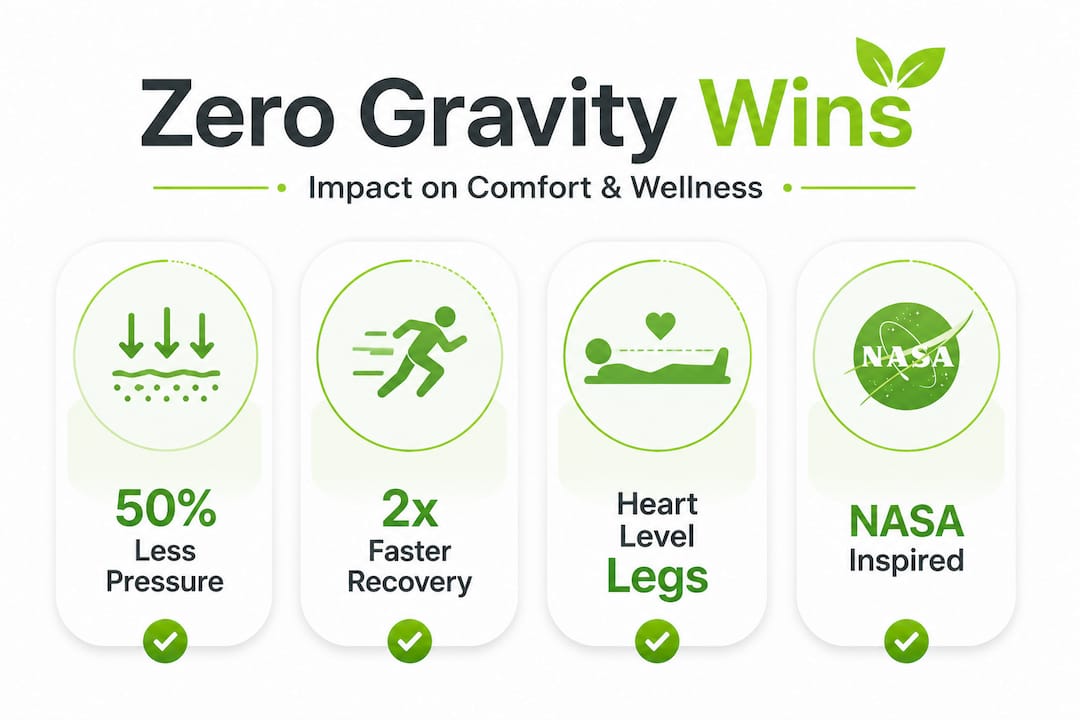
The key angle is everything. Research confirms that neutral body posture reduces musculoskeletal loading through reclined positioning with elevated legs, distributing body weight more evenly and supporting the spine and soft tissues. Most zero gravity chairs achieve this through a torso-to-thigh angle of roughly 120 to 128 degrees. At this angle, gravity pulls more evenly across the whole body rather than compressing the lumbar (lower back) vertebrae the way upright sitting does.
Here is how the forces in your body shift when you move from a regular chair into zero gravity positioning:
| Body area | Upright sitting pressure | Zero gravity position pressure |
|---|---|---|
| Lumbar spine | Very high | Significantly reduced |
| Hip joints | Moderate to high | Evenly distributed |
| Shoulders/neck | Moderate | Minimal |
| Heart strain | Elevated | Reduced |
| Leg circulation | Often restricted | Improved |
Notice the difference in lumbar spine pressure especially. That chronic lower back ache so many people feel after a long day is largely a compression problem. Upright chairs, even expensive ergonomic office chairs, keep the spine in a position where the vertebral discs bear most of your upper body weight for hours at a time.
Benefits of neutral body positioning include:
- Spinal decompression: The spine lengthens naturally, relieving pressure on discs and nerve roots.
- Reduced muscle fatigue: Supporting muscles don’t have to work constantly to keep you upright.
- Even weight distribution: No single area of the body bears the majority of load.
- Improved breathing: A slightly reclined torso opens the diaphragm for fuller, easier breaths.
- Decreased hip flexor tension: Elevating the knees releases the tight hip flexors many adults struggle with.
“Proper reclined positioning with elevated legs distributes body weight more evenly, reducing the musculoskeletal strain that standard seating creates over time.” This isn’t just comfort theory. It’s biomechanics at work in your daily environment.
If you’ve ever read about recliner therapy benefits and wondered whether the science holds up, neutral body posture is the foundation behind that entire approach.
Health benefits: Why zero gravity seating stands out
With the science established, let’s explore what these features mean for your daily comfort and wellness.
The body keeps score. Prolonged poor seating habits create a domino effect of physical strain that radiates from the lower back through the hips, knees, and even into the shoulders. Zero gravity seating interrupts that cycle at the source.
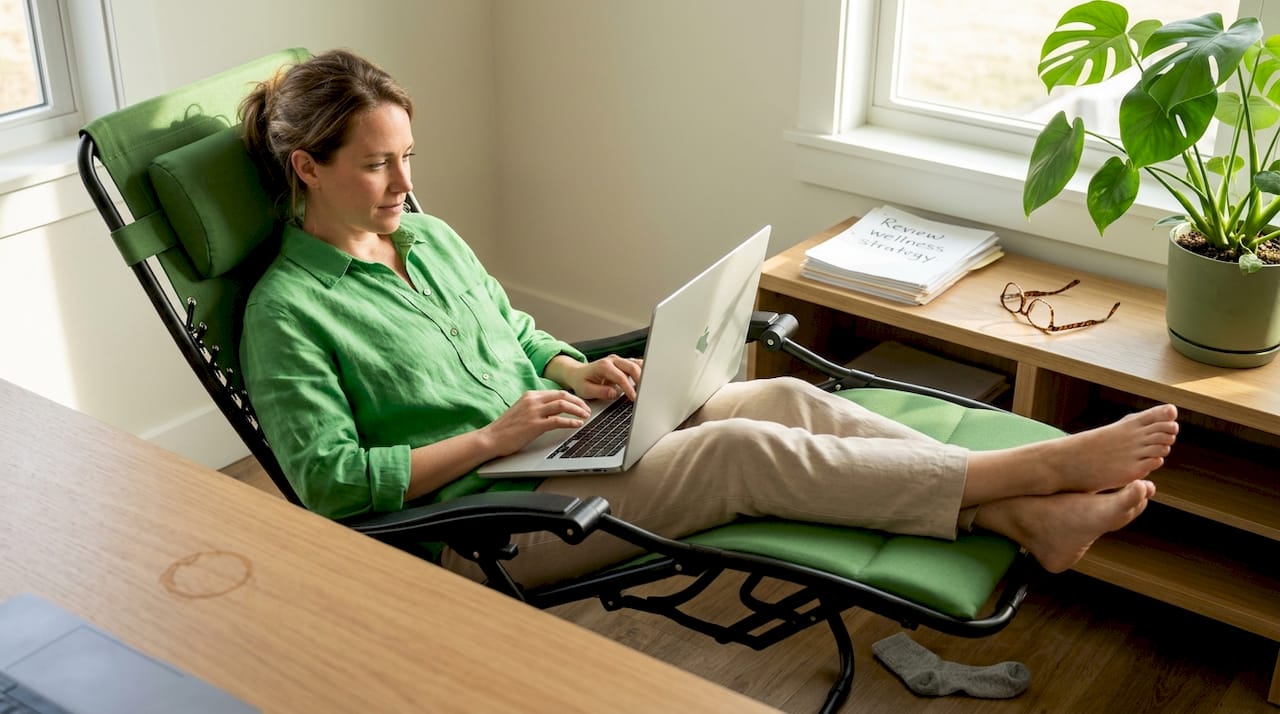
Optimized recline conditions improve overall comfort and pressure balance, according to emerging research on zero-gravity-like positioning. The practical implications go well beyond just “feeling more comfortable.” Here is how the benefits break down when you compare standard seating to zero gravity seating over time:
| Benefit | Standard recliner | Zero gravity chair |
|---|---|---|
| Spinal pressure relief | Minimal | Significant |
| Circulation support | Limited | Improved through leg elevation |
| Muscle tension release | Moderate | High |
| Recovery support | Low | Strong |
| Long-term postural benefit | Low | High |
The numbered list below captures the most meaningful health gains you can realistically expect:
-
Lower back pain relief. Elevating the legs to heart level removes compressive force from the lumbar vertebrae. People dealing with chronic back pain relief positions often find that zero gravity posture provides the most consistent relief compared to lying flat or upright sitting.
-
Better circulation. When your legs are raised above your heart, blood and lymphatic fluid return more easily from the lower extremities. This is particularly important for adults who notice swelling in the ankles or legs after long periods of sitting.
-
Reduced joint stress. Hip, knee, and ankle joints experience less compressive loading in zero gravity positioning, which is why many physical therapists recommend reclined postures during recovery periods.
-
Decreased muscle tension. Muscles throughout the back, glutes, and thighs relax when they no longer need to stabilize you against gravity’s downward pull. This translates into a feeling of full-body release that most chairs simply cannot deliver.
-
Improved breathing and relaxation. The open chest position promotes slower, deeper breathing, which naturally activates the parasympathetic nervous system. That is your body’s rest-and-digest mode, the state that supports recovery, digestion, and mental calm.
Pro Tip: Pair your zero gravity session with five minutes of slow, intentional breathing. Inhale for four counts, exhale for six. The combination of supported posture and controlled breathing compounds the relaxation effect noticeably.
For more on how your seating environment influences body mechanics, the ergonomic comfort guide covers the fundamentals in helpful detail.
Is zero gravity seating right for you? Practical considerations
Knowing the health impact, you’ll want to consider if zero gravity seating aligns with your own comfort priorities.
Zero gravity seating is not just for people recovering from injury, though it excels in that role. Research confirms that zero-gravity positioning promotes weightlessness-like comfort by balancing forces and minimizing musculoskeletal stress, which means virtually anyone who wants to sit more comfortably and rest more effectively can benefit.
That said, certain groups tend to notice the most dramatic improvement:
- Adults with chronic back or hip pain who feel worse after extended sitting periods
- People over 50 whose joints and spinal discs have less natural cushioning than they once did
- Those recovering from surgery or injury who need supported positioning that doesn’t strain healing tissues (see comfort solutions for recovery)
- Professionals who sit for long hours and arrive home tense and fatigued
- Anyone dealing with poor circulation in the legs, including those with mild swelling or varicose veins
- Individuals with high stress levels who need a reliable physical cue for mental unwinding
Zero gravity chairs come in several formats. Outdoor zero gravity loungers are lightweight and fold flat for easy storage. Indoor power recliners offer adjustable positioning with motorized controls, making them ideal for people with limited mobility. Massage-integrated zero gravity chairs combine pressure relief with vibration or air compression therapy for a layered wellness experience.
When choosing a chair, look for:
- Adjustable recline that reaches at least 120 degrees
- Adequate lumbar and neck support
- Durable, breathable fabric that won’t cause heat buildup during longer sessions
- A weight and size rating appropriate for your body
- Easy-to-use controls, especially if you plan to adjust position during use
Pro Tip: Start with two 20-minute sessions per day in your zero gravity chair. Morning sessions help you begin the day with a decompressed spine. Evening sessions accelerate recovery from the day’s physical demands. Consistency matters more than duration, especially in the first few weeks.
If you’re already focused on prevention, the strategies in this guide to prevent back pain pair naturally with regular zero gravity sessions.
What to expect: Real-world experiences and tips for best results
Once you decide to give zero gravity seating a try, here’s how to make the most of it.
The first thing most people notice is unfamiliarity. If you’ve spent decades in upright chairs, the reclined-with-legs-elevated position feels slightly unusual at first. That’s normal. Your nervous system and postural muscles are adjusting to a new set of demands, or more accurately, to a reduced set of demands.
Ergonomic positioning reduces pressure and improves relaxation in zero gravity seating, but the body sometimes needs a short adjustment period to fully accept and release into that support. Most users report that this adjustment happens within the first three to five sessions.
Here is a practical step-by-step approach to get the most out of your zero gravity chair from day one:
-
Start in a supported position. Recline gradually rather than going to full zero gravity immediately. Let your body settle at each stage before moving deeper.
-
Relax your hands and jaw. Many people hold tension in these areas without realizing it. Consciously releasing them signals the rest of your body to follow.
-
Use a small pillow for neck support if needed. Zero gravity chairs support the spine well, but neck positioning is personal. A rolled towel or small pillow under the cervical spine (neck area) can make a significant difference in initial comfort.
-
Stay in position for at least 15 to 20 minutes. The spinal decompression benefits build over time during a session. Short stints of five minutes won’t deliver the same results as longer, more deliberate rest periods.
-
Rise slowly. After extended zero gravity positioning, your cardiovascular system has adjusted to the reclined state. Standing up too quickly can cause momentary lightheadedness. Return your chair to a more upright position first and take a breath before standing.
-
Track how your body feels afterward. Many users find their lower back pain significantly reduced and their energy levels improved after just one week of consistent use.
“The most meaningful results come not from a single session but from integrating zero gravity positioning into a daily routine, allowing the body to regularly reset its baseline tension levels.”
Building this into a broader home back pain relief routine amplifies the results considerably. And for those who are post-surgery or working through physical therapy, combining zero gravity rest with professional guidance on recovery after surgery creates a genuinely supportive environment for healing.
Common mistakes to avoid include using the chair while distracted and shifting around restlessly, which defeats the purpose of supported stillness. Also avoid falling asleep for extended periods in zero gravity without proper neck support, as this can create discomfort over time despite the overall benefits.
What most people get wrong about comfort and seating
Here is an opinion that’s worth sitting with, literally and figuratively: most people confuse softness with support, and that confusion is costing them genuine comfort.
A plush couch that sinks under your weight feels wonderful for the first ten minutes. After an hour, your hips are lower than your knees, your lower back has lost its natural curve, and your body is quietly recruiting muscles to hold you in a position that no one designed intentionally. The comfort was an illusion. The strain was real.
Zero gravity seating challenges this assumption. The best positions for your body aren’t always the ones that feel immediately indulgent. They’re the ones that place your joints and soft tissues in alignment so that nothing has to work hard. That’s a very different sensation, especially at first.
We also think of comfort as passive, something that happens to you when you sit down. The reality is that good seating is active in the sense that it actively supports your body’s structure so you can be fully passive. That distinction matters. A well-designed zero gravity chair doesn’t just catch you. It holds you in a position where your body can actually stop working.
People also underestimate how much their daily seating habits accumulate. If you sit for six hours a day in a chair that adds even minor strain to your spine and hips, that’s thousands of hours of slow, compressive damage over years. The connection between poor seating and chronic pain isn’t dramatic. It’s a quiet, gradual process that most people only recognize in hindsight.
Thinking about side sleeping and back pain follows the same logic. Your body’s position during rest, whether sleeping or seated, shapes your pain patterns over time. Zero gravity seating isn’t a luxury upgrade. It’s a recalibration of what comfort should actually feel like.
Discover comfort engineered for you
You now understand why zero gravity seating is more than a trend. It’s a practical, science-supported tool for protecting your spine, improving circulation, and building real recovery into your day.

At Lunix, we design products for exactly this kind of intentional well-being. Our zero gravity recovery chairs are built with ergonomic precision, thoughtful materials, and features that support your body the way your body actually needs. Whether you’re looking to relieve chronic back discomfort, accelerate recovery, or simply build a better rest routine, Lunix has options designed to meet you where you are. Explore our collection and find the chair that fits your life.
Frequently asked questions
What exactly is zero gravity seating?
Zero gravity seating uses a reclined and leg-elevated position to distribute weight evenly and reduce pressure on the spine, mimicking the neutral body posture identified through NASA research.
Are there proven health benefits to zero gravity chairs?
Yes. Emerging comfort research confirms that zero gravity positioning improves pressure balance and overall relaxation through optimized weight distribution across the body.
Who should consider using zero gravity seating?
Adults dealing with back pain, hip stiffness, poor circulation, or high stress levels tend to benefit most, and the advantages are especially relevant for people over 40 whose bodies need more deliberate recovery support.
How does zero gravity seating compare to standard recliners?
Unlike standard recliners, zero gravity chairs specifically elevate the legs to or above heart level while reclining the torso, which reduces spinal load in a way that typical reclining positions don’t achieve.
Does using a zero gravity chair require special instructions?
Most zero gravity chairs are intuitive to use. Starting with shorter sessions and adjusting gradually allows your body to adapt comfortably, and rising slowly after use helps avoid any brief lightheadedness from the position change.
Recommended
- Ergonomic design cuts back pain 54%: comfort guide 2026 – Lunix
- 6 Comfort Solutions with 30% Faster Recovery & Pain Relief – Lunix
- Functional Comfort Explained: Elevate Home Wellness – Lunix
- 7 At-Home Comfort Tips for Better Relaxation and Recovery – Lunix
- Why elongated bidet seats deliver superior comfort– Smart Toilets & Bidet Seats | Premium Bidet