


TL;DR:
- Daily stretching improves joint mobility, posture, and reduces muscle tension in adults over 40.
- Consistency, gentle technique, and proper safety measures are key to effective and injury-free practice.
- Short, 10-15 minute routines with warm-up, dynamic, and static stretches support long-term flexibility.
If you wake up feeling stiff, or you notice your shoulders tightening by mid-afternoon, you are not alone. Most adults over 40 experience some degree of daily tension or reduced range of motion, and it tends to get worse without a plan. The good news is that a consistent daily stretching routine can genuinely change how your body feels, moves, and recovers. This guide walks you through the science, the preparation, and a practical workflow you can start using today, whether you are brand new to stretching or looking to refresh a habit that has slipped.
Table of Contents
- Why a daily stretching routine matters for wellness
- What you need: Tools, safety, and preparation
- Step-by-step daily stretching workflow
- Tracking progress and troubleshooting common issues
- Our perspective: Breaking the myth of ‘no pain, no gain’ in stretching
- Enhance your recovery: The next step in your stretching journey
- Frequently asked questions
Key Takeaways
| Point | Details |
|---|---|
| Consistency is crucial | Stretching daily delivers better flexibility and tension relief than occasional attempts. |
| Warm-up matters | Always warm up before stretching to prevent injury and maximize results. |
| Adapt to your needs | Gentle, supported stretches are vital for those with arthritis or balance issues. |
| Track progress | Simple measurements like the sit-and-reach test reveal flexibility gains over weeks. |
| No pain required | Stretching should be comfortable; avoid forcing or bouncing to see lasting results. |
Why a daily stretching routine matters for wellness
Stretching is often treated as an afterthought, something you do if you have extra time. But for adults between 40 and 65, it is one of the most impactful things you can do for your body every single day. Here is why that matters.
As we age, connective tissue naturally loses some elasticity. Muscles shorten, joints stiffen, and posture tends to shift forward. This creates a domino effect of physical strain: tight hips pull on your lower back, rounded shoulders create neck tension, and reduced ankle mobility affects your balance. The daily stretching benefits go far beyond just feeling looser.
Key benefits of consistent stretching for adults 40 to 65:
- Improved range of motion in major joints
- Reduced muscle stiffness and everyday tension
- Better posture and spinal alignment
- Lower risk of injury during daily activities
- Improved circulation and blood flow to muscles
- Support for arthritis and joint pain management
- Better balance and fall prevention
The ACSM recommends flexibility exercises for all major muscle groups at least 2 to 3 times per week, with daily practice being the most effective approach. For older adults especially, daily repetition is what creates lasting change rather than occasional sessions.
Research backs this up. Stretching improves flexibility, reduces tension and stiffness, supports circulation, and helps manage conditions like arthritis and joint pain. It also plays a meaningful role in fall prevention, which becomes increasingly important as we move through our 40s and 50s.
For those managing arthritis or chronic joint discomfort, gentle and modified stretching can be especially valuable. The key is working within a comfortable range and building gradually. Exploring mobility exercises for midlife can help you find the right starting point.
| Benefit | Short-term result | Long-term result |
|---|---|---|
| Range of motion | Feels looser after one session | Measurable joint mobility gains |
| Tension relief | Immediate muscle relaxation | Reduced chronic stiffness |
| Posture | Awareness improves quickly | Structural alignment improves |
| Injury risk | Better body awareness | Fewer strains and pulls |
| Balance | Slight improvement | Significant fall risk reduction |
The takeaway here is simple: stretching is not a luxury. For adults in this age group, it is a practical tool for maintaining independence, comfort, and quality of life.
What you need: Tools, safety, and preparation
Knowing why to stretch is motivating. Knowing how to do it safely is what keeps you consistent and injury-free. Before you start, let’s cover the basics.
Essential equipment:
- A non-slip yoga or exercise mat for floor stretches
- A stretching strap or long towel to extend your reach
- A sturdy chair for seated or standing balance support
- Comfortable, non-restrictive clothing
You do not need a gym or expensive gear. Most of these items are already in your home or available for very little cost.
Safety basics everyone should follow:
According to ACSM safety guidance, you should always warm up before stretching, never stretch a cold muscle, avoid bouncing movements, and stop if you feel sharp pain. A 3 to 5 minute light warm-up, such as walking in place or gentle arm circles, prepares your muscles and connective tissue for safe stretching.
One of the most important skills you can develop is distinguishing between mild tension and pain. Mild tension is a gentle pulling sensation that eases as you hold the stretch. Pain is sharp, sudden, or worsening. Always stay in the tension zone and back off immediately if something feels wrong.
“The goal of stretching is to feel a gentle pull, not to push through discomfort. Respecting your body’s signals is what makes progress possible.”
Adapting for joint pain or arthritis:
- Use a chair for support during standing stretches
- Reduce your range of motion and work within what feels comfortable
- Avoid any stretch that places direct pressure on an inflamed joint
- Consult your healthcare provider before starting if you have a diagnosed condition
For more guidance on protecting your joints, explore these joint flexibility tips and arthritis stretching tips tailored for this age group.
Pro Tip: If you are unsure whether a stretch is safe for your specific condition, start with seated stretches only. They are lower risk and still highly effective for building flexibility.
| Situation | Recommended adjustment |
|---|---|
| Arthritis in knees | Avoid deep lunges; use chair support |
| Lower back pain | Gentle supine stretches; no forward bends |
| Balance concerns | Hold a wall or chair during all standing work |
| Post-surgery | Get clearance from your provider first |
Step-by-step daily stretching workflow
With your tools and safety plan ready, follow this workflow as a daily habit. It takes about 10 to 15 minutes and covers all major muscle groups.
Step 1: Choose your timing
Morning stretching reduces overnight stiffness and energizes you for the day. Post-exercise stretching supports recovery and is ideal for static holds. Evening stretching promotes relaxation and better sleep. Any of these windows works. What matters most is picking a consistent time.
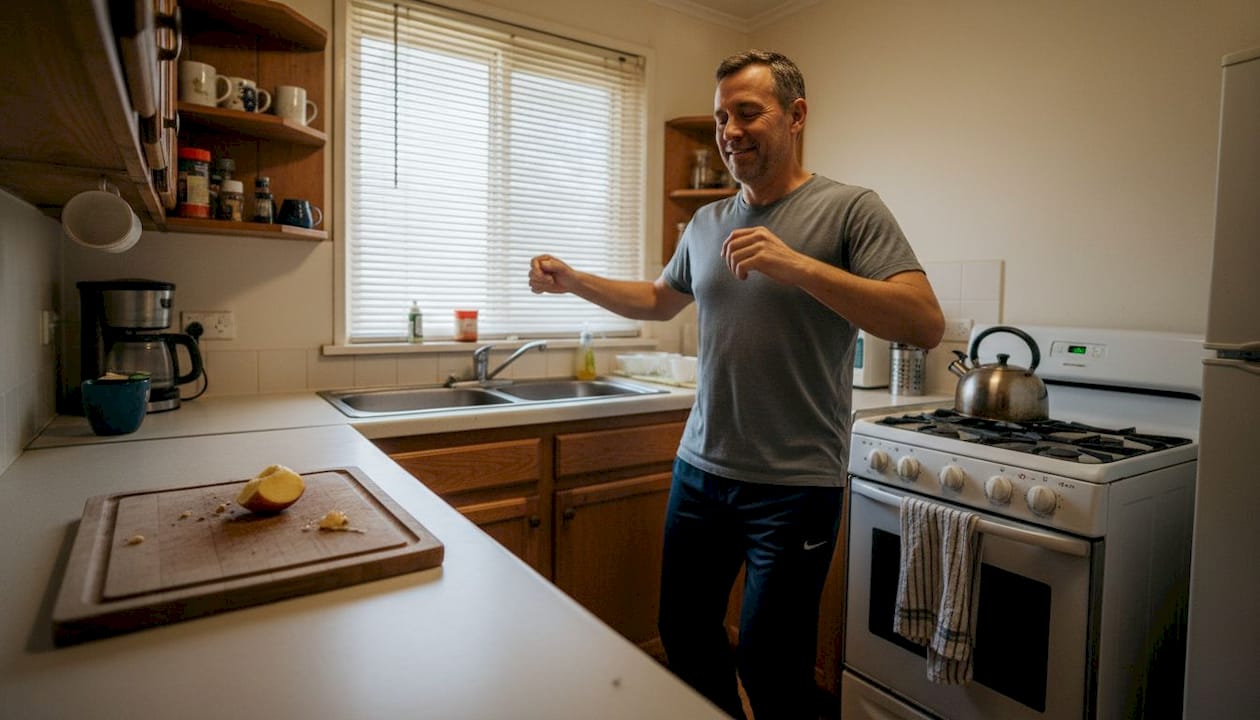
Step 2: Warm up for 3 to 5 minutes
Walk in place, do gentle arm swings, or march slowly around the room. Your muscles need warmth and blood flow before they stretch safely.
Step 3: Gentle dynamic stretches (pre-activity or morning)
Dynamic stretches involve controlled movement through a range of motion. Dynamic stretching is ideal before physical activity and provides acute flexibility improvements. Try:
- Leg swings (forward and back, 10 reps each side)
- Hip circles (slow and controlled, 8 reps each direction)
- Shoulder rolls (10 reps forward, 10 reps back)
- Gentle torso rotations (8 reps each side)
Step 4: Targeted static stretches (hold 30 to 60 seconds)
ACSM guidance recommends holding static stretches for 30 to 60 seconds for older adults, repeated 2 to 4 times per muscle group. Focus on these areas:
- Hamstrings: seated or supine stretch, use a strap if needed
- Hip flexors: gentle kneeling or standing lunge position
- Calves: standing wall stretch, both straight and bent knee
- Chest and shoulders: doorway or clasped-hands stretch
- Lower back: supine knee-to-chest, one leg at a time
- Neck: gentle side tilts, no rolling
Pro Tip: Use a strap around your foot during hamstring stretches to reduce strain on your lower back and get a deeper, safer stretch without forcing the position.
For additional joint mobility steps and targeted back pain stretching routines, these resources offer helpful extensions of this workflow.
| Stretch type | Best timing | Primary benefit |
|---|---|---|
| Dynamic | Before activity or morning | Warms up joints, acute mobility |
| Static | Post-activity or evening | Long-term flexibility gains |
| Supported (chair/strap) | Any time | Safe for joint concerns |
Tracking progress and troubleshooting common issues
Once your routine is in motion, staying motivated and adjusting for results is key. Progress in stretching can feel slow, but it is absolutely measurable.
How to track your flexibility:
The sit-and-reach test is a simple benchmark. Sit on the floor with legs extended, and reach forward toward your toes. Mark how far you reach each week. Even small improvements, like reaching a few centimeters further, signal real progress.
Chronic 12-week stretching programs show meaningful hamstring flexibility improvements, especially for those who start with lower baseline flexibility. Expect small acute gains after each session, with visible cumulative results building over weeks.
Common stumbling blocks and how to fix them:
- Inconsistency: Tie stretching to an existing habit, like after your morning coffee or before bed
- Overstretching: Back off to 70% of your maximum range and build from there
- Skipping the warm-up: Set a two-minute timer before you begin to make it non-negotiable
- Boredom: Rotate your stretch selection weekly to keep things fresh
- Plateau: Add one new stretch or increase hold time slightly to challenge your body again
Pro Tip: Keep a simple journal or use your phone’s notes app to log which stretches you did and how your body felt. This small habit builds self-awareness and helps you spot patterns quickly.
When to consult a professional:
If you experience persistent pain during or after stretching, numbness, or tingling, stop and speak with a physical therapist or your doctor. These are signals that your routine needs professional adjustment, not just a modification.
Understanding the muscle relaxation benefits of consistent practice can also help you stay motivated when progress feels gradual.
| Issue | Likely cause | Fix |
|---|---|---|
| Soreness after stretching | Overstretching | Reduce intensity and hold time |
| No improvement after 4 weeks | Inconsistent routine | Commit to daily practice |
| Sharp pain during stretch | Incorrect form or injury | Stop and consult a provider |
| Tightness always returns | Skipping warm-up | Always warm up before stretching |
Our perspective: Breaking the myth of ‘no pain, no gain’ in stretching
Here is something most stretching guides will not say directly: pushing harder is rarely the answer. The “no pain, no gain” mindset, while useful in some fitness contexts, is genuinely counterproductive when it comes to flexibility work for adults over 40.
We have seen it repeatedly. Someone starts a stretching routine with real motivation, pushes too far too fast, and ends up sore or strained. Then they stop. The irony is that the gentler approach, done consistently, builds far more lasting flexibility than aggressive sessions done occasionally.
Your nervous system plays a huge role here. When you force a stretch, your muscles actually tighten in response as a protective reflex. When you ease into a stretch and breathe through it, your nervous system relaxes its grip and allows genuine lengthening to happen.
Self-monitoring matters more than any rigid program. Some days your body will feel open and responsive. Other days, you may need to dial back. Honoring that variation is not weakness. It is smart practice. Explore these pain relief strategies if you want to build a broader framework around gentle, sustainable recovery.
Consistency beats intensity. Every single time.
Enhance your recovery: The next step in your stretching journey
Building a daily stretching routine is one of the most meaningful investments you can make in your long-term comfort and mobility. And the right recovery tools can make that practice even more effective.

At Lunix, we design recovery tools that support exactly this kind of daily wellness work. From ergonomic support cushions to smart recovery solutions, our products are built to complement your body’s natural restoration process. Whether you are winding down after your evening stretches or looking for comfort during the day, Lunix wellness products are designed to help your body feel its best. Explore our full recovery collection and find the tools that fit your routine.
Frequently asked questions
How long should my daily stretching routine take?
A complete routine typically takes 10 to 15 minutes. Each stretch should be held 30 to 60 seconds and repeated 2 to 4 times per muscle group for best results.
Is it better to stretch in the morning or at night?
Both times offer real benefits. Morning stretching reduces overnight stiffness, while evening stretching promotes relaxation. Consistency matters more than the specific time you choose.
How can I safely stretch if I have arthritis or joint pain?
Use gentle, supported stretches, avoid any bouncing, and reduce your range of motion. For chronic pain or arthritis, consult a provider for personalized modifications before starting.
What’s the difference between static and dynamic stretching?
Static stretches are held in place for 30 to 60 seconds and build long-term flexibility gains. Dynamic stretches involve movement and are best used before physical activity to prepare your joints.
How soon will I see results from daily stretching?
Most people notice some improvement within a few weeks. More significant results, particularly in hamstring flexibility, typically appear after 12 weeks of consistent daily practice.
Recommended
- Step-by-Step Routine for Back Pain Relief at Home – Lunix
- How to Relieve Muscle Tension Naturally: A Step-by-Step Guide – Lunix
- Morning relaxation routine guide for adults 40-65 in 2026 – Lunix
- How to enhance joint mobility: steps for active adults – Lunix
- Step by step calisthenics routine: build strength in 2026 - Gripnatic
- Step by step travel comfort: 50% less stress & neck strain – BOLSTIE TRAVEL PILLOW