


Waking up every day with a stiff neck or aching shoulders can leave you frustrated before your day even begins. For many, nighttime pain comes from a pillow that fails to keep the head, neck, and spine in line. Research confirms that optimal pillow height and neck support are key to better sleep quality and pain prevention, so finding the right pillow can be the first step toward relief and true rest. Uncover what truly makes a pillow genuinely supportive and how it could change the way you sleep—and feel—each morning.
Table of Contents
- What Makes A Pillow Supportive? Core Concepts
- Comparing Pillow Types And Key Materials
- How Supportive Pillows Relieve Pain
- Selecting The Best Pillow For Your Needs
- Risks, Misconceptions, And Alternatives
Key Takeaways
| Point | Details |
|---|---|
| Proper Alignment is Crucial | Supportive pillows maintain the alignment of the head, neck, and spine, preventing pain and discomfort upon waking. |
| Material Matters | The choice of pillow material affects support, comfort, and durability, impacting overall sleep quality and alignment. |
| Test Before Buying | Always test pillows for extended periods in your actual sleeping position to ensure they provide the necessary support for your specific body type. |
| Individual Needs Vary | Factors like shoulder width, sleeping position, and existing pain conditions dictate the best pillow choice for optimal support and comfort. |
What Makes a Pillow Supportive? Core Concepts
Supportive pillows solve a problem most people don’t realize they have: misalignment. Your head, neck, and spine need to stay in a straight line while you sleep, just like they do when you’re standing. When your pillow fails to maintain this alignment, you wake with pain, stiffness, and a cascade of daytime discomfort.
The magic happens when a pillow does three things simultaneously. It fills the gap between your shoulder and head. It cradles your neck without forcing it into an unnatural angle. It keeps your head level, preventing your neck from rolling or tilting as you shift positions throughout the night.
Core Pillars of Pillow Support
Research on optimal pillow height and neck support shows that the best pillows share specific characteristics:
- Height alignment — Pillow height must match your shoulder width and sleeping position to maintain cervical spine alignment
- Material responsiveness — The pillow compresses where needed but rebounds quickly to keep supporting you
- Proper contouring — Shaped designs provide targeted support for neck curves rather than flat surfaces
- Thermal stability — Temperature regulation prevents night sweats that cause tossing and position changes
What makes this work? Your body dimensions matter more than you think. Someone with broad shoulders needs more height than someone petite. Pillow design parameters including height, shape, and material directly influence both comfort and spinal alignment.
Why Comfort Alone Isn’t Enough
Here’s where most people get fooled: a pillow can feel comfortable but fail to support you properly. You might sink into a plush pillow and love it initially, only to wake with neck pain after eight hours. Comfort is about what your head feels in the moment. Support is about what your spine experiences throughout the night.
Supportive pillows maintain proper spinal alignment even when you can’t feel the support working—that’s the whole point.
Your cervical spine has specific curves that need maintaining. A supportive pillow respects these natural curves rather than flattening them. This is why side sleepers often experience different pain patterns than back sleepers and need adjusted pillow heights accordingly.
The Support-Comfort Balance
Your pillow needs to feel good enough that you actually rest on it—but its primary job is preventing injury. Think of it like shoes: supportive shoes might not feel as soft as sloppy ones, but they protect your feet during a long day. The best supportive pillows achieve both goals by using responsive materials that feel comfortable while maintaining alignment.
Pro tip: Test your pillow by lying down and checking if you can slide one finger under your neck—this simple test reveals whether your pillow fills the gap correctly for your body type.
Comparing Pillow Types and Key Materials
Not all pillows perform the same way. The pillow that feels amazing at the store might leave you with a stiff neck after a month of sleep. This happens because pillow type and material directly affect how well your spine stays supported throughout the night.
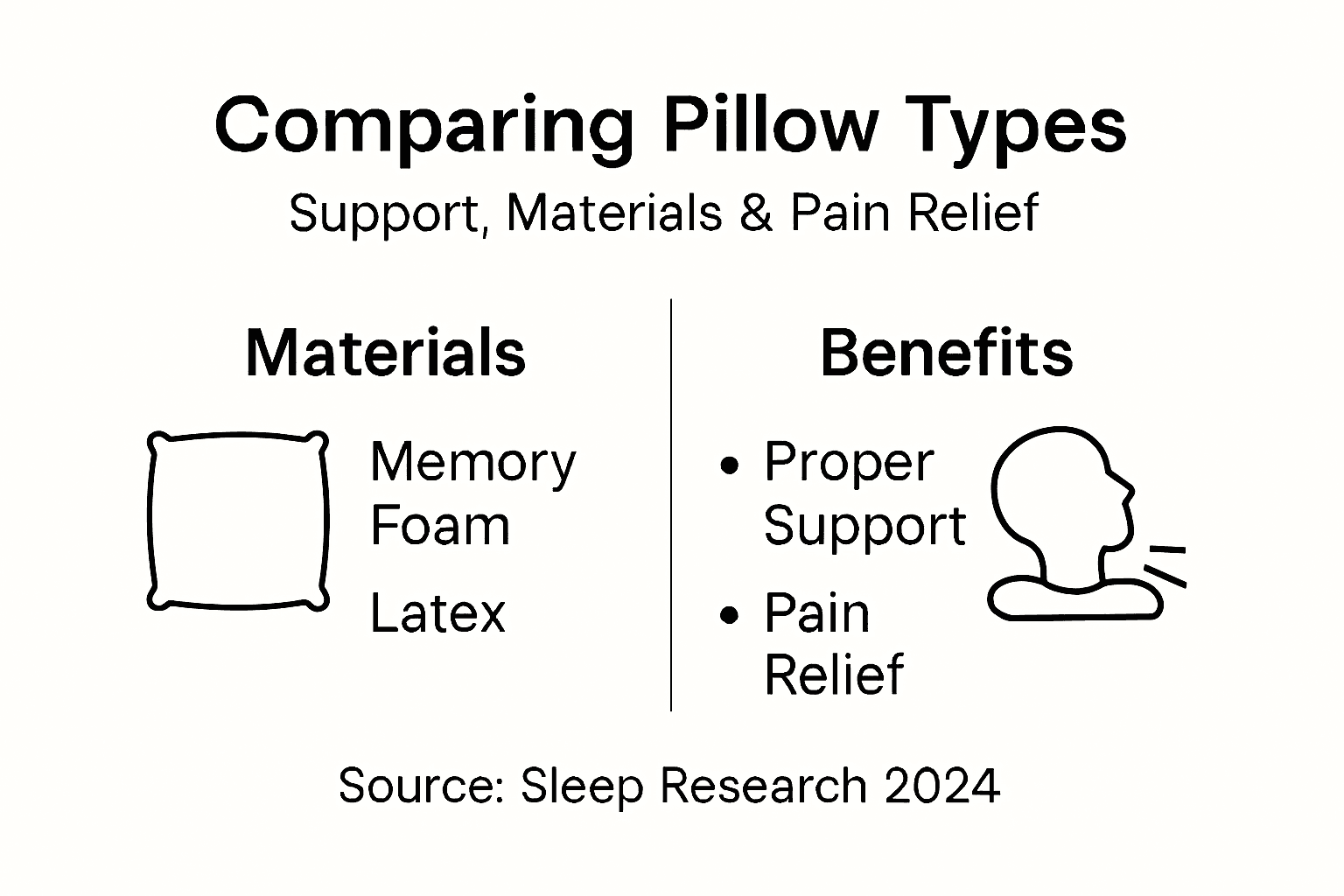
Your pillow choice matters because different materials respond differently to your head’s weight and neck’s curves. Some materials compress and stay compressed. Others bounce back quickly. Some hold heat while others breathe. Each characteristic changes how your pillow supports you, especially depending on whether you sleep on your back, side, or stomach.
Common Pillow Materials and Their Support Profiles
Different materials offer distinct advantages and limitations:
- Memory foam — Molds to your head shape but can trap heat and may feel too soft for some sleepers
- Latex — Responsive and naturally cooling, providing consistent support without excessive sinking
- Down and feathers — Comfortable but offer minimal support and compress over time, losing effectiveness
- Polyester fiber — Affordable and supportive but can clump and lose loft quickly
- Wool — Temperature-regulating and provides moderate support with natural durability
Research comparing pillow materials and pressure distribution shows that material choice significantly impacts spine comfort depending on your sleeping position and body type.
Here’s a quick reference guide to how common pillow materials affect support and comfort:
| Material | Support Quality | Temperature Management | Durability |
|---|---|---|---|
| Memory Foam | High contouring, medium firmness | Often traps heat | Lasts 2-4 years |
| Latex | Responsive, consistent support | Naturally cool, breathable | Lasts 4-8 years |
| Down/Feather | Soft, minimal support | Retains warmth, less cooling | Lasts 1-2 years |
| Polyester Fiber | Moderate support, affordable | Variable, can trap heat | Lasts 1-2 years |
| Wool | Moderate, firm support | Excellent for cooling | Lasts 3-5 years |
Pillow Types: What Actually Works
Pillow type goes beyond material—it includes shape, height, and firmness. Some types prove more effective than others at reducing neck pain. Studies reveal that rubber and spring pillows reduce neck pain more effectively than traditional feather pillows, though individual comfort varies.
Your sleeping position demands different pillow characteristics. Side sleepers need more height to fill the gap between shoulder and ear. Back sleepers need support under the neck curve without pushing the head too high. Stomach sleepers actually need thinner pillows to prevent neck strain.
The best pillow for you isn’t the most popular one—it’s the one that matches your sleeping position and body dimensions.
Material Properties That Matter Most
Three things determine a material’s supportiveness:
- Firmness — How much resistance the material provides against your head’s weight
- Responsiveness — How quickly the material rebounds after compression
- Durability — How long the material maintains support before degrading
Quality pillow covers made with certified fabric also influence how well your pillow performs, protecting the core material and affecting breathability.
Your age and pain history matter too. Someone recovering from neck surgery needs different support than someone with preventive interests. Materials that feel luxurious often sacrifice support. The goal is finding the overlap where your pillow feels good enough to relax into while actually protecting your spine.
Pro tip: Test pillows by lying down for at least 10 minutes in your actual sleeping position before purchasing—comfort in the first minute means nothing if your neck aches after 30 minutes of true support testing.
How Supportive Pillows Relieve Pain
Pain relief doesn’t always require medication. Sometimes it starts with something as simple as the right pillow. When your pillow properly supports your neck and spine alignment, you reduce the physical strain that creates pain in the first place.
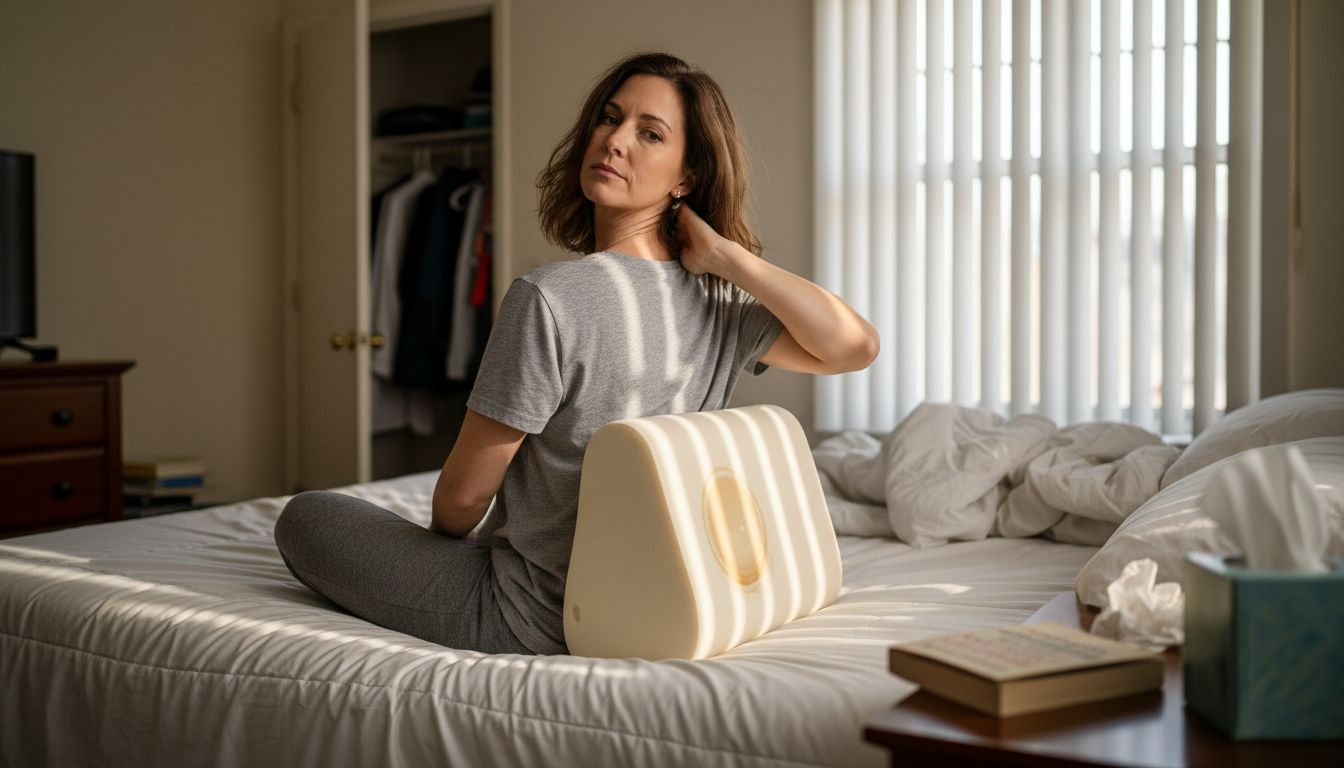
Here’s how it works: pain develops when muscles, nerves, and joints experience constant stress. A pillow that fails to support your cervical spine forces your neck muscles to work overtime, holding your head in awkward positions all night. By morning, you wake stiff and aching. A supportive pillow eliminates this problem by distributing your head’s weight evenly and maintaining proper alignment.
The Mechanics of Pain Relief
Supportive pillows relieve pain through several interconnected mechanisms:
- Pressure distribution — Proper support spreads your head’s weight across a larger surface area, reducing concentrated pressure on sensitive areas
- Cervical alignment — Maintaining proper neck curve prevents muscle strain and nerve compression
- Reduced muscle tension — When your neck stays aligned, muscles relax instead of contracting to compensate for poor positioning
- Improved circulation — Proper alignment allows blood flow to resume normally, reducing inflammation and supporting healing
Inadequate pillow support contributes significantly to neck pain and waking symptoms, while rubber and spring pillows demonstrate superior effectiveness at reducing pain and disability compared to traditional options.
Why Quality Sleep Matters for Pain Recovery
Your body repairs itself during sleep. When your pillow disrupts your rest by causing discomfort, you lose the recovery window your body needs. Poor sleep quality creates a domino effect: less restorative sleep means more inflammation, which means more pain the next day.
Temperature-regulating pillows improve sleep quality and comfort, helping reduce nighttime awakenings that interrupt the deep sleep stages where your body heals most effectively.
Think of it this way: if you’re waking every two hours due to pillow-induced discomfort, your body never reaches the deep sleep phases where tissue repair happens. A supportive pillow that keeps you comfortable throughout the night allows uninterrupted sleep cycles.
The right pillow doesn’t just feel better—it enables your body to actually heal while you sleep.
Pain Relief Across Different Conditions
Different pain conditions respond to specific pillow support features:
- Neck pain — Needs firm support and proper height for cervical alignment
- Shoulder pain — Requires adequate loft to prevent shoulder compression
- Lower back pain — Benefits from pillows supporting your upper body positioning
- Headaches — Often improve when proper alignment reduces tension throughout the neck and shoulders
Your sleeping position directly influences which pain conditions develop and how pillows should support them. Side sleepers experience different pain patterns than back sleepers, requiring different support strategies.
Pro tip: If you wake with pain that decreases within 30 minutes of moving around, your pillow is likely the culprit—quality supportive pillows eliminate this morning stiffness entirely.
Selecting the Best Pillow for Your Needs
Choosing the right pillow isn’t about finding what everyone else loves—it’s about finding what works for your specific body and sleep style. Your shoulder width, sleeping position, and existing pain conditions all matter. A pillow perfect for your partner might be completely wrong for you.
The problem: most people buy pillows based on feel alone. They test a pillow for two minutes in a store and decide. Real support only reveals itself after hours of sleep when your spine either maintains alignment or starts to strain. By then, you’ve already made a commitment.
Know Your Physical Starting Point
Before shopping, measure yourself:
- Shoulder width — Measure across your shoulders from point to point; this determines ideal pillow height
- Sleeping position — Side sleepers need more height than back sleepers; stomach sleepers need minimal height
- Existing pain — Any neck, shoulder, or back issues require specific support features
- Body dimensions — Height and weight affect how much support you need overall
Personalized pillow selection based on individual physical characteristics and sleeping posture produces measurably better results than generic recommendations, improving comfort and reducing pain significantly.
Your body’s geometry matters more than pillow brand reputation. Someone with a petite frame and narrow shoulders has completely different needs than someone with a larger build.
To simplify selecting your ideal pillow, here’s how physical traits and sleep styles influence the best choice:
| Trait or Condition | Recommended Pillow Height | Best Material | Key Support Feature |
|---|---|---|---|
| Broad Shoulders | High loft | Latex or memory foam | Deep gap-filling support |
| Petite Frame | Low to medium loft | Soft latex or fiber | Gentle contouring |
| Side Sleeper | Higher loft | Responsive foam or latex | Neck cradle |
| Back Sleeper | Medium loft | Memory foam or latex | Cervical curve support |
| Stomach Sleeper | Thin pillow | Soft fiber or down | Prevent neck strain |
Matching Pillow Features to Your Requirements
Once you understand your baseline, match pillow characteristics to your needs:
- Determine required height — Should align your head with your spine based on your shoulder width and position
- Select firmness level — Soft for back sleepers, firmer for side sleepers who need resistance
- Choose material responsiveness — Memory foam conforms; latex rebounds; choose based on your preference for sinking versus support
- Consider special conditions — Pillows adjusted for individual health conditions significantly improve sleep quality and reduce associated symptoms
The best pillow fills your specific gap and supports your specific curves—generic solutions fail because bodies aren’t generic.
If you have sleep apnea, acid reflux, or post-surgical recovery needs, your pillow selection becomes even more critical. Wedge pillows address specific positional therapy requirements for these conditions far better than standard pillows.
The Testing Reality
Feel matters, but not in the way most people think. Your pillow should feel comfortable enough that you relax into it, not so soft that it collapses or so firm that it feels harsh. The true test happens after one week of sleep—that’s when you discover whether your pillow actually supports you or just feels nice initially.
Don’t rush this decision. Take time to understand your needs first, then test pillows with realistic expectations about how long real support takes to evaluate properly.
Pro tip: Create a simple chart listing your shoulder width, preferred sleeping position, and any pain areas, then use this as your reference when evaluating pillows instead of relying on memory or in-store feel alone.
Risks, Misconceptions, and Alternatives
Not every pillow works for every person. Some people experience negative effects from certain pillow types or sleeping positions. Understanding potential risks and common misconceptions helps you make informed decisions that actually improve your health instead of creating new problems.
The biggest misconception: any pillow will improve sleep quality and spinal alignment. This isn’t true. A pillow can feel comfortable while providing poor support, or it can support your spine while feeling uncomfortable initially. These are separate qualities that don’t always overlap.
Common Misconceptions About Pillows
These false beliefs lead people down the wrong path:
- More expensive equals better support — Price doesn’t guarantee proper alignment; cheap pillows can support well if they match your needs
- One pillow works for everyone — Body geometry differs dramatically; your ideal pillow won’t work for your partner
- Plush always means comfortable — Soft pillows feel great initially but often collapse, leaving you unsupported by morning
- Pillow design alone fixes sleep problems — Pillow design doesn’t automatically enhance sleep quality in chronic pain patients, though it can reduce specific pain symptoms
These misconceptions cost people money on the wrong pillows and leave them frustrated when expensive purchases fail to deliver results.
Potential Health Risks Worth Knowing
Most pillow risks involve improper use rather than the pillow itself. However, some specific concerns exist:
Certain sleeping positions with pillows can affect eye pressure in susceptible individuals. Head posture into pillows may increase intraocular pressure, a concern for people with glaucoma or at risk for the condition.
Other risks include neck strain from improper height, shoulder compression from inadequate loft, and overheating from non-breathable materials. These aren’t pillow problems—they’re matching problems.
Risks emerge when pillow characteristics don’t align with your body’s specific needs, not from pillows themselves.
When to Consider Alternatives or Adjustments
If you experience any of these situations, reassess your pillow strategy:
- Waking with new or worsening pain that a different position doesn’t relieve
- Night sweats or overheating despite cool bedroom temperature
- Allergic reactions or skin irritation from pillow materials
- Existing eye conditions and concerns about intraocular pressure effects
- Post-surgical recovery requiring specialized positioning
Alternatives include adjusting pillow height using additional pillows, switching materials, trying different shapes, or consulting specialists about health-specific needs. Sometimes the solution isn’t a new pillow—it’s adjusting your current one through strategic layering or repositioning.
Pro tip: If a pillow causes problems, test adjustments before discarding it—adding or removing height, changing its firmness by compression, or repositioning it under different areas often solves issues faster than replacement.
Discover True Pain Relief with Supportive Pillows Designed for You
Struggling with neck pain and restless nights from inadequate pillow support is a more common issue than you think. The key to pain-free sleep lies in choosing a pillow that maintains proper cervical alignment while offering the perfect balance of comfort and responsiveness tailored to your body. Whether you need a pillow that fills the gap between your shoulder and head or one that adapts to your unique sleeping position, specialized solutions can transform how you rest and recover.

Explore Lunix’s premium collection of Wedge Pillows engineered to improve pain relief and support your spine naturally throughout the night. Our smart comfort designs prioritize consistent spinal alignment and thermal stability to enhance your sleep quality. Start your journey to waking refreshed and pain-free by choosing the right pillow from Lunix. Learn more at Lunix and unlock better sleep today.
Frequently Asked Questions
What features should I look for in a supportive pillow?
Look for features such as proper height alignment based on your shoulder width and sleeping position, material responsiveness that compresses and rebounds, proper contouring that supports your neck curves, and thermal stability to regulate temperature.
How do supportive pillows relieve pain?
Supportive pillows relieve pain by maintaining cervical alignment, distributing head weight evenly to reduce pressure points, decreasing muscle tension, and improving circulation, which aids in recovery and reduces inflammation.
What types of materials are best for supportive pillows?
Popular materials include memory foam for contouring, latex for responsiveness and cooling, down for comfort (although less support), polyester fiber for affordability, and wool for temperature regulation and durability. Each material has different effects on support and comfort depending on your sleeping position.
How can I determine which pillow height is right for me?
To determine the right pillow height, measure your shoulder width and consider your sleeping position. Side sleepers typically need higher loft pillows to fill the gap between the shoulder and head, while back sleepers require medium loft, and stomach sleepers need thinner pillows to avoid neck strain.