


Using a smart sleep tracker can improve sleep efficiency by up to 15% within three months. Smart devices for relaxation are technology-enabled tools that personalize and enhance your wellness journey through sensors, adaptive features, and real-time feedback. This guide explores how these innovations work, which devices suit your needs, and how to integrate them into daily routines for lasting benefits without falling into common traps.
Table of Contents
- Introduction To Smart Devices In Relaxation
- How Smart Devices Enhance Relaxation Mechanisms
- Common Misconceptions About Smart Devices In Relaxation
- Comparison Of Smart Devices By Relaxation Approach
- Practical Frameworks For Integrating Smart Devices Into Daily Wellness
- Limitations And Realistic Expectations For Smart Relaxation Devices
- Explore Smart Relaxation Solutions At Lunix
- Frequently Asked Questions
Key takeaways
| Point | Details |
|---|---|
| Device categories | Sleep trackers, biofeedback wearables, smart lighting, and muscle recovery tools each target specific relaxation mechanisms. |
| Primary benefits | Improved sleep quality, reduced stress levels, faster muscle recovery, and personalized wellness insights. |
| Common misconceptions | Results require 2-3 weeks of consistent use; data obsession can increase anxiety rather than reduce it. |
| Selection framework | Identify personal goals, research scientific validation, start with one device, and combine with traditional wellness practices. |
| Realistic limitations | Benefits depend on consistent use, behavioral integration, and managing expectations about timeframes. |
Introduction to smart devices in relaxation
Smart devices integrate sensors, algorithms, and adaptive features to deliver personalized relaxation experiences. These tools track biometric data, adjust environmental factors, and provide real-time feedback to optimize your body’s natural restoration processes. The wellness technology market has grown significantly, with adults aged 40-65 driving demand for solutions that address sleep quality, stress management, and physical recovery.
Common device types include wearables that monitor heart rate variability and sleep stages, smart home systems controlling lighting to boost melatonin production, and recovery tools targeting muscle tension. This demographic values data-driven insights that translate into actionable wellness improvements without disrupting established routines.
The appeal lies in personalization. Traditional relaxation methods offer general guidance, while smart devices adapt to your unique patterns. They identify stress triggers, optimize sleep schedules based on circadian rhythms, and track progress over time. This precision transforms wellness from guesswork into an evidence-based practice, making these tools increasingly central to modern self-care routines for adults seeking sustainable health improvements.
How smart devices enhance relaxation mechanisms
Smart devices work through multiple physiological and psychological pathways to promote relaxation. Understanding these mechanisms helps you choose tools aligned with your specific wellness goals and maximize their effectiveness.
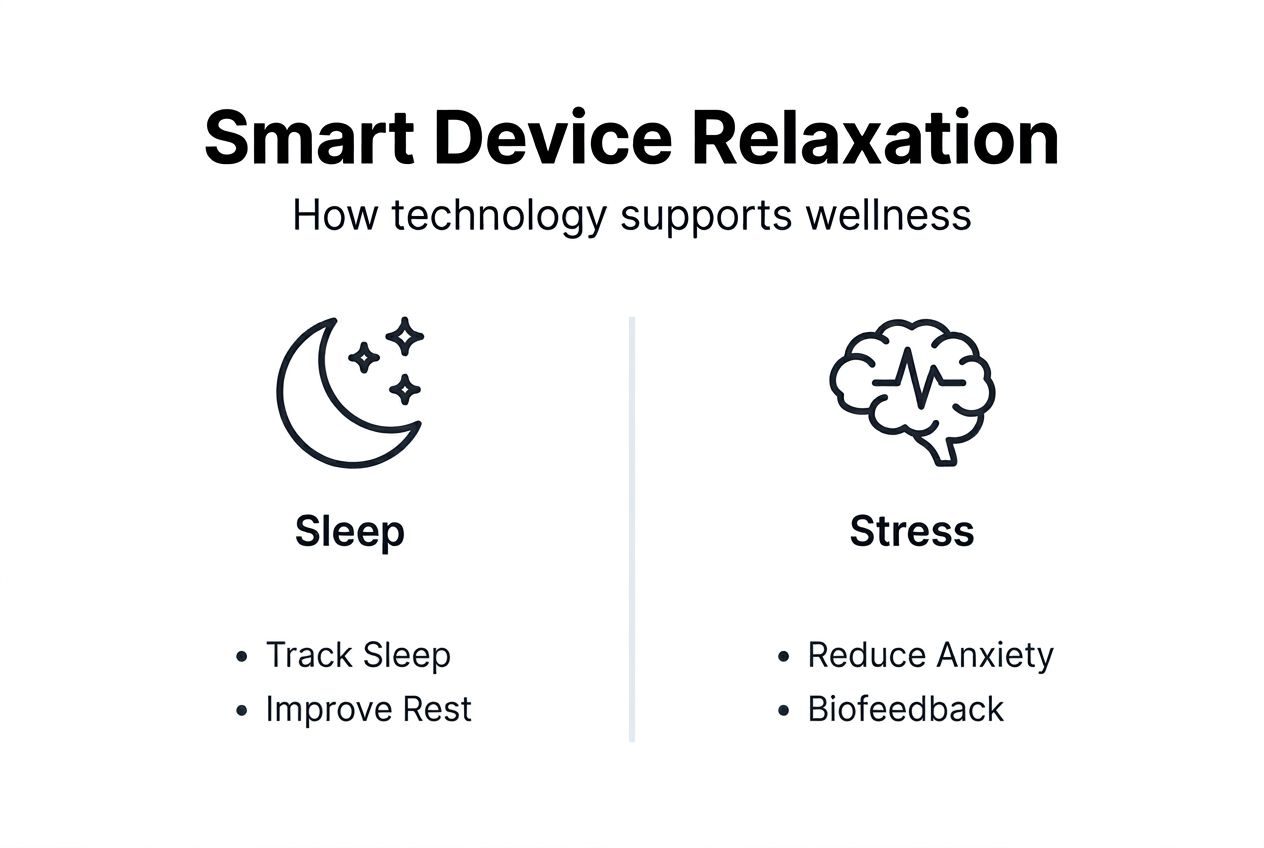
Sleep optimization: Smart sleep trackers improve sleep quality by monitoring sleep stages, movement, and respiratory patterns. They identify wake disruptions and provide personalized recommendations that reduce restless periods while increasing deep sleep phases. Over time, this data reveals patterns connecting daily habits to sleep quality, enabling targeted interventions.
Stress reduction: Biofeedback wearables measure heart rate variability (HRV), a key biomarker for nervous system balance. Guided breathing exercises paired with real-time HRV feedback train your body to activate the parasympathetic nervous system, reducing cortisol levels and promoting calm. These devices make invisible stress responses visible, empowering you to intervene before tension escalates.
Environmental alignment: Circadian rhythm lighting systems adjust color temperature and brightness throughout the day, supporting natural hormone production. Blue-enriched light in morning hours promotes alertness, while warm tones in evening trigger melatonin release. Sound machines adapt audio frequencies to mask disruptive noise while entraining brain waves toward relaxed states.
Recovery acceleration: Wellness devices for recovery like percussion massagers and compression systems target muscle tension by increasing blood flow and reducing inflammation. These tools complement relaxation techniques and stress relief practices by addressing physical manifestations of tension that mental approaches alone cannot resolve.
Holistic integration: Home wellness systems combine multiple environmental controls into unified platforms. They orchestrate temperature, humidity, lighting, and sound to create optimal conditions for comfort and recovery. This comprehensive approach addresses relaxation as a multi-sensory experience rather than isolated interventions.
| Mechanism | Device Type | Primary Benefit | Timeframe |
|---|---|---|---|
| Sleep regulation | Smart trackers, circadian lighting | Increased restorative sleep phases | 2-4 weeks |
| Stress response | HRV biofeedback wearables | Lower cortisol, improved nervous system balance | 3-6 weeks |
| Muscle recovery | Percussion massage, compression | Reduced tension, faster healing | 1-2 weeks |
| Environmental optimization | Smart home systems | Holistic relaxation environment | Immediate to 2 weeks |
Pro Tip: Choose devices combining multiple sensors for richer insights. A wearable tracking both sleep and HRV reveals connections between stress management and rest quality, enabling strategies that boost both performance and recovery.
Common misconceptions about smart devices in relaxation
Several myths prevent users from maximizing smart device benefits. Addressing these misconceptions sets realistic expectations and improves outcomes.
Instant results myth: Many buyers expect immediate relaxation improvements after first use. Reality requires 2-3 weeks of consistent use for your body to adapt and for devices to gather sufficient data for personalized recommendations. Benefits accumulate gradually as devices learn your patterns and you integrate insights into daily habits.
Data obsession trap: Constantly checking metrics can increase anxiety rather than reduce it. About 15% of users report stress from over-monitoring biometric data, defeating the relaxation purpose. The solution involves scheduled check-ins rather than continuous scrutiny, focusing on trends over time rather than daily fluctuations.
Passive benefit assumption: Devices alone cannot deliver results without behavioral changes. They provide information and environmental adjustments, but you must act on insights and maintain consistent routines. The placebo effect may create initial improvements, but lasting benefits require active engagement with recommendations.
Device confusion: Not all smart devices target the same outcomes. Sleep trackers optimize rest, biofeedback wearables reduce stress, and massage devices address physical tension. Understanding these distinctions prevents disappointment when a device delivers its intended benefit but not unrelated outcomes you hoped for.
Technology dependency: Some users worry about becoming reliant on devices for relaxation. The goal involves using tools to build awareness and establish habits that eventually become self-sustaining. Devices serve as training wheels, not permanent crutches, helping you recognize what optimal relaxation feels like so you can recreate it independently.
Pro Tip: Limit data checks to once daily or weekly to avoid stress. Trust the process and focus on how you feel rather than obsessing over numbers. This mindful approach maintains the relaxation focus while still leveraging device insights.
Comparison of smart devices by relaxation approach
Different device categories address relaxation through distinct mechanisms. Understanding these differences helps you select tools matching your specific wellness priorities.
Physical recovery devices target muscle tension and physical discomfort through mechanical intervention. Percussion massagers deliver rapid pressure pulses that increase blood flow and release trigger points. Compression systems apply rhythmic pressure to reduce inflammation and accelerate healing. These tools excel for active individuals dealing with muscle soreness or those whose stress manifests as physical tension.
Mental relaxation devices focus on nervous system regulation and cognitive states. Biofeedback wearables measure physiological stress markers and guide breathing exercises that restore calm. Meditation apps with smart features adapt sessions based on your current state. These devices suit individuals whose stress is primarily psychological or who struggle with racing thoughts and anxiety.
Hybrid devices combine multiple approaches for comprehensive wellness. Smart beds adjust firmness and temperature while tracking sleep, addressing both environmental and biometric factors. Advanced wearables monitor activity, sleep, and stress recovery, providing a complete wellness picture. These tools work best for users wanting holistic insights without managing multiple separate devices.
| Device Category | Primary Mechanism | Main Benefits | Ideal User Profile |
|---|---|---|---|
| Sleep trackers | Biometric monitoring, pattern analysis | Improved sleep quality, circadian alignment | Poor sleepers, shift workers |
| HRV biofeedback wearables | Nervous system regulation | Reduced anxiety, stress management | High-stress professionals, anxiety sufferers |
| Smart lighting | Circadian rhythm support | Better sleep-wake cycles, mood improvement | Light-sensitive individuals, seasonal affective disorder |
| Percussion massage | Mechanical muscle treatment | Faster recovery, tension relief | Athletes, physical workers, chronic pain |
| Smart home systems | Multi-factor environmental control | Comprehensive relaxation environment | Tech-comfortable users, home wellness enthusiasts |
| Meditation apps | Guided mental practices | Anxiety reduction, mindfulness | Beginners to meditation, busy professionals |
Key selection factors include:
- Scientific validation: Look for devices with peer-reviewed research supporting their mechanisms and effectiveness claims.
- Ease of use: Complex setups reduce adherence. Choose devices that integrate seamlessly into existing routines.
- Personalization capability: Generic recommendations provide less value than adaptive algorithms learning your unique patterns.
- Integration with wellness practices: Devices should complement rather than replace established habits like exercise, nutrition, and social connection.
For the 40-65 age demographic, prioritize intuitive interfaces and clear value propositions. Devices requiring extensive technical knowledge or constant troubleshooting create frustration rather than relaxation. Focus on tools addressing your most pressing wellness challenges first, then expand as you experience benefits.
Practical frameworks for integrating smart devices into daily wellness
Selecting and implementing smart devices effectively requires a structured approach that aligns tools with personal goals while avoiding common pitfalls.
-
Identify specific relaxation goals: Define what you want to improve. Better sleep quality differs from stress reduction, which differs from muscle recovery. Each goal points toward different device categories. Be specific: “fall asleep 20 minutes faster” provides clearer direction than “sleep better.”
-
Research device mechanisms and evidence: Investigate how candidate devices work and what scientific support exists for their approaches. Look for peer-reviewed studies, not just marketing claims. Understanding the mechanism helps you evaluate whether it addresses your particular challenge.
-
Start with one device: Avoid the temptation to buy multiple tools simultaneously. Implementing one device allows you to isolate its effects and learn its features thoroughly. This approach prevents overwhelm and helps you understand whether benefits come from the device or other lifestyle changes.
-
Establish baseline measurements: Track your current state before starting. Note sleep duration, perceived stress levels, or pain intensity. These baselines reveal whether the device creates measurable improvements or if perceived benefits reflect placebo effects.
-
Commit to consistent use for 3-4 weeks: Benefits require time to manifest. Use the device daily as intended without skipping sessions. This consistency allows proper evaluation and gives your body time to adapt to new inputs.
-
Combine with traditional wellness practices: Smart devices amplify but don’t replace foundational wellness habits. Pair sleep trackers with good sleep hygiene. Use biofeedback wearables alongside exercise and meditation. Integrate massage devices into stretching routines. This combination approach delivers superior results to devices alone.
-
Evaluate and adjust: After the initial period, assess whether the device delivers promised benefits. If results fall short, troubleshoot usage patterns, settings, or expectations before purchasing additional devices. Sometimes the solution involves optimizing current tools rather than adding more.
-
Manage data mindfully: Check metrics on a schedule rather than constantly. Focus on weekly or monthly trends rather than daily fluctuations. This perspective reduces anxiety while still providing actionable insights.
Pro Tip: Set quarterly device reviews where you assess continued value and adjust usage. Some devices provide most benefit during specific life phases or seasons. This evaluation prevents wasted effort on tools that no longer serve your current needs while identifying when to explore new solutions.
Limitations and realistic expectations for smart relaxation devices
Understanding device boundaries prevents disappointment and helps you maximize value within realistic constraints.
Smart devices provide data and environmental adjustments, but outcomes depend heavily on your behavior. A sleep tracker identifies poor patterns but cannot force you to adjust bedtime or reduce caffeine. Biofeedback devices guide breathing but require your active participation in exercises. The technology enables improvement; your actions create it.
Benefits accumulate gradually rather than appearing instantly. Initial excitement may create placebo improvements, but lasting results require weeks of consistent use. This timeframe frustrates users expecting immediate transformation. Patience and commitment separate successful adopters from disappointed abandoners.
Psychological risks exist alongside physical benefits. Data anxiety affects approximately 15% of users who become obsessed with metrics rather than focusing on how they feel. Some individuals develop dependence on devices for relaxation, losing confidence in their ability to self-regulate without technological assistance. Awareness of these risks allows preventive strategies.
Device accuracy varies. Consumer-grade sensors provide useful directional information but lack medical-grade precision. Treat metrics as guides for relative changes rather than absolute measurements. A sleep tracker showing improved patterns matters more than whether it captured exactly 89 versus 92 minutes of deep sleep.
Individual variation means identical devices produce different results for different people. Your genetics, lifestyle, stress sources, and baseline health all influence outcomes. Research showing average improvements guarantees nothing about your personal experience. Approach devices as experiments requiring personalized assessment.
Explore smart relaxation solutions at Lunix
Lunix creates premium wellness technology designed to transform your home into a personal restoration station. Our recovery collection features innovative devices that complement smart relaxation strategies, helping you restore and recharge effectively.

Explore our muscle recovery tools designed for adults seeking sophisticated wellness solutions that integrate seamlessly into daily routines. Each product combines thoughtful design with proven recovery mechanisms, supporting your journey toward better sleep, reduced stress, and improved physical comfort. Visit Lunix to discover how our smart wellness solutions can elevate your relaxation practice.
Frequently asked questions
What are the most effective smart devices for improving sleep?
Smart sleep trackers combined with circadian lighting systems deliver the strongest sleep improvements. Sleep trackers identify disruptions and provide personalized intervention strategies that reduce wake time. Circadian lighting supports natural melatonin production by adjusting color temperature throughout the day. Together, these tools address both monitoring and environmental optimization for comprehensive sleep enhancement.
How long does it usually take to notice relaxation benefits from smart devices?
Benefits typically emerge after 2-3 weeks of consistent daily use. Immediate effects are rare because devices need time to gather baseline data and your body requires adjustment periods to respond to interventions. Patience and regular use are essential. Track how you feel weekly rather than daily to recognize gradual improvements that might otherwise go unnoticed.
Can relying on data from smart relaxation devices increase anxiety?
Yes, approximately 15% of users experience increased anxiety from over-monitoring biometric data. Constantly checking metrics creates stress rather than reducing it, defeating the relaxation purpose. Experts recommend scheduled data reviews, weekly or less frequent, rather than continuous monitoring. Focus on long-term trends and how you feel rather than obsessing over daily number fluctuations.
How should I choose a smart device that fits my relaxation goals?
Start by identifying your specific wellness priorities: better sleep, lower stress, or faster muscle recovery. Research which device categories target those goals and investigate scientific evidence supporting their mechanisms. Begin with one device rather than multiple tools simultaneously. Combine device use with traditional wellness practices like exercise and meditation for optimal results. Evaluate effectiveness after 3-4 weeks before adding additional devices.