


TL;DR:
- A 6-10 minute, supportive breathing routine using the count-feel-rest cycle can effectively reduce stress at home. Proper posture, comfortable support, and specific patterns like box or diaphragmatic breathing enhance long-term practice. Lunixinc’s recovery accessories are designed to optimize comfort, making consistency easier and more sustainable.
The most effective breathing exercise workflow is a repeatable 3-stage cycle — count, feel, rest — completed in 6–10 minutes from any comfortable position at home. NHS clinical guidance recommends sessions of at least 5 minutes, and the Center for Healthy Minds frames each return of wandering attention as the actual training rep. Lunixinc’s recovery accessories are designed to make that posture and comfort setup effortless so you can focus on the breath, not the chair.
TL;DR
- 1 minute: Setup and posture check (seated, standing, or lying down with spine supported)
- 4–8 minutes: Core breathing cycles using box, 4-7-8, or diaphragmatic pacing
- 30–60 seconds: Wind-down and return to normal breathing
- Device pairing tip: A wedge pillow under your knees or back opens the diaphragm and makes every session more comfortable
Total session: 6–10 minutes (NHS guidance recommends at least 5 minutes per session).
Table of Contents
- Follow this step-by-step breathing workflow right now
- Why the three-stage cycle makes this more than just breathing
- How to set up a comfortable position at home
- Which breathing pattern fits your goal?
- When to stop and when to see a clinician
- How to pair breathing practice with your home recovery routine
- Key Takeaways
- Why Lunixinc built this workflow into its recovery approach
- Lunixinc recovery accessories that support your breathing practice
- Useful sources for further reading
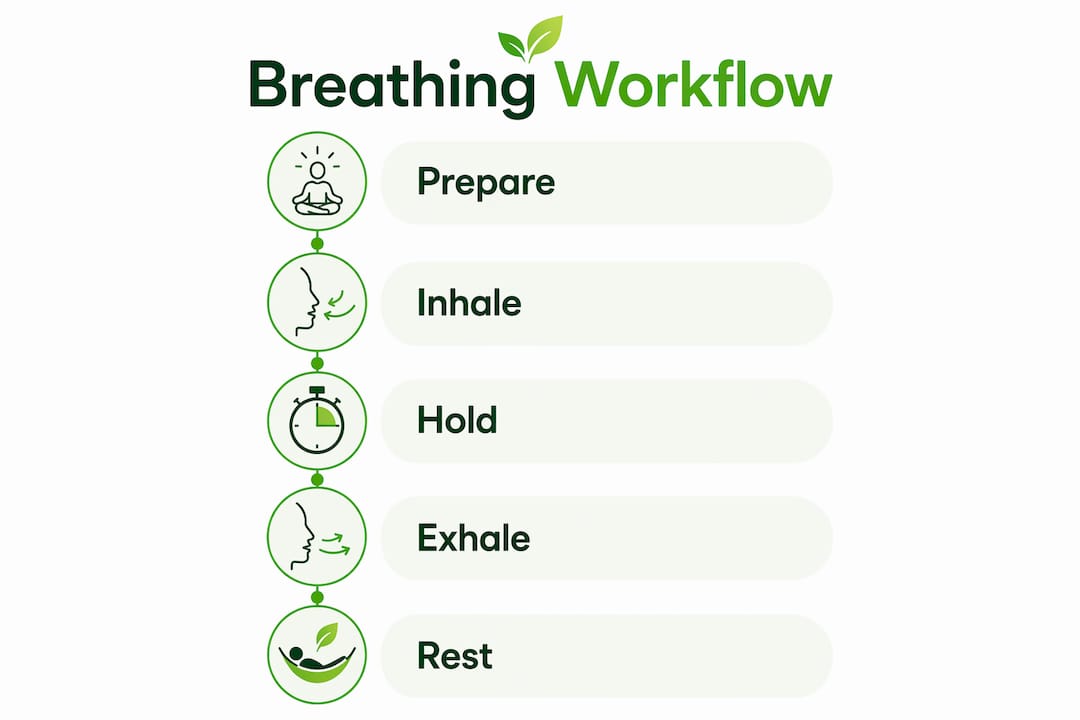
Follow this step-by-step breathing workflow right now
This routine gives you timing and pattern cues so there is no guesswork.
| Step | Action | Time |
|---|---|---|
| 1 | Choose your position (seated, lying, or standing) | 30 sec |
| 2 | Posture check: spine long, shoulders dropped, jaw soft | 30 sec |
| 3 | Grounding warm-up: 3-count inhale, 2-count hold, 4-count exhale | 1 min |
| 4 | Core cycle 1: Box breathing (4-4-4-4) × 4 rounds | 2 min |
| 5 | Core cycle 2: 4-7-8 pattern × 3 rounds | 2 min |
| 6 | Core cycle 3: Diaphragmatic pacing (5-count in, 5-count out) × 6 rounds | 2 min |
| 7 | Optional reset: Physiological sigh (double nasal inhale + long exhale) × 2 | 30 sec |
| 8 | Wind-down: return to natural breathing, notice body sensations | 30–60 sec |
Total session: 6–10 minutes (NHS guidance recommends at least 5 minutes per session).
- Choose your position. Sit upright in a chair with your feet flat, lie on your back with knees bent, or stand with feet hip-width apart. All three work as long as your diaphragm can move freely.
- Run a posture check. Lengthen your spine, let your shoulders drop away from your ears, and relax your jaw. Tension in the neck and chest limits how deeply you can breathe.
- Warm-up breath. Inhale through your nose for 3 counts, hold for 2, exhale through your mouth for 4. Repeat 4 times. This signals your nervous system that a focused session is starting.
- Box breathing (4-4-4-4). Inhale 4 counts, hold 4, exhale 4, hold 4. Four rounds. Use this pattern when you want calm focus without drowsiness.
- 4-7-8 pattern. Inhale 4 counts, hold 7, exhale 8. Three rounds. This ratio slows the heart rate noticeably and suits pre-sleep or deep relaxation goals.
- Diaphragmatic pacing. Place one hand on your chest and one on your abdomen. Inhale slowly through your nose for 5 counts, feeling your belly rise while your chest stays mostly still, then exhale for 5. Six rounds. Pulmonary rehab specialists teach this pattern to retrain the diaphragm and improve lung efficiency over time.
- Physiological sigh (optional reset). Take a full nasal inhale, then sneak in a short second inhale on top of it to fully inflate the lungs, then release a long, slow exhale. This single-breath reset is the fastest way to calm an overactive nervous system mid-session.
- Wind-down. Let your breathing return to its natural rhythm. Sit quietly for 30–60 seconds and notice how your body feels. No counting, no controlling.
Stop immediately and return to normal breathing if you feel dizzy, lightheaded, or notice chest tightness. Sit down if standing, and do not resume until symptoms pass completely.
Why the three-stage cycle makes this more than just breathing
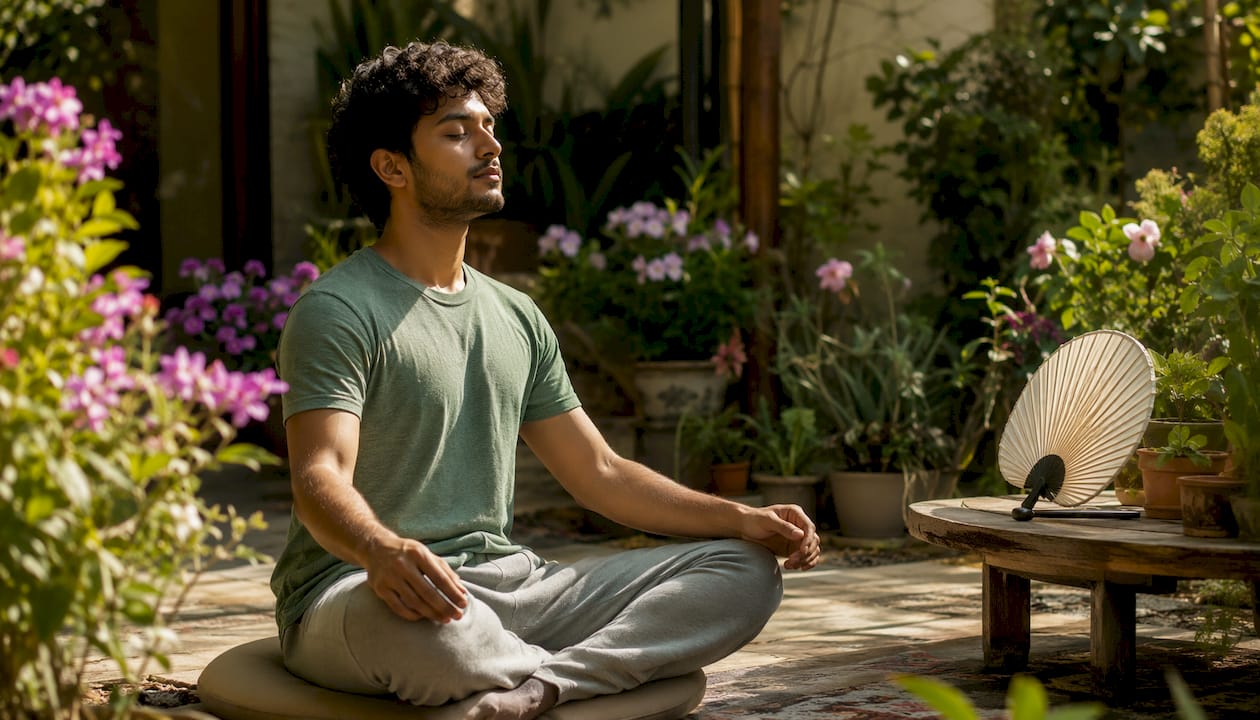
The 3-stage structure converts a simple respiratory exercise routine into a short mental training session. Counting anchors your attention. Feeling physical sensations builds body awareness. Resting in open awareness lets the nervous system consolidate the calm you just created.
- Stage 1 — Count the breath. Count each full exhale from 1 to 3, then restart. The number gives your mind a concrete anchor so it has somewhere to land instead of drifting to your to-do list.
- Stage 2 — Feel the breath. Drop the counting and notice the physical sensations: air moving through your nostrils, the rise of your ribcage, the slight pause at the top of each inhale.
- Stage 3 — Rest in awareness. Relax your focus entirely. You are not concentrating on anything specific. You simply know you are breathing. This is the non-doing stage, and it is harder than it sounds.
Mind-wandering is not a failure. According to Greater Good in Action at Berkeley, every time you notice your mind has drifted and bring it back to the breath, that return is the rep. The mental workout is the returning, not the staying. Keeping that framing makes mindful breathing practices far easier to stick with long-term.
How to set up a comfortable position at home
Any position works, provided your diaphragm can move without restriction. Tight waistbands, slumped posture, or a chair that forces you forward all reduce how fully you can breathe.
- Seated: Choose a firm chair with a straight back. Your hips should be at or slightly above knee height. Place a small lumbar roll or folded towel at the curve of your lower back.
- Lying down: Lie on your back with knees bent and feet flat. A wedge pillow under your knees reduces lower-back tension and lets your belly rise freely on each inhale. Beginners often find this position the easiest for feeling diaphragm movement.
- Standing: Stand with feet hip-width apart, knees soft, and hands resting at your sides. Useful for quick mid-day sessions when sitting is not practical.
- Clothing: Wear loose, non-restrictive clothing around your waist and chest. A tight belt or fitted shirt limits diaphragmatic expansion more than most people realize.
What to look for in support props: A wedge pillow with high-density foam holds its shape through a full session. A lumbar roll should be firm enough to maintain the natural curve of your spine without pushing you forward.
Pro Tip: Tilt your chair seat very slightly forward (a folded blanket under the back legs works) so your pelvis tips forward naturally. This one small change opens your hip flexors and frees the diaphragm without any effort on your part.
Which breathing pattern fits your goal?
Different patterns suit different goals. Pick by what you need right now, not by what sounds most advanced.
| Pattern | Ratio / Counts | Session Length | Primary Goal |
|---|---|---|---|
| Box breathing | 4-4-4-4 | 2–5 min | Calm focus, stress reset |
| 4-7-8 | 4 in, 7 hold, 8 out | several minutes | Deep relaxation, pre-sleep |
| Diaphragmatic pacing | 5 in, 5 out (nasal) | several minutes | Lung efficiency, daily training |
| Coherent / resonance | 5–6 sec in, 5–6 sec out | 10–20 min | HRV improvement, recovery |
| Physiological sigh | Double inhale + long exhale | 1–2 breaths | Acute stress, quick reset |
Most evidence-based breathing patterns produce noticeable effects within a few minutes; deeper relaxation typically calls for longer sessions. Start with daily practice and add time as the routine becomes familiar.
- Begin with box breathing if you are new to structured breathwork. The equal counts are easy to remember.
- Move to coherent breathing once you can hold a 5-minute session comfortably. The longer, slower rhythm is where heart rate variability benefits become more pronounced.
- Use the physiological sigh as a mid-session reset, not as a full practice on its own.
Safety note: Avoid forceful or extended breath-holding patterns if you have a cardiovascular or respiratory condition. Always get clinician approval before starting any breathwork beyond gentle diaphragmatic breathing.
When to stop and when to see a clinician
Breathing exercises are safe for most people when practiced gently and without strain. Stop and return to normal breathing if you feel dizzy, faint, or notice chest pain. Sit or lie down until symptoms fully resolve.
- Dizziness or lightheadedness: Usually caused by breathing too fast or too deeply. Slow down, breathe normally, and wait before resuming.
- Tingling in hands or face: A sign of mild hyperventilation. Breathe into cupped hands for 30 seconds to restore carbon dioxide balance.
- Chest tightness: Stop the session. If tightness persists, seek medical attention.
The American Lung Association advises that people with chronic lung conditions, cardiac issues, pregnancy complications, or recent surgery should consult a clinician before starting any structured breathwork program. NHS clinical guidance also recommends checking with a healthcare provider if you have an existing respiratory condition before increasing session length or intensity.
This article is general information, not medical advice. Confirm any breathing program with your doctor or a qualified clinician for your specific situation.
How to pair breathing practice with your home recovery routine
Timing your breathing sessions around recovery device use amplifies the benefit of both.
- Before a device session: Use 3–5 minutes of box breathing to shift your nervous system into a calmer state. You will feel the effects of compression or heat therapy more fully when you are not arriving tense.
- During a session: Diaphragmatic pacing pairs naturally with hand or foot compression devices. The rhythmic pressure of the device can actually help you stay on count.
- After a session: Coherent breathing for 10–15 minutes after an infrared sauna blanket session deepens the relaxation response and helps your body temperature normalize gradually. Avoid breath-holding patterns immediately after heat exposure if you have cardiovascular concerns.
Lunixinc’s orthopedic wedge pillows make diaphragmatic breathing easier by supporting the spine and pelvis in the exact position that frees the diaphragm. Percussion massagers used on the upper back before a session can release the thoracic tension that limits chest expansion. For a broader stress management routine that incorporates these pairings, the Lunixinc blog covers device-specific timing in more detail. Always follow the manufacturer’s safety instructions for any recovery device you use.
Key Takeaways
A consistent 6–10 minute breathing exercise workflow built on the count-feel-rest cycle is the most practical, evidence-backed routine you can add to a home recovery setup today.
| Point | Details |
|---|---|
| Core workflow | Use the 3-stage cycle (count, feel, rest) in a 6–10 minute session daily. |
| Minimum session length | NHS guidance recommends at least 5 minutes per session; most routines run 6–10 minutes for optimal benefit. |
| Posture matters | Spine support and loose clothing free the diaphragm; a wedge pillow under the knees helps beginners feel the breath. |
| Safety first | Stop for dizziness or chest pain; consult a clinician for cardiac, respiratory, or post-surgical conditions. |
| Lunixinc pairings | Wedge pillows, infrared sauna blankets, and compression devices pair directly with the workflow steps above. |
Why Lunixinc built this workflow into its recovery approach
Most breathing guides stop at technique. What they skip is the setup: the chair that forces you to hunch, the tight clothing that limits your exhale, the missing lumbar support that turns a 10-minute session into a back-ache. At Lunixinc, we designed our recovery accessories specifically around the posture and comfort conditions that make breathwork actually repeatable at home.
The three-stage cycle is not a meditation trend. It is a practical mental training tool backed by research from institutions like the Center for Healthy Minds and Mayo Clinic. Pairing it with the right physical support, whether that is a wedge pillow, a sauna blanket, or a percussion massager, removes the friction that stops most people from practicing consistently. Consistency is where the real benefit lives. Short daily sessions, done in a supported position with the right equipment, outperform occasional long sessions done on a hard floor with a stiff back. That is the design principle behind everything Lunixinc makes.
Lunixinc recovery accessories that support your breathing practice
Posture and comfort are the two things most likely to cut a breathing session short. Lunixinc’s recovery collection addresses both directly.

Lunixinc’s orthopedic wedge pillow sets prop your spine and pelvis into the position that lets your diaphragm move fully, making every breath deeper without extra effort. Infrared sauna blankets create a warm, low-stimulation environment that pairs with coherent breathing for a genuinely restorative 15–20 minute wind-down. Heated air compression hand massagers and percussion massagers give you something productive to do with your hands during shorter 5–10 minute breath cycles, which actually improves how long people stick with the practice.
Every product in the Lunixinc recovery collection is designed for home use by adults who want real results without a clinical setting. Browse the full collection and find the pairing that fits your routine.
Useful sources for further reading
- NHS: Breathing exercises for stress — Clinical guidance on safe positions, minimum session lengths, and technique instructions. The most authoritative starting point for general-population breathwork.
- Greater Good in Action, UC Berkeley — Step-by-step mindful breathing practice with research backing on attention training and stress reduction.
- Mayo Clinic: Mindfulness exercises — Practical guidance on short daily mindfulness breathing and its benefits for clarity and stress.
- American Lung Association: Breathing exercises — Diaphragmatic and pursed-lip breathing technique guides with pulmonary rehab context and safety notes.
- National Geographic: Science-backed mindful breathing — Accessible science on the physiological sigh and the nervous system effects of structured breathwork.
- Breathwork.Tools: Free guided breathing timer — Practical tool for timing box, 4-7-8, and coherent breathing sessions with audio cues.
- Mental Health and Resilience Center (MHRC) — Resources on mindfulness and breathing for mental health resilience; useful for readers wanting clinical-level support.
- Lunixinc blog: Breathing exercises and stress relief — Lunixinc’s own deep-dive on how breathing exercises reduce stress, with device-pairing context.