


TL;DR:
- Mindfulness practices help build emotional regulation and reduce stress through attention regulation and acceptance. Short, consistent sessions, especially around five minutes daily, are most effective for beginners and busy individuals. Practicing intentionally and understanding personal limits enhances mental health benefits while minimizing risks.
Mindfulness practices are defined as structured techniques that train focused attention and non-judgmental awareness to improve mental health and reduce stress. The role of mindfulness practices extends well beyond simple relaxation. Research from Johns Hopkins and the Mayo Clinic confirms that regular mindfulness builds cognitive-emotional regulation skills that reduce anxiety, ease depression, and improve mood. A 2026 critical review published in Healthcare (MDPI) found that acceptance and non-judgment drive sustainable mental health benefits more than meditation duration alone. That finding reframes how you should think about your practice from the very start.
What is the role of mindfulness practices in mental health?
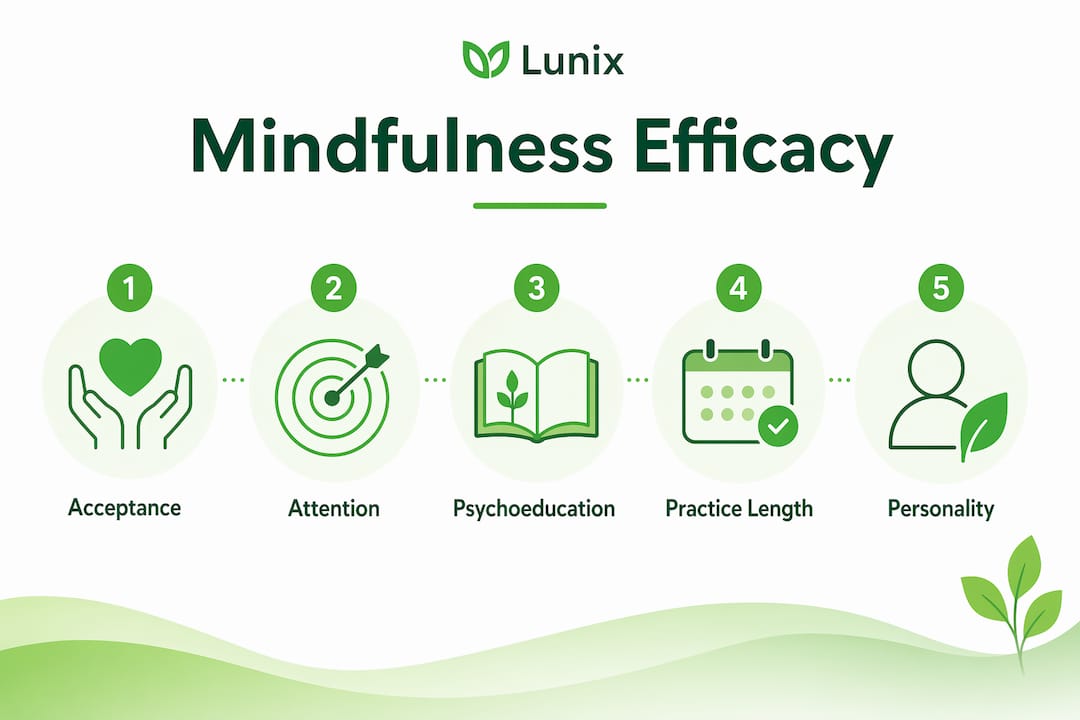
Mindfulness is built on two core processes: attention regulation and an accepting, non-judgmental stance toward your own thoughts and emotions. The 2026 review published in PMC explains that these two components work together to reduce emotional reactivity and support lasting therapeutic outcomes. Attention regulation helps you notice when your mind wanders. The accepting stance stops you from fighting what you find there.

Johns Hopkins clinical program director research emphasizes that acceptance as a key mechanism creates measurable brain changes. When you stop resisting difficult thoughts and emotions, your nervous system has room to settle. That mental space is where healthier responses grow.
Psychoeducation plays a supporting role too. Understanding why mindfulness works makes you more likely to stick with it. Informal mindfulness practice, such as paying full attention while eating or walking, reinforces the same skills as formal seated meditation without requiring extra time.
Mindfulness components and their relative efficacy
| Component | What It Does | Relative Impact |
|---|---|---|
| Attention regulation | Trains focus and reduces mind-wandering | Moderate, foundational |
| Acceptance and non-judgment | Reduces emotional reactivity and self-criticism | High, drives long-term gains |
| Psychoeducation | Builds understanding and commitment | Moderate, supports adherence |
| Informal daily practice | Reinforces skills throughout the day | High for sustainability |
| Compassion and gratitude exercises | Amplifies positive emotional benefits | Emerging, synergistic |
Pro Tip: If you only have time for one thing, practice the accepting stance. Noticing a stressful thought and choosing not to fight it takes seconds and delivers the most clinically significant benefit.
How does practice length affect mindfulness outcomes?
A 2026 randomized controlled experiment found that 5-minute mindfulness sessions can be more effective than 20-minute sessions for stress reduction in people with limited prior experience. That result surprises most people who assume longer always means better. The real driver is consistency and fit with your personality, not total minutes logged.
Dose-response in mindfulness is not linear. Shorter, more frequent sessions build trait mindfulness faster in beginners because they reduce the friction that causes people to quit. A 20-minute session feels like a commitment. A 5-minute session feels like a habit.
Here is a practical framework for getting started and building your routine:
- Start with 3–5 minutes daily. Choose a fixed time, such as right after waking or before lunch, to anchor the habit.
- Focus on breath awareness first. Count 10 slow breaths, noticing each inhale and exhale without trying to change them.
- Add the accepting stance in week two. When a thought appears, label it (“planning,” “worrying”) and return to your breath without judgment.
- Extend gradually only if it feels natural. Move to 10 minutes after two weeks if shorter sessions feel too easy, not because you feel obligated.
- Track how you feel, not how long you sat. Reduced tension and clearer thinking after a session are better signals than duration.
Personality matters here. People who score high in openness to experience tend to benefit from longer, more exploratory sessions. People who are more anxious or new to the practice benefit most from brief, structured formats. Personalizing your approach from the start prevents the frustration that causes most people to abandon mindfulness within the first month.
Pro Tip: Try the step-by-step relaxation techniques from Lunixinc to find a format that fits your schedule and personality before committing to a longer program.
What are the real benefits of mindfulness in daily life?
The Mayo Clinic confirms that even one-minute mindfulness moments reduce stress, reset burnout, and improve mental clarity without any equipment or training. That accessibility is one of the most underrated aspects of mindfulness. You do not need a meditation cushion, an app, or a quiet room to get results.
The benefits of mindfulness compound over time. Regular practice improves focus, lifts mood, and builds the emotional regulation skills that help you respond rather than react under pressure. A 2026 meta-analysis found that gratitude journaling combined with mindfulness amplifies emotional well-being gains and reduces depression more than mindfulness alone. Adding two minutes of written gratitude to your morning practice costs almost nothing and pays back significantly.
Here are practical mindfulness exercises you can use anywhere, at any time:
- Breath focus: Inhale for four counts, hold for four, exhale for four. Repeat three times at your desk, in traffic, or before a difficult conversation.
- Body scan: Starting at your feet, notice physical sensations moving upward to your head. Takes two minutes and interrupts the stress cycle effectively.
- Mindful observation: Pick one object near you and study it for 60 seconds, noticing color, texture, and shape. This anchors attention in the present moment.
- Gratitude pause: Name three specific things you are grateful for before checking your phone in the morning. Specificity matters more than length.
- Mindful walking: During any walk, focus on the sensation of your feet contacting the ground. This transforms a routine activity into a mindfulness in daily life practice.
These exercises work because they interrupt automatic, stress-driven thought patterns. Each one gives your nervous system a brief reset that accumulates into measurable mental health improvement over weeks.
What risks should you know before starting mindfulness?
Mindfulness is widely safe, but a Mount Sinai clinical literature review found that 25–87% of meditators report some adverse effects, with 3–37% experiencing functional impairment. That wide range reflects differences in practice intensity, individual history, and supervision quality. The number is not a reason to avoid mindfulness. It is a reason to start thoughtfully.
Common adverse effects include increased anxiety, depressive episodes, and traumatic re-experiencing. These are most likely in people with unresolved trauma, existing mental health conditions, or those who jump into intensive retreat-style practice without preparation. Clinicians recommend adapting practice for these individuals by choosing shorter durations and focusing on somatic awareness rather than open monitoring of thoughts.
Here is what responsible practice looks like:
- Screen yourself honestly. If you have a history of trauma, PTSD, or severe depression, consult a mental health professional before starting a formal mindfulness program.
- Start with guided formats. Apps like Headspace or Calm, or programs like Mindfulness-Based Stress Reduction (MBSR) developed by Jon Kabat-Zinn, provide structure and reduce the risk of unsupported practice.
- Monitor your response. If anxiety or distress increases after two weeks of consistent practice, reduce session length or shift to more grounding exercises like breath focus or mindful walking.
- Seek professional support when needed. A licensed therapist trained in mindfulness-based cognitive therapy (MBCT) can adapt the practice safely for complex mental health histories.
The goal is sustainable benefit, not pushing through discomfort. Mindfulness works best when it feels like a support, not a challenge.
Key takeaways
Mindfulness practices build lasting mental health benefits through acceptance and non-judgment, not through meditation duration, making brief and consistent daily practice the most effective approach for most adults.
| Point | Details |
|---|---|
| Acceptance drives results | Non-judgmental awareness produces more sustained benefits than longer meditation sessions alone. |
| Brief practice works | Five-minute daily sessions reduce stress effectively, especially for beginners and anxious personalities. |
| Daily integration matters | One-minute mindfulness moments throughout the day reset burnout and improve focus without equipment. |
| Gratitude amplifies gains | Combining gratitude journaling with mindfulness reduces depression and boosts emotional well-being beyond mindfulness alone. |
| Know the risks | Up to 37% of meditators experience functional impairment; screening and professional guidance protect safe practice. |
Mindfulness is more than a relaxation tool
At Lunixinc, we have watched the conversation around mindfulness shift significantly over the past few years. Most people still come to it looking for a way to relax. What they find, if they stay with it, is something more useful: a skill for regulating how they respond to everything.
The research on mindfulness therapy benefits confirms what we see in practice. The people who get the most out of mindfulness are not the ones who meditate longest. They are the ones who genuinely practice the accepting stance, the ones who stop arguing with their own thoughts and start observing them instead.
What I find most encouraging about the 2026 research is the permission it gives to keep things brief. You do not need an hour a day or a silent retreat to see real change. Five minutes of honest, non-judgmental attention to your own experience is enough to start rewiring how your brain handles stress. That is a low bar, and it is the right bar.
The one caution I would add: do not skip the self-assessment step. If you carry unresolved trauma or significant anxiety, jumping into open-awareness meditation without guidance can backfire. Start with breath focus, keep sessions short, and get professional support if your symptoms worsen. Mindfulness is a tool, and like any tool, it works best when you use it correctly for your situation.
The future of mental health care points strongly toward personalized, accessible practices like these. The science is there. The only question is whether you are ready to give it a genuine try.
— Lunix
Support your well-being with Lunixinc
Mindfulness builds mental resilience from the inside out. Pairing it with physical recovery tools deepens that effect. Lunixinc’s Recovery collection is designed to complement your mental wellness routine with comfort solutions that help your body and mind restore together.

Whether you are winding down after a stressful day or building a morning ritual that sets a calm tone, Lunixinc products create the physical conditions that make mindfulness easier to practice and sustain. Explore the Recovery collection and discover how thoughtful design supports the kind of daily well-being that goes beyond a single session on the mat.
FAQ
What is the role of mindfulness practices in reducing stress?
Mindfulness practices reduce stress by training attention regulation and an accepting, non-judgmental stance toward thoughts and emotions. Johns Hopkins research confirms this creates measurable brain changes that lower reactivity and improve mental health outcomes.
How long should a beginner practice mindfulness each day?
A 2026 randomized controlled study found that 5-minute daily sessions are more effective than 20-minute sessions for stress reduction in beginners. Consistency matters more than duration, especially in the first few weeks.
Can mindfulness help with anxiety and depression?
Mindfulness-based interventions produce moderate improvements in anxiety, depression, and stress, according to a 2026 clinical review. Programs like MBSR and MBCT, developed by Jon Kabat-Zinn and Zindel Segal respectively, have the strongest evidence base.
Are there any risks to practicing mindfulness?
A Mount Sinai review found that 25–87% of meditators report some adverse effects, with 3–37% experiencing functional impairment. People with trauma histories or existing mental health conditions should consult a professional before starting a formal program.
What mindfulness exercises work best for busy adults?
The Mayo Clinic recommends brief, equipment-free exercises like breath focus, body scans, and mindful observation. Even one-minute practices during the workday reduce stress and improve clarity without requiring dedicated time or training.