


TL;DR:
- Pain-free living focuses on reducing pain to improve daily function, not complete elimination.
- Key factors influencing chronic pain include physical activity, sleep, diet, and stress management.
- Consistent small lifestyle changes across these pillars can lead to meaningful long-term improvements.
Up to 30% of older U.S. adults experience chronic pain that affects their daily lives. That’s a striking number, yet most people assume pain is simply something you endure as you age. Here’s the truth: chronic pain is common, but it is not inevitable, and it is not something you have to just accept. Pain-free living is not about chasing a miracle cure or expecting to feel nothing. It is about making smart, consistent choices that reduce pain, restore function, and help you enjoy your life again. This guide walks you through exactly how to do that.
Table of Contents
- Defining pain-free living: What it is and what it isn’t
- The science: Factors influencing pain and key statistics
- Core pillars of pain-free living: What works best
- Applying pain-free principles: A week in real life
- The surprising truth: Progress, not perfection, is possible
- How to get more support on your pain-free journey
- Frequently asked questions
Key Takeaways
| Point | Details |
|---|---|
| Pain-free isn’t all-or-nothing | Pain-free living emphasizes minimizing pain and maximizing function, not total absence of pain. |
| Movement beats inactivity | Regular activity is the most effective and essential strategy to reduce chronic pain. |
| Daily habits matter | Small, consistent changes in diet, sleep, and stress management drive long-term improvement. |
| Holistic approaches win | Combining physical, emotional, and social strategies delivers better outcomes than quick fixes. |
Defining pain-free living: What it is and what it isn’t
Now that we’ve seen why chronic pain is so prevalent, let’s define what pain-free living really means and what it doesn’t.
Many people hear “pain-free living” and picture a life where nothing ever hurts. That image sets you up for disappointment. In reality, pain-free living is about reducing chronic, persistent pain to a level where it no longer controls your daily decisions. It means you can sleep through the night, take a walk, enjoy time with family, and get through your day without pain calling all the shots.
“Complete pain elimination is rare. The real goal is functional improvement through multidisciplinary, non-drug approaches that help you live better.”
This shift in thinking matters more than you might expect. When you stop chasing a cure and start focusing on management, you open the door to real, lasting progress. The US Pain Foundation guide describes this as building a “pain toolkit” rather than searching for a single fix.
Here’s what pain-free living actually includes:
- Reduced frequency and intensity of pain episodes over time
- Improved physical function, like walking farther or bending more easily
- Better sleep quality without pain waking you through the night
- Greater emotional resilience when discomfort does arise
- Less reliance on medications through self-managed lifestyle habits
And here’s what it is not:
- A guarantee that pain disappears completely
- A single product, supplement, or treatment that fixes everything
- Something only achievable through surgery or prescription drugs
Pain-free living sits on a spectrum. Someone who moved from daily 7-out-of-10 pain to occasional 3-out-of-10 discomfort has made enormous progress, even if they are not “pain-free” in the literal sense. Supporting wellness at home through consistent habits is where that progress actually happens. The goal is function, freedom, and quality of life, not perfection.
The science: Factors influencing pain and key statistics
With a clearer understanding of what pain-free living means, let’s look at what science says about why pain persists and what makes a difference.
Chronic pain does not happen in a vacuum. It is shaped by a combination of physical habits, lifestyle patterns, and biological factors. Understanding what drives it gives you real power to change it.
What the research tells us:
Physical inactivity is the single strongest risk factor for severe chronic pain in older adults. One study found that inactivity raises pain risk with an odds ratio of 4.35, meaning inactive adults are over four times more likely to experience severe pain. That number is hard to ignore.
| Risk factor | Impact on chronic pain | Modifiable? |
|---|---|---|
| Physical inactivity | Strongest risk factor (OR 4.35) | Yes |
| Poor sleep quality | Significantly worsens pain sensitivity | Yes |
| Inflammatory diet | Increases systemic inflammation | Yes |
| Smoking | Reduces circulation, worsens pain | Yes |
| Older age | Natural tissue changes increase risk | No |
| Female sex | Higher pain prevalence reported | No |
The good news? Four of the six biggest risk factors are fully within your control. That is not a small thing. It means the daily choices you make, what you eat, how much you move, how well you sleep, whether you smoke, genuinely shift your pain trajectory.
There is also a cycle worth understanding. Inactivity leads to muscle weakness and stiffness. Weakness makes movement painful. Painful movement leads to more inactivity. This domino effect of physical strain is one of the most common traps adults fall into after 40. Breaking that cycle, even with small steps, is what effective pain management is built on.
Women, rural residents, and lower-income adults tend to experience higher rates of chronic pain, often due to reduced access to care and higher stress loads. Knowing this helps you understand that pain is not just physical. It is shaped by your whole life context.
Core pillars of pain-free living: What works best
Knowing what increases or decreases your risk, let’s dive into the specific everyday actions that matter most.
There is no single habit that eliminates chronic pain. But there are four evidence-backed pillars that, when practiced consistently, create a powerful foundation for feeling better.
1. Movement and physical activity The NIH recommends 150 minutes of moderate exercise per week, plus strength training and stretching. You do not need to run marathons. Walking, swimming, yoga, and resistance bands all count. Start small and build gradually.

2. Anti-inflammatory nutrition What you eat directly affects how much inflammation your body carries. Pain management nutrition focuses on foods like fatty fish, leafy greens, berries, and olive oil, while reducing processed foods, refined sugar, and alcohol.
3. Sleep hygiene Poor sleep amplifies pain sensitivity. Aim for 7 to 9 hours per night. Keep a consistent bedtime, reduce screen time before bed, and keep your room cool and dark. Sleep is when your body repairs itself.
4. Stress management Chronic stress keeps your nervous system in a heightened state, which makes pain feel more intense. Mindfulness techniques like deep breathing, body scans, and guided meditation are more effective than simply “trying to relax.” They actually retrain how your brain processes discomfort.
Comparing approaches:
| Approach | Effectiveness | Ease of starting | Long-term benefit |
|---|---|---|---|
| Daily movement | Very high | Moderate | High |
| Anti-inflammatory diet | High | Moderate | High |
| Quality sleep | High | Easy | Very high |
| Mindfulness practice | Moderate to high | Easy | High |
| Medication alone | Moderate | Easy | Low to moderate |
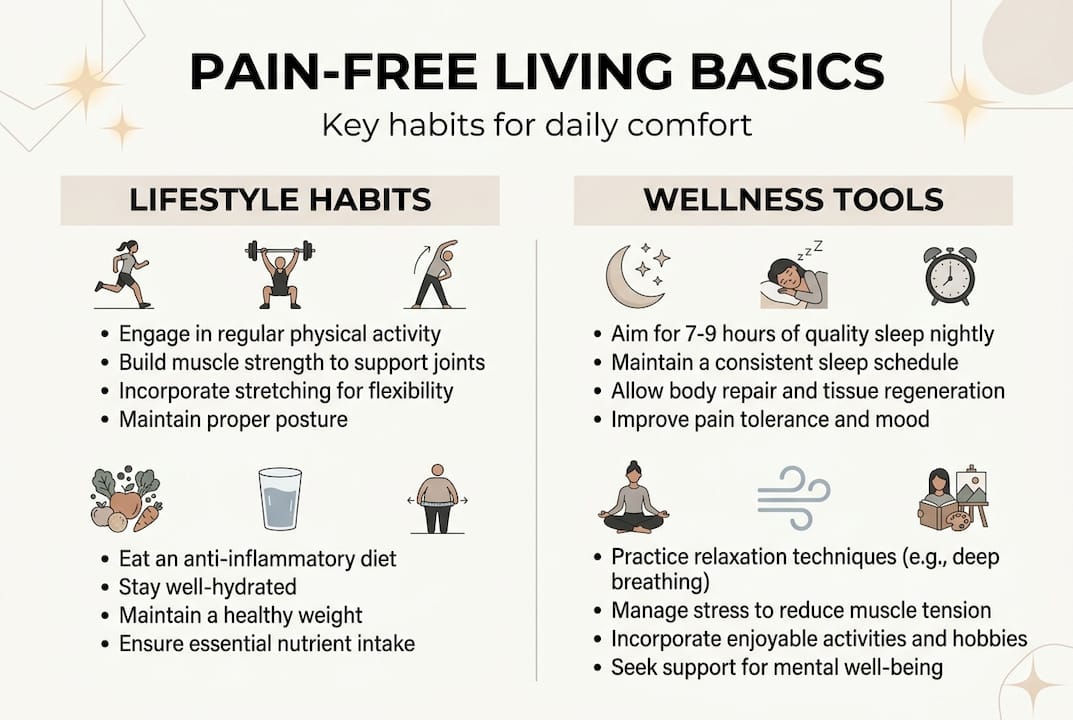
Pro Tip: Combining all four pillars works far better than focusing on just one. Complementary pain approaches show that layering lifestyle strategies produces better outcomes than any single method alone.
Applying pain-free principles: A week in real life
The pillars are clear, but how do you actually bring them together in daily life? Here’s how pain-free living can look over a week.
Knowing the pillars is one thing. Building them into your actual week is another. The key is starting simple and staying consistent, not perfect.
For adults 40 to 65, the most effective starting point is tracking pain triggers, adding manageable daily movement, and introducing a short mindfulness practice. Here is what a realistic week might look like:
Daily habits to build in:
- Morning: 10 to 15 minutes of gentle stretching or a short walk before breakfast
- Meals: One anti-inflammatory swap per meal, like olive oil instead of butter, or berries instead of a sweet snack
- Afternoon: A 5-minute breathing exercise or body scan during a break
- Evening: A consistent wind-down routine starting 30 minutes before bed, with no screens
- Tracking: Keep a simple pain journal noting what you ate, how you moved, and your pain level each day
Patterns emerge quickly when you track. You might notice that your pain spikes after sitting for long stretches, or that it eases after a short walk. That awareness is powerful.
Pro Tip: Use a free phone app or a simple notebook to log your pain score (1 to 10) each morning. After two weeks, you will likely see clear patterns that help you make smarter adjustments.
For days when pain flares, relaxation techniques can help you manage without reaching for medication. And if you are dealing with back discomfort specifically, a structured back pain relief routine can make a real difference in your day-to-day comfort.
If pain persists for more than a few weeks or limits your ability to function, it is time to bring in professional support. A multidisciplinary team, including a physical therapist, dietitian, and your primary care provider, can build a personalized plan around your specific needs.
The surprising truth: Progress, not perfection, is possible
After seeing the real-life application, let’s get real about what actually works for pain-free living.
Here is something most wellness content will not tell you: the people who make the most progress with chronic pain are not the ones who overhaul their entire lives overnight. They are the ones who make small, boring, consistent choices every single day.
The “miracle cure” narrative is everywhere. A new supplement, a trending device, a viral stretching routine. These things capture attention because they promise fast results. But chronic pain is not built in a week, and it does not unravel in one either.
What actually works is less exciting but far more reliable. A 10-minute walk today. A better night of sleep this week. One less processed meal. Over months, those choices stack up into real, measurable change. Visualization for pain relief is one example of a simple mental practice that, used consistently, can genuinely shift how your brain experiences discomfort.
Managing your expectations is not giving up. It is the most strategic thing you can do. Celebrate the small wins, because they are the building blocks of lasting improvement.
How to get more support on your pain-free journey
If you are ready to move forward, here is where you can find even more tools and guidance for your journey.
Building a pain-free lifestyle takes more than willpower. It takes the right environment, the right tools, and support that fits your daily routine. At Lunix, we design recovery solutions that work alongside the habits you are already building, helping your body restore and relax more effectively between activity and rest.

Whether you are just starting out or looking to deepen your self-care routine, pain-free living support is what we are here for. Explore our curated resources, expert-informed guides, and comfort-focused products designed specifically for adults who want to feel better, move more freely, and live with less pain every day.
Frequently asked questions
Is pain-free living the same as never feeling pain?
No. Pain-free living means managing pain effectively so it no longer controls your daily function. Complete pain elimination is rare, and that is okay because meaningful improvement is absolutely achievable.
What daily habits help reduce chronic pain the most?
Regular movement, an anti-inflammatory diet, quality sleep, and stress-management practices are the most effective. The NIH recommends combining all four for the best results.
Can older adults really improve pain with lifestyle changes?
Yes. Physical activity and self-management consistently improve pain symptoms and quality of life in older adults, even when starting small.
When should I see a healthcare provider for chronic pain?
If pain lasts more than a few weeks or limits daily activities, seek care. Multidisciplinary, holistic care is the preferred approach for persistent pain.
Are medications the only solution for pain-free living?
No. Non-drug approaches and self-care are favored over medications alone, and evidence consistently shows lifestyle-based strategies produce better long-term outcomes.
Recommended
- Pain Management: Empowering Daily Wellness at Home – Lunix
- 7 Proven Pain Relief Strategies for Active Adults – Lunix
- The Traveler’s Guide to Pain-Free Adventures: Stay Comfortable on the – Lunix
- Chronic pain management: Effective strategies for adults – Lunix
- Do You Need a Pain Management Alternative?