


TL;DR:
- Holistic restoration treats interconnected systems as one to achieve lasting healing for ecosystems and individuals. It emphasizes addressing root causes, involving multidisciplinary teams, and building long-term community engagement. Success depends on regular monitoring, adaptive management, and viewing restoration as an ongoing mindset rather than a quick fix.
Holistic restoration is defined as the practice of healing whole systems by addressing their physical, mental, social, and environmental components at the same time. The term applies both to ecosystems and to personal well-being, making it one of the most versatile frameworks in modern health and environmental science. Whether you are rebuilding a degraded wetland or recovering from chronic stress, the core logic is the same: fix the root causes, not just the symptoms. Frameworks like the 4 Returns Framework and evidence-based practices like yoga, meditation, and breathwork give this philosophy measurable, practical shape.
What is holistic restoration, and why does it matter?
Holistic restoration is the process of returning a system, whether a forest, a community, or a human body, to a state of balance by treating all of its interconnected parts. The word “holistic” comes from the Greek holos, meaning whole. In practice, it means you never treat one element in isolation because every part affects every other part.
In personal health, this approach is often called integrative or whole-person care. It recognizes that your sleep, nutrition, stress levels, relationships, and physical movement all influence each other. A person dealing with chronic fatigue, for example, may need better sleep hygiene, dietary changes, and stress reduction at the same time, not just a single prescription.
In environmental science, the same logic applies. Holistic restoration integrates ecological, social, and economic systems to build resilient, self-sustaining recovery. Projects using this approach have restored nearly 250 animal species across 180 islands. That scale of success is only possible when human communities, ecosystems, and economic incentives align.
Understanding holistic wellness means accepting that quick fixes rarely hold. A restored wetland that ignores local farming practices will degrade again. A person who treats back pain without addressing posture and stress will relapse. The integrated approach is slower, but the results last.
What are the core principles and frameworks of holistic restoration?
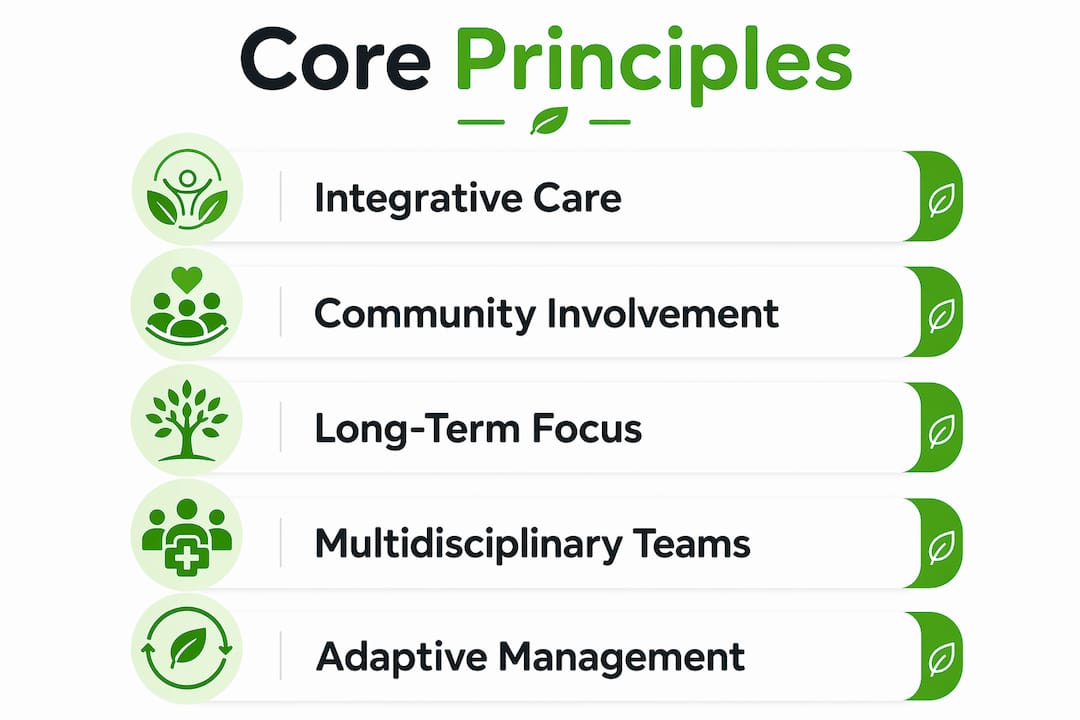
The foundation of any restorative practice is interconnectedness. Ecological, social, and economic systems do not operate in separate boxes. They overlap, feed into each other, and collapse together when one part fails. Holistic restoration treats this overlap as a feature, not a complication.
The 4 Returns Framework is the most widely used structure for measuring restoration outcomes across four dimensions:
- Natural returns: Biodiversity recovery, soil health, and water quality
- Social returns: Community cohesion, local agency, and cultural connection to land
- Financial returns: Sustainable livelihoods and economic viability for local people
- Inspirational returns: Hope, pride, and a renewed sense of purpose in communities
Each return reinforces the others. A community that earns income from a restored forest is more likely to protect it. A person who feels hopeful about their health is more likely to maintain good habits.
Multidisciplinary teams are not optional in this work. Geologists, hydrologists, social scientists, and community leaders all contribute to assessments before any intervention begins. Skipping the social scientist or the community elder is one of the most common reasons restoration projects fail, even when the ecological science is sound.
Pro Tip: The biggest mistake people make with restoration, personal or environmental, is treating it as a one-time event. Build in regular check-ins and be willing to adjust your approach as conditions change.
Long-term thinking separates restoration from repair. Repair fixes what is broken today. Restoration rebuilds the conditions that prevent breakdown in the future.
How is holistic restoration applied in personal wellness and lifestyle?
In personal health, whole-person restoration means treating your body, mind, and social environment as one system. The American Association of Naturopathic Medical Colleges describes this philosophy as personalized, evidence-based care where nutrition, movement, and sleep are as important as clinical intervention. This corrects a common misconception: whole-person care does not treat symptoms in isolation.
Common holistic healing methods include:
- Yoga and movement: Builds body awareness, reduces cortisol, and improves circulation
- Meditation and breathwork: Lowers stress hormones and supports emotional regulation
- Acupuncture: Addresses pain and energy flow through targeted pressure points
- Massage therapy: Reduces muscle tension and promotes lymphatic drainage
- Mindfulness practices: Trains attention and reduces anxiety over time
These methods work best alongside conventional medicine, not instead of it. The most successful health outcomes combine mindfulness and integrative therapies with treatments like cognitive behavioral therapy (CBT), creating care that addresses anxiety and stress from multiple angles at once.
“Holistic restoration in personal health best supports the body’s natural healing through sleep hygiene, nutrition, and mindfulness, and complements rather than replaces medical treatment for chronic illness.”
The mind-body connection is the mechanism behind these results. When you reduce psychological stress, your body’s inflammatory response decreases, your sleep improves, and your energy returns. That chain reaction is exactly what whole-person restoration is designed to trigger.
Pro Tip: Start with one practice, not five. Meditation for ten minutes each morning creates a foundation. Add movement, nutrition changes, and sleep hygiene one at a time over several weeks.
What does holistic restoration look like in environmental and community projects?
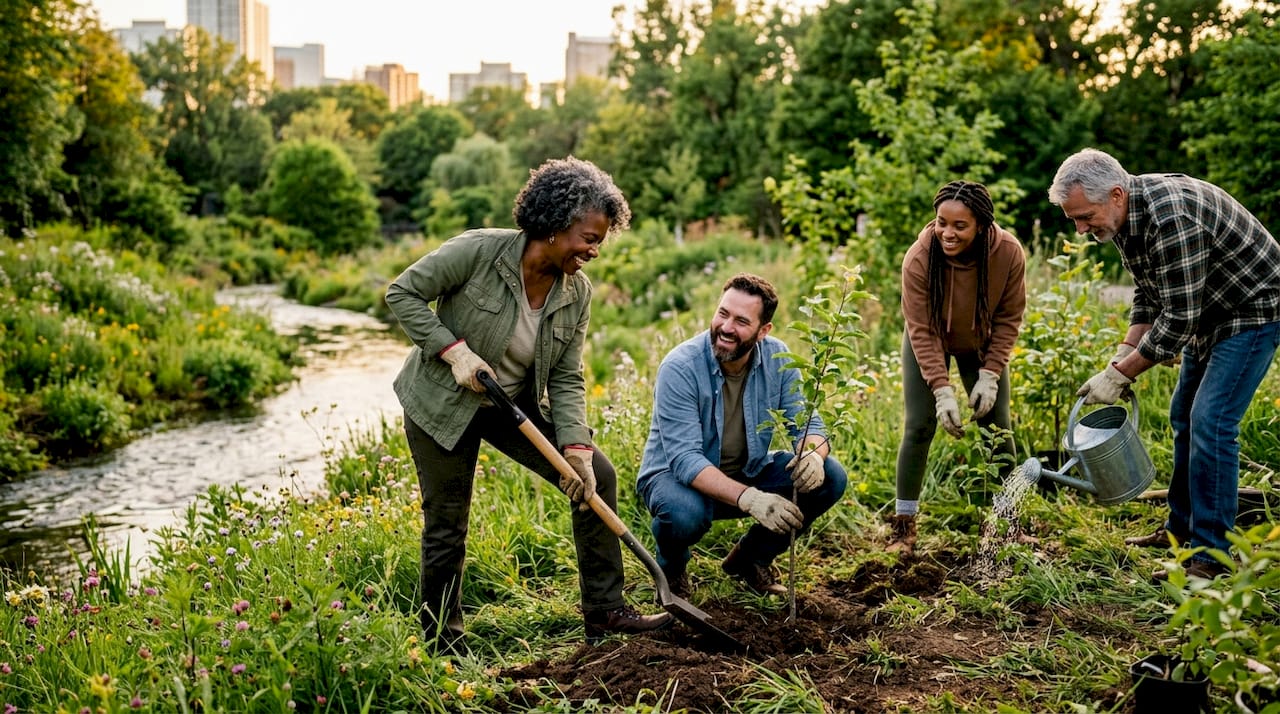
Environmental restoration goes far beyond planting trees. Accelerated recovery techniques include native species reintroduction, invasive species control, and the restoration of ecosystem functions like pollination, seed dispersal, and predator-prey balance. Each technique targets a specific gap in the system’s ability to sustain itself.
Keystone species play an outsized role in this work. Reintroducing a single apex predator can restructure an entire food web. Restoring a native pollinator population can revive plant communities that had been declining for decades. These are not isolated wins. They are system-level shifts.
Community participation is not just ethical. It is essential for sustainable restoration success. When local people help design and implement restoration plans, they develop ownership over the outcome. That ownership is what keeps a project alive after the scientists and funders leave.
| Factor | Single-factor restoration | Whole-system restoration |
|---|---|---|
| Focus | One species or one problem | Entire ecosystem and community |
| Duration | Short-term intervention | Decades-long process |
| Community role | Minimal or absent | Central to planning and execution |
| Outcome stability | Often reverts without maintenance | Self-sustaining over time |
| Measures of success | Species count or vegetation cover | Biodiversity, livelihoods, and community resilience |
Pro Tip: Before starting any environmental restoration project, map the social landscape as carefully as the ecological one. Who uses this land? Who has historical ties to it? Answering these questions early prevents conflict later.
How are the outcomes of holistic restoration measured and sustained over time?
Measuring restoration success requires looking beyond species counts and vegetation cover. The 4 Returns Framework provides a structure for tracking natural, social, financial, and inspirational outcomes simultaneously. Each return is observable and, in most cases, quantifiable over time.
Psychosocial resilience is one of the most undervalued outcomes in restoration work. Research published in PNAS shows that restoration shifts environmental work from a technical task to a socially meaningful process. That shift increases community agency, hope, and long-term commitment to the project. In personal wellness, the equivalent is the sense of progress and self-efficacy that builds when you see your sleep, energy, and mood improving together.
Adaptive management is the method that keeps restoration on track. Teams monitor outcomes at regular intervals, compare results against baseline data, and adjust interventions when something is not working. This is not a sign of failure. It is the mechanism that separates durable restoration from projects that look good in year one and collapse by year five.
Power imbalances are the most common cause of long-term failure. When outside organizations make decisions without genuine community input, local people disengage. Rebuilding that trust takes years. The most successful projects build consensus slowly, over decades, and treat social process as seriously as ecological science.
Sustained outcomes also depend on funding structures that reward long-term stewardship rather than short-term deliverables. A project measured only by its first-year results will be managed for first-year results. Aligning incentives with decade-long goals is one of the hardest and most important parts of the work.
Key Takeaways
Holistic restoration succeeds when ecological, social, and personal systems are treated as one interconnected whole rather than a collection of separate problems.
| Point | Details |
|---|---|
| Integrated approach | Address physical, mental, social, and environmental factors together for lasting results. |
| 4 Returns Framework | Measure natural, social, financial, and inspirational returns to evaluate true restoration success. |
| Community is central | Sustainable restoration, ecological or personal, requires genuine participation and long-term consensus. |
| Adaptive management | Monitor outcomes regularly and adjust strategies to prevent early gains from reversing over time. |
| Complement, don’t replace | Whole-person wellness practices work best alongside conventional medical care, not as substitutes. |
Why I believe restoration is a mindset, not a method
After working closely with wellness and recovery for years, the pattern I keep seeing is this: people want a protocol. They want a list of steps that, once completed, means they are restored. That is not how restoration works, and I think that misunderstanding is the biggest barrier to lasting change.
Restoration is a way of paying attention. It asks you to notice when one part of your life is pulling another part down. Poor sleep wrecks your nutrition choices. Chronic stress tightens your muscles and narrows your thinking. Disconnection from nature or community quietly drains your motivation. None of these problems exist in isolation, and none of them respond to isolated fixes.
What I have found, both in the environmental work I follow closely and in the wellness space Lunixinc operates in, is that the people and projects that succeed are the ones willing to stay in it. They do not expect a restored wetland in six months or a fully recovered body in thirty days. They build systems, check in regularly, and adjust without shame when something is not working.
The practical starting point is simpler than most people expect. Pick one area, sleep, movement, or stress, and build one consistent practice around it. Then watch how that single change begins to affect the others. That ripple effect is restoration in action. It is not magic. It is interconnection, and it works every time you give it enough time and attention.
— Lunix
Recovery tools that support your whole-body restoration
Whole-person restoration does not happen only in your mind or on a yoga mat. Your physical environment matters. The surfaces you rest on, the tools you use to decompress, and the daily rituals you build around recovery all shape how well your body and mind actually restore.

Lunixinc designs recovery products built around this principle. Every item in the Lunixinc recovery collection is created to support the body’s natural restoration process, whether that means relieving muscle tension after a long day, improving circulation during rest, or creating a dedicated space for relaxation at home. If you are ready to make your environment work for your recovery, the collection is a practical place to start. You can also explore restorative living tips for adults who want to build sustainable daily habits alongside the right tools.
FAQ
What is holistic restoration in simple terms?
Holistic restoration is the practice of healing a whole system, whether a person, a community, or an ecosystem, by addressing all of its interconnected parts at once rather than fixing one problem at a time.
What are the main holistic healing methods for personal wellness?
Common methods include yoga, meditation, breathwork, acupuncture, and massage therapy. These practices work best when combined with conventional medical care rather than used as replacements.
How does the 4 Returns Framework measure restoration success?
The 4 Returns Framework tracks four outcomes: natural returns (biodiversity and soil health), social returns (community cohesion), financial returns (sustainable livelihoods), and inspirational returns (hope and purpose).
Can holistic restoration replace conventional medical treatment?
No. Whole-person restoration complements conventional medicine and supports the body’s natural healing, but it does not replace clinical treatment, especially for chronic illness or acute conditions.
Why do holistic restoration projects sometimes fail?
The most common cause of failure is neglecting the social process. Managing power imbalances and building genuine community consensus over time matters as much as the ecological or clinical science behind the work.