


TL;DR:
- Holistic wellness addresses the physical, mental, emotional, social, spiritual, and environmental aspects of health as interconnected. It complements conventional medicine by focusing on root causes through personalized assessments and daily habits like sleep, nutrition, and stress management. Practitioners such as naturopaths and acupuncturists build tailored plans that promote resilience and long-term well-being.
Holistic wellness is defined as a whole-person approach to health that addresses physical, mental, emotional, social, spiritual, and environmental factors together, not just the absence of disease. Unlike a single-symptom focus, this approach treats your body, mind, and life circumstances as one connected system. The result is better balance, stronger resilience, and a quality of life that conventional checkups alone rarely deliver. If you are between 30 and 65, understanding this framework gives you a practical foundation for lasting health, not just temporary fixes.
What is holistic wellness and what does it include?
Holistic wellness addresses multiple interconnected domains of health simultaneously. Physical, mental, emotional, social, spiritual, and environmental factors all count. No single dimension works in isolation. When one area suffers, the others feel it too.
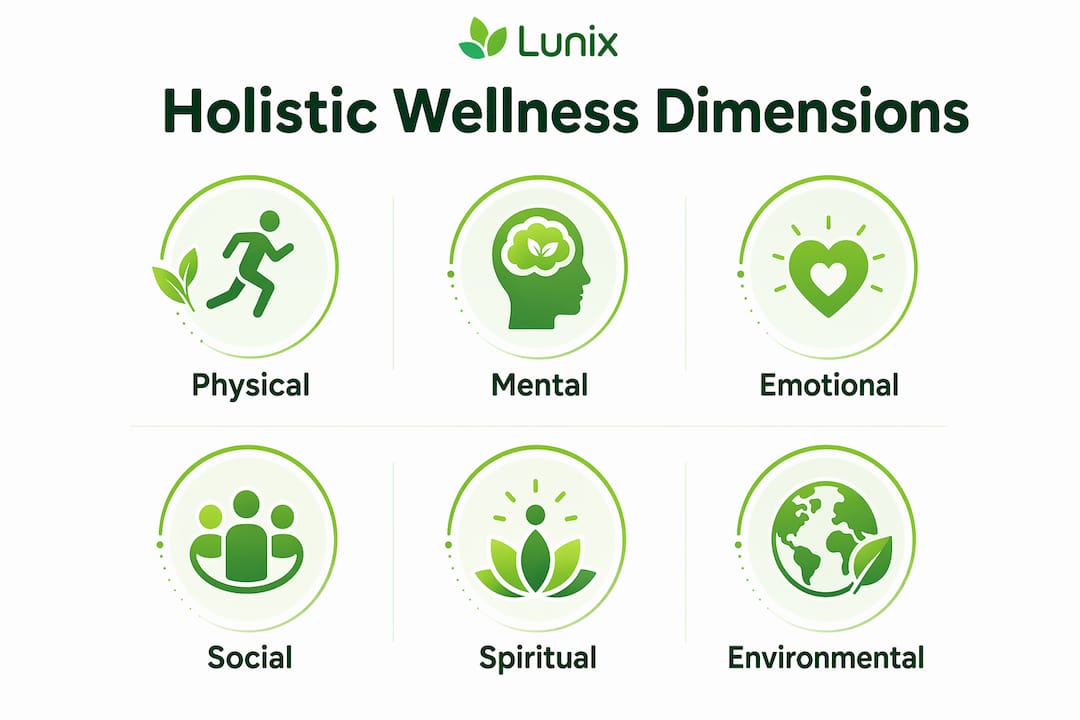
Think of it this way: chronic work stress raises cortisol, disrupts sleep, weakens immunity, and strains relationships. That is not a mental health problem or a physical health problem. It is a whole-person problem, and it needs a whole-person response.
The table below shows the core dimensions and how each one connects to your daily experience.
| Dimension | What it covers | How imbalance shows up |
|---|---|---|
| Physical | Nutrition, movement, sleep, recovery | Fatigue, pain, frequent illness |
| Mental/Emotional | Stress, mood, cognitive function | Anxiety, burnout, poor focus |
| Social | Relationships, community, belonging | Isolation, conflict, low motivation |
| Spiritual | Purpose, values, meaning | Emptiness, lack of direction |
| Environmental | Home, workplace, nature exposure | Tension, poor sleep, low energy |
| Occupational | Work satisfaction, boundaries | Resentment, exhaustion |
The mind, body, and spirit interconnect deeply, affecting health outcomes in measurable ways. Addressing only one dimension while ignoring the others produces short-term results at best. Whole-person wellness depends on the combined influence of biological, psychological, social, and behavioral factors, which is exactly why multifactor approaches outperform one-dimensional treatments.
How does holistic wellness differ from conventional health care?
Conventional medicine excels at diagnosing and treating specific conditions. It identifies a problem, prescribes a solution, and measures success by symptom reduction. That model saves lives. It is also incomplete for many of the chronic, lifestyle-driven conditions that affect adults most between ages 30 and 65.
Integrative medicine combines conventional and complementary approaches within a framework that restores balance among physical, emotional, and spiritual systems. It does not replace your doctor. It works alongside your doctor to address root causes, not just symptoms.
| Feature | Conventional care | Integrative/Whole-person care |
|---|---|---|
| Primary focus | Symptom and disease treatment | Root causes and whole-person balance |
| Assessment scope | Organ or system specific | Lifestyle, stress, environment, relationships |
| Treatment tools | Medication, surgery, procedures | Conventional medicine plus nutrition, movement, acupuncture, therapy |
| Success measure | Symptom reduction | Resilience, function, quality of life |
| Patient role | Passive recipient | Active participant in care |
A common misconception is that choosing a whole-person approach means rejecting conventional medicine. Holistic wellness complements conventional medicine rather than replacing it. Some complementary therapies like acupuncture and manual manipulation are now integrated into hospital systems and covered by insurance in many states.
Pro Tip: If you are managing a chronic condition, ask your primary care physician about integrative options within your existing care plan. You do not need to choose between approaches.
What daily habits build a whole-person wellness routine?
Holistic wellness includes everyday habits such as sufficient sleep, balanced nutrition, regular movement, stress management, social support, and spiritual practices like gratitude. The key word is “includes.” These are not separate tasks. They form one connected routine.

For adults between 30 and 65, life stage challenges like work demands, caregiving, and rising chronic disease risk make rigid wellness programs unsustainable. The goal is a flexible, scalable routine that fits your actual life.
Here is a practical starting framework:
- Sleep 7–9 hours. Sleep is the foundation of physical recovery and emotional regulation. Cutting it short undermines every other habit you build.
- Eat whole foods most of the time. You do not need a perfect diet. Reducing processed food and increasing vegetables, protein, and healthy fats makes a measurable difference.
- Move your body daily. A 20-minute walk counts. Consistency matters more than intensity, especially if you are rebuilding after a sedentary period.
- Practice stress reduction. Options include breathwork, meditation apps like Calm or Headspace, journaling, or simply spending 10 minutes in nature. The method matters less than the regularity.
- Invest in social connection. Loneliness carries real health consequences. Schedule time with people who restore your energy, not just those who drain it.
- Add a spiritual or reflective practice. This does not require religion. Gratitude journaling, quiet morning time, or time in nature all count. The goal is a sense of meaning and presence.
- Protect your environment. Your home and workspace shape your stress levels and sleep quality. Small changes like reducing clutter, improving lighting, or adding plants have real effects.
Successful implementation depends on integrating these habits into a cohesive daily routine rather than treating them as a disconnected checklist. When habits reinforce each other, adherence improves and results compound.
Pro Tip: Start with one habit per week. Stacking too many changes at once leads to abandonment. Small, consistent shifts outperform dramatic overhauls every time.
You can find practical guidance on fitting these habits into a busy schedule with self-care strategies for busy people from Lunixinc.
What role do holistic practitioners play in personalized care?
Holistic practitioners assess your full life picture, not just your current symptoms. Practitioners identify root causes by examining stress levels, lifestyle patterns, relationships, and environmental factors, then build a personalized care plan around those findings.
Two people with the same headache may need completely different care. One may be dehydrated and sleep-deprived. The other may be carrying unresolved emotional stress. A whole-person assessment catches that distinction. A symptom-only approach misses it.
Common practitioners in this space include:
- Naturopathic doctors (NDs): Trained in conventional diagnostics and natural therapies including nutrition, herbal medicine, and lifestyle counseling.
- Integrative medicine physicians: Medical doctors who combine standard care with evidence-based complementary therapies.
- Chiropractors: Specialize in musculoskeletal alignment, which affects nervous system function and overall physical comfort.
- Licensed acupuncturists: Use traditional Chinese medicine principles to address pain, stress, and systemic imbalances.
- Health coaches: Support behavior change, habit formation, and goal setting across multiple wellness dimensions.
The WHO endorses integration models that combine traditional, complementary, and conventional medicine to deliver whole-person care at scale. This is not fringe thinking. It is the direction health systems worldwide are moving.
Personalized care plans address both short-term goals, like reducing back pain or improving sleep, and long-term goals like preventing chronic disease and maintaining vitality into your 60s. Ongoing check-ins allow practitioners to adjust the plan as your life changes. For a deeper look at what wellness means across life stages, the practical guide for adults 40–65 from Lunixinc offers useful context.
Key takeaways
Whole-person wellness works because it treats physical, mental, social, spiritual, and environmental health as one connected system rather than separate problems.
| Point | Details |
|---|---|
| Definition of whole-person wellness | It addresses physical, mental, emotional, social, spiritual, and environmental health together. |
| Complements conventional care | Integrative approaches work alongside standard medicine, not instead of it. |
| Daily habits are the foundation | Sleep, nutrition, movement, stress reduction, and social connection form one connected routine. |
| Personalized assessment matters | Practitioners identify root causes unique to you, not just shared symptoms. |
| Start small and stay consistent | One new habit per week builds lasting change better than overhauling everything at once. |
What Lunixinc has learned about making wellness real
Most people who come to wellness do so after something breaks down. A bad back. Months of poor sleep. A stress level that finally became impossible to ignore. I have seen this pattern repeatedly, and it points to a gap in how wellness is usually presented.
The gap is this: wellness gets framed as a destination. You eat well, you meditate, you exercise, and eventually you “arrive.” That framing sets people up to quit. Real wellness is a practice, not a finish line. The goal is not perfection. It is awareness and small, intentional shifts that compound over time.
The other thing most articles skip is recovery. You can eat well and exercise consistently and still feel worn down if your body never fully restores between efforts. Physical recovery, whether through quality sleep, massage, or targeted tools, is not optional. It is the mechanism that makes every other habit work better.
For adults between 30 and 65, the challenge is not knowing what to do. Most people already know they should sleep more and stress less. The real challenge is building an environment and a routine that makes those things easier. That means your home, your tools, and your daily structure all need to support your health, not fight it.
Start where you are. Add one thing. Let it settle. Then add another.
— Lunix
Physical recovery as part of your wellness routine
Whole-person wellness requires physical recovery as much as it requires movement and nutrition. Without it, the body cannot repair, adapt, or perform at its best.

Lunixinc designs recovery and comfort products built for exactly this purpose. From targeted support for sore muscles to tools that help your body restore after long days, the Lunixinc recovery collection fits naturally into the physical wellness dimension of a whole-person routine. These are not luxury add-ons. They are practical tools that make recovery consistent and accessible at home. If you are building a wellness routine and physical restoration is missing from it, that is the gap worth closing first.
FAQ
What is the definition of holistic wellness?
Holistic wellness is a whole-person approach to health that addresses physical, mental, emotional, social, spiritual, and environmental factors together. It focuses on balance and root causes rather than treating isolated symptoms.
How does holistic wellness differ from alternative medicine?
Holistic wellness is not a rejection of conventional medicine. It integrates conventional and complementary therapies within a framework focused on whole-person balance, and many of its approaches are covered by insurance and used in hospital settings.
What does a holistic wellness routine look like daily?
A daily routine includes 7–9 hours of sleep, balanced nutrition, regular movement, stress reduction practices, social connection, and a reflective or spiritual activity. Consistency across all dimensions matters more than perfection in any one area.
Who are holistic wellness practitioners?
Holistic practitioners include naturopathic doctors, integrative medicine physicians, chiropractors, licensed acupuncturists, and health coaches. Each assesses multiple life domains and builds personalized care plans around root causes.
Is there research supporting integrative wellness approaches?
A review of 14 clinical trials showed consistent association between integrative health interventions and improved outcomes, particularly for chronic, non-communicable diseases. Stronger evidence continues to build as integrative care enters mainstream health systems.