


TL;DR:
- A restoration routine for women addresses physical, mental, and emotional recovery through daily habits like breathing, sleep hygiene, and gentle movement. It emphasizes sequencing, consistency, and personalization to create sustainable, measurable improvements in well-being during midlife. Small, deliberate practices protect nervous system balance, leading to lasting health benefits.
A restoration routine for women is a deliberate set of daily and weekly habits that address physical, mental, and emotional recovery during midlife. Women aged 40 to 65 face a specific set of challenges: shifting hormones, disrupted sleep, accumulated stress, and a nervous system that rarely gets a real break. The good news is that restorative living for midlife does not require hours of free time or an expensive wellness program. A well-structured routine built around nervous system downshift, sleep hygiene, and personalized self-care can deliver measurable improvements in energy, mood, and sleep quality within weeks.
What are the core components of a restoration routine for women?
A restoration routine works because it targets three interconnected systems: your nervous system, your sleep architecture, and your emotional regulation. When even one of these is neglected, the others suffer. Think of it as a three-legged stool. Pull one leg away and the whole thing tips.
Nervous system downshift is the foundation. Abdominal breathing training significantly reduces perceived stress and improves physiological markers including heart rate and blood pressure. A 2025 randomized trial showed a 5.9% decrease in anxiety scores with sustained benefits four weeks after the intervention ended. That means a few minutes of intentional breathing each evening is not a relaxation trick. It is a clinically supported practice with lasting effects.
Sleep hygiene is the second pillar. A screen-free pre-bed buffer of 30 to 60 minutes, combined with dim warm lighting, supports melatonin production and measurably improves sleep quality. For women in perimenopause and menopause, this matters even more. Consistent sleep timing, limiting caffeine after 2 p.m., and keeping your bedroom cool and dark are all menopause sleep essentials recommended by current clinical guidance.
Emotional and physical care rounds out the routine. Here are the key practices to include:
- Gratitude journaling for 3 to 5 minutes to process the day and shift your mental state
- Gentle stretching or yoga-style movements to release physical tension held in the hips, shoulders, and neck
- A brief face massage or skincare ritual to signal to your body that the day is ending
- Mindfulness techniques such as body scans or progressive muscle relaxation for deeper nervous system calm
Pro Tip: If you only have five minutes, prioritize the breathing exercise. It activates your parasympathetic nervous system faster than any other single practice, and it sets the tone for everything that follows.
How to build a personalized restoration routine that fits your lifestyle
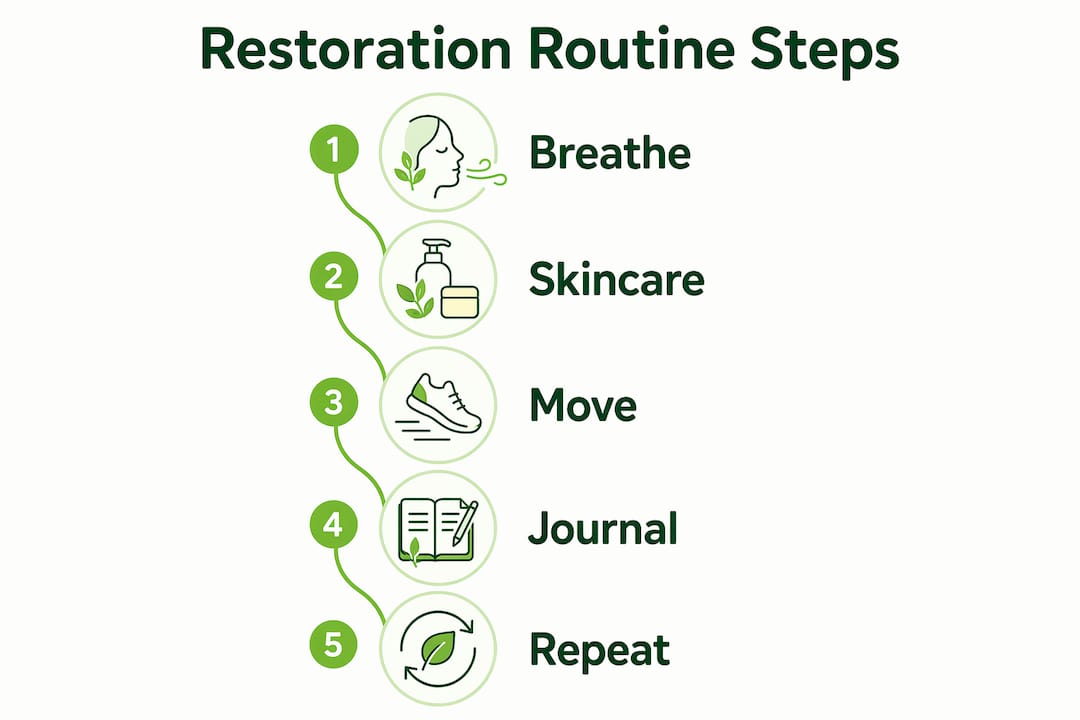
The most effective self-care routine for women is the one you will actually do. Personalization is not optional. It is the mechanism that makes a routine stick. A checklist-based approach that breaks restoration into daily, weekly, and monthly steps reduces decision fatigue and prevents the overwhelm that causes most routines to collapse within two weeks.

Start by assessing three things honestly: your available time, your current stress load, and your biggest recovery gap. If sleep is your weakest point, build your routine around sleep hygiene first. If emotional exhaustion is the issue, lead with journaling and breathing. If physical tension is your primary complaint, prioritize movement and body work.
Here is a practical framework for building your personalized routine:
- Identify your non-negotiables. Choose two or three practices you will do every single day, no matter what. These anchor your routine and create consistency without requiring perfection.
- Layer in weekly practices. Add deeper restoration activities such as a longer stretching session, a bath with Epsom salts, or a digital detox afternoon once or twice a week.
- Schedule monthly resets. A monthly check-in where you review what is working and what is not keeps your routine aligned with your changing needs.
- Use tracking tools. Wellness apps for women like Insight Timer, Calm, or a simple paper habit tracker help you see patterns and stay motivated.
- Protect your routine from perfectionism. Missing one night does not erase your progress. The goal is consistency over weeks, not flawless execution every day.
Self-care is most effective when treated as regular manageable steps rather than a complex optimization project. That reframe alone removes a significant barrier for women who feel they need to do everything perfectly before they can start.
Pro Tip: Pair your restoration routine with an existing habit, like brushing your teeth or making herbal tea. Habit stacking reduces the mental effort required to start and dramatically improves follow-through.
What does a practical daily restoration routine look like?
A 15-minute restoration routine divided into four focused segments is realistic for most busy women and covers all three core systems. Here is how to structure it:
- Minutes 1 to 4: Mental reset through breathing. Sit comfortably and practice abdominal breathing. Inhale slowly for four counts, hold for two, exhale for six. This extended exhale activates the vagus nerve and begins the nervous system downshift. You can explore breathwork in Pilates for additional technique variations.
- Minutes 5 to 7: Skin and hygiene care. Cleanse your face, apply a hydrating serum or facial oil, and spend 60 seconds doing a gentle upward facial massage. Women’s skincare restoration is not vanity. The tactile ritual signals safety to your nervous system and reinforces the transition out of the day’s demands.
- Minutes 8 to 11: Gentle body movement. Move through three to four simple stretches targeting the neck, shoulders, and lower back. A seated forward fold, a gentle spinal twist, and a chest opener are enough to release the physical tension that accumulates from hours of sitting or caregiving.
- Minutes 12 to 15: Emotional check-in and journaling. Write three things you are grateful for and one thing you are releasing from the day. This is not a productivity exercise. It is an emotional processing tool that reduces cortisol and prepares your brain for restorative sleep.
The sequence matters. Calming activities must come first before any stimulating tasks. If you check your email or scroll social media between your breathing and your journaling, you undo the nervous system work you just completed.
Key reminders for your daily practice:
- Keep your phone in another room during your routine
- Dim the lights in your space before you begin
- Use the same location each night to build environmental cues
- Treat the 15 minutes as a non-negotiable appointment with yourself
What common mistakes hinder restoration routines?
Most restoration routines fail not because the practices are wrong but because of predictable, fixable errors in how they are structured or timed. Recognizing these patterns early saves weeks of frustration.
The most common mistakes include:
- Skipping the screen-free buffer. Scrolling your phone until the moment you close your eyes suppresses melatonin and keeps your nervous system in alert mode. The hour before bed functions as a physiology transition window. Treat it that way.
- Inconsistent sleep timing. Going to bed at 10 p.m. on weekdays and 1 a.m. on weekends disrupts your circadian rhythm more than most women realize. Consistency within 30 minutes each night is more restorative than any supplement.
- Doing stimulating activities after calming ones. Answering work messages after your breathing practice, or watching an intense show after journaling, reverses the physiological progress you made. Sequence your routine so calming always precedes sleep.
- Expecting immediate results. Structured breathing programs show their most durable benefits after weeks of consistent practice, not after a single session. Give your routine at least three weeks before evaluating its impact.
- Over-engineering the routine. Adding too many steps too quickly creates a routine that feels like a chore. Start with two practices and add more only when the first two feel automatic.
Self-compassion is not a soft concept here. It is a practical strategy. Women who approach their daily restoration habits with flexibility and self-kindness are more likely to return to their routine after a missed night than those who treat every lapse as a failure.
Key takeaways
A restoration routine for women aged 40 to 65 works best when it combines nervous system downshift through breathing, consistent sleep hygiene, and personalized emotional care practiced in the right sequence every day.
| Point | Details |
|---|---|
| Nervous system downshift first | Begin every routine with abdominal breathing to activate the parasympathetic system before other practices. |
| Screen-free buffer is non-negotiable | A 30 to 60 minute screen-free window before bed supports melatonin and measurably improves sleep quality. |
| Personalize with a checklist | Break restoration into daily, weekly, and monthly steps to prevent overwhelm and improve long-term adherence. |
| Sequence determines effectiveness | Calming activities must precede stimulating ones. Reversing the order undoes the physiological benefits. |
| Consistency beats perfection | Sustained breathing and sleep practices over weeks produce more durable results than any single perfect night. |
What we have learned building restoration routines for midlife women
At Lunixinc, we have worked with women in the 40 to 65 age range long enough to notice a clear pattern. The women who see the most meaningful change are not the ones who build the most elaborate routines. They are the ones who protect two or three simple practices with the same seriousness they give to a work meeting.
The science behind nervous system downshift is not complicated, but it is counterintuitive. Most women in this stage of life have spent decades in high-output mode, and the idea that doing less, breathing slowly, and going to bed at the same time each night could actually shift their health feels almost too simple. It is not. The clinical evidence behind abdominal breathing and sleep hygiene is some of the most consistent in wellness research.
What we have also seen is that physical comfort tools make a real difference in whether a routine becomes a habit. When your body feels supported during rest, the nervous system downshifts faster and more completely. That is not marketing. It is physiology. A body that is physically comfortable during a restorative evening ritual reaches a deeper state of relaxation than one that is tense or poorly supported.
Our honest advice: start smaller than you think you need to. Add one practice this week. Do it for seven days. Then add another. The compounding effect of small, consistent restoration habits over 90 days is more powerful than any intensive wellness retreat you could book.
— Lunix
How Lunixinc supports your restoration routine

Your restoration routine deserves more than good intentions. It deserves the right physical environment to match. Lunixinc’s recovery collection is designed specifically for women who want their body to feel as restored as their mind after a dedicated wellness practice. Whether you are winding down after a long day or building a restful bedtime routine, the right recovery tools make the difference between a routine that feels like effort and one that feels like a reward. Explore the collection and find the products that fit your body, your space, and your restoration goals.
FAQ
What is a restoration routine for women?
A restoration routine for women is a structured set of daily habits designed to support physical, mental, and emotional recovery. It typically includes breathing exercises, sleep hygiene practices, gentle movement, and emotional check-ins.
How long does a daily restoration routine need to be?
A 15-minute routine divided into breathing, skincare, movement, and journaling is enough to produce meaningful benefits when practiced consistently. Longer is not always better.
Why is breathing the first step in a restoration routine?
Abdominal breathing activates the parasympathetic nervous system, which shifts your body out of stress mode. Starting with breathing prepares your physiology for every other restoration practice that follows.
How soon will I notice results from a restoration routine?
Structured breathing programs show sustained improvements after weeks of consistent practice. Most women notice better sleep and reduced stress within two to three weeks of daily practice.
What is the biggest mistake women make with restoration routines?
The most common mistake is doing stimulating activities, like checking email or watching intense content, after calming practices. Sequencing matters: calming always comes before sleep, never after a stimulating task.