


TL;DR:
- Muscle growth occurs during recovery, not while you are exercising or training.
- Sleep, rest days, and targeted recovery modalities are essential for effective fitness progress in adults aged 40 to 65.
Recovery is where your fitness gains actually happen. Your muscles don’t grow during a workout — they grow during the hours and days after, when your body repairs microscopic damage, restores hormonal balance, and rebuilds tissue stronger than before. To get the most from that process, start with these three actions today:
- Prioritize adequate sleep each night. Sleep is the most critical component of recovery, supporting cell regeneration, hormonal balance, and cortisol reduction.
- Schedule at least one full rest day regularly. Periodization — alternating harder training with planned rest days — prevents overreaching and keeps progress consistent.
- Add one evidence-backed recovery modality after hard sessions. A 2018 PMC meta-analysis confirmed that massage reduces delayed onset muscle soreness (DOMS) and perceived fatigue; compression garments also help manage fatigue with moderate evidence.
For adults 40–65, these three habits form the foundation. Devices from Lunixinc — percussion massagers, heated compression units, and red-light panels — are designed to support exactly this kind of structured, at-home recovery.
Table of Contents
- How recovery drives your body’s repair and adaptation
- Evidence-based recovery methods ranked by strength of evidence
- A simple weekly recovery plan for active adults 40–65
- How to choose safe, effective home recovery devices
- When to pause a device and see a clinician
- Key Takeaways
- Recovery and healthy aging: Lunix’s perspective
- Lunix home recovery devices built for adults 40–65
- Useful sources
How recovery drives your body’s repair and adaptation
Strength and endurance gains don’t occur during exercise. They occur during recovery windows, when your body repairs microscopic muscle damage, synthesizes new protein, and adapts the nervous system to handle future loads. Skip that window, and you’re essentially training on a foundation that never fully sets.
During intense exercise, your body releases inflammatory markers including interleukin-6 (IL-6) and C-reactive protein (CRP). These are normal signals that trigger repair. The problem arises when high cortisol levels prevent your nervous system from shifting into the parasympathetic “rest and digest” state where healing actually occurs. UCHealth clinicians, including physical therapist Jessica Yeaton, emphasize that intentional rest and periodization are what allow this hormonal shift to happen.
“If an individual remains in a high-stress, high-cortisol state, they cannot achieve the parasympathetic ‘rest and digest’ state needed for healing — affecting injury prevention, strength production, and overall health.” — UCHealth Today
Typical muscle repair takes a couple of days after moderate exercise. For adults 40–65, that window often stretches longer. Sarcopenia (the gradual loss of muscle fiber size with age) means the muscles you have carry a greater load, and tendons and joints need more time to recover. Joint stiffness after a hard session isn’t just discomfort — it’s a signal that your body needs more recovery time, not less. Skipping that time leads to overreaching, chronic soreness, reduced immune function, and a higher baseline cortisol level that compounds over weeks.
Evidence-based recovery methods ranked by strength of evidence
The methods below are ranked by how well the research supports them. Start with the top two — they do the most work — then layer in targeted modalities based on your specific needs.
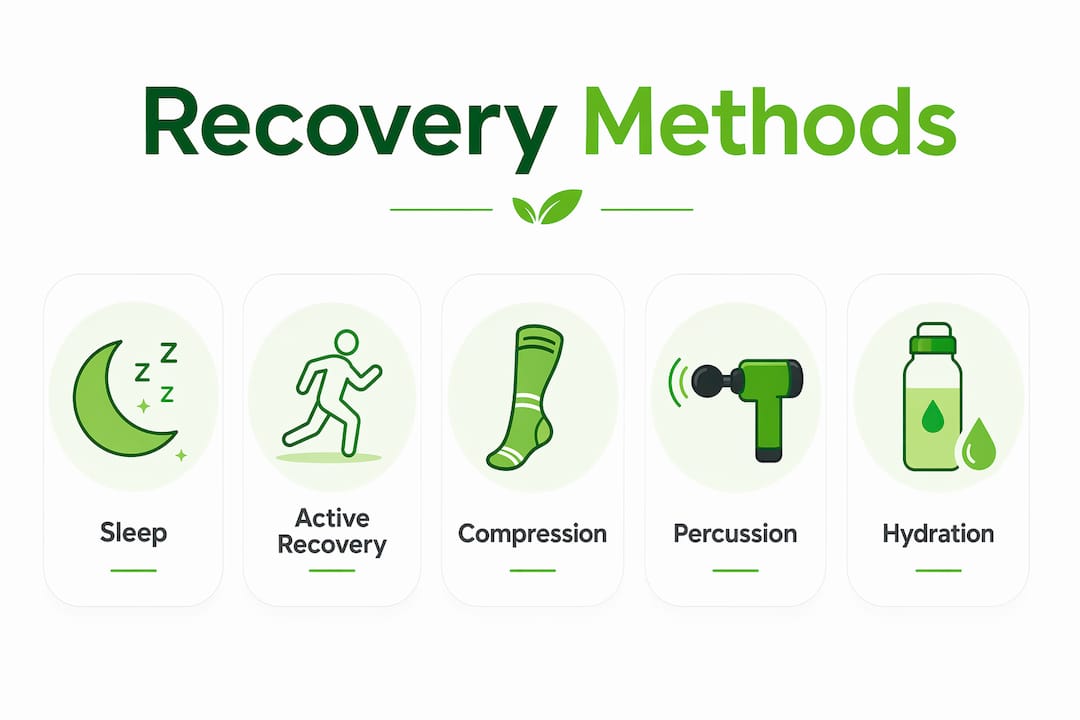
- Sleep (strong evidence): Aim for adequate sleep. Sleep deprivation impairs the hormonal signals that drive muscle repair and elevates cortisol. No device replaces this.
- Post-workout nutrition (strong evidence): Eat a meal combining carbohydrates and protein within 45 minutes of finishing a session to replenish glycogen and support tissue repair. For hydration, aim to replace fluid losses promptly after exercise.
- Active recovery (moderate evidence): Light walking, gentle swimming, or mobility work on non-training days increases circulation and helps clear metabolic waste without adding training stress.
- Massage and percussion (moderate evidence): The PMC 2018 meta-analysis found massage reduces DOMS and perceived fatigue. Percussion massagers deliver similar myofascial release at home in short sessions.
- Compression garments (moderate evidence): GSSI recommends individualized use of compression alongside sleep and nutrition. Heated compression devices add a circulation benefit useful for joint stiffness.
- Cold/contrast hydrotherapy (moderate evidence): Alternating cold and warm water exposure reduces inflammation markers. Practical at home with a contrast shower.
- Red-light therapy / photobiomodulation (emerging evidence): Mass General Brigham notes that photobiomodulation sessions can reduce inflammation and improve perceived recovery by targeting mitochondrial function. Review red light therapy dosage guidance before starting sessions to match device output to your needs.
- PEMF and vibration therapy (emerging evidence): Early research suggests benefits for circulation and muscle relaxation, particularly for adults with joint stiffness. Useful as a complement, not a replacement, for foundational habits.
For adults 40–65, GSSI’s guidance to personalize your recovery plan is especially relevant. What works well for a 35-year-old athlete may need adjustment in timing, intensity, or frequency for your body.
Pro Tip: Combining active recovery with a short percussion or compression session on the day after a hard workout tends to produce better results than passive rest alone — you get circulation benefits plus targeted muscle relief.
| Method | Evidence Level | Best For |
|---|---|---|
| Sleep (adequate duration) | Strong | Hormonal repair, cortisol reduction |
| Post-workout nutrition | Strong | Glycogen replenishment, tissue repair |
| Active recovery | Moderate | Circulation, metabolic waste clearance |
| Massage / percussion | Moderate | DOMS reduction, perceived fatigue |
| Compression garments | Moderate | Fatigue management, joint support |
| Cold/contrast hydrotherapy | Moderate | Inflammation reduction |
| Red-light therapy | Emerging | Localized inflammation, mitochondrial support |
| PEMF / vibration | Emerging | Circulation, joint mobility |
A simple weekly recovery plan for active adults 40–65
A consistent weekly structure — training hard 2–4 days, adding active recovery on 1–2 days, and protecting one full rest day — produces real benefits for adults in this age range. The key is scheduling recovery the same way you schedule workouts.
| Day | Training Load | Recovery Action | Device Use |
|---|---|---|---|
| Monday | Strength (moderate) | Post-session protein meal | Percussion massager |
| Tuesday | Active recovery | 30-min walk or gentle swim | Compression sleeves if needed |
| Wednesday | Strength (higher load) | Stretch + hydrate well | Percussion massager |
| Thursday | Rest day | Full rest or light mobility | Heated compression for joints |
| Friday | Cardio (moderate) | Post-session nutrition | Red-light panel |
| Saturday | Strength or yoga | Foam rolling or stretching | Optional percussion |
| Sunday | Full rest | Sleep priority, light walk | None required |
Signs you’re under-recovering deserve attention. Watch for:
- Persistent soreness lasting beyond 72 hours after a session
- Declining performance across back-to-back workouts
- Poor sleep quality or difficulty falling asleep
- Elevated resting heart rate compared to your baseline
- Increased irritability, brain fog, or low motivation
If two or more of these appear together, dial back training intensity and add a rest day before resuming your normal schedule. For age-specific recovery strategies after 40, the adjustments are straightforward but make a significant difference.
How to choose safe, effective home recovery devices
Devices accelerate targeted recovery, but they work best when layered on top of sleep, nutrition, and scheduled rest days. Think of them as maintenance tools, not shortcuts.
When evaluating a home recovery device, check for:
- Proven modality for your primary need. Percussion for general muscle tension, heated compression for joint stiffness, red-light panels for localized inflammation in hands, feet, or joints.
- Safety features. Auto shutoff, adjustable temperature controls, and pressure settings are non-negotiable for home use.
- Ease of use. Touchscreen controls and intuitive interfaces matter more than you’d expect when you’re tired after a workout.
- Washable covers and hygienic design. Devices used regularly need to be easy to clean. Look for removable, machine-washable covers.
- Warranty and return policy. A minimum 30-day return window and at least a one-year warranty signal a brand that stands behind its product.
- Clinician clearance for chronic conditions. If you have cardiovascular disease, diabetes, or a musculoskeletal condition, check with your doctor before starting any new device.
For a full overview of device categories suited to adults 40+, the types of muscle recovery devices guide covers percussion, compression, red light, and infrared options in detail.
Pro Tip: Prioritize clinically backed functionality over marketing language. A device that clearly states its modality, session length, and contraindications is a better sign of quality than one that promises broad “total body recovery.”
When to pause a device and see a clinician
Stop or modify any recovery practice immediately if you notice sharp or worsening pain, new swelling, skin irritation, or numbness and tingling. These are signals that something needs professional evaluation, not more device time.
Specific contraindications to know:
- Active infection or open wounds: Never apply heat, compression, or percussion directly over an affected area.
- Deep vein thrombosis (DVT) risk: Compression devices require clinician clearance if you have a history of blood clots or circulatory conditions.
- Implanted electrical devices: Pacemakers and neurostimulators are contraindicated with PEMF and some electrical stimulation devices. Confirm compatibility with your cardiologist.
- Heat and circulation issues: People with peripheral neuropathy or reduced sensation should use heated devices at the lowest setting and check skin regularly to avoid burns.
- Red-light therapy dosage: More is not better. Follow the manufacturer’s session guidelines and consult the red light therapy results guide for realistic expectations. Overexposure can cause skin sensitivity.
- Aggressive percussion over bony prominences: Avoid direct percussion over the spine, joints, or any area with bone close to the surface.
Consult a clinician if pain worsens after 72 hours of rest, if you experience systemic symptoms like fever alongside soreness, or if you have any cardiovascular concern that hasn’t been evaluated recently.
This article provides general wellness information, not medical advice. Confirm any recovery practice with your physician or a qualified clinician for your specific health situation.
Key Takeaways
Recovery is where fitness adaptations occur — sleep, scheduled rest days, and targeted modalities are the three pillars that make training actually work for adults 40–65.
| Point | Details |
|---|---|
| Recovery drives adaptation | Muscle repair, protein synthesis, and neural adaptation happen during rest, not during exercise. |
| Sleep is the top priority, supporting hormonal balance, cortisol reduction, and cell regeneration. | |
| Schedule at least one rest day | Periodization — alternating hard training with rest — prevents overreaching and sustains long-term progress. |
| Devices supplement, not replace, rest | Percussion, compression, and red-light tools accelerate targeted recovery when layered on top of foundational habits. |
| Lunixinc for home recovery | Lunixinc offers heated compression, percussion massagers, and red-light devices designed for safe, practical home use by adults 40–65. |
Recovery and healthy aging: Lunix’s perspective
The fitness world tends to celebrate effort and undervalue rest. For adults 40–65, that imbalance is where injuries happen and progress stalls. At Lunix, the belief is straightforward: recovery isn’t a passive afterthought — it’s the active part of any fitness plan that actually produces results.
What gets overlooked in most recovery conversations is the nervous system piece. Shifting from sympathetic (stress) to parasympathetic (rest) mode is as important as repairing muscle tissue. That’s why tools that support relaxation and circulation — heated compression, gentle percussion, red-light therapy — aren’t luxuries. They’re practical ways to help your body do what it’s already trying to do.
The other thing worth saying plainly: under-recovery is usually a planning problem, not a willpower problem. When recovery isn’t scheduled, it gets skipped. The adults who maintain their fitness and mobility into their 60s and beyond tend to treat rest days and recovery sessions with the same commitment they give their workouts. Lunix’s evidence-based recovery tips for healthy aging are built around exactly that principle.
Lunix home recovery devices built for adults 40–65

Foundational recovery — sleep, nutrition, rest days — always comes first. When you’re ready to add targeted support, Lunix offers devices built specifically for the needs of adults 40–65: heated air compression hand massagers for joint stiffness, percussion massagers for post-workout muscle tension, and red-light therapy panels for hands, feet, and joints. Every product features practical details that matter at home — washable covers, safety zippers, auto shutoff, and touchscreen controls that are easy to use after a long day.
Lunix products are available with clear return policies and warranty coverage. If you have a chronic condition, check with your clinician before starting any new device. Browse the full range and find the right fit for your recovery routine at lunixinc.com.
Useful sources
| Source | What It Supports |
|---|---|
| PMC — Recovery after exercise (PMC4513271) | Sleep as the top recovery component; cell regeneration and hormonal balance |
| PMC 2018 meta-analysis (PMC5932411) | Massage reduces DOMS and perceived fatigue; compression for fatigue management |
| UCHealth Today — Rest and recovery for athletes | Cortisol, parasympathetic recovery, and expert guidance from Jessica Yeaton |
| GSSI — Recovery techniques for athletes | Individualized recovery strategies; compression, massage, hydrotherapy |
| Mass General Brigham — Recovery for athletes | Photobiomodulation (red-light therapy) and emerging recovery modalities |
| ScienceDirect — Recovery after exercise | Nutritional interventions, rehydration, and combining recovery methods |
| Shred.app — Rest and recovery in strength training | Rest day scheduling, periodization, and hydration guidance |