


TL;DR:
- Muscle recovery devices help reduce soreness, improve circulation, and speed healing after exercise, especially for adults aged 40 to 65. Foam rollers and percussion guns provide effective, affordable options for self-myofascial release and pain relief. Consistent use of basic tools often outperforms expensive devices in promoting recovery and preventing injury.
Muscle recovery devices are tools that reduce soreness, improve circulation, and speed healing after exercise. For fitness enthusiasts aged 40 to 65, recovery is not optional. Muscle repair slows with age, and ignoring recovery raises injury risk, causes burnout, and stalls progress. The main types of muscle recovery devices include foam rollers, percussion massage guns, compression therapy boots, thermal therapy systems, and advanced tools like vibration plates and PEMF mats. Each category works through a different mechanism, carries different evidence, and fits different budgets. Knowing which tool does what helps you build a recovery routine that actually works.
1. Types of muscle recovery devices: foam rollers and massage sticks
Foam rollers and massage sticks are the most accessible muscle recovery tools available. They work through self-myofascial release, a technique that applies direct pressure to soft tissue to break up adhesions and restore normal muscle function. Physical therapists and coaches have used this method for decades, and the evidence behind it is strong.
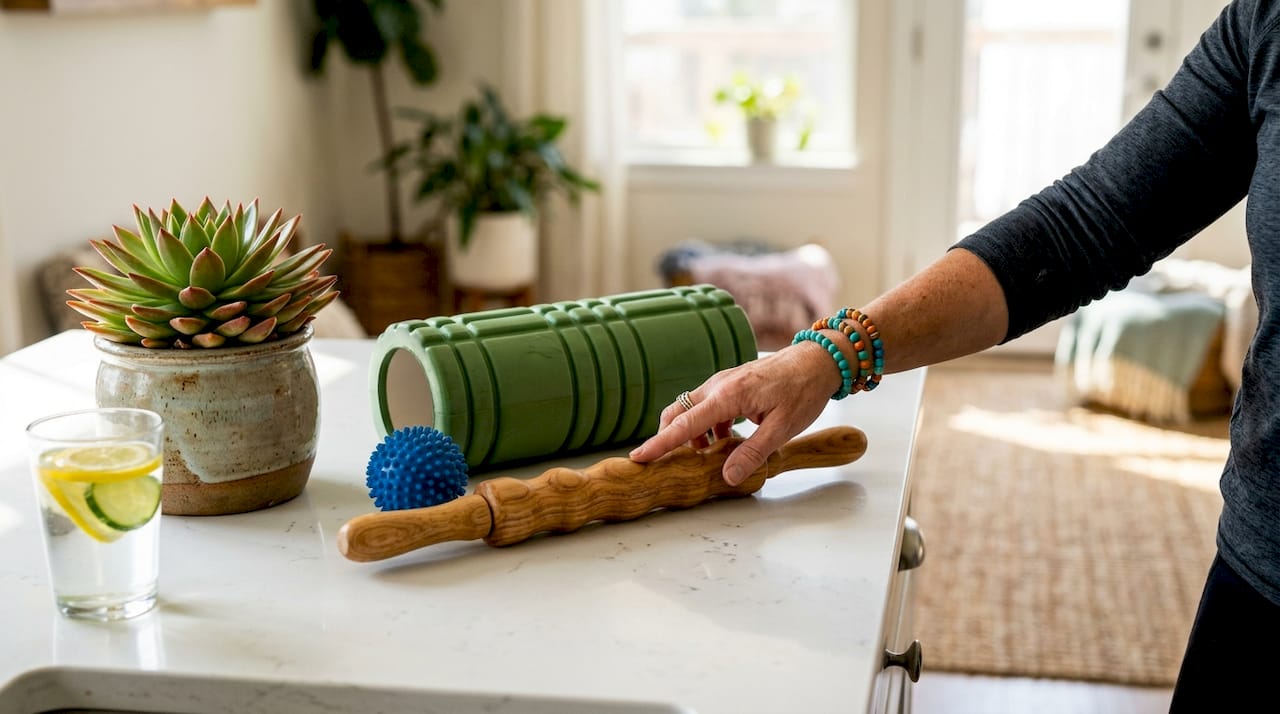
Foam rolling post-workout can reduce Delayed Onset Muscle Soreness (DOMS) by up to 50% when done consistently. That number matters because DOMS is the stiffness and ache you feel 24 to 48 hours after a hard workout. Reducing it means you move better the next day and stay consistent with your training.
Here is what makes foam rollers worth your time:
- Time requirement: 1–2 minutes per muscle group is enough for a measurable effect.
- Cost: Most quality foam rollers cost between $15 and $50, making them the most affordable recovery tool in any category.
- Tissue remodeling: Consistent use over weeks reshapes connective tissue, not just temporary relief.
- Portability: Foam rollers and massage sticks fit in a gym bag and need no power source.
Pro Tip: Pair foam rolling with light stretching and a 10-minute walk after your workout. That combination addresses both the muscle tissue and the circulatory system, giving you faster recovery than rolling alone.
For a deeper look at how to use these tools effectively, the post-workout recovery guide from Lunixinc covers practical step-by-step methods.
2. Percussion massage guns: convenient relief with real but limited advantages
Percussion massage guns deliver rapid, repetitive pulses deep into muscle tissue. They increase local blood flow, loosen fascia, and create a sensation of immediate relief that many people find satisfying after a hard session.
Percussion massage guns reduce soreness by 20–30% through increased blood flow and fascial release. That is a real benefit. The catch is that scientific evidence does not show percussion guns are superior to foam rollers in clinical outcomes. User preference and the convenience factor drive much of their popularity.
Key facts to know before buying:
- Recommended frequency: Use 3–5 times per week for consistent benefit without overworking the tissue.
- Price range: Entry-level models start around $100. Premium models with quiet motors and app integration reach $500.
- Best use case: Hard-to-reach areas like the upper back, glutes, and calves where foam rollers are awkward to use.
- Older adults: The adjustable intensity settings on most models make them well-suited for people over 40 who need gentler pressure.
Pro Tip: Start on the lowest speed setting and move the gun slowly, about one inch per second, over the muscle belly. Avoid bony areas and the spine entirely.
The convenience of a massage gun is real, especially if you travel or work out at odd hours. Just do not expect it to replace the foundational work of consistent rolling and stretching.
3. Compression therapy: boots and sleeves for circulation and drainage
Compression therapy devices use air pressure to squeeze and release the legs in a rhythmic cycle. This process mimics the pumping action of the lymphatic system, pushing fluid out of tired muscles and bringing fresh, oxygenated blood back in.
Intermittent pneumatic compression boots have moderate to strong evidence for reducing perceived muscle soreness and improving lymphatic drainage. That makes them one of the better-supported recovery tools in this category, particularly for runners, cyclists, and anyone whose training is leg-heavy.
Compression devices typically cost between $200 and $600. Premium models add app control, customizable pressure zones, and session timers. The technology itself is the same across price points. What you pay for at the higher end is convenience and precision.
Use compression boots on rest days or after light training sessions. Daily use builds a cumulative effect on circulation that single sessions cannot replicate. If you only pull them out after your hardest workouts, you are leaving most of the benefit on the table.
For adults over 40 managing joint stiffness or mild circulation concerns, compression sleeves for the arms and calves offer a lower-cost entry point. They do not deliver the same pressure as pneumatic boots, but they support recovery during activity and travel.
4. Thermal therapies: cold water immersion and infrared saunas
Cold and heat therapies represent two opposite physiological responses, and both have strong research support for recovery.
Cold water immersion has the broadest evidence base for athletic recovery, reducing DOMS, lowering inflammation, and building mental resilience. An ice bath constricts blood vessels, which flushes metabolic waste from muscles. When you warm up afterward, fresh blood rushes back in, accelerating repair.
Infrared saunas improve circulation, stimulate growth hormone production, and reduce inflammation through a completely different mechanism. The deep heat penetrates tissue directly, relaxing muscle fibers and supporting cardiovascular health with regular use.
| Therapy | Primary benefit | Best timing | Cost range |
|---|---|---|---|
| Cold water immersion | Reduces DOMS and inflammation | Within 1 hour post-workout | $30 (tub) to $500+ (dedicated unit) |
| Infrared sauna | Boosts circulation and muscle repair | Rest days or evening sessions | $1,000 to $4,000+ |
| Contrast therapy | Combines both for enhanced effect | Post-workout or next morning | Varies by setup |
Many athletes and physiotherapists now recommend contrast therapy, alternating between cold and heat in the same session. The back-and-forth creates a pumping effect in the circulatory system that neither therapy achieves alone. You can read more about optimizing recovery between sessions from a physiotherapy perspective.
5. Advanced recovery devices: hyperbaric chambers, PEMF mats, and vibration plates
These tools occupy the high end of the market and carry more complicated evidence profiles. Understanding what each actually does prevents expensive mistakes.
Hyperbaric chambers flood the body with pressurized oxygen to accelerate tissue repair. Clinical units operate at 2.0 ATA or higher. Home hyperbaric chambers operate at only 1.3–1.5 ATA with ambient air, not pure oxygen. That gap significantly limits their physiological benefit. Prices range from $5,000 to $15,000. For most fitness enthusiasts, the cost-to-benefit ratio does not hold up.
PEMF mats use pulsed electromagnetic fields to stimulate cellular repair. PEMF technology is FDA-cleared for bone fracture healing. The evidence for general muscle recovery or wellness claims is weak. Consumer-grade mats often overstate what the research actually supports.
Vibration plates offer genuine value for mobility, muscle activation, and warm-up routines. They are not a standalone recovery tool, but they complement stretching and foam rolling well.
| Device | Evidence strength | Typical cost | Best suited for |
|---|---|---|---|
| Home hyperbaric chamber | Weak for muscle recovery | $5,000–$15,000 | Clinical rehabilitation settings |
| PEMF mat | Strong for bone healing only | $500–$3,000 | Fracture recovery under medical guidance |
| Vibration plate | Moderate for mobility and activation | $200–$1,500 | Warm-up and mobility work |
The honest advice for adults 40 to 65 is to build a strong foundation with foam rollers, compression, and thermal therapy before spending on advanced devices. The basics, done consistently, outperform expensive gadgets used occasionally.
Key takeaways
The most effective muscle recovery approach for adults 40 to 65 combines affordable, evidence-backed tools used consistently rather than expensive devices used rarely.
| Point | Details |
|---|---|
| Foam rollers lead on value | Consistent use reduces DOMS by up to 50% at a cost of $15–$50. |
| Percussion guns offer convenience | They reduce soreness by 20–30% but do not outperform foam rollers in clinical studies. |
| Compression boots have strong evidence | Intermittent pneumatic compression reduces soreness and improves lymphatic drainage. |
| Thermal therapy works both ways | Cold immersion cuts inflammation; infrared saunas boost circulation and muscle repair. |
| Advanced devices need scrutiny | Home hyperbaric chambers and PEMF mats have limited evidence for general recovery use. |
What I have learned about recovery after 40
Recovery after 40 is not the same conversation it was at 25. The body takes longer to repair, inflammation lingers, and the cost of skipping recovery shows up faster. I have seen this pattern repeatedly: people invest in the most expensive gadget on the market, use it twice a week when they remember, and wonder why they still feel beat up on Monday morning.
The truth is that sleep and nutrition are the non-negotiable foundation. No device replaces them. A foam roller used every single day after a workout will do more for your body than a $400 massage gun sitting in a drawer. Compliance beats technology every time.
What I find genuinely useful for midlife fitness enthusiasts is a layered approach. Start with a foam roller and a basic compression sleeve. Add thermal therapy when your budget allows. Consider a percussion gun if you have specific areas that are hard to reach or if convenience keeps you consistent. Save the high-ticket devices for later, if at all.
The wellness devices guide from Lunixinc reflects this thinking well. Recovery is a daily practice, not a weekend project. The people who feel the best at 55 and 65 are the ones who built simple, repeatable habits around it.
— Lunix
Recovery tools built for the way you actually live
Lunixinc designs recovery products for adults who take their health seriously and want tools that fit into real life, not just a professional athlete’s schedule.

The Lunixinc recovery collection includes foam rollers, massage guns, compression gear, and thermal therapy options, all vetted for quality and ease of use. Every product is selected with the 40 to 65 age group in mind, meaning thoughtful design, clear instructions, and results you can feel after the first week. Whether you are managing post-run soreness, stiff shoulders from desk work, or general fatigue from an active lifestyle, there is a tool in the collection that fits your routine. Browse the full range and find what your body has been asking for.
FAQ
What are the most effective muscle recovery devices?
Foam rollers and intermittent pneumatic compression boots have the strongest evidence for reducing DOMS and improving circulation. Percussion massage guns offer comparable results to foam rollers with added convenience.
How often should you use muscle recovery tools?
Most recovery devices work best when used 3–5 times per week. Compression boots and foam rollers can be used daily, especially on rest days, for cumulative circulatory benefits.
Are recovery devices worth it for adults over 40?
Yes. Recovery tools prevent burnout and reduce injury risk for regular exercisers aged 40 to 65, not just elite athletes. Consistent use of even affordable tools produces measurable results.
What is the difference between cold therapy and heat therapy for recovery?
Cold water immersion reduces inflammation and DOMS immediately after exercise. Heat therapy, including infrared saunas, improves circulation and supports muscle repair best on rest days or the evening after a workout.
Do you need expensive devices to recover well?
No. A foam roller costing $15 to $50, used consistently for 1–2 minutes per muscle group, delivers recovery benefits comparable to devices costing ten times more. The muscle recovery guide from Lunixinc outlines how to get the most from simple tools.