


TL;DR:
- Post-work recovery for adults over 40 involves sufficient sleep, proper nutrition, hydration, active recovery, and stress management to support tissue repair and reduce injury risk. Prioritizing 7 to 9 hours of sleep, spreading protein intake across meals, and replacing fluids accurately enhance recovery and muscle growth. Effective strategies include timed low-intensity movement, stress reduction techniques, and cautious use of cold or heat therapies.
Post-work recovery is the process of restoring the body’s energy, repairing tissues, and resetting the nervous system after physical exertion. For adults aged 40–65, this process takes longer and requires more intention than it did at 25. The good news is that a structured post-work recovery guide built around five pillars, sleep, nutrition, hydration, active recovery, and stress management, can dramatically reduce soreness, lower injury risk, and improve how you feel every single day. Age-related changes in hormone levels, circulation, and muscle repair speed make each of these pillars non-negotiable, not optional extras.
How does sleep impact post-work recovery for adults over 40?
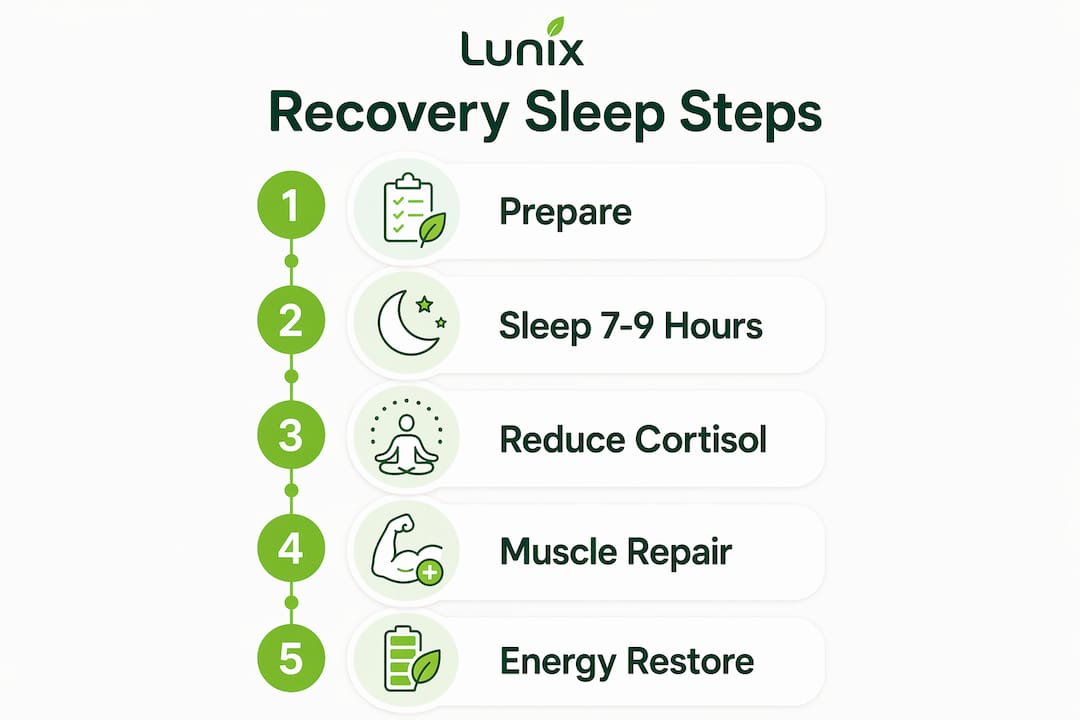
Sleep is the single most impactful variable for systemic recovery. While nutrition and hydration matter, nothing replaces what happens to your body during deep sleep: growth hormone releases, muscle fibers repair, and the nervous system resets. Adults aged 40–65 who consistently get 7–9 hours per night recover faster, perform better, and sustain fewer injuries than those sleeping 5–6 hours. That gap in sleep quality is not trivial. It compounds over weeks into chronic fatigue, elevated inflammation, and slower tissue repair.
After 40, sleep architecture shifts. You spend less time in deep, slow-wave sleep, which is the stage most responsible for physical repair. This means the quality of your sleep matters as much as the quantity. A few practical changes can protect both.
Key habits that protect sleep quality for adults 40–65:
- Keep a consistent bedtime and wake time, even on weekends, to anchor your circadian rhythm.
- Avoid screens for 60 minutes before bed. Blue light suppresses melatonin production.
- Keep your bedroom cool, ideally between 65°F and 68°F, to support deep sleep stages.
- Limit alcohol within three hours of bedtime. It fragments sleep architecture even if it helps you fall asleep faster.
- Consider magnesium glycinate in the evening. It supports muscle relaxation and sleep depth without sedation.
Pro Tip: If you wake up stiff or sore after a hard workout, that is a signal your sleep quality needs attention, not just your training volume. Prioritize restorative sleep before adding more recovery tools.
Poor sleep also raises cortisol, the body’s primary stress hormone. Elevated cortisol actively breaks down muscle tissue and slows repair. For adults over 40, where muscle mass is already declining at roughly 1% per year, that is a cycle worth breaking early.
What nutrition strategies optimize muscle and systemic recovery?
Daily protein intake drives muscle repair more than any single post-workout meal. Active adults should target 0.7–1.0 grams of protein per pound of body weight each day. A 160-pound adult needs 112–160 grams of protein daily. That number sounds high, but spreading it across three to four meals makes it manageable.
The myth that you must consume protein within 30 minutes of finishing a workout has largely been debunked. What matters far more is your total daily nutrition over a 2–3 day recovery window. Consistency across meals beats any single post-exercise supplement.
Quality protein sources well-suited for adults 40–65:
- Eggs: complete amino acid profile, easy to digest, and versatile.
- Greek yogurt: high in leucine, the amino acid most responsible for triggering muscle protein synthesis.
- Salmon and other fatty fish: protein plus omega-3 fatty acids, which reduce inflammation.
- Chicken breast and lean turkey: high protein density with low saturated fat.
- Legumes and lentils: plant-based options that pair well with grains for a complete amino acid profile.
Carbohydrates also play a critical role. They replenish glycogen stores in muscle and liver tissue, which fuels your next session and prevents the fatigue that makes recovery feel endless. Aim for complex carbohydrates like oats, sweet potatoes, and brown rice within two hours of finishing a workout.
Pro Tip: Aim for 30–40 grams of protein per meal rather than loading it all into one sitting. Your body can only use so much protein for muscle repair at once. Spreading intake across meals gives your muscles a steady supply of building material throughout the day.
For adults following this body restoration approach, pairing protein with anti-inflammatory foods like berries, leafy greens, and turmeric adds another layer of systemic support without requiring supplements.
How to manage hydration effectively during and after exercise
Dehydration slows every recovery process. It thickens blood, reduces nutrient delivery to muscles, and increases the perception of soreness. The standard guideline is to drink 8 ounces of water for every 15–30 minutes of exercise. After a session, replace 8 ounces of fluid for every pound of body weight lost during the workout.
The weigh-in method is the most accurate way to gauge fluid loss. Weigh yourself before and after exercise. Each pound of difference represents approximately 16 ounces of fluid lost. Most adults skip this step entirely, which means they underestimate how much they need to drink.
| Situation | Hydration target |
|---|---|
| During exercise | 8 oz every 15–30 minutes |
| After exercise (per pound lost) | 16 oz per pound of body weight lost |
| General daily baseline | At least 64–80 oz depending on activity level |
| With electrolyte loss (heavy sweat) | Add sodium and potassium via food or electrolyte drink |
Electrolytes deserve attention, especially for adults who sweat heavily or exercise in heat. Sodium, potassium, and magnesium regulate fluid balance inside and outside muscle cells. Plain water alone does not replace these minerals. A banana, a pinch of sea salt in water, or a low-sugar electrolyte drink covers most needs without added complexity.
For a deeper look at how hydration supports muscle repair, the connection between fluid balance and reduced inflammation is especially relevant for adults over 40.
What are effective active and passive recovery methods for adults 40–65?
Active recovery means moving your body at low intensity on rest days. Walking, swimming, and yoga all promote blood flow to sore muscles without adding training stress. Low-intensity movement speeds recovery by delivering oxygen and nutrients to damaged tissue while clearing metabolic waste. For adults 40–65, this is often more effective than complete rest.
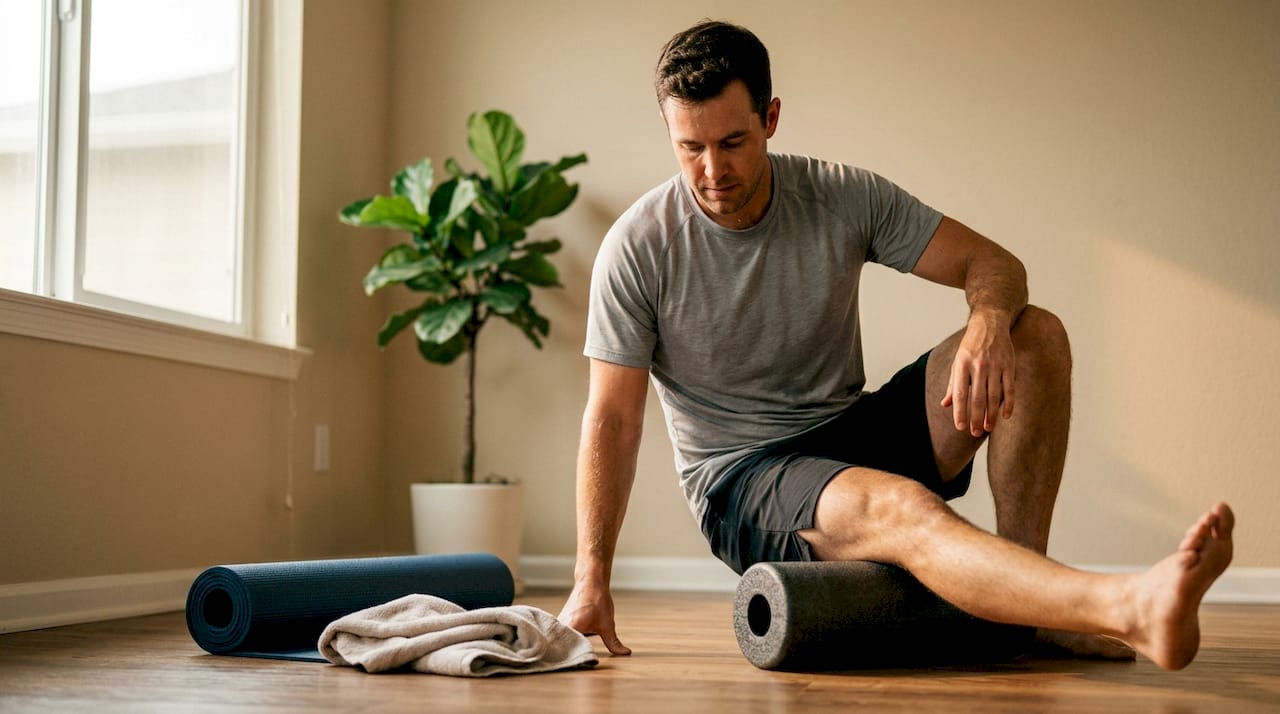
Passive recovery, including sleep, massage, and recliner therapy, is the better choice when you are deeply fatigued, recovering from illness, or returning from a long break. Passive methods let the body direct all available resources toward repair without the added demand of movement.
Timing matters more than most people realize:
- Foam rolling and static stretching produce the most benefit 24–48 hours after exercise, when soreness peaks, not immediately after a session.
- Immediately post-workout, keep movement gentle. A 5–10 minute cool-down of light walking lowers heart rate gradually and prevents blood from pooling in the legs.
- Massage is most effective within 24–48 hours of a hard session. It releases muscle tightness, increases circulation, and reduces soreness measurably.
- Yoga works well as a recovery activity 1–2 days after intense effort. It combines gentle movement with breathing techniques that activate the parasympathetic nervous system.
Stress management belongs in every recovery plan. High allostatic load, the cumulative burden of life stress, actively impairs physical recovery. Diaphragmatic breathing, meditation, and even 20 minutes of quiet reading lower cortisol and shift the body into repair mode. For adults managing careers, family responsibilities, and aging bodies simultaneously, this is the most overlooked recovery pillar.
Pro Tip: Try recliner therapy for 20–30 minutes after a demanding day. Elevating your legs reduces fluid accumulation, takes pressure off the spine, and activates the parasympathetic response that signals your body to repair.
The critical biological repair window lasts 24–72 hours post-exercise. Stacking active recovery, massage, and stress management techniques across that window produces far better results than any single intervention.
How can temperature therapy accelerate recovery without blocking muscle growth?
Cold and heat therapies both support recovery, but the timing and frequency determine whether they help or hinder your progress. Cold water immersion reduces soreness and inflammation effectively. The problem is that routine cold immersion can blunt the muscle-building adaptations that strength training triggers. Use it strategically, not daily.
Contrast therapy, alternating between hot and cold exposure, improves circulation and reduces soreness without the same adaptation-blunting risk. A practical protocol moves from hot (sauna or warm shower) to cold (cold shower or immersion) and back to hot, spending roughly 3–5 minutes in each phase.
| Therapy type | Best use case | Frequency for adults 40–65 | Caution |
|---|---|---|---|
| Cold water immersion | High training volume weeks | 1–2 times per week | Avoid daily use if building muscle |
| Sauna or heat therapy | General soreness and relaxation | 3–4 times per week | Stay hydrated; limit to 15–20 min |
| Contrast therapy | Post-competition or heavy training | 1–2 times per week | Not recommended for cardiovascular conditions without medical clearance |
For adults 40–65, heat therapy alone carries real value beyond muscle recovery. Regular sauna use supports cardiovascular circulation and reduces systemic inflammation. If cold immersion feels too aggressive, a warm Epsom salt bath achieves mild contrast effects and adds magnesium absorption through the skin.
The key principle is this: save cold therapy for your hardest training weeks. On lighter weeks, lean on heat and contrast methods to support circulation and relaxation without interfering with the adaptations your body is working to build.
Key takeaways
Effective post-work recovery for adults 40–65 requires consistent sleep, daily protein targets, proper hydration, timed active recovery, and deliberate stress management across a 24–72 hour window.
| Point | Details |
|---|---|
| Sleep is the foundation | Aim for 7–9 hours nightly to support hormonal balance and muscle repair. |
| Daily protein drives repair | Target 0.7–1.0 grams per pound of body weight spread across meals. |
| Hydration requires a plan | Replace 16 oz of fluid per pound of body weight lost during exercise. |
| Time your recovery techniques | Foam rolling and stretching work best 24–48 hours after exercise, not immediately after. |
| Cold therapy needs limits | Reserve cold water immersion for high-volume training weeks to avoid blunting muscle adaptations. |
What I have learned about recovery after 40
Recovery used to feel like something I did when I had time left over. That mindset cost me months of progress and more than a few unnecessary injuries. The shift that changed everything was treating recovery as the actual work, not the break between workouts.
What I have found is that adults over 40 do not need more training. They need better recovery between sessions. The body at this stage is fully capable of building strength and improving fitness. It just needs more time and more support to do it. Skipping sleep to fit in an extra session is the fastest way to go backward.
The other lesson I keep coming back to is that stress does not stay in your head. Life pressure, work deadlines, family demands, all of it lands in your muscles and your recovery timeline. The people I see making the most consistent progress are not the ones training hardest. They are the ones managing their full stress load, not just their workout intensity.
My honest advice is to start with sleep and protein. Get those two right before adding contrast therapy, foam rolling protocols, or any other technique. The fundamentals compound. The extras only work when the foundation is solid.
— Lunix
Recovery tools designed for adults who take their health seriously

Knowing what your body needs is the first step. Having the right tools to deliver it is the second. Lunixinc designs recovery solutions specifically for adults who want to feel better, move better, and sleep better without adding complexity to their routines. From massage products that target deep muscle tension to comfort solutions that support restorative rest, every product is built around the recovery principles covered in this guide.
Adults 40–65 deserve recovery tools that match the seriousness of their goals. Explore the full range of Lunixinc recovery products and find the options that fit your lifestyle, your body, and your schedule.
FAQ
How many hours of sleep do adults over 40 need for recovery?
Adults aged 40–65 need 7–9 hours of sleep per night for effective physical recovery. Sleeping fewer than 6 hours consistently slows muscle repair, raises cortisol, and increases injury risk.
When should I use foam rolling after a workout?
Foam rolling produces the most benefit 24–48 hours after exercise, when muscle soreness peaks. Immediately post-workout, stick to light walking or gentle movement instead.
What is the best protein intake for muscle recovery after 40?
Target 0.7–1.0 grams of protein per pound of body weight daily, spread across three to four meals. Prioritizing total daily intake matters more than consuming protein within a specific post-workout window.
Does cold water immersion help or hurt muscle building?
Cold water immersion reduces soreness effectively but can blunt muscle-building adaptations if used daily. Limit it to 1–2 times per week during high-volume training periods for the best balance of recovery and progress.
What counts as active recovery for adults 40–65?
Active recovery includes low-intensity activities like walking, swimming, and yoga performed on rest days. These promote blood flow and clear metabolic waste without adding training stress to recovering muscles.