


You’ve probably heard whispers about PEMF therapy in wellness circles, maybe dismissed it as another passing trend. Yet research shows measurable pain reduction and functional improvements that go far beyond placebo effects. PEMF, or Pulsed Electromagnetic Field therapy, uses low-frequency electromagnetic fields to influence cellular repair, reduce inflammation, and support your body’s natural healing processes. This article will walk you through exactly what PEMF therapy is, how the technology works at a cellular level, its research-backed benefits for pain and recovery, and practical guidance on whether it’s right for your wellness routine.
Table of Contents
- What is PEMF therapy?
- How does PEMF therapy work?
- Proven benefits of PEMF therapy
- Comparing PEMF therapy to other alternative treatments
- Is PEMF therapy safe and who should consider it?
- Elevate your recovery with Lunix wellness solutions
- Frequently asked questions
Key Takeaways
| Point | Details |
|---|---|
| Science-backed pain relief | PEMF therapy has shown significant pain reduction and improved function in clinical trials. |
| Non-invasive and safe | Most adults can use PEMF devices safely with little risk of side effects. |
| Multiple applications | PEMF can help manage pain, speed recovery, and may complement other wellness strategies. |
| Compares favorably | Compared to other therapies, PEMF offers deep, cellular targeting and research-driven results. |
What is PEMF therapy?
Now that we’ve established PEMF isn’t a fad, let’s break down exactly what it is. PEMF therapy uses time-varying electromagnetic fields delivered through specialized devices to encourage healing and cellular repair. Unlike electric stimulation or TENS units that send electrical currents directly through your skin, PEMF works through magnetic fields that pass painlessly through tissue.
The science behind PEMF is rooted in physics, specifically Faraday’s Law. When electromagnetic fields pulse through your body, they induce tiny microcurrents in your tissues. These microcurrents encourage cell signaling, support nutrient exchange, and help your cells function more efficiently. Think of it as giving your cells a gentle nudge to do what they already know how to do: repair, restore, and maintain balance.
Common uses for PEMF therapy include:
- Pain reduction in joints and muscles
- Inflammation management
- Faster recovery after physical activity or injury
- Supporting bone health and tissue repair
- Enhancing overall wellness and cellular function
Many people confuse PEMF with other therapies, but the distinction matters. PEMF doesn’t heat tissue like infrared therapy, doesn’t stimulate nerves like TENS, and doesn’t require direct contact like massage. It’s a non-invasive approach that works at the cellular level, making it uniquely suited for pain management and daily wellness routines.
“PEMF therapy represents a bridge between traditional medicine and emerging wellness technologies, offering a research-backed approach to pain relief and recovery that fits seamlessly into modern life.”
How does PEMF therapy work?
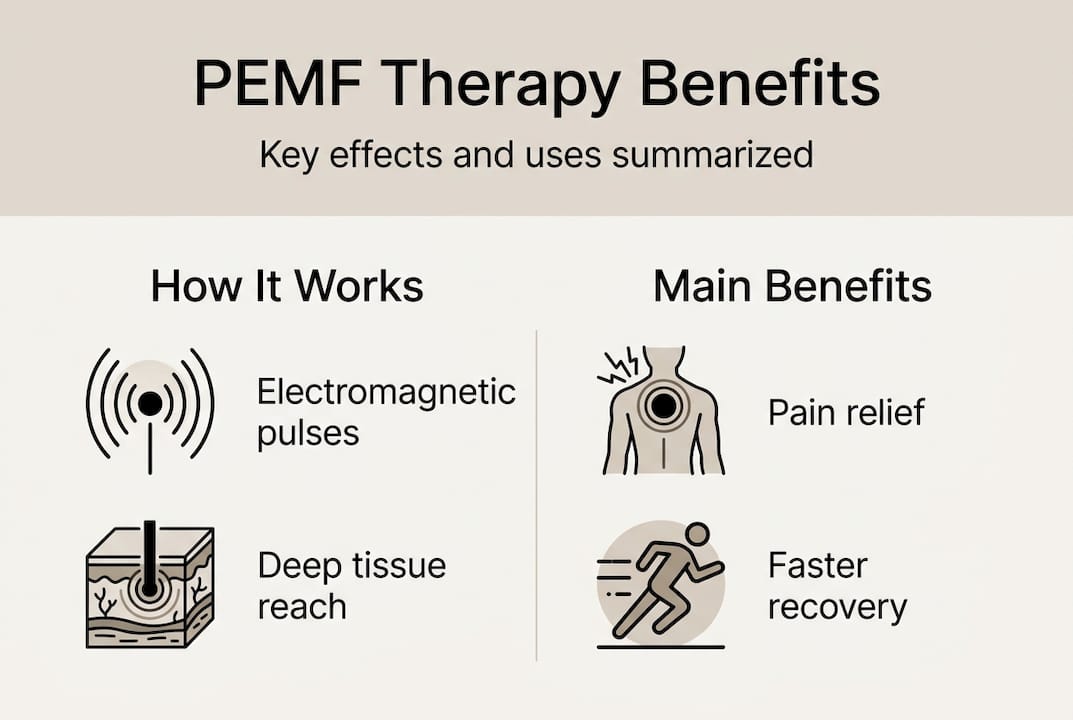
With a clear definition in mind, let’s look at how PEMF therapy physically interacts with your body. PEMF devices create collapsing magnetic fields by sending pulsed electrical currents through coils. These magnetic fields penetrate your skin, muscles, and bones without any sensation, inducing microcurrents that influence cellular behavior.

The key parameters that determine how PEMF affects your body are frequency, intensity, and waveform. Frequency refers to how many pulses occur per second, typically ranging from 1 to 100 Hz for therapeutic applications. Intensity measures the strength of the magnetic field, usually expressed in microtesla or millitesla. Waveform describes the shape of the pulse, whether it’s a smooth sine wave, a sharp square wave, or something in between.
Understanding PEMF device settings:
| Parameter | Range | Effect on Body |
|---|---|---|
| Frequency | 1-100 Hz | Lower frequencies (1-10 Hz) support relaxation and pain relief; higher frequencies (50-100 Hz) may enhance cellular energy |
| Intensity | 1-100 microtesla | Lower intensities work well for daily wellness; higher intensities target deeper tissues |
| Waveform | Sine, square, sawtooth | Different waveforms influence how cells respond to the signal |
These induced microcurrents don’t cause muscle contractions or tingling sensations. Instead, they work at the cellular membrane level, supporting ion exchange and encouraging cells to maintain proper voltage. Healthy cells typically maintain a voltage around negative 70 millivolts. When cells are damaged or inflamed, this voltage drops, and cellular function suffers. PEMF helps restore optimal cellular voltage, which supports healing and reduces inflammation.
What makes PEMF different from other therapies is its ability to reach deep tissues without discomfort. Heat therapy warms surface tissues, massage manipulates muscles mechanically, and electrical stimulation activates nerves. PEMF works through magnetic fields that pass through all these layers, influencing cellular function throughout the treatment area. This makes it particularly valuable for wellness tech focused on recovery, especially when combined with other modalities like whole-body vibration therapy.
Pro Tip: Start with lower intensity settings and shorter sessions (10-15 minutes) when you first try PEMF therapy. Your body needs time to adapt to the cellular changes, and gradual introduction helps you gauge your individual response.
Proven benefits of PEMF therapy
Understanding the mechanics is critical, but what do studies actually show about PEMF’s impact? Clinical research provides compelling evidence. A randomized controlled trial demonstrated 36% pain reduction with PEMF compared to just 10% with standard care alone. Even more striking, participants using PEMF therapy required over 50% fewer pain medications than control groups.
These aren’t isolated findings. Multiple studies on knee osteoarthritis, soft tissue injuries, and chronic pain conditions show consistent improvements in pain levels, physical function, and quality of life. The research points to several key mechanisms: reduced inflammation markers, improved muscle activation patterns, enhanced circulation, and faster tissue repair.
Research-backed benefits of PEMF therapy:
- Significant pain reduction across multiple conditions, particularly joint and muscle pain
- Decreased inflammation through modulation of inflammatory cytokines and cellular signaling
- Improved muscle activation and strength, supporting better movement patterns
- Faster recovery times after physical activity, injury, or surgery
- Reduced medication dependence for pain management
- Enhanced cellular repair and tissue regeneration
| Condition | PEMF Outcome | Standard Care Outcome |
|---|---|---|
| Knee osteoarthritis | 36% pain reduction | 10% pain reduction |
| Medication use | 50%+ reduction | Minimal change |
| Physical function | Significant improvement | Modest improvement |
| Inflammation markers | Measurable decrease | Variable results |
What does this mean for your everyday life? If you’re dealing with persistent joint discomfort, PEMF therapy might help you move more freely and reduce your reliance on over-the-counter pain relievers. If you’re recovering from an injury, it could speed up the healing process and get you back to activities you enjoy. For wellness-focused individuals, PEMF offers a proactive approach to maintaining cellular health and preventing the gradual decline that often comes with aging.
The beauty of PEMF therapy lies in its versatility. It complements other approaches like heat therapy for pain relief, fits naturally into broader pain relief strategies, and works synergistically with lifestyle factors like nutrition for pain management.
Comparing PEMF therapy to other alternative treatments
With proven benefits in mind, how does PEMF stack up against other tools in your wellness toolbox? Each therapy offers unique advantages, and understanding these differences helps you make informed choices about your recovery routine.
PEMF vs. other common therapies:
| Therapy Type | Mechanism | Best For | Limitations |
|---|---|---|---|
| PEMF | Electromagnetic fields induce cellular currents | Deep tissue pain, inflammation, cellular health | Requires consistent use; effects build over time |
| Heat therapy | Increases blood flow through warmth | Surface muscle tension, stiffness | Limited penetration depth; temporary relief |
| TENS units | Electrical nerve stimulation | Acute pain, nerve-related discomfort | Surface-level; can cause skin irritation |
| Ultrasound therapy | Sound waves create deep tissue warmth | Targeted soft tissue injuries | Requires professional application |
| Vibration therapy | Mechanical oscillation | Muscle activation, circulation | Limited research on long-term benefits |
PEMF therapy offers several distinctive advantages. First, it reaches deep tissues without any sensation, making it comfortable for people who find electrical stimulation uncomfortable. Second, the research backing PEMF demonstrates measurable cellular changes, not just symptomatic relief. Third, PEMF doesn’t interfere with other therapies, so you can combine it with heat, massage, or physical therapy for enhanced results.
Consider your specific needs when choosing therapies. If you’re dealing with surface muscle tension after a long day, heat therapy might provide immediate comfort. For nerve-related conditions like carpal tunnel syndrome, you might benefit from combining PEMF with ergonomic adjustments and targeted exercises. The most effective pain management plans often layer multiple approaches, addressing both symptoms and underlying cellular health.
Is PEMF therapy safe and who should consider it?
Now let’s address the question on many readers’ minds: is PEMF therapy actually safe for you? The short answer is yes, for most people. PEMF is non-invasive, uses low-frequency fields well below levels that cause tissue heating, and has been studied extensively without significant adverse effects reported.
That said, certain precautions apply. If you have an implanted electronic device like a pacemaker, insulin pump, or cochlear implant, PEMF therapy could interfere with its function. Pregnant women should avoid PEMF as a precaution, since research on pregnancy and electromagnetic fields remains limited. People with active bleeding, acute infections, or certain cancers should consult their healthcare provider before starting PEMF therapy.
Who benefits most from PEMF therapy:
- Individuals with chronic pain in joints, muscles, or soft tissues
- Active adults seeking faster recovery after exercise or physical activity
- People managing inflammation from arthritis, injuries, or autoimmune conditions
- Wellness-focused individuals looking to support cellular health proactively
- Those reducing medication use who want non-pharmaceutical pain management options
PEMF is generally well-tolerated and safe for most adults when used as directed. Side effects are rare and typically mild, such as temporary tingling or slight discomfort that passes quickly. Most people feel nothing during treatment, while others report a subtle sense of relaxation or warmth.
The ideal PEMF candidate is someone dealing with persistent discomfort who wants a research-backed, non-invasive option that supports the body’s natural healing processes. Whether you’re exploring wellness devices for recovery or looking to speed up recovery after physical therapy, PEMF offers a scientifically grounded approach that fits seamlessly into modern wellness routines.
Pro Tip: Always discuss new therapies with your healthcare provider, especially if you have existing medical conditions or take medications. They can help you determine whether PEMF therapy aligns with your overall health strategy and monitor your progress as you incorporate it into your routine.
Elevate your recovery with Lunix wellness solutions
You’ve learned how PEMF therapy works at the cellular level and the research supporting its benefits for pain, inflammation, and recovery. Now it’s time to think about how you can integrate these insights into your daily wellness practice.

At Lunix, we understand that true wellness comes from creating personalized recovery stations in your own home. Our carefully designed wellness devices complement therapies like PEMF by addressing multiple aspects of recovery and comfort. From targeted heat therapy to ergonomic support solutions, we help you build a comprehensive approach to feeling your best. Explore our collection of smart recovery tools that transform your living space into a sanctuary for restoration and long-term health.
Frequently asked questions
What can PEMF therapy help treat?
PEMF therapy is primarily used for pain management, inflammation reduction, faster recovery, and supporting joint or muscle health. Clinical trials demonstrate pain reduction and improved function for various musculoskeletal conditions.
How long does it take to see results with PEMF therapy?
Some people notice pain or stiffness relief after a few sessions, while others see improvements over several weeks. Consistent use over weeks typically produces the most significant functional improvements in research settings.
Is PEMF therapy safe to use at home?
Most home PEMF devices are safe when used as directed, but check with your doctor first, especially if you have a pacemaker or implanted device. PEMF is generally well-tolerated by most adults.
Are there side effects with PEMF therapy?
Side effects are rare; some users may feel mild discomfort or temporary tingling, which usually passes quickly. PEMF is generally safe and rarely causes adverse reactions.
How is PEMF therapy different from TENS or heat therapy?
PEMF works at a cellular level using magnetic fields, while TENS uses electrical stimulation, and heat therapy increases blood flow with warmth. PEMF has distinctive mechanisms compared to other non-invasive modalities.