


Stiff knees on the stairs. Tight hips when you stand up after sitting. A shoulder that protests every morning. If any of this sounds familiar, you are not alone. Joint stiffness is one of the most common complaints among adults between 40 and 65, and it has a real impact on how you work, move, and enjoy life. The good news is that restoring joint comfort is absolutely within reach. This guide walks you through everything you need, from the right exercises and stretching techniques to overlooked lifestyle changes, all grounded in current research, so you can move better starting today.
Table of Contents
- Get started: Tools, mindset, and health check
- Core mobility exercises: Low-impact movement for flexibility and strength
- Stretching routines and flexibility: Static, dynamic, and real-world tips
- Lifestyle upgrades: Weight, diet, and joint-specific therapies
- Measuring progress: Tracking, troubleshooting, and personalizing your plan
- A smarter approach to joint mobility: What most guides miss
- Support your mobility journey with the right tools
- Frequently asked questions
Key Takeaways
| Point | Details |
|---|---|
| Consistency matters | Regular low-impact exercise and stretching bring the greatest long-term mobility gains for adults 40-65. |
| Safe, holistic approach | Combine movement, strength training, diet, and professional guidance for optimal joint function and pain relief. |
| Track your progress | Measuring your range of motion and adjusting your plan keeps improvements steady and sustainable. |
| Small changes, big impact | Even modest weight loss and daily flexibility tweaks can dramatically reduce joint stress and boost comfort. |
Get started: Tools, mindset, and health check
Before you launch into mobility routines, it is crucial to set yourself up for success. Here is how to prepare your body and your surroundings.
The right mindset is your first piece of equipment. Many adults make the mistake of going too hard too fast, then quitting when soreness hits. Understanding the mobility benefits in midlife can help you stay motivated when progress feels slow. Small, consistent steps beat intense bursts every time. Think of it like building a house: you need a solid foundation before you add the walls.
Before starting any new movement program, a quick health check is smart. Talk to your doctor or physical therapist if you have had a recent injury, surgery, or a chronic condition like osteoarthritis or rheumatoid arthritis. This is not about fear; it is about getting a plan that fits your body specifically.
Basic equipment you will need:
- A non-slip exercise mat
- Supportive, cushioned shoes
- A sturdy chair for balance support
- A water bottle
- A simple notebook or app to track your sessions
| Setup element | Why it matters |
|---|---|
| Non-slip mat | Prevents falls during floor work |
| Supportive shoes | Reduces joint impact during movement |
| Chair support | Allows safe balance during standing exercises |
| Tracking log | Keeps you accountable and shows real progress |
For your first week, schedule three sessions of 20 to 30 minutes each. As Harvard Health notes, warm up 5 to 10 minutes, focus on proper form, and consult a professional for personalization to prevent injury. A warm-up does not need to be complicated: a brisk walk around the block or gentle marching in place is enough to get blood moving to your joints. You can also explore this holistic guide to healthy joints for a broader picture of what supports joint health long term.
Pro Tip: Set a recurring calendar reminder for your mobility sessions. Treating them like appointments rather than optional activities dramatically improves follow-through.
Core mobility exercises: Low-impact movement for flexibility and strength
With your foundation set, let us look at proven movement strategies that directly target joint health.
Low-impact aerobic exercise is one of the most powerful tools you have. Walking, cycling, and swimming all reduce joint stiffness by promoting synovial fluid production, which is the natural lubricant inside your joints. Research confirms that regular low-impact aerobics lubricate joints, reduce stiffness, and boost function for adults 40 and older, with 150 to 300 minutes of moderate weekly activity and two strength sessions per week recommended.
Strength training is the other half of the equation. Building the muscles around a joint gives it more support and reduces the load placed on the joint itself. According to research, strengthening exercises stabilize joints, reduce pain, and improve range of motion, though they do not reverse osteoarthritis. Bodyweight moves like wall sits, clamshells, and seated leg raises are excellent starting points. Resistance bands add gentle progressive challenge without the stress of heavy weights.

The benefits of exercise for joints go beyond pain relief. Regular movement also improves balance, reduces fatigue, and supports cartilage health over time.
How to start and progress safely:
- Begin with 10 to 15 minutes of low-impact aerobics three times per week.
- Add one bodyweight strength session in week two.
- Increase session duration by five minutes every two weeks.
- Introduce resistance bands once bodyweight moves feel comfortable.
- Aim for the full 150 to 300 minutes per week by week eight.
| Exercise type | Best for | Frequency |
|---|---|---|
| Walking | General joint lubrication | 5 days/week |
| Cycling | Knee and hip mobility | 3 to 4 days/week |
| Resistance bands | Muscle support around joints | 2 days/week |
| Bodyweight strength | Stability and balance | 2 days/week |
Pro Tip: Swimming is especially valuable if you have significant knee or hip pain. Water reduces your body weight by about 90%, letting you move freely without joint stress.
For more ideas on how to keep your joints flexible as you age, and to explore pain relief strategies that complement movement, these resources are worth bookmarking.
Stretching routines and flexibility: Static, dynamic, and real-world tips
While movement is key, targeted stretching routines multiply your mobility gains. Here is how to use stretching the smart way.
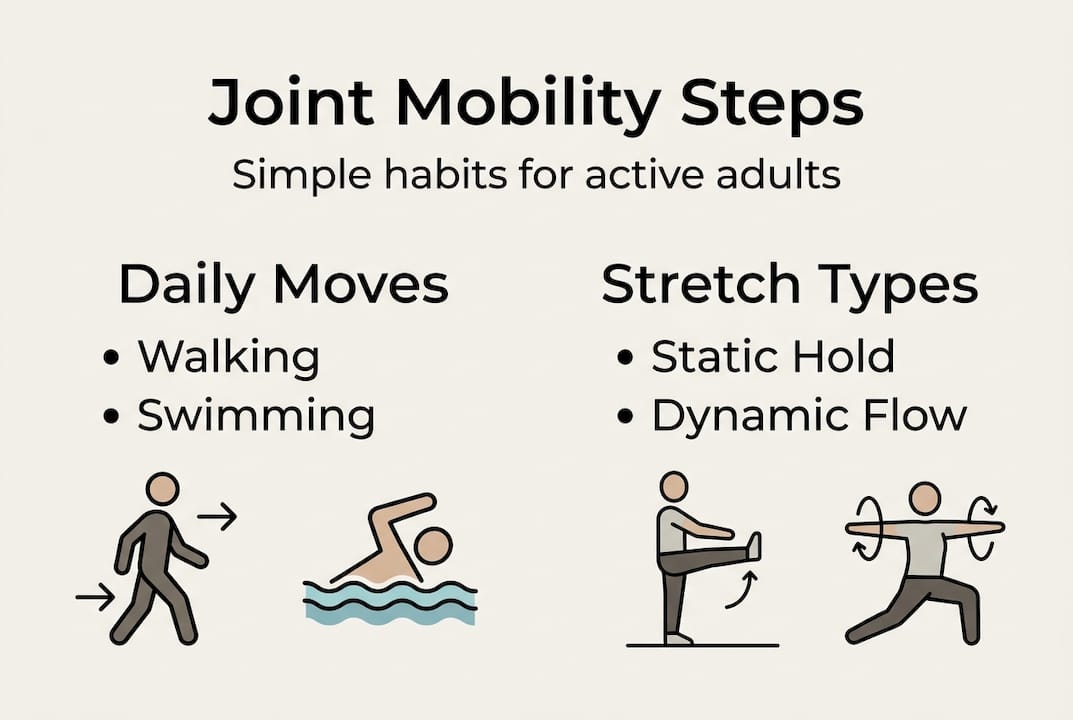
There are three main types of stretching worth knowing. Static stretching means holding a position for 20 to 60 seconds, like a seated hamstring stretch. Dynamic stretching involves controlled movement through a range, like leg swings or arm circles. PNF stretching (proprioceptive neuromuscular facilitation) combines contraction and relaxation to push range of motion further and is typically done with a partner or therapist.
Research shows that static and dynamic stretching both reduce muscle stiffness and improve range of motion, with static stretching best for long-term chronic gains and dynamic stretching ideal before activity. There is an important caveat: acute static stretching may temporarily reduce strength output, so save it for after your workout or on rest days.
Recommended stretching routine for active adults:
- Warm up for five minutes before any stretching session.
- Perform dynamic stretches (leg swings, hip circles, shoulder rolls) before exercise.
- Hold static stretches for 30 seconds each, two to four times per muscle group.
- Stretch at least four days per week for consistent gains.
- Progress by gradually increasing the depth of the stretch, never by forcing it.
Common mistakes to avoid:
- Stretching cold muscles (always warm up first)
- Bouncing during a static stretch, which can cause micro-tears
- Ignoring mild discomfort versus sharp pain (sharp pain means stop)
- Skipping the lower body entirely and only stretching the upper body
- Rushing through stretches without holding long enough
If back tightness is part of your picture, exploring stretching for back stiffness can give you targeted relief alongside your general routine.
Pro Tip: A morning stretching routine of just 10 minutes can set a positive tone for your entire day and reduce the stiffness that tends to peak after sleep.
Lifestyle upgrades: Weight, diet, and joint-specific therapies
Maximizing your mobility is not just about exercise. Addressing weight, diet, and advanced techniques can amplify your gains significantly.
Weight management has a surprisingly large effect on your joints. According to the National Institute of Arthritis and Musculoskeletal and Skin Diseases, losing just one pound reduces four pounds of pressure on your knees, and anti-inflammatory eating lowers pain and inflammation. Even a modest 5 to 10 pound loss can create a noticeable difference in how your knees and hips feel during daily activity.
Diet plays a direct role in joint inflammation. Research on nutrition and joint health points to strong connections between what you eat and how your joints feel day to day.
Anti-inflammatory eating basics:
- Eat more: fatty fish (salmon, sardines), leafy greens, berries, olive oil, nuts
- Limit: processed foods, refined sugars, trans fats, excessive red meat
- Stay hydrated: cartilage is roughly 80% water, so hydration directly supports joint cushioning
| Food category | Joint-friendly choice | What to reduce |
|---|---|---|
| Protein | Fatty fish, legumes | Processed deli meats |
| Fats | Olive oil, avocado | Trans fats, fried foods |
| Carbohydrates | Whole grains, vegetables | White bread, sugary snacks |
Manual therapy is another tool worth considering, especially if you are managing osteoarthritis. A clinical trial found that Mulligan’s mobilization with movement is proven for rapid gains in pain and function for knee osteoarthritis. This technique, performed by a trained physical therapist, involves guided joint movement combined with manual pressure to quickly restore range of motion.
Combining weight management, anti-inflammatory nutrition, and targeted manual therapy creates a powerful three-way support system for your joints. No single approach does everything, but together they deliver results that exercise alone cannot.
Exploring the midlife mobility advantages of a combined approach can help you see the bigger picture of what is possible.
Measuring progress: Tracking, troubleshooting, and personalizing your plan
After you have started implementing these strategies, it is time to ensure your effort delivers real, lasting results.
Self-assessment does not require fancy equipment. A few simple tests can tell you a lot. Try measuring how far you can reach toward your toes, how wide you can open your arms, or how easily you can turn your head side to side. Note these benchmarks in a journal or app every two weeks. Improvement in these small markers signals that your program is working.
Stat to know: A six-month program of medium-intensity training combining range-of-motion work, walking, and strength exercises produced significant mobility, strength, and aerobic gains for adults aged 60 and older. Consistency over six months is the real differentiator.
Signs your routine is working:
- Morning stiffness decreases in duration
- You can complete daily tasks with less discomfort
- Your range of motion benchmarks improve over time
- Energy levels during activity increase
How to troubleshoot common setbacks:
- Plateau: Change one variable, such as adding five minutes to your session or swapping walking for cycling.
- Lost motivation: Find a movement buddy or join a local group fitness class.
- Increased pain: Reduce intensity by 30% and consult your provider if pain persists beyond 48 hours.
- Boredom: Rotate between three different aerobic activities each week.
- Time constraints: Break sessions into two 15-minute blocks instead of one 30-minute session.
Personalization is key. Someone managing hip osteoarthritis will need a different program than someone dealing with shoulder stiffness. If you are unsure how to adjust, a physical therapist can build a plan around your specific joints and goals. For seasonal adjustments and day-to-day comfort, these comfort tips for joint pain offer practical, situation-specific guidance.
A smarter approach to joint mobility: What most guides miss
Here is something worth saying plainly: most people who struggle with joint mobility are not doing too little. They are doing one thing too intensely, or chasing the latest trend, and then burning out when results do not come fast enough.
The research is clear that combining aerobic movement, strength training, stretching, and lifestyle changes works far better than any single method. Yet most advice focuses on one magic exercise or one superfood. That kind of tunnel vision leads to frustration.
What we have seen is that the adults who make the most lasting progress are the ones who build a routine they actually enjoy and stick with it for months, not weeks. Gradual, steady gains are not glamorous, but they are durable. A good posture habit, for example, can quietly reduce joint strain all day long. Learning more about posture after 40 is one of those small shifts that pays off in ways people rarely expect.
The real setback in most mobility journeys is rushing. Trying to do too much too soon leads to soreness, discouragement, and quitting. Patience is not passive. It is the active choice to trust the process and show up consistently.
Support your mobility journey with the right tools
You have put in the effort to understand what your joints need. Now it is worth making sure your home environment supports that work every single day.

At Lunix, we design recovery and comfort solutions specifically for people who take their well-being seriously. Whether you are looking for targeted support after a workout, a way to ease stiffness during rest, or tools that help you maintain the gains you have worked hard for, our Lunix recovery products are built to complement evidence-based routines like the ones in this guide. Explore what is available and find the tools that fit your lifestyle and your joints.
Frequently asked questions
How often should I exercise to improve joint mobility?
Aim for 150 to 300 minutes of moderate-intensity aerobic exercise and two strength sessions each week for best results.
What is the best type of stretching for joint mobility?
Static stretching done consistently is most effective for chronic mobility gains, while dynamic stretching before activity prevents temporary strength loss.
Can weight loss really reduce joint pain and stiffness?
Yes. Losing even one pound reduces four pounds of pressure on your knees, easing pain and improving movement noticeably.
Are manual therapies like Mulligan’s MWM safe for midlife adults?
Modern studies show Mulligan’s mobilization with exercise safely accelerates pain relief and function, especially for knee osteoarthritis.
Recommended
- Healthy Aging: Natural Ways to Keep Your Joints Flexible and Strong – Lunix
- Top 5 advantages of mobility exercises for midlife health – Lunix
- Unlock the Secrets to Happy, Healthy Joints: Your Holistic Guide – Lunix
- Movement Therapy: Enhancing Wellness and Mobility – Lunix
- Role of Shoes in Joint Health – Impact and Solutions – YDA UK