


TL;DR:
- Many adults find home environments increasingly overstimulating, contributing to stress rather than relaxation.
- Simple decluttering, thoughtful design, and establishing routines can transform your space into a calming sanctuary.
You walk through your front door after a long day and somehow feel more tense, not less. Sound familiar? For many adults, home has quietly become a source of overstimulation rather than a refuge. Piles of unread mail, flickering screens, harsh lighting, and rooms that feel cluttered with both objects and obligation all add up to an environment that keeps your nervous system on edge. The good news is that you don’t need a full renovation or a design degree to fix this. With a few intentional changes to your space and your habits, genuine home relaxation is completely within reach.
Table of Contents
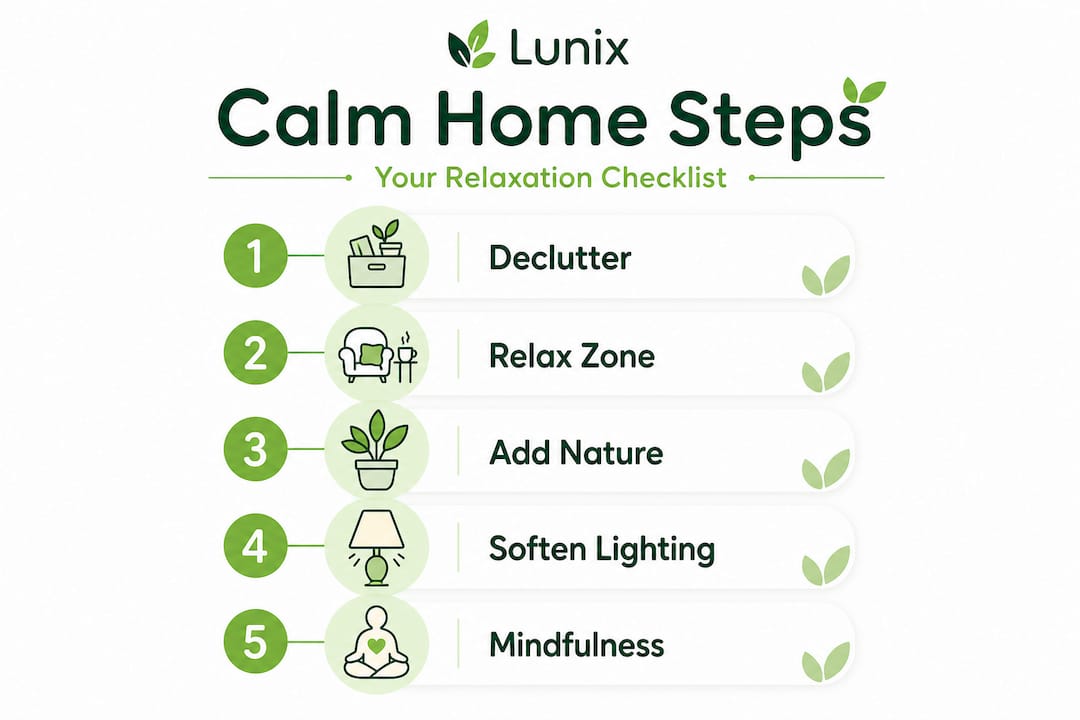
- Assess your space: The case for less is more
- Choose and design your relaxation zone
- Bring nature indoors: The power of biophilic elements
- Lighting, color, and sensory details: Completing your oasis
- Anchor relaxation with a mindfulness routine
- Why calm is about more than design: Our take
- Bring relaxation home with Lunix
- Frequently asked questions
Key Takeaways
| Point | Details |
|---|---|
| Declutter first | Removing visual clutter lays the foundation for a calming environment in any home. |
| Designate a calm zone | A specific spot set apart with cozy seating and minimal distractions helps trigger relaxation. |
| Bring in greenery | Adding simple plants boosts mood and reduces physiologic stress according to research. |
| Prioritize soft lighting | Warm, layered light supports circadian rhythm and reduces feelings of overstimulation. |
| Build a mindfulness habit | A daily breath-focused routine anchors the benefits of your calming space and supports well-being. |
Assess your space: The case for less is more
With the problem clear and the goal set, the first step is examining what in your environment might be quietly ramping up your stress.
Most of us underestimate how much our surroundings affect our inner state. Visual noise, which is the mental load created by seeing too many objects, surfaces, and colors at once, can keep your brain in a low-grade state of alert without you even noticing. Interior designers consistently recommend mindful subtraction first: reduce visual noise and clutter before making any other changes to your space.
Decluttering isn’t just about tidiness. It’s about giving your eyes and mind somewhere to rest. Research from Healthline confirms that decluttering may reduce stress and that limiting digital stimulation in key living areas reinforces that effect. The science backs up what most people feel intuitively: a cleaner, quieter space signals safety and rest to the brain.
Here are the most common sources of visual overstimulation at home and simple ways to reduce them:
| Source of overstimulation | Why it adds stress | Simple reduction strategy |
|---|---|---|
| Piled mail and paperwork | Creates unfinished task cues | Use a single inbox tray, sort weekly |
| Multiple remotes and cables | Visual clutter on surfaces | Cable management box or drawer organizer |
| Mismatched decor | Competing focal points | Choose a two-color anchor palette |
| Overloaded shelving | Too many items to process | Edit to five key objects per shelf |
| Bright overhead lighting | Triggers alertness, not rest | Replace or dim with warm-toned bulbs |
Top 5 spots to declutter for instant impact:
- Entryway: This is the first thing you see when you arrive. Clear shoes, bags, and stray items. A simple hook rack and one small tray for keys is enough.
- Coffee table: Limit this surface to one or two intentional objects. A candle and a book is calming. A stack of magazines, remotes, and cups is not.
- Bedroom nightstands: Remove everything except a lamp, one book, and perhaps a glass of water. Your last visual input before sleep matters.
- Kitchen countertops: Appliances you use less than once a week belong in a cabinet. Countertop clutter has a direct link to mealtime stress.
- Home office desk or any work surface: Create a physical boundary between your workspace and your relaxation space. If you can see work from your couch, your brain stays in work mode.
Pro Tip: Don’t try to declutter your whole home in a weekend. Pick one room, complete it fully, and let the calm you feel there motivate the next step. Visible progress is a powerful motivator.
Choose and design your relaxation zone
Once you’ve reduced visual clutter, the next move is to purposefully carve out and design your own relaxation zone.
A calm corner doesn’t need to be a separate room. It can be an armchair by a window, a small nook at the end of a hallway, or a corner of your bedroom that you set apart. What matters is that it feels intentionally different. Real Simple describes a calm corner as a designated low-stimulation space that prioritizes cozy seating, calming sensory items, a neutral color palette, and the removal of digital distractions.
Choose your spot based on three factors: quiet (away from high-traffic noise), natural light (a window nearby is ideal), and proximity (you’ll only use it if it’s easy to reach). Here’s how to build it step by step:
- Clear the space completely. Start with nothing. Remove every item that doesn’t serve rest or calm.
- Add one comfortable seat. This might be a plush chair, a floor cushion, or a chaise. Comfort is non-negotiable. Your body needs to feel physically supported before your mind can relax.
- Introduce two or three calming sensory anchors. Think a soft throw blanket, a scented candle with a grounding fragrance like cedarwood or lavender, or a small sound machine that plays gentle white noise.
- Set a neutral color palette. Warm whites, soft taupes, muted sage greens, and dusty blues all reduce cortical arousal. Bright reds, oranges, and busy patterns do the opposite.
- Remove screens from this zone. Your phone, tablet, and television all belong elsewhere. Healthline advises setting technology boundaries in spaces designed for mental restoration.
To help you decide between a screen-filled space and a tech-free one, here’s a quick comparison:
| Feature | Tech-enabled space | Tech-free calm corner |
|---|---|---|
| Mental state triggered | Alertness, engagement | Rest, inward focus |
| Cortisol impact | Often elevated | Often reduced |
| Sleep quality benefit | Minimal to negative | Positive |
| Creative thinking | Distracted | Supported |
| Ease of setup | Passive (default) | Active (intentional) |
Calm design is not about what you add. It’s about what you remove. Every object you eliminate is one less demand on your attention, and every demand removed is one step closer to genuine rest.
You can create a relaxation zone that works within two weeks by making even small, consistent choices about what belongs in that space and what doesn’t.
Pro Tip: Stick to a maximum of three decorative elements in your calm corner. One plant, one candle, one piece of art. More than three and the space stops feeling restful and starts feeling busy.
Bring nature indoors: The power of biophilic elements
With a dedicated space set up for calm, it’s time to infuse it with the restorative energy that only nature can provide, right inside your home.
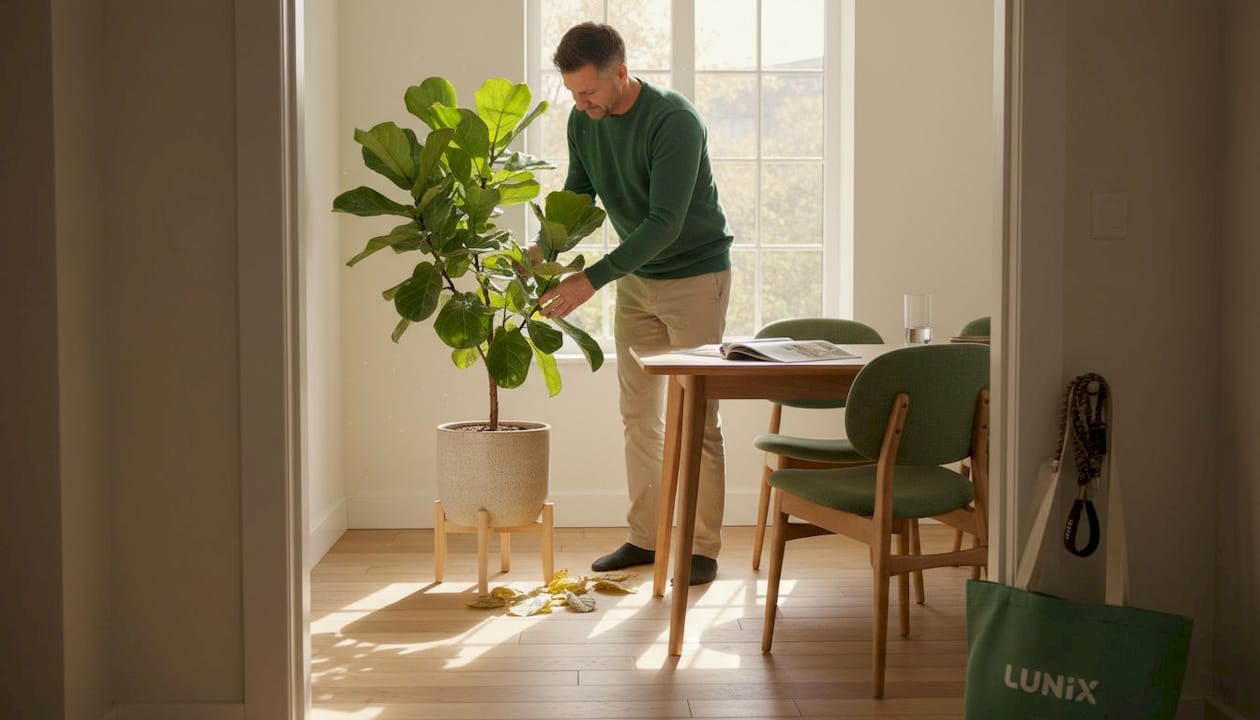
Biophilic design is the practice of connecting indoor spaces to natural elements like plants, wood, water, and organic textures. It sounds like an interior design trend, but the science behind it is solid and growing. A study in Frontiers in Psychology found that domestic interiors featuring greenery were perceived as significantly more restorative than those without. That means your brain literally reads a plant-filled room as a safer, more peaceful place to be.
Research published in Scientific Reports found that even a small living wall with plants in an indoor setting produced measurably higher physiological relaxation compared to spaces without greenery. You don’t need a jungle. You need presence.
Types of biophilic elements to consider:
- Potted houseplants: Ferns, pothos, peace lilies, and snake plants are all low-maintenance and air-quality friendly. One or two medium-sized plants can shift the entire feel of a room.
- Low-maintenance succulents: Ideal if you travel frequently or worry about plant care. They require minimal watering and add organic texture.
- Natural materials: Wooden bowls, rattan baskets, stone coasters, and linen cushion covers all signal “nature” to the brain even without living plants.
- Plant-based decor: Dried botanical arrangements, pressed botanicals in frames, or a small bundle of eucalyptus bring natural color and scent without watering requirements.
- A small water feature: Even a tabletop fountain with gentle flowing water can trigger a relaxation response through sound alone.
You can find practical comfort tips for relaxation that integrate well with biophilic design choices for a layered approach to home calm.
Pro Tip: Position at least one plant directly within your line of sight from your calm corner seating. When your eyes drift naturally to greenery during moments of rest, it reinforces the relaxation response without any additional effort.
Lighting, color, and sensory details: Completing your oasis
Now that the bones of your calming space are in place, you’ll want to refine it with finishing touches that subtly influence your senses, especially lighting and color.
Lighting is one of the most underutilized tools in home wellness design. Your body’s circadian rhythm, the internal clock that governs sleep and wakefulness, responds directly to the color temperature of light. Harsh, cool-toned overhead lighting mimics midday sun and signals to your nervous system that it’s time to be alert. Interior designers at Real Simple consistently recommend swapping harsh overheads for warm, layered, dimmable sources that support your natural wind-down cycle.
Warm LEDs rated below 3000K (look for “soft white” or “warm white” on the packaging) are your best everyday option. Layer them with floor lamps, table lamps, and even battery-operated candles to create depth and variety in your lighting. A room that has multiple small light sources always feels cozier than one lit by a single overhead fixture.
Best sensory upgrades for a calming space:
- Dimmable warm LED bulbs: Replace cold white or daylight bulbs in your relaxation zone with soft warm alternatives.
- Salt lamps or amber nightlights: These cast a golden hue that feels warm and grounding without overpowering the room.
- Muted, earthy colors: Dusty rose, warm gray, moss green, and cream tones lower visual stimulation compared to saturated, high-contrast palettes.
- Varied textures: Combine a plush throw, a smooth ceramic vase, a wooden tray, and a woven rug. Mixed textures engage your touch without adding clutter.
- Subtle scent: A diffuser with lavender or sandalwood, or an unscented beeswax candle, can complete the sensory picture without being overwhelming.
Access more home sensory tips that pair well with these lighting and color strategies for a complete room transformation.
Anchor relaxation with a mindfulness routine
With your environment primed for comfort, your final foundation is a simple, actionable routine that consistently signals to your mind and body that it’s time to unwind.
Your calm corner works best as an anchor for a daily practice. A beautiful space alone won’t shift your stress levels if you only use it occasionally. The Mayo Clinic recommends focused-breathing mindfulness as one of the most accessible and effective tools for relaxation, and you can build it into just a few minutes per day. You can also explore mindfulness pathways for stress relief to understand how different techniques support your nervous system differently.
Here’s a simple breath-focused mindfulness routine to start with:
- Sit in your calm corner at the same time each day. Morning works well for intention-setting; evening works well for winding down.
- Set a gentle timer for five minutes to begin. Remove the mental chore of watching the clock.
- Close your eyes and take three slow, deep breaths. Inhale for four counts, hold for two, exhale for six. This pattern actively engages your parasympathetic nervous system.
- Let your breathing return to normal and simply observe it. Notice the rise and fall of your chest. When your mind wanders, gently bring it back.
- End by naming one thing you’re grateful for before opening your eyes. This small practice rewires how your brain exits the session.
It’s not the length of your mindfulness session that matters. It’s the consistency. Five minutes every day will change how your nervous system responds to stress far more effectively than an hour once a week.
Learning more about mindfulness meditation techniques and pairing them with a solid stress management guide gives you a complete toolkit for lasting calm.
Why calm is about more than design: Our take
Most guides on calming home environments stop at aesthetics. They’ll tell you which paint colors to choose and which plants look best, and that advice is genuinely useful. But it misses half the picture.
At Lunix, we’ve worked closely with adults between 40 and 65 who come to us seeking recovery and rest. What we consistently see is this: a beautifully designed space without a consistent ritual attached to it will eventually stop working. The calm corner becomes a reading chair that gets piled with laundry. The biophilic plants become something else to water and worry about. Design creates the conditions for calm, but ritual creates the habit of it.
We think the most honest thing we can say is this: the greatest threat to your at-home calm is not the wrong paint color or the wrong lamp. It’s allowing digital noise and mental overflow to follow you into the space you’ve worked to protect. Your phone is designed to be compelling. Work emails don’t respect evening hours. The brain doesn’t automatically switch off because you sat down in a pretty chair.
The real work is learning how to return to your calm space with intention every single day, not just when things get bad. Think of it the way you’d think about physical health: you don’t exercise only when you’re already injured. You build the practice before the crisis, so your body and mind know the way back. Explore relaxation routines for healthy living to understand why regularity matters more than intensity.
Control what you can touch and see, but also how you return to that place every day. That combination of environment plus ritual is what actually delivers lasting, felt calm.
Bring relaxation home with Lunix
Creating a calming home environment is one of the most powerful investments you can make in your long-term well-being. When your space actively supports rest and your daily routine reinforces it, the results go beyond relaxation. Sleep improves, stress response softens, and your body gets the recovery time it genuinely needs.

At Lunix, we design smart comfort and recovery products that fit naturally into the home environments you’re building. From ergonomic support that helps your body fully let go during rest to thoughtfully designed comfort solutions, every product is created to make your calm space work harder for you. Visit Lunix to explore how our wellness solutions can become the final, fitting piece of your relaxation sanctuary.
Frequently asked questions
What is the simplest way to start creating a calmer home environment?
Begin by decluttering your most-used room and removing digital distractions. Interior designers recommend reducing visual noise first before making any other changes, since clutter is the fastest driver of indoor stress.
Do I need special equipment to make a calming space?
No special equipment is needed. Most calming spaces use existing furniture, a few cozy textiles, a plant, and controlled lighting. A designated low-stimulation zone can be built with items you likely already own.
What are biophilic elements and why do they matter?
Biophilic elements are nature-inspired features like plants, wood, and water. Research in Frontiers in Psychology shows that indoor spaces with greenery are perceived as more restorative and can reduce physiological stress.
How often should I practice a mindfulness routine for best results?
A few focused minutes each day in your calm zone delivers stronger benefits than occasional longer sessions. Mayo Clinic supports daily breath-focused mindfulness as both accessible and effective for stress reduction.
Is it okay to have some technology in a calming environment?
A truly restful zone limits technology, but soft music or curated relaxation apps can be helpful in moderation. The key guidance from Healthline is to limit screens and set boundaries with technology in any space designed for mental restoration.