


TL;DR:
- Deep tissue relief methods target deeper muscle and connective tissue to reduce tension and ease pain. They include sustained pressure, trigger point therapy, and tool-assisted self-myofascial release to produce lasting benefits. Consistent practice and proper techniques are essential for effective self-care and managing chronic pain.
Deep tissue relief methods are specialized techniques that target the deeper layers of muscle and connective tissue to reduce tension, alleviate pain, and restore mobility. Chronic pain affects approximately 24% of U.S. adults, with 8.5% experiencing high-impact pain that limits daily activities. That scale makes multi-modal, non-drug approaches not just helpful but necessary. The American Medical Association now emphasizes self-care and non-pharmacological therapies as first-line strategies. Lunixinc builds recovery tools specifically designed to support these methods at home.
1. What are the most effective deep tissue relief methods?
Deep tissue massage techniques work by applying slow, firm pressure to reach the fascia and deeper muscle fibers beneath the surface. These interventions reduce adhesions and desensitize the nervous system, restoring normal circulation and muscle mobility. That dual mechanism explains why deep tissue work produces longer-lasting relief than surface-level rubbing.
The core methods include sustained pressure, trigger point release, muscle stripping, cross-fiber friction, and tool-assisted self-myofascial release. Each targets a different aspect of tissue restriction. Used together, they form a complete approach to muscle tension relief that you can practice safely at home.
2. Sustained pressure on muscle knots
Sustained pressure is the foundation of most effective pain relief methods. You locate a tender spot, apply firm, steady pressure, and hold it until the tissue releases. Hold each knot for 20 to 90 seconds to allow the muscle to respond. Holding shorter than 20 seconds rarely produces a lasting change.
The key is patience. Your muscle needs time to register the pressure signal and begin releasing. If you feel the tension softening under your thumb or tool, that is the release you are looking for. Move to the next spot only after you feel that shift.
3. Trigger point therapy: finding the right pressure level
Trigger point therapy targets specific hypersensitive spots within a muscle that refer pain to other areas. A knot in your upper trapezius, for example, can send pain up into your skull. Releasing it at the source stops that domino effect of physical strain.
Effective trigger point therapy maintains a discomfort level of 5 to 7 out of 10. That range means you feel meaningful pressure without sharp or burning pain. Stop immediately if you feel numbness or a shooting sensation. Those signals indicate nerve compression, not muscle release.
- Apply pressure with a thumb, knuckle, or massage ball
- Hold at the 5–7 discomfort level for 20–60 seconds
- Breathe slowly and let the muscle soften before releasing
- Repeat up to 3 times per spot in a single session
4. Muscle stripping and cross-fiber friction
Muscle stripping involves applying firm pressure along the length of a muscle fiber, moving slowly from origin to insertion. Think of it as ironing out a wrinkle in fabric. This technique breaks up longitudinal adhesions and improves the glide between muscle layers.
Cross-fiber friction works perpendicular to the muscle fibers. You apply short, brisk strokes across the grain of the tissue. This method is particularly effective for tendons and areas where scar tissue has formed. Both techniques benefit from starting with lighter effleurage strokes before moving into deeper pressure. That warm-up sequence reduces discomfort and primes the tissue to respond.
Pro Tip: Always work beside the spine, never directly on the vertebrae. Applying direct pressure to spinal bones can irritate nerves and cause injury.
5. How tool-assisted methods enhance muscle tension relief
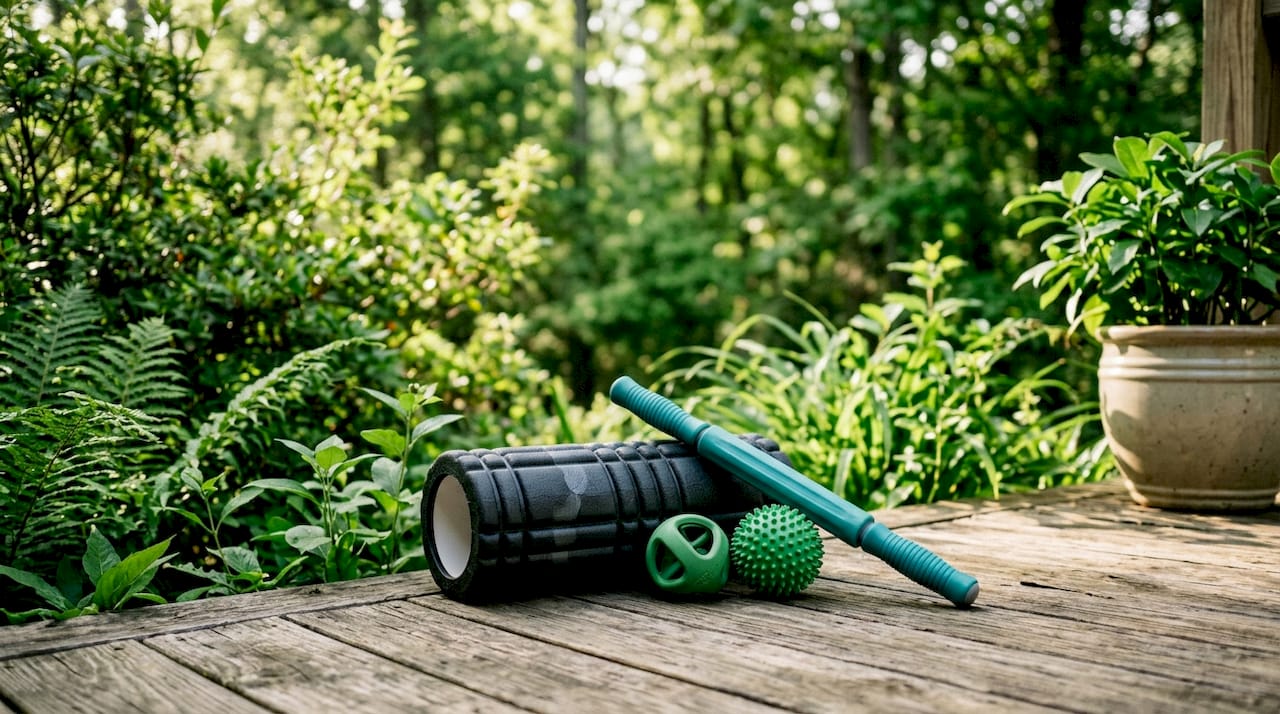
Tools extend your reach and apply consistent pressure that hands alone cannot sustain. Foam rollers deliver compressive and shear forces, while vibration devices produce neuromuscular stimulation that desensitizes overactive tissue. Each tool type produces a distinct mechanical effect on the fascia and underlying muscle.
Massage balls target smaller, harder-to-reach areas like the glutes, feet, and shoulder blades. Percussion devices, commonly called massage guns, deliver rapid pulsing pressure that penetrates deeply without requiring you to sustain manual effort. You can learn more about using massage guns effectively to get the most from each session.
| Tool type | Pressure depth | Best target areas | Ease of use | Portability |
|---|---|---|---|---|
| Foam roller | Moderate | Back, quads, IT band | Easy | Low |
| Massage ball | High | Glutes, feet, shoulders | Moderate | High |
| Percussion device | Deep | Large muscle groups | Easy | Moderate |
| Manual thumb/knuckle | Variable | Neck, forearms | Requires practice | Very high |
Pro Tip: Combine tool use with a 3-minute warm-up walk or arm swings before your session, then finish with 5 minutes of gentle stretching. That sequence produces noticeably better results than tool use alone.
6. Warming up before deep tissue work
Warming tissues before deep work is not optional. Warming tissues for 3 to 5 minutes before deep manual work improves tissue pliability and reduces discomfort during the session. Cold, stiff tissue resists pressure and is more prone to bruising or irritation.
Dynamic movement is the most effective warm-up for this purpose. Arm circles, leg swings, a short walk, or even a warm shower all raise tissue temperature and prime the mechanoreceptors in your muscles. Mechanoreceptors are sensory nerve endings that respond to pressure. When they are primed, your body interprets deep pressure as therapeutic rather than threatening.
Here are the most reliable warm-up options before a deep tissue session:
- 3 to 5 minutes of brisk walking or marching in place
- Arm circles and shoulder rolls for upper body work
- Hip circles and leg swings for lower body sessions
- A warm shower or heating pad applied for 5 minutes to the target area
7. Post-session recovery techniques
Recovery after deep tissue work matters as much as the session itself. Skipping it can leave tissue inflamed and sore the next day. Gentle effleurage strokes, which are long, flowing passes over the skin, calm the nervous system and signal the body to shift from stimulation to repair.
Therapeutic stretching techniques applied after a session extend the benefits by lengthening the tissue while it is still warm and pliable. Hold each stretch for 30 to 60 seconds without bouncing. Passive stretching, where you relax into a position rather than forcing it, works best immediately after deep tissue work. Staying hydrated after a session also supports tissue recovery by flushing out metabolic waste released during deep pressure work.
8. Safety rules that protect your results
Safety is what separates effective self-massage from self-injury. Avoid applying direct pressure on bones or spinal vertebrae to prevent nerve irritation. Always target the muscle tissue beside the spine, not the spine itself. This rule applies whether you are using your hands, a foam roller, or a percussion device.
Other safety principles worth following:
- Never work on bruised, inflamed, or broken skin
- Avoid deep pressure over varicose veins or areas with poor circulation
- Limit each muscle group to 5 to 10 minutes per session to prevent overuse
- If pain increases after a session rather than decreasing, reduce pressure in the next session
9. Integrating deep tissue methods into a chronic pain management plan
Deep tissue techniques work best as part of a broader plan, not as a standalone fix. Non-pharmacological therapies like targeted massage provide safe alternatives to long-term opioid treatment, which carries risks of tolerance and hyperalgesia. That does not mean medication has no place. It means manual therapy approaches should be your first line of defense for chronic muscle pain.
Graded activity programs reduce pain sensitivity more effectively than high-intensity quick fixes. Start with shorter, lighter sessions and build gradually over weeks. This approach mirrors the AMA’s guidelines on pacing and patient-centered care. You can read more about chronic pain management strategies to build a plan that fits your life.
A well-rounded chronic pain management plan combines:
- Deep tissue and self-massage sessions 3 to 4 times per week
- Regular low-impact exercise such as walking, swimming, or cycling
- Cognitive behavioral therapy or mindfulness to address the psychological dimension of pain
- Adequate sleep and anti-inflammatory nutrition to support tissue repair
- Relaxation practices for mental health that reduce the stress response driving muscle tension
10. Choosing the right oils and surfaces for self-massage
The right massage oil reduces friction and allows your hands or tools to glide smoothly over the skin. Frictionless movement lets you apply deeper pressure without dragging or irritating the surface tissue. Coconut oil, jojoba oil, and arnica-infused oils are widely used for muscle relief work. Arnica in particular has a long clinical history for reducing bruising and soreness after deep tissue sessions.
Your surface matters too. A firm massage table or yoga mat on the floor gives you the stability needed to apply consistent pressure. A soft mattress absorbs the force you apply and reduces the effectiveness of every technique. For back and glute work, lying on a firm floor with a massage ball beneath you is one of the most effective self-massage setups available.
11. Building a consistent weekly routine
Consistency produces results that intensity cannot. A 15-minute session three times per week outperforms a 90-minute session once a month. Your nervous system and connective tissue adapt to regular input. That adaptation is what creates lasting relief rather than temporary comfort.
A practical weekly structure looks like this: two sessions focused on your primary problem areas, one session covering the full body lightly, and daily 5-minute warm-up movements to keep tissue pliable. Track how your tension levels change week to week. That feedback tells you which techniques are working and where to adjust. For a structured starting point, the self-massage at home guide from Lunixinc walks through each step clearly.
Key takeaways
The most effective deep tissue relief methods combine sustained pressure, trigger point release, tool-assisted self-myofascial release, and graded progression to produce lasting muscle tension relief and chronic pain reduction.
| Point | Details |
|---|---|
| Hold pressure long enough | Sustain pressure on each knot for 20–90 seconds to produce a real tissue release. |
| Stay in the safe discomfort zone | Maintain a 5–7 out of 10 discomfort level and stop if pain feels sharp or numb. |
| Warm up before every session | Three to five minutes of dynamic movement improves tissue pliability and reduces injury risk. |
| Use tools to extend your reach | Foam rollers, massage balls, and percussion devices each produce distinct mechanical effects on fascia. |
| Build a consistent routine | Three short sessions per week outperforms occasional intense work for long-term pain relief. |
What I have learned from years of watching people approach recovery
Most people make the same mistake: they go too hard, too fast, and then wonder why they feel worse the next day. Deep tissue work is not about how much pain you can tolerate. It is about applying the right amount of pressure, in the right place, for the right duration. The body responds to precision, not force.
The second mistake I see constantly is skipping the warm-up. People grab a foam roller cold and grind away at a tight IT band for ten minutes. The tissue is not ready. The result is irritation, not release. Three minutes of movement before you start changes the entire outcome.
Tool investment is worth it, but technique matters more than the tool. A $20 massage ball used correctly outperforms a $300 percussion device used carelessly. Learn the fundamentals first. Then add tools to amplify what you already know how to do.
The mental side of this work is underrated. Regular self-massage lowers cortisol and activates the parasympathetic nervous system. That means it does not just relieve physical tension. It genuinely calms your mind. Pairing your sessions with therapeutic soundscapes deepens that effect noticeably. Recovery is not just physical. Treat it that way and your results will reflect it.
— Lunix
Lunixinc recovery tools built for deep tissue work
Lunixinc designs recovery products for people who take their body seriously. Every tool in the Lunixinc recovery collection is built to support the kind of consistent, technique-driven self-care described in this guide.

Whether you are targeting chronic back tension, post-workout soreness, or daily stress that settles into your shoulders and neck, Lunixinc has tools that fit your routine. The collection includes options suited for both beginners and people with established self-massage practices. Explore the full range and find the right tool for your body and your goals.
FAQ
What is the difference between deep tissue and regular massage?
Deep tissue massage techniques apply slow, firm pressure to reach the fascia and deeper muscle layers, while regular massage focuses on surface-level relaxation. The goal of deep tissue work is to break down adhesions and restore mobility, not just reduce surface tension.
How often should you use deep tissue relief methods?
Three to four sessions per week is the most effective frequency for ongoing muscle tension relief. Daily sessions are not necessary and can cause tissue irritation if pressure is too intense.
Is deep tissue self-massage safe for chronic pain?
Self-massage is safe for most adults with chronic pain when applied at a moderate pressure level and away from bones and nerves. People with inflammatory conditions, blood clots, or recent injuries should consult a physician before starting.
What tools work best for at-home deep tissue relief?
Foam rollers, massage balls, and percussion devices each serve different purposes. Foam rollers cover large muscle groups, massage balls target smaller areas, and percussion devices deliver deep vibration with minimal effort.
How long does it take to feel results from deep tissue methods?
Most people notice reduced tension after 2 to 3 consistent sessions. Lasting relief from chronic muscle pain typically develops over 4 to 6 weeks of regular practice.