


Finding the balance between staying active and managing sore muscles becomes more challenging as we age. Muscle recovery is not just about getting enough rest, but also restoring your body’s natural balance after every workout or physical stress. For American adults over 40, recognizing the need for individualized muscle recovery strategies can help support daily fitness goals and overall wellness. This article shares practical solutions to optimize healing and maintain strength while avoiding common recovery myths.
Table of Contents
- Defining Muscle Recovery And Common Myths
- How Muscle Recovery Changes With Age
- Types Of Muscle Recovery Strategies
- Essential Elements For Effective Recovery
- Risks Of Poor Recovery And How To Avoid Them
Key Takeaways
| Point | Details |
|---|---|
| Muscle Recovery is Active | Recovery involves physiological processes like protein synthesis and inflammation management, not just passive rest. |
| Age Affects Recovery | Individuals over 40 experience slower recovery times and increased injury risks, necessitating tailored recovery strategies. |
| Nutrition is Essential | Adequate protein intake and hydration become critical to support muscle repair, especially with aging. |
| Varied Recovery Strategies | Utilizing diverse recovery methods like cryotherapy and massage can enhance healing and performance efficiently. |
Defining Muscle Recovery and Common Myths
Muscle recovery represents a complex physiological process where your body repairs and rebuilds muscle tissue after physical stress and exercise. Unlike popular misconceptions, recovery is not simply about resting passively, but involves active biological mechanisms designed to restore strength, repair microscopic muscle damage, and prepare your body for future physical challenges.
At its core, muscle recovery encompasses several critical processes, including protein synthesis, inflammation management, and metabolic rebalancing. Muscle recovery involves restoring homeostasis after exercise-induced stress, which means addressing physiological and chemical imbalances created during intense physical activity. For individuals over 40, this process becomes increasingly nuanced, requiring more strategic and personalized approaches.
Common myths about muscle recovery can significantly impede optimal healing and performance. One prevalent misconception is that all muscle soreness indicates effective training, when in reality, excessive pain might signal improper technique or potential injury. Another widespread myth suggests that recovery is uniform across all individuals, whereas scientific evidence demonstrates that factors like age, fitness level, nutrition, and sleep quality dramatically influence recovery rates. Incorrect recovery strategies can prolong injury time, making it crucial to understand individualized approaches.
Pro tip: Implement a personalized recovery strategy that includes proper nutrition, adequate hydration, targeted stretching, and sufficient sleep to optimize your body’s natural healing mechanisms.
How Muscle Recovery Changes With Age
As we age, muscle recovery becomes increasingly complex and challenging. The biological processes that once effortlessly repaired muscle tissue start to slow down, creating a fundamental shift in how our bodies respond to physical stress and exercise. Muscle loss becomes more pronounced after middle age, a phenomenon known as sarcopenia, which dramatically impacts an individual’s ability to recover and maintain muscle strength.
The physiological changes affecting muscle recovery after 40 are multifaceted. Protein synthesis rates naturally decrease, making it harder for muscles to repair and rebuild after intense workouts. Hormonal shifts, reduced mitochondrial efficiency, and lower testosterone levels contribute to slower recovery times. These biological transformations mean that older adults require more strategic approaches to exercise, nutrition, and rest to maintain muscle health and prevent injury.

Nutritional needs also evolve with age, becoming more critical for effective muscle recovery. Protein intake becomes increasingly important, with older adults needing higher quality protein sources to support muscle repair and counteract the natural decline in muscle protein synthesis. Additionally, recovery periods between workouts typically need to be longer, and the intensity of exercise might require more careful management to prevent overexertion and potential muscle damage.
Here is a comparison of how recovery needs change before and after age 40:
| Factor | Under 40 Years Old | Over 40 Years Old |
|---|---|---|
| Protein Synthesis Rate | Typically faster | Noticeably slower |
| Recovery Time | Shorter, quick adaptation | Longer, more gradual healing |
| Injury Risk | Lower overall | Increased with age |
| Nutritional Emphasis | Less critical but helpful | Essential for muscle repair |
| Rest Needs | Standard recommendations | Extended and more frequent |
Pro tip: Prioritize high-quality protein sources, include resistance training, and allow for extended recovery periods to optimize muscle health and maintain strength after 40.
Types of Muscle Recovery Strategies
Muscle recovery strategies are not one-size-fits-all, especially for individuals over 40. Comparative analysis of recovery methods reveals a diverse range of techniques designed to optimize healing, reduce inflammation, and support muscle repair. These strategies encompass physical interventions, nutritional approaches, and lifestyle modifications that can significantly impact recovery efficiency and overall athletic performance.
Physical recovery techniques include several evidence-based methods. Cryotherapy and cold-water immersion can help reduce muscle inflammation and soreness, while compression garments support blood circulation and muscle recovery. Massage therapy offers unique benefits by promoting central nervous system modulation and facilitating muscle tissue repair. Vibration therapy and functional electrical stimulation represent more advanced approaches that can enhance neuromuscular responsiveness and accelerate the recovery process for older athletes.
Nutritional and lifestyle strategies play an equally critical role in muscle recovery. Proper hydration, targeted protein intake, and strategic rest periods are fundamental components of an effective recovery plan. For individuals over 40, these strategies become even more important, as metabolic processes slow down and muscle repair becomes more challenging. Integrating a comprehensive approach that combines multiple recovery techniques can help mitigate age-related muscle recovery limitations and maintain optimal physical performance.
Below is a summary of popular muscle recovery strategies and their targeted effects:
| Strategy | Primary Benefit | Ideal User Group |
|---|---|---|
| Cryotherapy | Reduces inflammation | Athletes, older adults |
| Compression Garments | Enhances blood circulation | Those with soreness |
| Massage Therapy | Promotes muscle repair | All age groups |
| Protein Intake | Supports tissue rebuilding | Especially 40+ adults |
| Active Recovery | Improves mobility, healing | Most exercisers |
Pro tip: Develop a personalized recovery toolkit that combines multiple strategies, focusing on your body’s unique response and adapting techniques as you age.
Essential Elements for Effective Recovery
Muscle recovery is a complex process that requires a holistic approach, particularly for individuals over 40. Restoring physiological systems to baseline involves understanding the intricate interplay between physical, nutritional, and psychological factors. Effective recovery is not simply about passive rest, but an active strategy that supports the body’s natural healing and regeneration mechanisms.
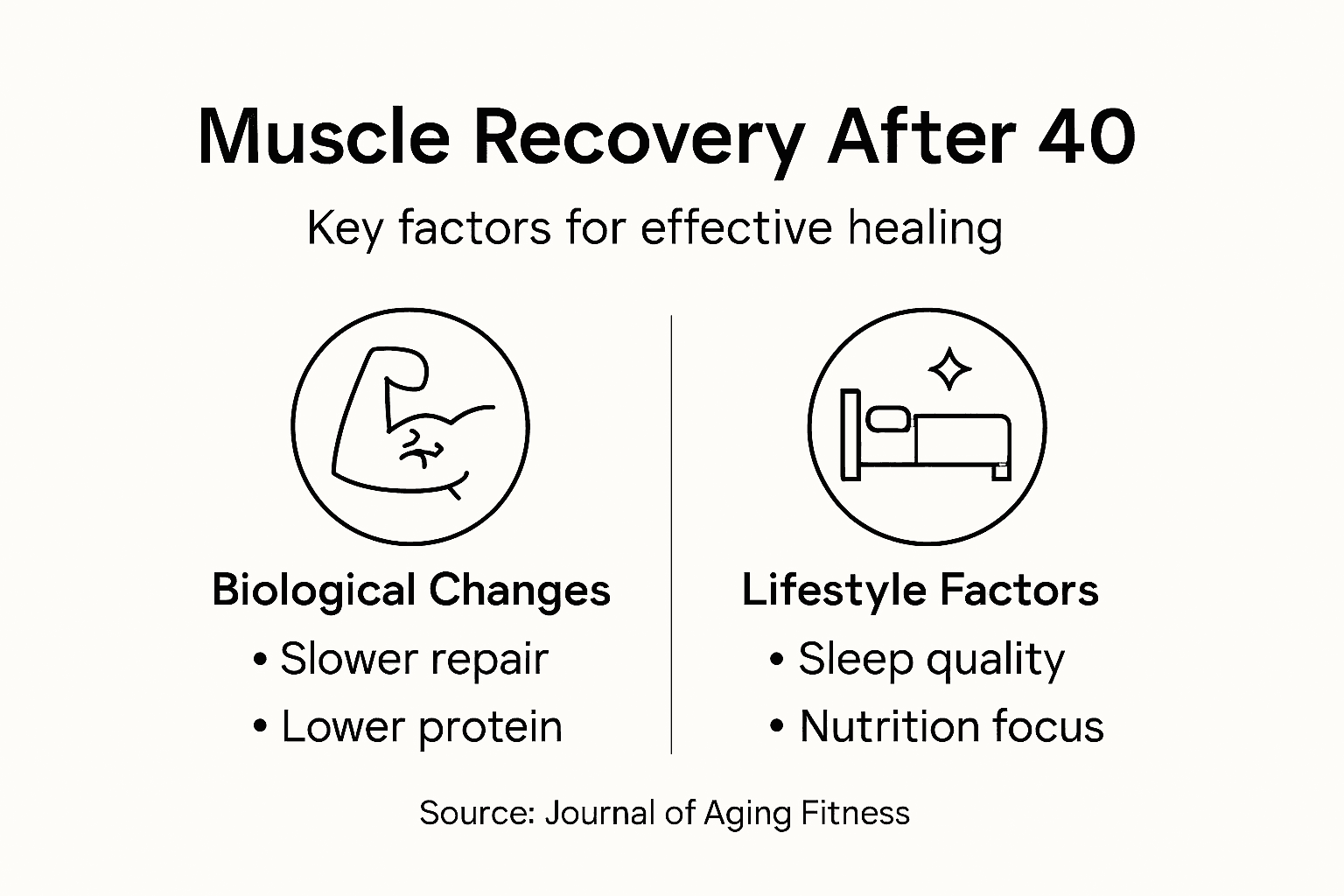
Nutritional foundations play a critical role in muscle recovery. Protein intake becomes increasingly important with age, serving as the primary building block for muscle repair and growth. Balanced nutrition should include high-quality proteins, complex carbohydrates, and essential micronutrients that support cellular repair and reduce inflammation. Hydration is equally crucial, as proper fluid intake helps transport nutrients, remove metabolic waste, and maintain optimal muscle function.
Physiological recovery extends beyond nutrition to include strategic rest, sleep quality, and active recovery techniques. Sleep represents a fundamental recovery mechanism, during which the body releases growth hormones, repairs tissue, and consolidates muscle adaptations. Active recovery methods like light movement, stretching, and low-intensity exercises can enhance blood circulation, reduce muscle stiffness, and promote faster healing. Psychological well-being also plays a significant role, as stress management and mental relaxation contribute to more effective physical recovery processes.
Pro tip: Create a personalized recovery protocol that integrates nutrition, rest, and active recovery, adjusting strategies based on your body’s unique responses and changing physiological needs.
Risks of Poor Recovery and How to Avoid Them
As individuals age, the consequences of inadequate muscle recovery become increasingly severe and potentially long-lasting. Overtraining and improper recovery can lead to significant physiological disruptions that compromise overall physical performance and health. These risks extend far beyond temporary soreness, potentially resulting in chronic inflammation, muscle atrophy, and decreased functional mobility.
The primary risks associated with poor recovery include persistent muscle damage, increased injury susceptibility, and accelerated age-related muscle loss. Muscle tissue requires careful management after 40, as the body’s natural repair mechanisms slow down. Persistent inflammation can damage muscle fibers, reduce strength, and create a cycle of decreased physical activity. Overtraining without proper recovery can trigger hormonal imbalances, compromise immune function, and significantly increase the likelihood of long-term muscular degradation.
Preventing these risks requires a comprehensive and proactive approach. Regular resistance training, balanced nutrition with adequate protein intake, strategic rest periods, and monitoring training intensity are crucial. Incorporating flexibility work, managing stress levels, and paying attention to early signs of muscle fatigue can help mitigate potential long-term damage. Understanding individual physiological limits and creating personalized recovery protocols becomes increasingly important with age, as the margin for error narrows.
Pro tip: Implement a weekly recovery assessment that tracks muscle soreness, energy levels, and performance metrics to continuously adjust and optimize your recovery strategy.
Elevate Your Muscle Recovery After 40 with Lunix
Muscle recovery changes significantly after 40 due to slower protein synthesis and longer healing times. If you are feeling the effects of age on your recovery or want to avoid the risks of poor recovery such as chronic soreness and injury, it is time to prioritize smart recovery solutions. The article highlights the importance of a personalized recovery toolkit combining techniques like compression, improved circulation, and rest. Lunix offers premium wellness products designed to help your body restore and perform at its best by integrating innovative recovery technology seamlessly into your daily life.

Don’t let age slow you down. Explore Lunix innovative recovery solutions that support muscle repair and enhanced comfort tailored for adults over 40. Act now to transform your recovery routine and experience the benefits of thoughtful design and advanced wellness technology. Visit Lunix and start building your personalized path to better muscle health today.
Frequently Asked Questions
What is muscle recovery, and why is it important after 40?
Muscle recovery is the physiological process in which your body repairs and rebuilds muscle tissue after exercise. It is particularly important after 40, as aging slows down recovery processes, increases injury risk, and impacts overall muscle health.
How does muscle recovery change as we age?
As we age, particularly after 40, muscle recovery becomes more complex. Factors like decreased protein synthesis rates, hormonal changes, and longer recovery times mean older adults must focus on strategic exercise, nutrition, and rest to support muscle health.
What are effective muscle recovery strategies for individuals over 40?
Effective strategies for muscle recovery after 40 include high-quality protein intake, longer rest periods, proper hydration, active recovery techniques, and targeted stretching to enhance circulation and reduce muscle stiffness.
What risks are associated with poor muscle recovery after 40?
Poor muscle recovery can lead to persistent muscle damage, increased susceptibility to injuries, chronic inflammation, and accelerated muscle loss. It’s crucial to implement effective recovery strategies to mitigate these risks.
Recommended
- The Role of Hydration in Muscle Recovery: Sip Your Way to Stronger Mus – Lunix
- The Link Between Sleep and Muscle Recovery: Why Rest Is Just as Import – Lunix
- The Secret to Recovering Faster After a Tough Workout – Lunix
- The Science of DOMS: How to Recover Faster After a Workout – Lunix
- The Ultimate Guide to Muscle Recovery - Home Remedies
- 7 Best Protein Sources for Muscle Recovery Explained
- Recovery Nutrition for Athletes: Enhancing Performance and Healing - Dietium